Summary

Media caption,

'Putin showing no signs of compromise', says BBC's Steve Rosenberg

  1. Europe puts on united front for Ukraine, as US-Putin peace talks stallpublished at 18:28 GMT 3 December 2025
    Freya Scott-Turner
    Live reporter

    Kremlin spokesperson Dmitry Peskov told reporters this morning that "the more quiet" surrounding yesterday's US-Putin peace talks, "the more productive" they are.

    Without official comment from the US, and no detail about what - if any - proposals have been accepted, things certainly are quiet. But they don't appear to have been very productive.

    Peskov denied that President Putin had rejected US peace proposals, despite a comment from one of the Russian aides at the negotiating table that "no compromise" had been reached on Ukrainian territory claims.

    This is the climate in which Nato foreign ministers gathered in Brussels - to discuss ongoing efforts to end the war.

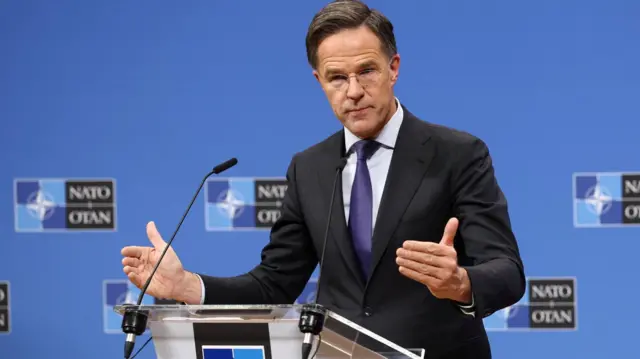
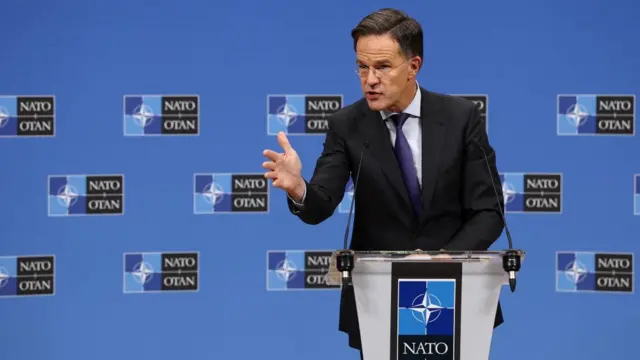
    "Putin believes he can outlast us, but we are not going anywhere", stated the Nato Secretary General Mark Rutte as he rounded off the day's proceedings with a warning about Russia's "increasingly reckless behaviour".

    And there was similar fighting talk from Starmer, who dismissed an earlier comment from Putin (that Russia was "ready" for a war, if Europe were to start one) as "Kremlin claptrap".

    Elsewhere, in some potentially good news for Ukraine, the EU put forward proposals to use frozen Russian assets to fund its war effort.

    But there's no disguising the fact that the US and Europe hold fundamentally different views on how to end this war, says our Europe correspondent Nick Beake. While our Russia editor Steve Rosenberg says that Putin is convinced he is winning this war, and isn't prepared to stop now.

  2. Russia and Ukraine trade strikes as peace talks take placepublished at 18:13 GMT 3 December 2025

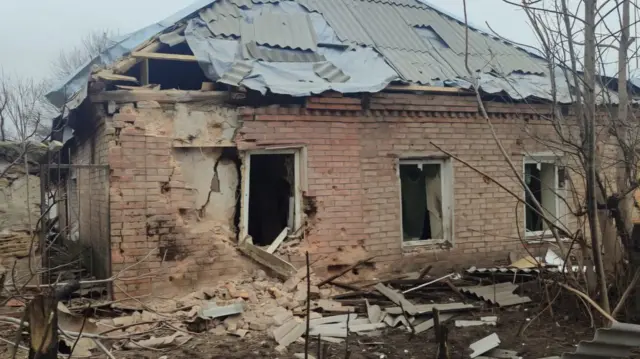
    A bombed out house in NikopolImage source, Vladyslav Haivanenko/Telegram
    Image caption,

    Vladyslav Haivanenko says three people were injured by Russian strikes in the Nikopol region of Ukraine

    While Nato negotiations in Brussels today followed last night's peace talks in Moscow, fighting on the ground in Ukraine and Russia has continued.

    As we reported earlier, both countries reported strikes overnight; two men were killed in Ternovka, Ukraine. Meanwhile, Russia's defence industry reported that 102 Ukrainian drones were intercepted and destroyed by its air defence systems overnight.

    More recently Vladyslav Haivanenko, Ukraine's representative for Dnipropetrovsk Oblast, says Russian strikes were carried out overnight on Volodymyr Zelensky's hometown Kryvyi Rih where he says a woman was injured.

    Haivanenko also says that the Nikopol region in Ukraine's south east endured attacks, with three people injured and infrastructure damaged.

    Meanwhile the Russian governer of Oryol Oblast in the country's south west says there was a Ukrainian attack on the Oryol oil facility.

    Writing on social media, Andrei Klychkov says no one was injured, but emergency services attended to a fire at the scene.

  3. Hungary will not send money or weapons to Ukraine - FMpublished at 17:50 GMT 3 December 2025

    Hungary will not send any weapons or money to Ukraine, foreign minister Péter Szijjártó says.

    His comments come after he and other Nato foreign ministers attended a meeting to discuss peace in Ukraine, and the EU's proposal to fund Ukraine with immobilised Russian assets.

    Following the Nato foreign ministers meeting, Szijjártó told a briefing: "A brutal war fanaticism has gripped the European members of Nato. This blinds them and makes them incapable of making rational decisions."

    He accused Nato members of undermining Trump's peace efforts and added that he fully supports the US president.

    Earlier, the foreign minister said it would be "impossible" for Hungary to accept the European Union's provisional agreement to phase out Russian gas by 2027 that was announced this morning. He added that his country, along with Slovakia, will challenge it in the Court of Justice.

  4. ECB cannot act as backstop on reparations loan, Lagarde sayspublished at 17:24 GMT 3 December 2025

    As the European Commission looks for ways to financially support Ukraine, including transforming immobilised Russian assets into a reparations loan (we've got more on that here), European Central Bank (ECB) president Christine Lagarde has said that acting as a backstop on a reparations loan would violate the treaty of Europe.

    Lagarde told the European Parliament that the central bank will do everything it can to help Ukraine, but would not violate Article 123 of the Treaty on the Functioning of the European Union which states that the independent ECB cannot monetise the obligations of member states.

    Belgium has been critical of the plan, as most of the Russian assets frozen by the EU are held at Euroclear, the Brussels-based central securities depositor. This has led to fears that Belgium could bear the brunt of any future Russian legal action.

    This has led to calls for fellow EU countries to share the risk with Belgium, but that could be difficult given that the ECB has said it would not be able to act as a lender of last resort.

  5. Analysis

    Russia needs money to fight - but economic pressure is growingpublished at 17:00 GMT 3 December 2025

    Steve Rosenberg
    Russia editor

    I’ve said before that, in many ways, Vladimir Putin reminds me of a car with no brakes, no steering wheel and no reverse gear; a vehicle careering full speed down the motorway.

    Nearly four years after the full-scale invasion of Ukraine there is still no sign of the "Putinmobile" turning off, turning back, or coming to a halt.

    He certainly wants his opponents to think that nothing or no-one can force him to change direction: neither European leaders, nor the Trump administration, nor President Zelensky.

    But cars need fuel - a constant supply.

    And, to fight a war, countries need money - a constant supply.

    For now, despite international sanctions, Russia’s government is still able to finance the "special military operation", its war on Ukraine. But economic pressures are building: revenues from oil and gas have been falling, the budget deficit growing.

    Even Vladimir Putin admits there are problems, referring to "imbalances in the economy".

    "In several sectors, production output not only failed to increase this year but actually decreased,” President Putin said this week. “Are we satisfied with such trends? No."

    The big unknown: at what point, if at all, will economic concerns start to influence the Kremlin’s calculations on the battlefield?

  6. Analysis

    No Kremlin compromise on peace talks is no real surprisepublished at 16:49 GMT 3 December 2025

    Steve Rosenberg
    Russia editor

    What does the latest round of diplomacy on Ukraine tell us about Vladimir Putin’s mood and intentions?

    For starters, that he’s not ready to sign a peace deal. At least, not right now.

    And certainly not the deal - or deals - on the table.

    “No compromise version has yet been found,” commented Kremlin foreign policy aide Yuri Ushakov after five hours of talks in Moscow involving President Putin, Steve Witkoff and Jared Kushner.

    No compromise is no real surprise, considering the Kremlin leader’s uncompromising comments in recent days. In various statements he has condemned the Ukrainian leadership as a “thieving junta”, accused European leaders of trying to sabotage peace efforts and insisted that Russia holds the initiative on the battlefield.

    On a couple of recent occasions Russian TV showed Putin in military fatigues, studying maps of the front line, and trumpeting military gains.

    After nearly four years of Russia’s war on Ukraine, despite the heavy losses Russia has suffered on the battlefield and the damage to the Russian economy, President Putin seems convinced that he is winning this war and that now is not the moment to stop.

    At least, that is what he would like the West to believe: that nothing can stop him now from achieving his goals.

  7. Analysis

    Trump may seek new approach amid frustration at lack of immediate progresspublished at 16:37 GMT 3 December 2025

    Bernd Debusmann Jr
    Reporting from the White House

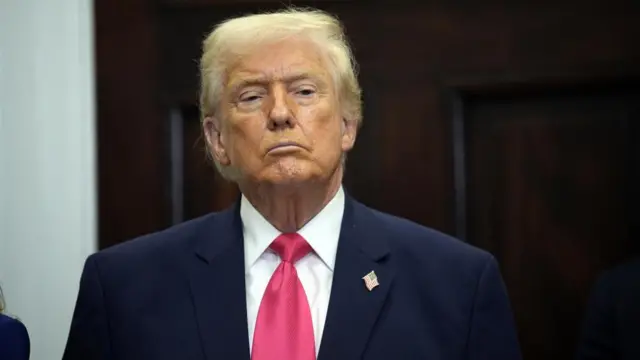
    US President Donald J TrumpImage source, EPA

    Just over a week ago, US President Donald Trump suggested the warring parties could potentially be on the verge of a deal.

    "Is it really possible that big progress is being made in peace talks between Russia and Ukraine?" he wrote on 24 November. "Don't believe it until you see it, but something good just may be happening."

    But a five-hour meeting between Moscow's representatives and those sent by the White House - Steve Witkoff and Jared Kushner - has led to little visible progress, even though Kremlin adviser Yuri Ushakov described the talks as "very positive".

    For the White House, the lack of any immediate progress will be seen as a frustration. For Trump, the war in Ukraine remains the administration's greatest pending foreign policy challenge.

    The US president and his team will now also face questions about how the talks have been handled.

    Some US lawmakers - both Democrats and Republicans - have already questioned Witkoff's actions, with some saying he is too swayed by Russia's negotiating position.

    So far, Trump has stood behind his envoys. But a continued lack of progress may mean the White House could look at a new approach.

  8. International law crucial in territory debate - Guterrespublished at 16:26 GMT 3 December 2025

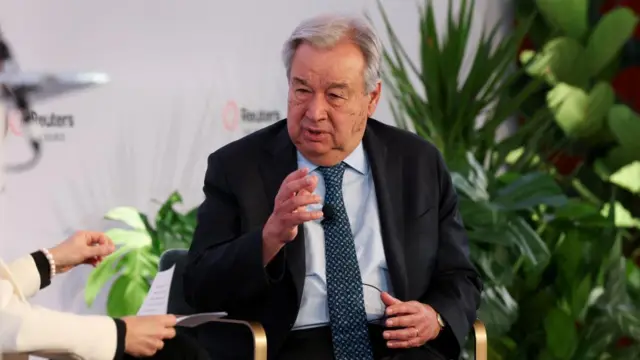
    Guterres speaking during an interview with ReutersImage source, Reuters

    United Nations secretary general Antonio Guterres is urging those involved in Ukraine peace talks not to forget the principles of international law as the debate over territory drags on.

    "First, it was Russia that invaded Ukraine, not the other way around. And second, when we look at the conflict, the solution of the conflict should abide by international law, which means the charter, and which means the respect for the territorial integrity of states," Guterres says in an interview with Reuters.

    Russia's annexation of Ukrainian territories have been condemned and declared illegal under international law. Putin, however, claims they are now Russian territory.

    "The violation of these rules is extremely dangerous because everywhere in the world people will feel that they can do whatever they want because international law doesn't matter anymore," Guterres says.

    "I hope that the way the negotiations end will respect these principles, even if I understand that that will not be easy.”

  9. Ukraine welcomes 'important and responsible' EU proposal on Russian assetspublished at 16:05 GMT 3 December 2025

    Ukrainian prime minister Yulia Svyrydenko has welcomed the European Union's proposal to use frozen Russian assets to finance Ukraine.

    Yulia Svyrydenko described the proposal set out by Ursula von der Leyen earlier as "an important and responsible step forward" that "strengthens Ukraine’s path toward full European integration".

    Svyrydenko thanked the European Commission president, who today announced a package worth £79bn where frozen Russian assets would cover "two thirds of Ukraine's financing needs" for the next two years.

    "We look forward to continued close cooperation with all EU Member States and to the European Council’s final endorsement," Svyrydenko said.

  10. US reporting 'positive' steps in Russia talks - Ukrainepublished at 15:52 GMT 3 December 2025

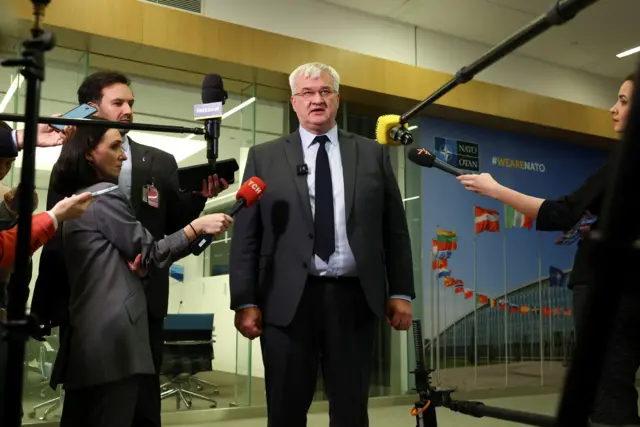
    Ukrainian Foreign Minister Andrii Sybiha surrounded by reporters and microphones during a media conference.Image source, Reuters
    Image caption,

    Ukrainian Foreign Minister Andrii Sybiha says the US team have reported progress being made in peace talks

    In an update on the progress of the peace talks, Ukrainian Foreign Minister Andrii Sybiha says US envoy Steve Witkoff spoke to the head of the Ukrainian delegation, Rustem Umerov, after his visit to Moscow.

    Sybiha tells reporters in Brussels the pair spoke via phone, and "for security reasons, it is difficult to imagine that the details of this meeting [in Moscow] were discussed" given the sensitive nature of ongoing talks.

    "What the representatives of the American delegation reported is that in their assessment, the talks in Moscow were of positive significance for the peace process," Sybiha says.

    "This is their assessment. And they invited the Ukrainian delegation to continue our talks in America in the near future."

  11. Analysis

    As Europe is sidelined by US, dissent grows in Italypublished at 15:38 GMT 3 December 2025

    Sarah Rainsford
    Southern and Eastern Europe correspondent, reporting from Rome

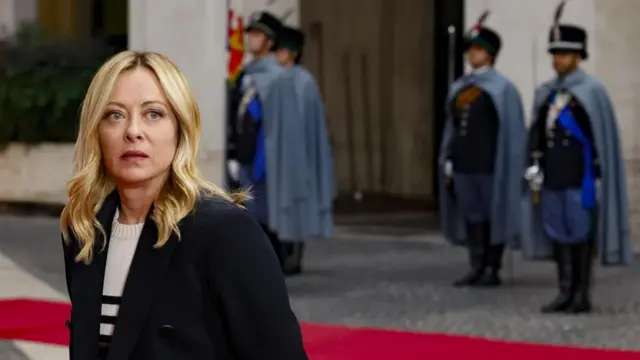
    Italy’s Prime Minister Giorgia Meloni standing in the foreground, with guards in ceremonial dress behind her.Image source, EPA
    Image caption,

    Italy’s Prime Minister Giorgia Meloni has said that she won’t commit to the PURL scheme “for now”

    Mocked and threatened by Vladimir Putin and increasingly sidelined by the US, Europe insists its support for Ukraine is solid and united.

    Its new “landmark” agreement to “turn off the taps forever” on Russian gas flowing into the EU is part of demonstrating that - finally halting the reverse flow of billions of euros from the EU that have been helping to fund Russia’s war machine.

    The deal has taken almost four years, though, and won’t kick in for another 12 months, at least.

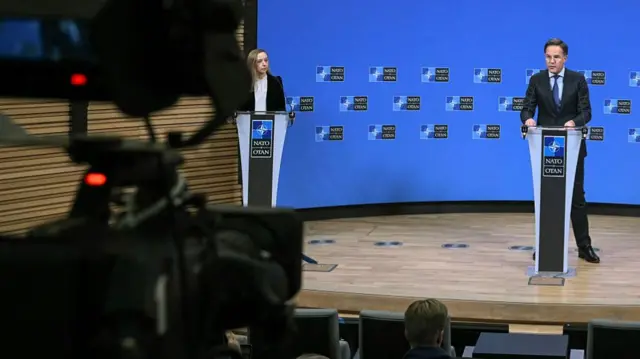
    Nato chief Mark Rutte assured in his press conference that two-thirds of Nato allies had signed up to the PURL (Prioritised Ukraine Requirements List) mechanism for funding ongoing weapons purchases for Ukraine from the US.

    But Italy’s Prime Minister Giorgia Meloni has said that she won’t commit to that “for now”. While she’s long been a firm ally of Ukraine, dissenting voices here have grown louder - emboldened, it seems, by the rhetoric of Donald Trump’s White House.

    This week, Deputy PM Matteo Salvini, of Italy's far-right League party, said that he “dreams” of restoring relations with Russia, warned about corruption in Kyiv and argued there’s “no need” to buy more weapons for Ukraine when the US is pushing for a peace deal.

    Officials in Rome have now confirmed there's a delay in extending authorisation to continue sending military equipment to Kyiv, although the current decree is still valid for a few more weeks.

  12. Six things we heard from Nato boss Mark Ruttepublished at 15:24 GMT 3 December 2025

    Mark Rutte at a podiumImage source, Getty Images

    We've just heard Nato chief Mark Rutte after the bloc's foreign ministers met in Brussels to discuss Ukraine. Here's the six takeaways from Rutte's time at the lectern:

    • He warns against Russia's "increasingly reckless behaviour" through cyber attacks and airspace violations, and repeats Nato allies must move to investing 5% GDP in defence spending
    • "There is only one person in the whole world who is able to break the deadlock... That is the American President Donald J Trump," he says, praising Trump's team's efforts to meet with Putin's advisers
    • He says Vladimir Putin believes he can "outlast" Nato but tells the Russian leader that today's show of support for Ukraine proves he is "wrong". "We're not going anywhere," he says
    • Two thirds of allies have signed up to a weapons supply scheme for Ukraine, he says
    • He expresses confidence at the EU's proposal to use frozen Russian assets to help Ukraine, after Ursula Von Der Leyen announced a package worth £79bn
    • He refuses to answer whether peace talks on Ukraine between the US and Russia are progressing
  13. Nato chief refuses to weigh into US-Russian peace talks progresspublished at 15:17 GMT 3 December 2025

    Rutte is asked whether Russia has moved any closer to the Ukrainian position in securing a peace deal in recent days, thanks to meetings with US officials.

    He says he respects the question, but he refuses to answer as he thinks it's better for him not to comment on the process.

    Rutte is also asked what the next steps should be from Nato and the EU to ensure that, at some point, Russia and Ukraine will both sit at the negotiating table.

    "We have to continue the pressure on Russia," Rutte says, even though we do not know whether the peace process will lead to a successful outcome.

    He says this includes continuing the flow of weapons to Ukraine and economic pressure to ensure Putin understands there is no way out and he will have to compromise.

    Mark Rutte in suit behind lectern, answering questionsImage source, Reuters
  14. Rutte says Nato must 'react' to Russia's military spendingpublished at 15:14 GMT 3 December 2025

    Rutte is now asked about the steps countries are taking to strengthen their military capabilities - including conscription, extending service duration, and including women in mobilisation plans.

    He's asked whether this reflects preparations to secure long-term peace in Europe.

    Rutte says Russia is spending 40% of its state budget on defence. "We have to react," he adds.

    This includes the 5% defence pledge for Nato members, and making sure the defence industry can deliver the output necessary, Rutte says.

    "Specific decisions" - including on issues like who is in uniform - are up to each individual country, he says.

  15. Russia 'will feel' Nato response to Russian attacks - Ruttepublished at 15:10 GMT 3 December 2025

    Rutte is asked by a journalists about "brazen attacks" attributed to Russia, including an explosion on a Polish railway, and what concrete steps Nato is taking to prevent these escalating attacks.

    As a reminder, last month there was an explosion on a railway line in Poland - a Nato member - approaching the Ukraine border. Poland's prime minister Donald Tusk called it "an unprecedented act of sabotage".

    These attacks are "extremely reckless and totally unacceptable," says Rutte.

    He says it is up to Nato's intelligence services, as well as Poland, to find out more about such attacks.

    Nato will "do more" with PURL in response to such attacks.

    "We will act in a way of our own choosing and they will feel it," says Rutte.

  16. Rutte says he has confidence in EU over use of frozen Russian assetspublished at 15:04 GMT 3 December 2025

    Rutte is asked about the use of frozen Russian assets to help the Ukraine war and reconstruction efforts.

    This follows an announcement by European Commission president Ursula von der Leyen to use frozen assets to cover Ukraine's financing needs.

    Rutte replies that the discussion is playing out with EU mainly, and “if that is not happening, we need to get the money in another way".

    He adds that he has full confidence in the EU leadership to steer that discussion.

  17. 'Two thirds' of allies now signed onto weapons scheme, Rutte sayspublished at 14:59 GMT 3 December 2025

    Rutte is asked about critcism of "uneven burden sharing" under the PURL programme - which is an initiative launched by the US and Nato to supply weapons to Ukraine.

    He says there is "only a handful of nations" not yet committed to the scheme, and that "two thirds" of allies are now signed on.

    He says burden sharing is "in a much better place" now and Nato has been able to provide Ukraine with a "sustained flow of weapons".

    This puts pressure on Russia and sends a signal that "we are not going away" while ensuring Ukraine is supported, he says.

  18. Trump only person who can break deadlock - Ruttepublished at 14:56 GMT 3 December 2025

    Rutte is asked by a journalist from an Italian news agency whether the Kremlin is trying to derail US sanctions on Russia, as it appears to have said 'no' to the latest US proposals to end the war in Ukraine.

    Rutte responds that there is only one person in the whole world who is able to break deadlock when it comes to the war in Ukraine and that is Donald Trump.

    He says Trump has been engaged in securing a peace deal since February and he still is, along with other key players in the US.

    But he says getting this peace deal, as Trump said, is "not something in a straight line all in one go" and it will be a "step by step approach".

    He says "the last thing I want to do is make it more difficult to get to a deal by commenting on every in-between step".

  19. Allies 'completely committed' to facing Russian threat, Rutte assurespublished at 14:52 GMT 3 December 2025

    Now the floor is opened to questions from journalists.

    Allies agreed a few years ago that Russia was the most significant and direct threat to Nato allies' security, a Reuters journalist says.

    She asks Rutte whether this is still the case - and whether the US still shares this assessment.

    Rutte replies by saying there is "no reason to debate the outcome of the strategic concept", adding that all allies are "completely committed to that thinking".

  20. 'Putin believes he can outlast us, but we are not going anywhere'published at 14:47 GMT 3 December 2025

    Mark Rutte gestures with his extended right hand while speaking from a Nato podium.Image source, Reuters

    Rutte says Nato's support is making a difference on the ground, including air defence to help Ukraine hold the front line and protect its people.

    He goes on to say that Ukraine continues to show "incredible resillience".

    "Putin believes he can outlast us, but we are not going anywhere," he says.

    Today is "another clear sign that he [Putin] is wrong", says Rutte, after ministers discussed commitments to increase defence spending and enhance support for Ukraine.

    "Nobody wants more peace more than Ukraine," Rutte tells those at the press conference.

    He reiterates Nato's willingness to "do what it takes" to protect and secure its territory and people.

    That said, Rutte now moves on to questions from the press.