Summary

  1. What we learned todaypublished at 22:51 GMT 6 January

    Four days after the US attacked Venezuela and seized President Nicolas Maduro, it is unclear what is next for the South American nation.

    President Trump and other US officials have said they plan to use the military and other methods to coerce Venezuela's current leadership, with the president keen to have US oil companies back in business in the country.

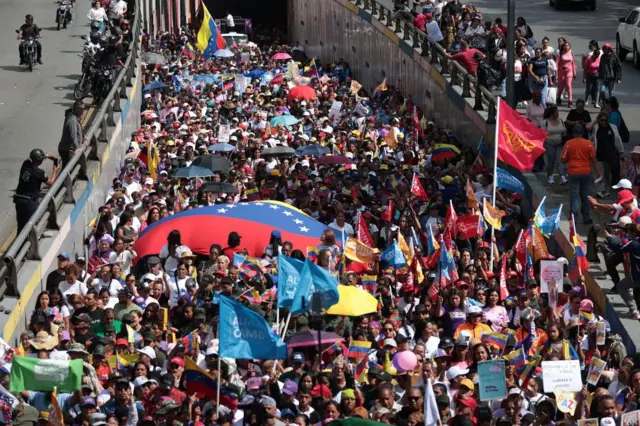
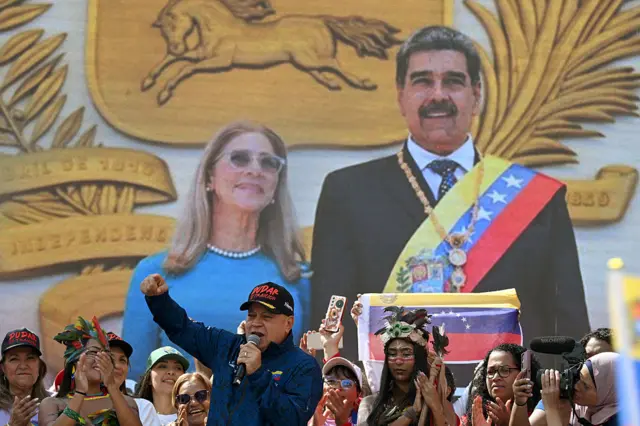
    In Caracas, women supporters of Maduro have marched in support of the ousted president. He is currently in a federal jail in New York.

    A BBC journalist in the Venezuelan capital reports that while the streets remained relatively quiet, there are some empty shelves in stores after people stockpiled goods out of fear there would be shortages.

    On Capitol Hill, Democrats are planning to introduce new legislation that would seek to check the president's powers in relation to launching serious military operations without congressional approval.

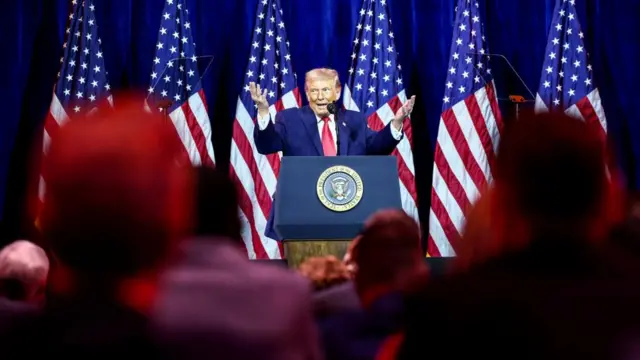
    Earlier in the day, Trump boasted about the attack which he says involved 152 US planes. He described it as successful amid applause and a standing ovation from fellow Republicans at a speech in Washington, DC.

    We are pausing our rolling coverage, but you can read more of the BBC's reporting on this fluid situation here: Venezuelan security forces detain journalists from foreign news organisations
  2. Venezuelan military mourns soldiers killed in US attackpublished at 22:21 GMT 6 January

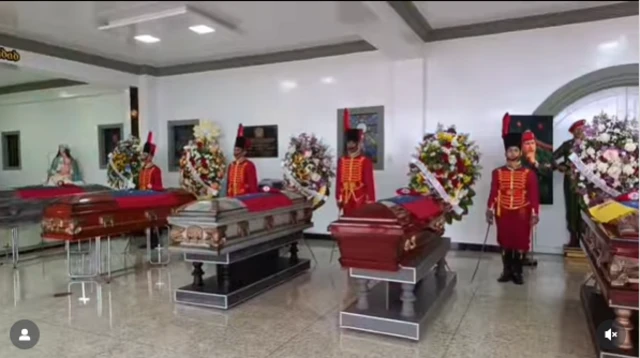
    Soldiers stand behind five flag drapped coffins in CenezuelaImage source, Instagram/Venezuela Ministry of Defence

    Venezuela is paying tribute to some of the soldiers killed in the US attack over the weekend. A video shared online by the Ministry of Defence shows at least five coffins draped in national colours at a ceremony featuring honour guards and attended by weeping relatives.

    "There is no greater love than that of those who give their lives for the freedom and security of their nation," the online post says. "In every corner of our land, their blood becomes the seed of sovereignty."

    Earlier, Venezuela's army said 24 officers were killed during the US operation. Separately, Cuba has confirmed that 32 of its soldiers were also killed.

  3. Why did the US attack Venezuela and seize its president?published at 22:14 GMT 6 January

    Donald Trump blames Nicolás Maduro for the arrival of hundreds of thousands of Venezuelan migrants in the US.

    Without providing evidence, he has accused Maduro of "emptying his prisons and insane asylums" and "forcing" its inmates to migrate to the US.

    But Trump has also focused on fighting the influx of drugs - especially fentanyl and cocaine - into the US.

    Two Venezuelan criminal groups - Tren de Aragua and Cartel de los Soles - have been designated as Foreign Terrorist Organisations and Trump alleges the latter is led by Maduro himself.

    Analysts have pointed out that Cartel de los Soles is not a hierarchical group but a term used to describe corrupt officials who have allowed cocaine to transit through Venezuela.

    Maduro has vehemently denied being a cartel leader and has accused the US of using its "war on drugs" as an excuse to try to depose him and get its hands on Venezuela's vast oil reserves.

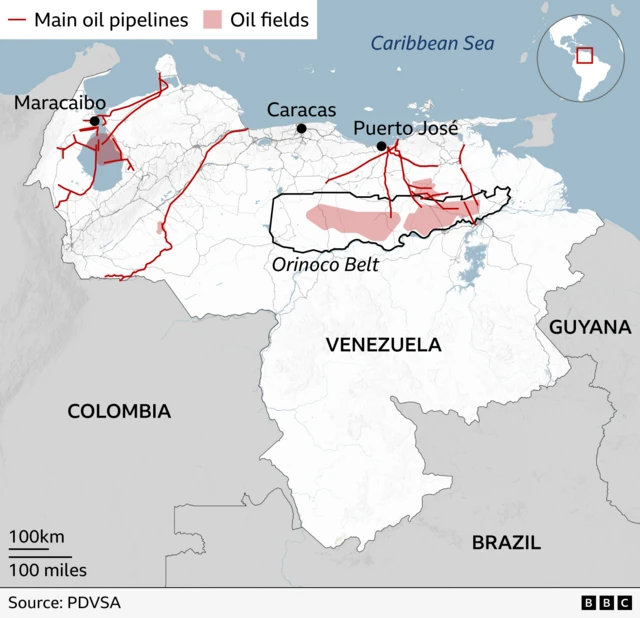
    Venezuela has the world's largest proven crude oil reserves and profits from the oil sector finance more than half of its government budget. However, its exports have been hit by sanctions and a lack of investment and mismanagement within Venezuela's state-run oil company.

    You can read more here.

    Map of Venezuela showing major oil infrastructure. Red shaded areas indicate oil fields, concentrated around Lake Maracaibo in the northwest and the Orinoco Belt in the east-central region. Red lines represent main oil pipelines connecting these fields to ports and other facilities. Key locations labeled include Maracaibo, Caracas, and Puerto José. Neighbouring countries Colombia, Brazil, and Guyana are shown in grey, and the Caribbean Sea is labelled along the northern coast. A small inset map at the top right shows Venezuela’s position at the north of South America.
  4. 'To me, this is America first' - Trump supporter backs Venezuela operationpublished at 22:01 GMT 6 January

    Eloise Alanna
    BBC News

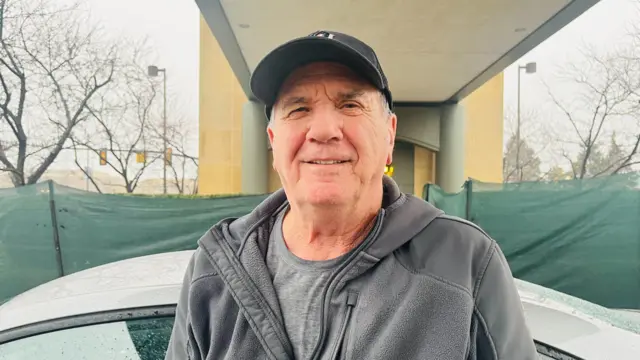
    An elderly man in a dark zip-up jumper with a hoodie poses in front of a car under what appears to be a raised walkwayImage source, Eloise Alanna/BBC

    William Solway, an 83-year-old taxi driver from Michigan, says recent US involvement in the conflict in Venezuela is justified and has not changed his support for Donald Trump.

    He argues the president’s “America First” approach applies to foreign policy, saying drug trafficking poses a direct threat to the United States.

    William also says the US has a responsibility to act as a global leader when it comes to foreign intervention, “to me, this, is America first. They're bringing in so many drugs."

    He adds that despite his age, he continues to work full time because Social Security alone is not enough to live on.

    You can check out what more Trump's supporters think of last week's operation in the clip below:

    Media caption,

    Watch: Trump supporters across US react to Venezuela operation

  5. Watch: BBC examines relationship between Cuba and Venezuelapublished at 21:53 GMT 6 January

    Cuba has held close relations with Nicolás Maduro's Venezuela, but with Maduro seized in a US military operation, Havana could be exposed if its oil supply collapses.

    Trump suggested on Sunday that US military intervention in the country wasn't needed, because Cuba is "ready to fall".

    The BBC's Will Grant, reports from the city of Cúcuta on the Colombia-Venezuela border.

  6. Maduro and wife were injured when captured by US forcespublished at 21:40 GMT 6 January

    We are getting more details now about the operation that led to Maduro being seized by US forces.

    The Venezuelan leader and his wife were arrested while they were trying to escape into a safe room, according to a senior military official and a source familiar with Monday's congressional briefing, the BBC's US partner CBS reports.

    Special operations forces threw flash-bangs into the area where they were found and by the time the couple were arrested, they were already bleeding.

    Some of the injuries were evident yesterday when Maduro's wife, Cilia Flores, appeared in a federal court on Monday, according to a BBC reporter who witnessed proceedings.

    Flores had bandages near her eyes and forehead for injuries her lawyers said she sustained during their arrest.

    Describing the apprehension of Maduro, President Trump earlier said: "He was trying to get to a safe place, which wasn't safe, because we would have had the door blown up in about 47 seconds."

    He added: "He made it to the door. He was unable to close it. He got bum rushed so fast that he didn't get into that [room]."

  7. Rodriguez: 'There is no external agent governing Venezuela'published at 21:27 GMT 6 January

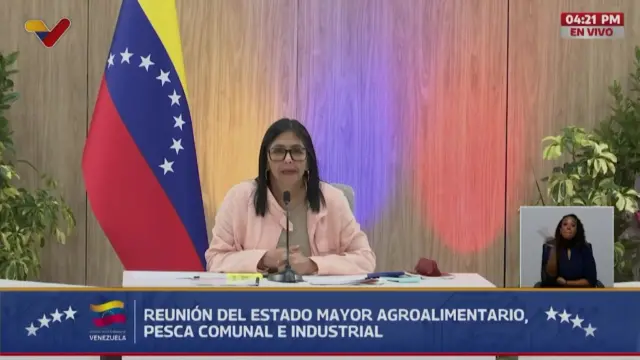
    Venezuela acting president Delcy Rodriguez in a pink jacket, beige top sitting down at a desk during a televised address. Behind her wood-panelled wall, a Venezuelan flag to her right. In the bottom right of the frame, is a Black woman in a black suit translating her speech in sign languageImage source, Reuters

    We just heard from interim Venezuelan President Delcy Rodriguez, who reasserted the country's independence while speaking to a meeting of the Agri-Food, Community and Industrial Fisheries General staff.

    "The Venezuelan government rules our country, and no one else does. There is no external agent governing Venezuela. It is Venezuela, and it is its constitutional government. (...) Personally, whoever threatens me, my destiny is decided only by God," she said.

  8. US oil firms to meet Trump officials on Wednesday - CBSpublished at 21:13 GMT 6 January

    A Chevron sign at a petrol stationImage source, EPA
    Image caption,

    Chevron is the only US oil company currently operating inside Venezuela

    Three major US oil firms are planning to discuss Venezuela with the Trump administration in a meeting on Wednesday, the BBC's partner CBS News reports.

    Representatives from oil giants Chevron, ConocoPhillips and ExxonMobil are expected to meet Energy Secretary Chris Wright.

    It comes after Trump saidUS oil companies would be able to go into Venezuela and improve its oil infrastructure now President Nicolás Maduro has been seized by the US military.

    Trump said the US oil industry could be "up and running" with increased operations in Venezuela within 18 months, though analysts have been sceptical of this time frame.

    "A tremendous amount of money will have to be spent, and the oil companies will spend it, and the oil companies will spend it, and then they'll get reimbursed by us or through revenue," Trump said on Monday.

    * An earlier version of this post incorrectly stated the meeting would take place on Thursday

  9. Women march in Caracas to show support for Maduropublished at 21:02 GMT 6 January

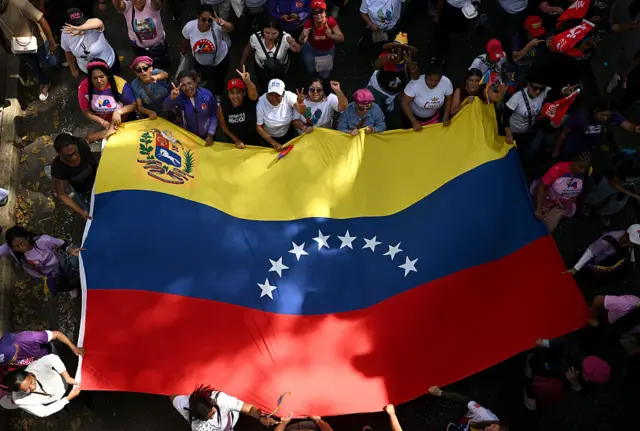
    Supporters of Nicolas Maduro have been marching in Venezuela's capital today, four days after he was seized by US forces.

    The procession is billed as a march by women supporters of Chavismo, the political movement started by Maduro's predecessor Hugo Chavez.

    A large crowd waving Venezuela and other flags emerge from under an overpass bridgeImage source, EPA
    Venezuela's Minister of Interior Diosdado Cabello delivers a speech during a women's rally in support of Maduro. Next to him are women supporters and behind him is an image projection of Maduro and his wife Cilia FloresImage source, AFP via Getty Images
    Image caption,

    Venezuela's Minister of Interior Diosdado Cabello delivers a speech during a women's march for Maduro

    Women wave a big Venezuelan flag during a rally in support of ousted Venezuela's President Nicolas Maduro and his wife Cilia Flores in Caracas.Image source, AFP via Getty Images
  10. US congressional leaders focus on Venezuela on first day back at the Capitolpublished at 20:45 GMT 6 January

    Ana Faguy
    Reporting from Capitol Hill

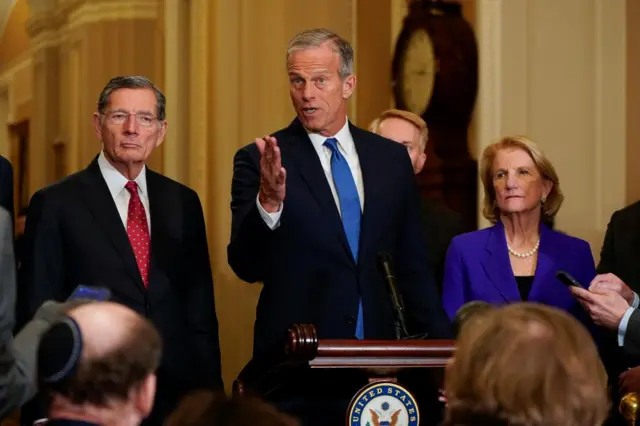
    U.S. Senate Majority Leader John Thune (R-SD) speaks during a press conference following Republicans’ weekly policy lunch on Capitol HillImage source, Reuters
    Image caption,

    Senate Majority Leader John Thune speaks during a press conference following Republicans’ weekly policy lunch on Capitol Hill

    I'm on Capitol Hill today, speaking with lawmakers on the House and Senate's first day back of the new year.

    Legislators were expecting to spend the first working week of the year talking about the Epstein files, healthcare costs, another government looming shutdown. Instead, there’s one thing on their minds: Venezuela.

    Republican Senate Majority Leader John Thune seems optimistic about the prospect of the US working with the Venezuelan energy industry in the wake of Maduro's arrest.

    "It’s not going to be a cost to the American taxpayer," Thune tells reporters. "There ought be revenue coming into this country if we're working in a way with Venezuela."

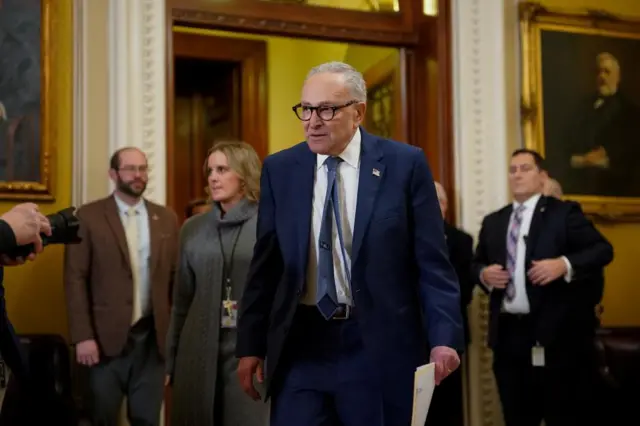
    Democratic Senate Minority Leader Chuck Schumer says he hasn't heard as much information from the Trump administration as he'd like about its actions in Venezuela.

    Senate Minority Leader Chuck SchumerImage source, Reuters
    Image caption,

    Senate Minority Leader Chuck Schumer

    Schumer says he doesn’t have answers to how the US is running the South American country - as Trump stated over the weekend - for how long or at what cost.

    In response, the minority leader said that Democrats' number one focus in the Senate - when it comes to Venezuela - is passing the War Powers Resolution Act (a law that checks the president's power to get the US involved in a war without the consent of congress) on Thursday, adding they only need two Republicans to join them.

    Congressional leaders are hoping more might be revealed tomorrow, when senior Trump administration officials are expected to brief both chambers over the Venezuela operation.

  11. Border residents 'still don't know what's going on' days after Maduro's seizurepublished at 20:22 GMT 6 January

    Alice Cuddy
    Reporting from Cúcuta, on the Colombia-Venezuela border

    I’ve been speaking to people crossing into Colombia from Venezuela today.

    Fifty-three-year-old Mailu from near the border says people in her community are waiting to see what happens.

    “We still don’t know what’s going on,” she says, days after the US's seizure of Maduro.

    She says she is “praying to God” that it will be peaceful.

    Elsewhere, people have described an uneasy return to their normal routines.

    A Colombian woman returning from travelling around Venezuela says there was “tension in the air” but that daily life was continuing in the areas she visited.

    Several people said they couldn’t comment on the situation.

  12. BBC Verify examines claims Venezuela 'stole' US oilpublished at 20:06 GMT 6 January

    The US government has made it clear that getting access to Venezuelan oil is an important motivation for its actions in the country, with President Donald Trump claiming Venezuela "stole" oil from the US.

    Ben Chu from BBC Verify has been looking into the facts.

    Media caption,

    Ben Chu has examined President Donald Trump's claim Venezuela “stole” oil from the US

  13. G7 foreign ministers to discuss Venezuela on phone call - reportspublished at 19:39 GMT 6 January

    The foreign ministers from the G7 nations are due to discuss Venezuela and Ukraine over a phone call this evening, French diplomatic sources told AFP and Reuters.

    The call was scheduled to start at 19:00 GMT (14:00 ET), AFP reported. We'll bring you any lines that emerge.

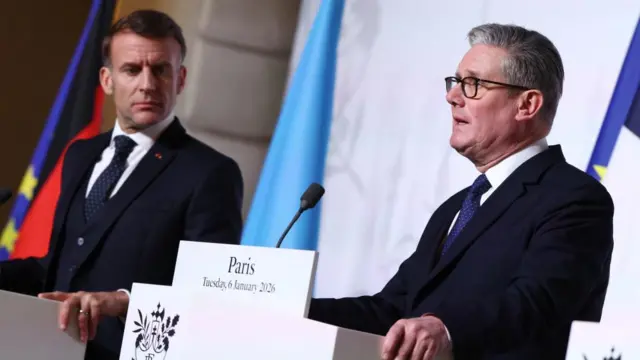
    Discussions on Venezuela come as leaders of several G7 nations gathered in Paris today concerning security guarantees for Ukraine in a meeting of the so-called Coalition of the Willing.

    They've just finished giving a press conference in which the UK and France said they would send troops to Ukraine in the event of a peace deal with Russia.

    You can follow more from that meeting in our Ukraine live page.

    Macron and Starmer stand at podiums in front of flagsImage source, PA Media
  14. DeSantis says Florida looking to bring state charges against Maduropublished at 19:19 GMT 6 January

    In the last few hours, Florida Governor Ron DeSantis has said his attorney general is looking into filing extra charges against Venezuelan President Nicolás Maduro.

    Addressing the media in Clearwater, DeSantis says Maduro could face state charges in addition to the federal ones already brought by the US Government.

    "We are looking very seriously at potentially bringing a state case against Nicolas Maduro," he says. "He was obviously very involved with drugs, with bringing drugs particularly to Florida."

    • As a reminder, federal US prosecutors allege that Maduro, his wife Cilia Flores, his son Nicolás Ernesto Maduro Guerra, and three others participated in a "relentless campaign of cocaine trafficking"
  15. 'We’ve been panic buying every time something happens in this country'published at 18:53 GMT 6 January

    Nicole Kolster
    BBC Mundo, reporting from Caracas

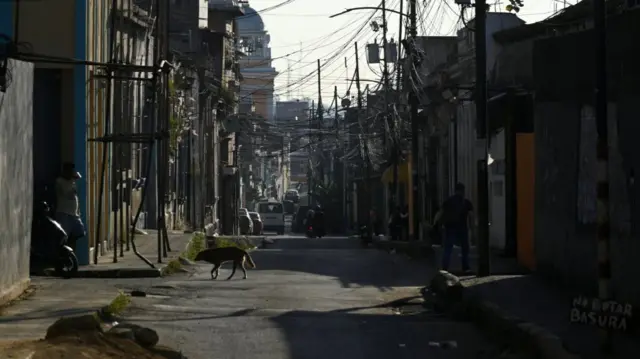
    Wide shot of a near-empty street in Caracas, a dog approaching the left-side pavement after crossing the road. A man is walking in the shadowy right-side of theImage source, Reuters

    Supermarkets in Caracas are quieter today. It’s a religious holiday and we haven’t had the long queues we saw over the weekend.

    But inside one store, there was still some fruit missing, and where there’s usually a variety of bread, there was nothing.

    During the worst years of Venezuela’s economic crisis, empty shelves were the norm. That changed when government controls eased, but now some people fear shortages could return.

    One woman buying lemons – out shopping for the first time since Saturday’s events – tells me: “It’s nothing new. We’ve been panic buying every time something happens in this country for more than 20 years."

    Another shopper says life feels “totally normal” this morning, though the streets appear emptier.

    He notes a lighter police presence, saying they should be the ones maintaining order.

    There have been some reports of “colectivos” - armed groups who were loyal to President Maduro - out on the streets.

  16. Trump hails 'amazing military achievement' in Venezuelapublished at 18:30 GMT 6 January

    Trump stands at a lecturn in front of six American flags. A number of audience menbers can be seen watching him speakImage source, Reuters
    Image caption,

    Trump addresses House Republicans

    Earlier in the afternoon, Donald Trump shared more details about what he calls his "amazing military achievement" in Venezuela.

    Republicans erupted with applause and gave the US President a standing ovation as he spoke about the “complex” operation, our reporter at the scene in Washington DC reports.

    Trump explained that “many, many” people were killed, “mostly Cubans” when US elite troops stormed Maduro and his wife Cilia Flores' Caracas compound on Saturday.

    Cuba has said 32 Cubans died during the incident, with local media in Venezuela reporting 57 people in total - including two civilian women - were killed.

    Trump added that 152 planes took part in the operation and that no Americans were killed.

    “The United States proved once again that we have the most powerful, most lethal, most sophisticated, and most fearsome,” he has said.

    “It's a fearsome military on planet Earth, and it's not even close. You know, I've been saying it for a long time. Nobody can take us.”

  17. Recap: Venezuelans say they're 'scared to go out' as military guard streetspublished at 18:01 GMT 6 January

    Throughout the day, we've heard from people in Venezuela, and the reaction on the ground to recent events. Here's a roundup of what they've said:

    *Names have been changed due to fear of backlash from authorities

  18. Caracas calm, sources say, as Venezuela marks the Festival of Kingspublished at 17:47 GMT 6 January

    BBC Mundo

    Residents and local reporters have told BBC Mundo that Caracas is calm today.

    Venezuela is marking the Festival of the Kings, a Christian holiday, and shops are quiet.

    Unlike recent days, there are not widespread reports of food shortages, though queues outside supermarkets and pharmacies are relatively common in Caracas.

    Sources say main roads are largely free of checkpoints, and they have not seen a significant security presence on the streets.

    Armed groups loyal to President Maduro, known as “colectivos”, have been seen in some locations, but their presence is not considered unusual.

    Gas stations are operating as normal.

    A source told Mundo they were able to drive around the city and its outskirts without any checkpoints.

    However, the situation in the capital and across the country is mixed. It’s difficult to get a clear picture and there are reports of heavy security in some areas.

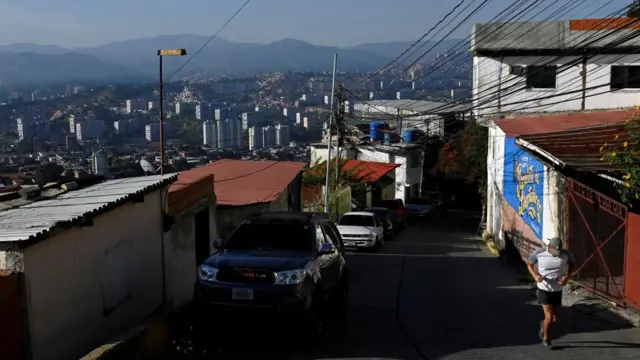
    An unidentified man jogs through a Caracas streetImage source, Reuters
    Image caption,

    A man jogs in the Puerta Caracas neighbourhood of Caracas on Tuesday

  19. Fifty-seven killed in US operation on Venezuela - local reportspublished at 17:21 GMT 6 January

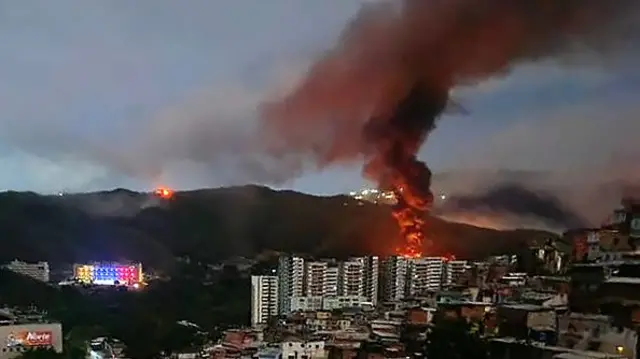
    Fire bellowing from a building complex against a silhouetted mountain ridge.Image source, Getty Images
    Image caption,

    The US carried out strikes in Caracas on Saturday

    Local media in Venezuela are now reporting that 57 people were killed in the US-led operation on Nicolás Maduro's Caracas compound last Saturday.

    Twenty-three Venezuelan soldiers and 32 Cuban fighters died, as well as two civilian women.

    The Cuban Communist Party's official newspaper, Granma, has also shared details of the soldiers it lost in the operation in a post titled "Honour and Glory" - adding that they were killed "in combat action and after fierce resistance".

  20. US on alert as tanker once bound for Venezuela nears Europepublished at 17:12 GMT 6 January
    Breaking

    Jonathan Beale
    Defence correspondent

    US military aircraft appear to be using RAF bases in the UK to track an oil tanker sailing in the North Atlantic.

    The US Coastguard tried to board the tanker last month in the Caribbean. Then named Bella 1, the tanker was believed to be heading towards Venezuela, before it dramatically changed course - and changed its name to the Marinera.

    US officials had already obtained a seizure warrant for the tanker - accused of breaking sanctions and shipping Iranian oil.

    Its approach nearer Europe coincided with the arrival of around 10 US military transport aircraft in the UK, as well as helicopters.

    Speculation has been mounting that the US might mount an operation to seize the tanker. CBS News has reported that two US officials have said they’d rather seize the ship than sink it.

    The tanker is now believed to be between Scotland and Iceland – distance and weather making a boarding difficult.

    If any US military operation were to be launched from the UK then Washington would be expected to inform its ally. The Ministry of Defence says it won’t comment on other nations military activities.