Summary

  • Senior BBC figures have been questioned by MPs after a leaked memo raised claims of bias at the corporation

  • The Culture, Media and Sport (CMS) committee hearing follows two high-profile resignations at the BBC and a threat of legal action from US President Donald Trump over an edit of his speech

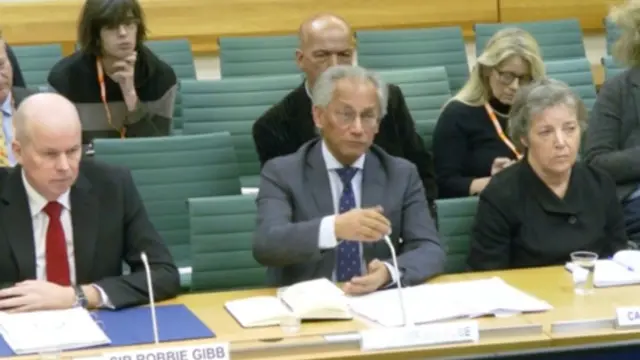
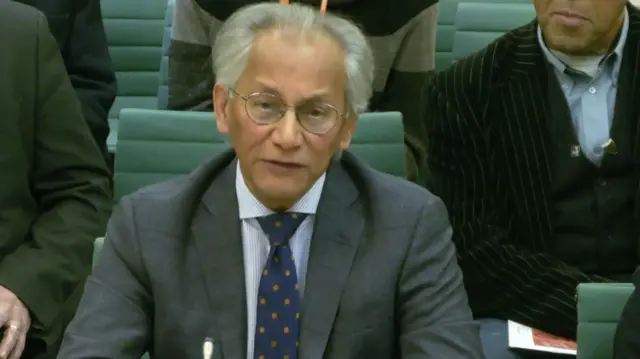
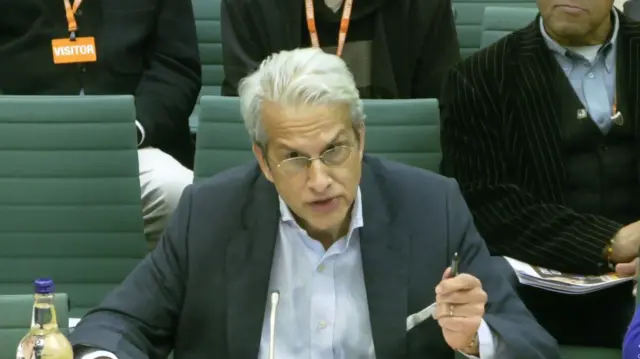
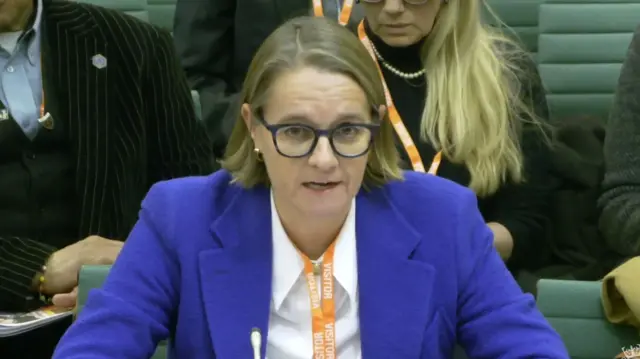
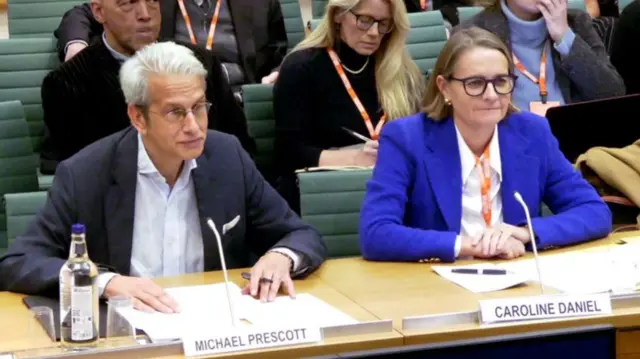
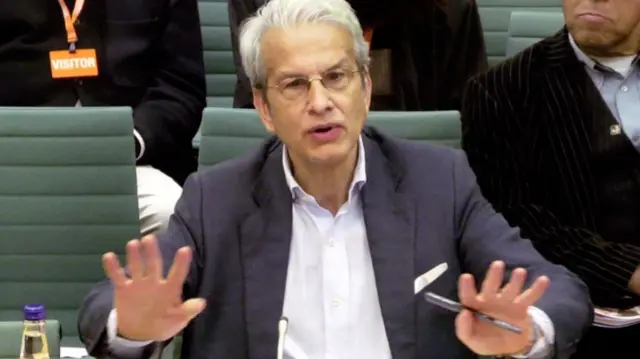
  • Members of the BBC board, including chair Samir Shah, Robbie Gibb and Caroline Thomson, and former advisers Michael Prescott and Caroline Daniel appeared before MPs

  • Michael Prescott was pressed on his leaked memo which accused BBC Panorama of misleading viewers with its Trump edit

  • BBC chair Shah was pressed on governance at the corporation and filling the director general role

  1. Analysis

    A few insights emerge, but crisis isn't over for BBCpublished at 19:41 GMT 24 November 2025
    Katie Razzall
    Culture editor

    We're ending our live coverage now - we'll have more on the BBC website shortly.

    The key thing today was that the BBC chair, Samir Shah, needed to demonstrate that he's got a grip.

    The pressure was on him and today he told MPs his job is now “to steer the ship” – and begin the search for the next director general.

    Caroline Thomson, a fellow board member sitting next to Shah, said he had the unanimous support of the board.

    Well, clearly not Shumeet Banerji, the board member who resigned on Friday. That obviously added to the pressure on him ahead of this committee appearance – and this part of his evidence was the most damning.

    Although he praised Banerji, he pushed back on the sense he hadn’t been consulted about the events leading up to the resignations of the director general and CEO of News.

    Shah claimed – twice – that he had had a 26-minute conversation with him.

    No killer blows for Shah

    Shah went into the session with MPs in a fairly weak position – accused of losing grip over his board. He appears to have come out stronger.

    There were no killer blows. Perhaps that was not the intention. But it didn’t make riveting TV.

    We got a few insights. Shah was asked about the vacuum that was created by his failure to apologise for the misleading Donald Trump edit once it was made public, and he said there were sharp disagreements on the board about the Panorama programme.

    He suggested he hadn't accepted the apology being suggested by news executives because it wasn't sufficient.

    Gibb denies political interference

    We also heard for the first time from Robbie Gibb, the former BBC executive and Downing Street head of communications under Theresa May, who's one of the political appointees to the board.

    He has been accused by some of political interference. Today, he denied that – saying he’s become weaponised, and that he has impartiality in his bones.

    And when Gibb was asked directly whether there had been a politically motivated coup, as some people had suggested, he said it was a ridiculous charge, complete nonsense and offensive to board members.

    Whether that is enough to quell the critics is another matter.

    Crisis not over

    To take a step back from this, every one of the people who gave evidence today professed huge support for the BBC.

    But given the divisions and the mistakes that have been laid bare over the past few weeks, which have prompted big resignations at the top of the BBC, on top of the legal threat from Donald Trump, this crisis is not over.

    We're ending our live coverage now - we'll have more on the BBC website shortly.

  2. BBC sets out plans to review editorial standards committeepublished at 19:30 GMT 24 November 2025

    The BBC press office has issued a statement reiterating some of what we heard from Shah when he was speaking to MPs earlier.

    It says a review into the effectiveness of the BBC’s Editorial Guidelines and Standards Committee (EGSC) began in June.

    The review is examining the "powers and scope" on the committee, the range of voices and protocols around escalation and accountability, and its processes.

    Additonally, Peter Johnson - the director of editorial complaints and reviews - will re-visit "every item" in Michael Prescott's memo to decide if further action is required, and ensure "appropriate action is taken if any piece of content falls short" of the BBC's editorial standards.

    The findings of both the review and Johnson will be presented to the BBC board in December, it says

  3. Analysis

    What would a new deputy director general do?published at 19:19 GMT 24 November 2025

    Noor Nanji
    Culture reporter

    The job advert for director general officially went live today.

    But, as Shah just told MPs, that role is “too big for one person”.

    He has just confirmed that they are also looking to bring in a new deputy director general, as one of the new measures being introduced in the wake of the Panorama row.

    It’s worth pointing out that there have been deputy DGs (or “DDGs”, as Shah just called them) before and until quite recently.

    Having a DDG who is “laser focused on journalism”, as Shah says, would free up the director general to do all the other parts of the role – and that could make managing the next crisis easier.

    It’s also a hint that the next DG might not necessarily need to be a journalist.

  4. BBC chair pressed on leadership and future of boardpublished at 19:09 GMT 24 November 2025

    The Culture, Media and Sport (CMS) committee hearing has now wrapped up. Before the final exchanges, MPs questioned chair Samir Shah on what's next for the BBC board and management.

    Here's a synopsis of what we heard:

    • Shah is asked whether the role of BBC director general is too big for one person - he agrees, saying there should be a deputy director general focused on journalism, especially as the "nature of news has changed"
    • On the composition of the board, Shah says that is a matter for the corporation's Royal Charter, but says he would like "greater flexibility"
    • Asked if it's right for the board to have political appointees, Shah pushes back and says they are "public" appointments and not political, and talks about the importance of both independence and accountability
    • He says the "real thing" is to have a diversity of opinion and ensure party politics is left out

  5. Shah asked if his position as BBC chair needs reviewingpublished at 18:34 GMT 24 November 2025

    Samir ShahImage source, House of Commons

    Here's a summary of more of the key exchanges:

    • In his resignation letter, Banerji said he was "not consulted" about the events leading up to the departures of BBC director general, Tim Davie, and head of news Deborah Turness. Shah disputes this, saying he recalls Banerji being consulted
    • Asked if his own position needs to be looked at - following reports this weekend of possible future changes to the BBC's governance - Shah says: "I don't think that's right. Right now my job is to steer the ship" and the priority is to recruit a new director general
    • Caroline Thomson - a non-executive director on the board - says Shah has the unanimous support of the board
  6. Analysis

    Gibb emphatic on impartiality and 'ridiculous' coup claimspublished at 18:25 GMT 24 November 2025

    Noor Nanji
    Culture reporter

    Questions have been raised in recent weeks about the political appointees on the BBC board (there are five including Samir Shah and Sir Robbie Gibb). And about whether they have been interfering in editorial decisions.

    The role of Gibb, a former BBC senior editor and director of communications for Conservative Prime Minister Theresa May, has come under particular scrutiny.

    But when asked about how he manages his own bias, Gibb was emphatic.

    “I have impartiality through my bones,” was his precise quote.

    He also said he felt he’d become “weaponised” in the way he’s perceived, and he dismissed the claims of a politically-motivated "coup" at the top of the BBC as "ridiculous" and "nonsense".

    It’s strong language. It’s clearly something he has felt deeply affected by.

    But whether this appearance in front of MPs is enough to convince others of his impartiality or otherwise, remains to be seen.

  7. 'Complete nonsense': Board members refute coup rumourspublished at 18:21 GMT 24 November 2025

    Gibb is next asked about rumours of a "board-level orchestrated coup" over the leaking of Michael Prescott's memo.

    He calls these rumours "complete nonsense".

    Caroline Thomson also says she did not see anything she would characterise as evidence of a "board coup".

  8. Gibb asked about accusations of biaspublished at 18:19 GMT 24 November 2025

    Robbie GibbImage source, House of Commons

    Robbie Gibb is asked now about previous roles he's held and whether it has impacted his work on the BBC Board, following claims of bias and political interference made against him in media reports.

    Here's an upsum of his key responses:

    • Asked how he manages his bias - as ex-director of communications for Theresa May and a former BBC editor - Gibb says he's "become weaponised", adding that he was a BBC journalist for 25 years and worked at Number 10 for two years.
    • "Everyone that knows me - I'm hugely impartial, I have friends across the political divide, I have impartiality through my bones," he says
    • Pushed on his links to the Jewish Chronicle, he says during his time there he had "no involvement editorially whatsoever" but was a director as a "favour".
    • On his role at GB News, he says he worked there only prior to it becoming a news channel
    • Asked about media claims he interfered politically in editorial decision-making, Gibb replies: "I don't know why people write that... it's not for me to say. Perception is important but not as important as reality"
    • Separately, Chair Samir Shah tells the committee he has "absolute faith in Robbie [Gibb] as a journalist"

  9. BBC board members on delay to apology over Trump editpublished at 18:09 GMT 24 November 2025

    Caroline ThomsonImage source, House of Commons

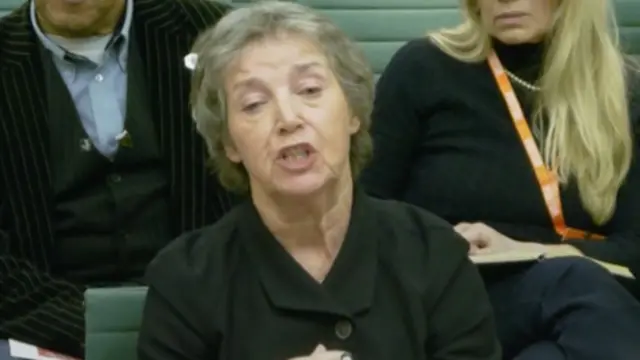
    Also addressing questions over the lack of a timely BBC response to the 6 January Panorama Trump edit:

    • Caroline Thomson, a non-executive board member, says there was a "continuing and sharp difference" of opinion about what the board would be apologising for
    • She says she thought the edit had given a "misleading" impression, but she says BBC News continued to maintain that the overall impression given was correct, while accepting it should have been more transparent
    • Board member Robbie Gibb says there definitely was a difference of opinion on the board - adding: "It all came down to whether - from my perspective and the point I was making - there was a serious error"
    • He says he felt that the edit gave the impression that Trump's comments were a call to arms, which he says "was a breach of editorial policy"

  10. Shah admits BBC was too slow to apologise over Trump editpublished at 17:47 GMT 24 November 2025

    Robbie Gibb, Samir Shah and Caroline ThomsonImage source, House of Commons
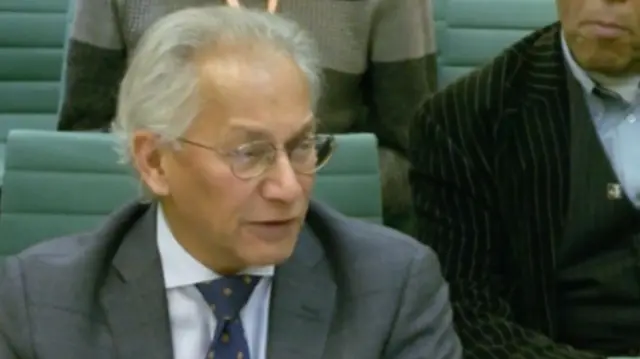
    • BBC Chair Samir Shah says he regrets BBC Panorama's edit of Donald Trump's speech on 6 January 2021
    • Did you block the head of news, Deborah Turness, from apologising for the Panorama programme, he's asked
    • Shah says Turness wanted to apologise for the splicing of the footage, but he didn't see this as "sufficient". "The real issue was the impression... that President Trump... had encouraged a call to violent action"
    • Asked by the committee chair why the BBC did not apologise when David Grossman first flagged the edit, Shah replies: "Looking back, I think we should have made the decision earlier in May"
    • "I think there is an issue about how quickly we respond, the speed of our response, why do we not do it quickly enough... We should have pursued it to the end and got to the bottom of it, and not wait as we did till it became public discourse"
    • Pushed again on why the BBC was slow to respond - this time in light of the "drama" in the press surrounding the story - Shah says the corporation needed to reach the "right answer"
    • Asked if the resignations of the head of news and director general could have been avoided if the BBC had responded earlier, he replies: "That's a hypothetical I cannot answer"
    • He strongly denies that there was any pressure from the Board to delay apologising. "I needed to make sure what I was apologising for was fully sourced and fully right"
  11. A lot is riding on Samir Shah’s appearance todaypublished at 17:26 GMT 24 November 2025

    Noor Nanji
    Culture reporter

    Samir ShahImage source, House of Commons

    We're now hearing from BBC chair Samir Shah. He has been facing pressure, even anger from some, after losing two senior executives under his watch - Tim Davie and Deborah Turness.

    He was also hit by another resignation on Friday, by board member Shumeet Banerji, who quit blaming governance issues at the very top of the corporation.

    Shah does have his supporters. But these events have also led to some to question his ability to remain in the job.

    This afternoon, he will be very keen to prove he’s got a grip on things, and that he’s capable of leading the BBC into its next phase.

  12. Prescott's memo 'a personal account rather than a comprehensive view'published at 17:16 GMT 24 November 2025

    After Prescott's account of his memo, Caroline Daniel was asked whether it was an "accurate reflection" of the David Grossman report on which he said it was based. She's asked if she has read both documents.

    "Michael's memo does not provide a comprehensive view of what was in the David Grossman report," she replies.

    The memo is "a personal account rather than a comprehensive review of everything that was covered in the committee", she adds.

    You can watch their full exchange back below:

    Media caption,

    Caroline Daniel: Prescott's memo 'a personal account rather than a comprehensive view'

  13. Prescott: Memo topics reflected areas of internal BBC reviewpublished at 17:12 GMT 24 November 2025

    Labour MP Rupa Huqasks if topics addressed and language used in Prescott's memo - particularly related to Trump, trans issues and Gaza - are all from one perspective.

    • Prescott says the selection of topics he was referring to in his memo were ones that David Grossman - an adviser to the BBC's standards committee - had been given to look at. So, Prescott says, the topics were not chosen by him
    • Prescott says "in a funny way" he didn't really write a lot of the memo, it was him quoting from Grossman's internal BBC reports
    • Huq asks if "culture war issues" had been "selected in one direction" which "seem to betray a political bias themselves"
    • Prescott dismisses the idea that there was an "ideological party political skew to the work", and says when Grossman's work was commissioned they didn't know what he would find
    • Referring to his memo, he says it "covers almost all" of the reports produced by Grossman, and denies picking out specific points for mention based on them having a particular "ideological flavour"
  14. Prescott pressed on Panorama's Trump speech editpublished at 16:44 GMT 24 November 2025

    Michael PrescottImage source, House of Commons

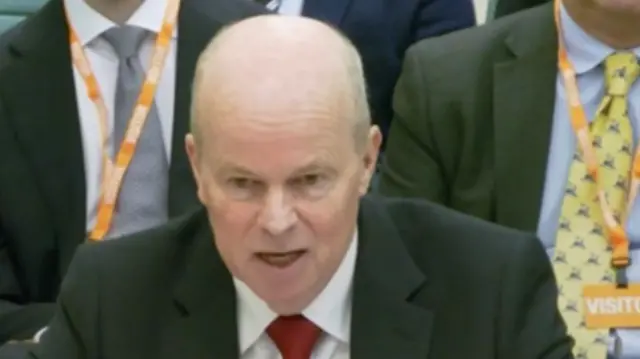
    Prescott is asked by MPs about his criticisms of the Panorama documentary on Donald Trump. Here's a summary of those exchanges:

    • When he initially watched it, the programme struck him as "having an issue to do with balance" but he says he assumed Panorama would also do an equivalent programme on 2024 Democratic presidential candidate Kamala Harris
    • When the EGSC tasked David Grossman to look at the documentary, he says management didn't accept there was an issue with the coverage of the US election or the Panorama programme
    • It's put to Prescott that Grossman wrote that the coverage of the presidential election was "generally excellent" - Prescott repeats there are "incipient problems" that need addressing in the BBC and Grossman did not give the BBC "a gold star"
    • Prescott is asked again why he raised concerns about the Panorama programme - he says it was a "stark example" of something that went wrong and wasn't addressed
    • It's further put to him Kamala Harris wasn't found to have played an active role in the 6 January Capitol riots, so what would an equivalent programme look like? It would examine her track record and the political consequences of if she was elected, he says
    • Was Trump's reputation damaged by how his speech was edited in the programme? Prescott says he's answering with "restraint" given Trump's legal threat against the BBC, before adding: "I can't think of anything I agree with Donald Trump on"
    • "We still don't know" how the clip ended up airing in the programme, he says

  15. Analysis

    Expect more questions over claims of political interferencepublished at 16:40 GMT 24 November 2025

    Noor Nanji
    Culture reporter

    In recent weeks, one of the key questions that has come up is whether there is political interference at the BBC.

    We’ve already heard Michael Prescott’s take on it. He calls himself a “centrist dad” and “no ideological soul mate of Robbie Gibb”.

    That might be a bit glib, but I think we’ll hear more questions on this in the next hour, when BBC Board members Gibb and Caroline Thomson enter the room.

    Gibb - a former director of communications for Theresa May and BBC editor - has been accused by some of politicising the BBC Board and pursuing his own agenda. Others disagree with that characterisation. We’ll hear his perspective on this in later in the session.

  16. Analysis

    Is the BBC about to make changes to its leadership structure?published at 16:31 GMT 24 November 2025

    Noor Nanji
    Culture reporter

    Prescott says Tim Davie's resignation is confirmation of what he's been “thinking for a while” - that the director general role is too big for one person.

    I think this is a topic that we may hear more about during this session.

    Last night, the Guardian reported that one of the measures being considered is adding a new deputy director general role.

    The other change the newspaper signposted is an expansion of the BBC’s standards committee – we understand that to be accurate.

    BBC bosses will be hoping that through measures like this, they’ll be able to prove they’ve got a grip on things - and are capable of leading the BBC into its next phase.

    The question is will it be enough?

  17. Former external advisers pressed on BBC handling of mistakespublished at 16:23 GMT 24 November 2025

    Caroline DanielImage source, House of Commons

    Here's another digest of some of the key exchanges from the session:

    • Caroline Daniel - a former external adviser on editorial standards - says there had been improvements at the BBC around admitting mistakes after previous reviews
    • Asked why a quick response did not follow the leaking of Prescott's memo and subsequent claims of bias, she says she wasn't involved
    • Michael Prescott - who held the same role as Daniel - says there's an issue within the BBC when it comes to self-criticism. It "does try to look at itself... when it comes to following through on actions, it's not always fantastic"
    • There are "issues of denial", he says, citing concerns he raised in his memo over the edited footage of Donald Trump's speech on 6 January 2021. The initial BBC response was "just plain deny", he says
    • He says management didn't argue on the facts - "they just disagreed with him and didn't do anything"
    • Later in the questioning on how the BBC responds to criticism, Prescott says: "The public expects the BBC to be honest, accurate, impartial and fair. It is most of the time, it needs to do a better job when it is caught out not being so"
  18. Prescott and Daniel asked about how standards committee workspublished at 16:13 GMT 24 November 2025

    Michael Prescott and Caroline DanielImage source, House of Commons

    We're continuing to hear from Daniel and Prescott. They have been asked about the Editorial Guidelines and Standards Committee (EGSC) and how it works.

    • Daniel says she "wouldn't agree" when asked if some members were more vocal than others, describing the committee as "open" and saying "people could say what they thought"
    • The former external BBC adviser says she would not describe the committee's decision-making as politicised
    • Asked if he has a political bias, Prescott describes himself as a "centrist dad" and "no ideological soulmate of Robbie Gibb"
    • Outlining his concerns, Prescott tells the committee he was frequently seeing that the BBC's way of dealing with issues was to "change the editors around" or "tweak the written guidelines", and there was never any willingness "to look into what exactly went wrong"
    • Asked if he knows how the Telegraph came to have the memo he sent to the BBC, Ofcom and the DCMS, Prescott says he has "no idea how that happened", insisting he did not share it with anyone else
  19. Analysis

    Prescott emphatic over questions of biaspublished at 16:04 GMT 24 November 2025

    Noor Nanji
    Culture reporter

    After all the drama of the past few weeks, it all comes down to one key question: is the BBC institutionally biased?

    It was widely reported that Michael Prescott’s leaked memo – which kicked off this whole controversy – raised concerns about "systemic problems" of bias in some of the BBC’s coverage.

    So, it was very interesting to hear his response to whether he thinks the BBC is institutionally biased. He was fairly emphatic about it. “No, I don’t.”

    Prescott makes it clear that his concern was more that there were “incipient problems” and that the BBC wasn’t tackling those as it should.

    He says: "The root of my disagreement and slight concern even today is that the BBC was not - and I hope they will change - treating these as having systemic causes. There's real work that needs to be done at the BBC.”

    We’ll await to hear what other senior figures say about that later in this session.

    If some members of the board believe that the BBC does suffer from systemic bias, and others do not, then it’s not clear where this ends.

  20. Prescott pushed on resignation of director generalpublished at 16:02 GMT 24 November 2025

    Michael PrescottImage source, House of Commons

    We can bring you more lines from the exchange between the committee chair and Michael Prescott.

    • The committee chair asks who Tim Davie was "targeting" in his resignation statement, in which he warned about weaponising the BBC - "you'd have to ask Davie himself," Prescott replies
    • He says his "suspicion is that the last part was targeted at 'big C' Conservatives who were piling in" after his memo was published in the Telegraph
    • Some people "jumped to the conclusion that there was some sort of ideological exercise," he says, but this wasn't the case from his point of view
    • Asked if he was surprised his memo led to the resignations of the BBC director general and head of news, Prescott says he was and expected matters to play out in private