Summary

  • The Bank of England has cut interest rates from 4% to 3.75% - the lowest level since February 2023

  • The Monetary Policy Committee voted 5-4 in favour of the cut

  • "We still think rates are on a gradual path downward but with every cut we make, how much further we go becomes a closer call," says Bank governor Andrew Bailey

  • Chancellor Rachel Reeves calls it "good news for families with mortgages and businesses with loans" - but says there's "more to do"

  • The Bank's base rate influences the cost of borrowing. Cutting it can make mortgages cheaper, but can also mean lower interest on savings

  • Meanwhile, the Bank now expects no economic growth at the end of this year, but thinks inflation will fall closer to the 2% target sooner than expected

Media caption,

Who are the winners and losers of the interest rate cut?

  1. Bank signals caution going forward after cutting interest rates to 3.75%published at 15:15 GMT 18 December 2025

    Rachel Clun
    Business reporter

    The Bank of England has cut interest rates from 4% to 3.75% - the lowest level in nearly three years. Here's the detail:

    • The decision was widely expected but it was another knife-edge vote, with policymakers voting 5-4 in favour of a cut
    • Concerns about weak economic growth and rising unemployment outweighed worries about inflation, which is falling but remains above the Bank’s 2% target
    • The Bank expects inflation to near 2% by the middle of next year, partially due to the government’s tax and spending policies announced in last month’s Budget
    • Interest rates are likely to continue on a gradual downward path, Bank governor Andrew Bailey says, but he adds "with every cut we make, how much further we go becomes a closer call"
    • The Bank's next meeting to consider interest rates is schedule for 5 February
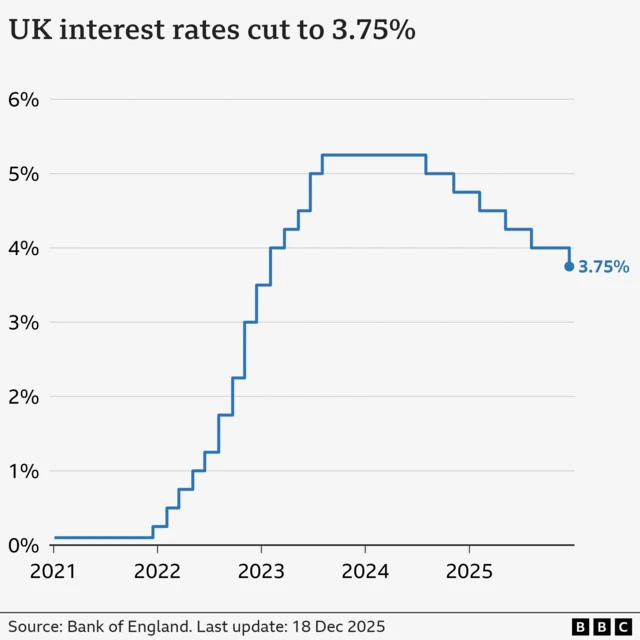
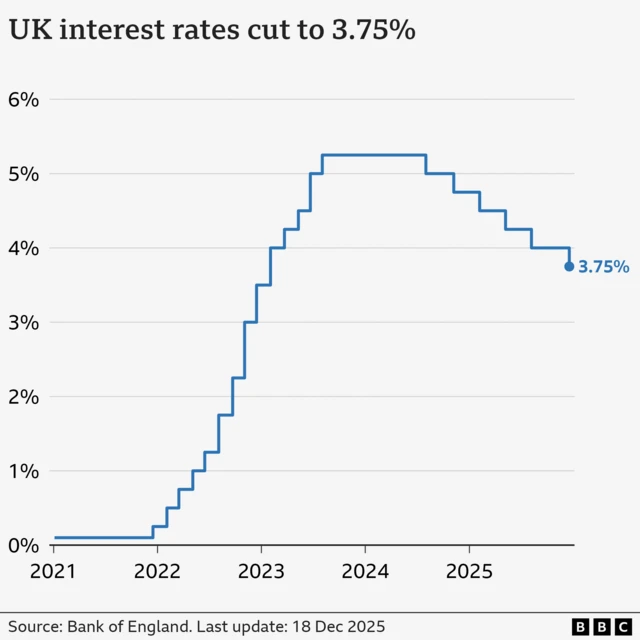
    A line chart showing interest rates in the UK from Jan 2021 to December 2025. At the start of January 2021, rates were at 0.1%. From late-2021, they gradually climbed to a high of 5.25% in August 2023, before being cut to 5% in August 2024, 4.75% in November, 4.5% in February 2025, 4.25% in May, and 4% in August. At the Bank of England's latest meeting on 18 December, rates were cut to 3.75%. The source is the Bank of England.

    We're wrapping up our liver coverage now, but you can read more in our news story.

  2. Rate hikes cost us £1,000 a month - now we're hoping our mortgage will come downpublished at 15:11 GMT 18 December 2025

    Adam Woods
    Economics producer

    Woman standing in her kitchen smiling

    Kayleigh Taylor is due to re-mortgage next year - she was hoping to see interest rates cut today after earlier rate hikes saw her paying £1,000 a month extra.

    She lives in Billericay in Essex with her husband and their daughter, and ideally would like to move to a bigger place.

    "When we bought the property that we're in now, because of the circumstances we had to lock in for just a year. So then we were forced to re-mortgage and it was at the worst time," she says.

    They were paying almost £1,000 more per month so cut back on holidays, takeaways and family days out.

    "We are due to re-mortgage next year and we're in a little bit of a limbo as to whether we re-mortgage and stay where we are, or in an ideal world we would look to move to somewhere more rural and a little bit less built up area," she says.

  3. 'Interest rate cut into the new year will really benefit us'published at 14:57 GMT 18 December 2025

    Archie Mitchell
    Business reporter

    Man in suit stands in office whilst looking into camera

    The boss of a company which sells machines to manufacturers says the interest rate cut ahead of the new year "will really benefit us" and give his customers greater access to finance.

    Jonathan Smart, Managing Director of NCMT, tells the BBC there had been a “lack of confidence amongst many of our customers”, heightened ahead of November’s Budget.

    But he says now that firms know what is on the table “hopefully…they can start investing”.

    He says interest rate cuts make access to finance easier and spur bosses to invest more - many of his customers make purchases on finance.

    “An interest rate cut into the new year will really benefit us, support us with cash flow, give us confidence we can invest," he says. "But also, it will give our customers the ability to access finance.”

  4. Rate cut is a bit of positive news, says mortgage brokerpublished at 14:24 GMT 18 December 2025

    Adam Woods
    Economics producer

    Woman sat at desk with hands on her lap

    Sarah Tucker, founder and CEO of mortgage brokerage The Mortgage Mum, says this year has been tough for brokers and people trying to get mortgages - but things are looking more positive.

    "The rate cut means a huge bit of positive news for my clients, up to a couple of hundred pounds a month for some of them, and that can make a huge difference when we're living in a cost of living situation where things are still expensive," she says.

    Sarah says people have been holding back on moving house because of uncertainty around their personal finances.

    "People have been waiting for the autumn Budget, very, very anxious about what it was going to bring.

    "I've never known a Budget attract so much attention from mortgage customers before, but people seem to be really, really interested in what was going to happen," she says.

    Sarah says affordability has "dramatically changed" this year and she can see more people getting a mortgage who couldn't before.

    "The rates are better, they're not where they were. They're never going to be back to what we saw in Covid but they are a lot more stable.”

  5. Some could save £15 a month per £100,000 on their mortgage - Martin Lewispublished at 14:16 GMT 18 December 2025

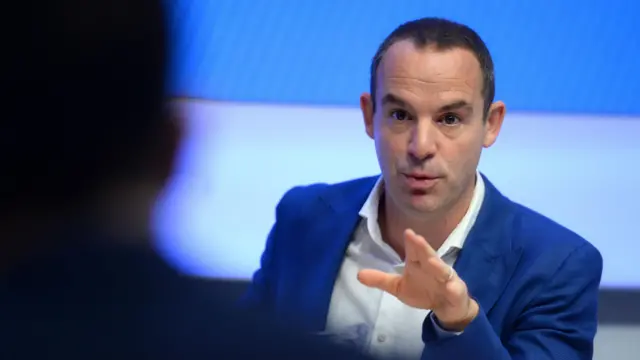
    Martin Lewis in a blue jacketImage source, PA Media

    Journalist and founder of the MoneySavingExpert website, Martin Lewis, has been speaking to BBC Radio 5 Live about how the Bank of England's interest rate cut will affect people with mortgages.

    He says people on variable rate mortgages - rather than fixed - will see an impact from the base rate being cut.

    Lewis says that if you're on a tracker rate - where your mortgage rate follows a specific benchmark, usually the Bank of England's interest rate - you can expect your mortgage rate to drop by 0.25 percentage points.

    "A quarter point percentage drop is equivalent to a saving of roughly £15 per month per £100,000 of repayment mortgage," he explains.

    People should be informed of any changes within three to four weeks, he says.

  6. Recap: Interest rates cut, but on a knife-edge votepublished at 13:53 GMT 18 December 2025

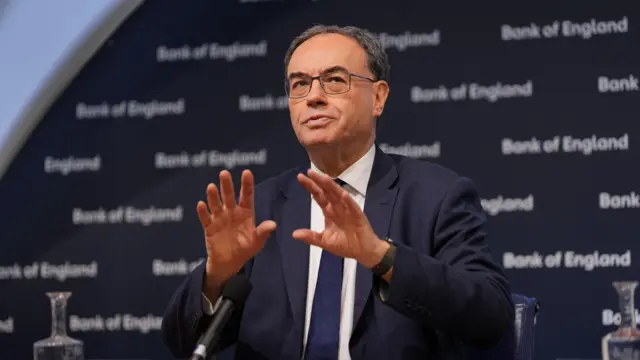
    Andrew Bailey sits at a table in a blue jacketImage source, Reuters

    The Bank of England has cut interest rates from 4% to 3.75%, bringing the cost of borrowing to its lowest level in nearly three years. Here's a recap:

    • It was a knife-edge vote of 5-4 in favour of lowering the rates
    • Figures on Wednesday showed inflation had slowed to 3.2% in the year to November - still above the 2% target, but the Bank says it has fallen "a long way" from its peak three years ago
    • The Bank also forecasts inflation to fall closer to its 2% by spring or summer next year - this hadn't been expected until 2027, but adds that it expects zero growth for the last few months of this year
    • Bank governor Andrew Bailey says rates are "likely to continue on a gradual downward path" going forward, but warns that "with every cut we make, how much further we go becomes a closer call"
    • Chancellor Rachel Reeves has called the cut "good news for families with mortgages and businesses with loans" - shadow chancellor Mel Stride calls it "welcome news" but stresses inflation is "well above target"

    Analysis

  7. Mince pies and a merry Christmas from the Bank's governorpublished at 13:33 GMT 18 December 2025

    Michael Race
    Business and economics reporter, at the Bank of England

    There’s often a lot to take in during the Bank of England lock-ins - and that’s not just the biscuits (or mince pies, as it was today).

    We’re given a paper booklet with the minutes from the latest Monetary Policy Committee meeting and the decision on the Bank’s interest rate.

    All the journalists, including myself, are then locked in a room for an hour, sometimes two, before the interest rate decision is made public.

    You’re only allowed one electronic device, so most reporters have to put their phone in a locker - there’s no signal anyway, so you can’t contact the outside world.

    The lock-in is because the Bank’s decision and the interest rate are market moving - if it leaked out early, there could be big consequences for financial markets.

    Today, we had mince pies and a visit from the governor, who wished everyone a merry Christmas.

  8. What does today mean for you and your money? Send us your questionspublished at 13:16 GMT 18 December 2025

    A red logo with white graffiti writing reading "your voice"

    How do interest rates affect the money in my savings account? Will this impact my mortgage? Our team of economics and business reporters are on hand to answer all of your questions about today's decision on interest rates.

    Please read our terms & conditions and privacy policy

    In some cases a selection of your comments and questions will be published, displaying your name and location as you provide it unless you state otherwise. Your contact details will never be published.

  9. Cut now, but what next for your finances?published at 13:02 GMT 18 December 2025

    Kevin Peachey
    Cost of living correspondent

    It doesn’t take long after one rates decision – a few minutes, in fact – before analysts wonder what it means for the next one.

    That also has an impact on those about to renew their mortgage or get one for the first time.

    This interest rate cut was so expected that mortgage providers had already priced it into their latest deals. Rates for new, fixed deals have been falling.

    But the Bank of England governor’s comments suggesting that any further cuts next year were more in the balance could lead to more caution from lenders.

    In other words, while further rate cuts are expected, the downward trend on mortgage rates could now stall.

    Lots of people don’t have a mortgage, but the wider prospects for the economy are influenced by the Bank’s decisions and course of thinking.

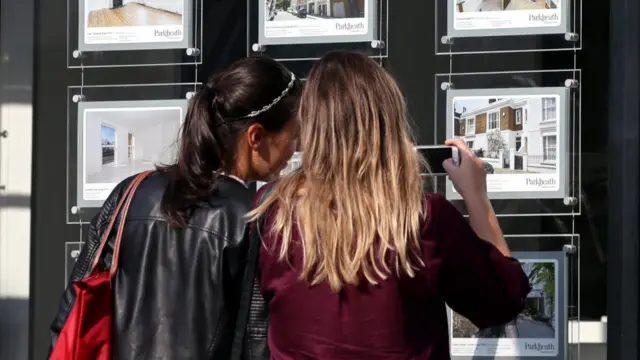
    a couple of women studying the house price signs in an estate agents window, in Kentish Town, LondonImage source, PA Media
  10. Pace of interest rate cuts expected to slow from nowpublished at 12:48 GMT 18 December 2025

    Rachel Clun
    Business reporter

    While the Bank has said it will continue to cut rates "gradually" if inflation keeps falling, experts say people should expect the pace of rate cuts to slow.

    Yael Selfin, chief economist at KPMG UK, notes the Bank’s governor Andrew Bailey has had to cast another tie-breaking vote in the Monetary Policy Committee (MPC) meeting after the last rate cut in August.

    “There is significant division within the MPC regarding the balance of risks to the inflation outlook, which will make it more difficult to build consensus for further rate cuts next year,” she says. KPMG expects just two interest rate cuts in 2026.

    Ruth Gregory, deputy chief UK economist for Capital Economics, says there are "clear signs" that the committee does not think rates need to be cut much further.

    “This suggests that once rates fall to 3.50%, more convincing evidence will be required for the MPC to cut rates further,” she says.

  11. Consumers 'cautious' in run up to Christmaspublished at 12:33 GMT 18 December 2025

    Michael Race
    Business reporter, at the Bank of England

    Christmas is a time when many people spend more to treat family and friends.

    But today the Bank of England says information it has gathered from around the country suggested consumers remain "cautious".

    It says households are keenly focused on "value for money" for goods, adding that food shops are "smaller than usual".

    "Some supermarkets have been concerned that the Budget will dampen spending on Christmas food and drink, but discounters say that early sales of lower priced seasonal food are solid so far," the Bank says.

    While the inflation rate has fallen, it doesn't mean prices are coming down - just that they're rising less quickly.

    The Christmas period is the main money-making part of the year for restaurants and bars, but the Bank notes hospitality firms are trying to "contain price increases as far as possible, given fragile demand and rising concerns about affordability for consumers".

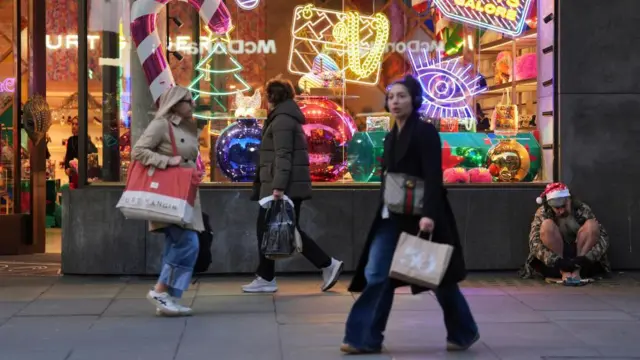
    Shoppers on Oxford Street in LondonImage source, PA Media
  12. Interest rate decision in the Bank's own wordspublished at 12:27 GMT 18 December 2025

    Rachel Clun
    Business reporter

    Here are the key things that fed into the decision to lower interest rates, according to the Bank’s governor Andrew Bailey:

    • Inflation is still above its 2% target, but it has fallen "a long way" from its peak three years ago, and the Bank believes it will keep falling from here
    • The committee decided that, at the moment, the risk of the economy becoming too weak is greater than the risk of inflation staying too high for too long
    • If inflation keeps falling, the Bank will "gradually" be able to cut rates even further
    • But the Bank says it will "do what is necessary" to make sure inflation does get back to 2% - this is its core job
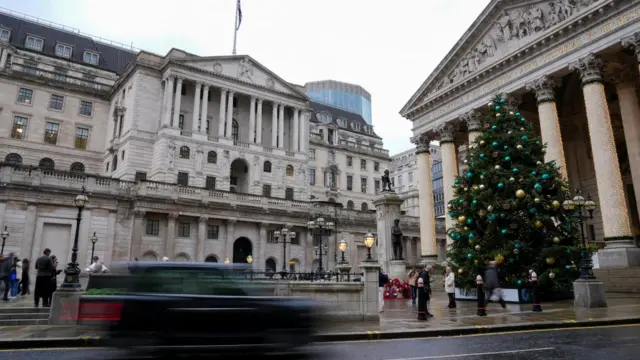
    A blurry black cab zooms past the grand Bank of England Building, and a large Christmas tree decorated with gold and green baubles.Image source, Reuters
  13. Shadow chancellor welcomes rate cut, but says inflation still above targetpublished at 12:24 GMT 18 December 2025

    Shadow chancellor Mel StrideImage source, PA Media

    We're now hearing from shadow chancellor Mel Stride.

    In a post on social media, Stride says that "lower interest rates will be welcome news for many families - but rates are being cut despite inflation remaining well above target", and points to rising unemployment rates and low growth figures.

    The latest data from the Office for National Statistics showed that prices increased by 3.2% in the year to November, above the Bank of England's 2% inflation target.

  14. It was a narrow decision - but why?published at 12:19 GMT 18 December 2025

    Rachel Clun
    Business reporter

    As we've been reporting, it was a narrow decision, with four members of the nine-person monetary policy committee voting to hold interest rates at 4%.

    Megan Greene, Clare Lombardelli, Catherine Mann and Huw Pill voted to keep rates steady.

    While they acknowledged that inflation has started to fall, they noted that evidence points to services inflation and wage growth staying above target levels for some time.

    But the members who voted for a rate cut - Andrew Bailey, Sarah Breeden, Swati Dhingra, Dave Ramsden and Alan Taylor - thought subdued spending in the economy and rising unemployment were enough to keep inflation on its downward path.

    However, three members who voted to cut rates are still concerned about the path of inflation, which remains well above the Bank’s 2% target.

    They want to see a more prolonged period of “policy restriction”, meaning future rate cuts may happen at a slower pace.

  15. BoE forecasts inflation to fall to 2% in spring or summer next yearpublished at 12:14 GMT 18 December 2025

    Michael Race
    Business and economics reporter, at the Bank of England

    While the cut will be welcomed by people looking to borrow cash or secure a mortgage deal, savers will see a reduction in returns.

    The Bank says that following the tax and spending policies announced in the government's Budget last month, and easing oil and gas prices, it now forecasts inflation to fall "closer to 2%" - the Bank's target - in the spring or summer of next year.

    Previously, it did not expect this to happen until 2027.

    However, the Bank says weaker economic growth in November has led it to expect zero growth for the final few months of this year.

    It says information gathered from businesses around the country suggested a "lacklustre economy", with firms concerned over the wide speculation on policies in the run-up to the Autumn Budget.

    "Employment intentions are slightly negative," the Bank says. "Firms have been cautious amid the uncertainty around the strength of Christmas trading and that surrounded the Budget."

  16. Chancellor says rate cut 'good news' for families with mortgagespublished at 12:08 GMT 18 December 2025

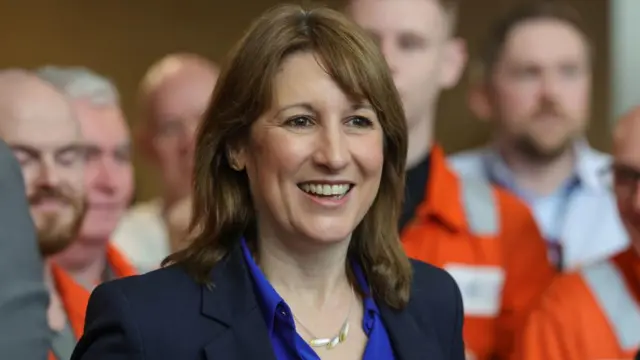
    Rachel ReevesImage source, PA Media

    We've just had Rachel Reeves' reaction to the interest rate cut.

    The chancellor describes the decision as "good news for families with mortgages and businesses with loans".

    She goes on: "But I know there's more to do to help families with the cost of living.

    "That's why at the Budget we froze rail fares and prescription charges, and will be cutting £150 off the average energy bill next year."

  17. Analysis

    This cut reflects some concerns about a lacklustre economypublished at 12:06 GMT 18 December 2025

    Faisal Islam
    Economics editor

    The Bank of England governor Andrew Bailey has timed this rate cut just before Christmas.

    And while this will be welcomed for many borrowers and businesses, the Bank sent out some caution about whether the cuts would continue at the same speed next year.

    It might take a lot more for the much-needed jolt of confidence and festive spirit to spread across the economy to businesses that paused investments, and consumers who sat on their savings.

    It was a narrow decision, with the governor as the swing voter from hold last month to cut today. Andrew Bailey said we had "passed the peak of inflation".

    His team now believe, following the Budget and yesterday’s sharp fall in inflation, that the headline rate of inflation will be "closer" to target by April, rather than in 2027. He confirmed a prediction that the chancellor’s Budget measures will take 0.5 percentage points off the headline rate of inflation.

    The Bank of England’s cut, sixth time since last summer, takes base rates to below 4% for the first time since early 2023. Bailey said that rates were still on a gradual path downwards, but how much further they go was now "a closer call".

    The cut reflecting some concerns about a subdued and lacklustre economy, with no growth now expected in the current final quarter of 2025.

    While the rate-setting Monetary Policy Committee agrees that rates were still heading downwards next year, some members who voted for the cut suggested the roughly one cut a quarter speed of cuts could be slower from here.

    Much now depends whether businesses and consumers, who have paused investment and spending, and increased savings, now regain confidence, for the future.

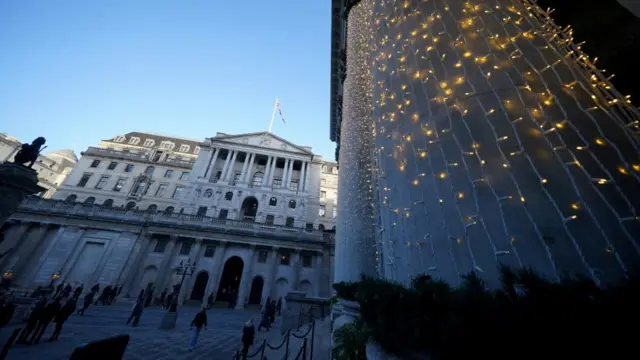
    The Bank of England in Threadneedle Street, LondonImage source, PA Media
  18. Vote on whether to cut rates went down to the wirepublished at 12:06 GMT 18 December 2025

    Michael Race
    Business reporter, at the Bank of England

    In a knife-edge vote, policymakers voted 5-4 in favour to lower rates from 4%, reflecting concerns over unemployment rising and weak economic growth.

    The Bank says rates are "likely to continue on a gradual downward path" going forward, but warn judgements on further cuts next year would more contested.

    "We still think rates are on a gradual path downward but with every cut we make, how much further we go becomes a closer call," says the Bank's governor Andrew Bailey.

  19. Decision to lower interest rates widely expectedpublished at 12:04 GMT 18 December 2025

    Michael Race
    Business and economics reporter, at the Bank of England

    The decision to lower borrowing costs from 4% was widely expected, after figures earlier this week showed inflation slowed to 3.2% in the year to November.

    Rising unemployment and sluggish economic growth also played a part in the Bank's decision to reduce rates.

    While the cut is likely to be good news for people looking to borrow money or secure a mortgage, savers could see a reduction in their returns.

  20. Interest rates cut to 3.75%published at 12:00 GMT 18 December 2025
    Breaking

    The Bank of England has cut interest rates from 4% to 3.75%, bringing the cost of borrowing down to its lowest level in nearly three years.

    We’ll have more analysis soon.

    A line chart showing interest rates in the UK from Jan 2021 to December 2025. At the start of January 2021, rates were at 0.1%. From late-2021, they gradually climbed to a high of 5.25% in August 2023, before being cut to 5% in August 2024, 4.75% in November, 4.5% in February 2025, 4.25% in May, and 4% in August. At the Bank of England's latest meeting on 18 December, rates were cut to 3.75%. The source is the Bank of England.