Summary

  1. Syria's president vows new era, as BBC correspondents unpack year since Assad's fallpublished at 17:28 GMT 8 December 2025
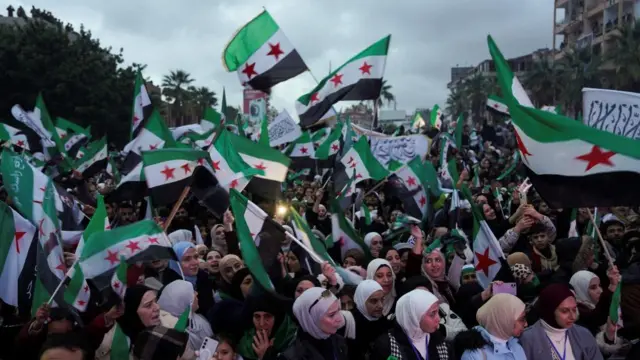
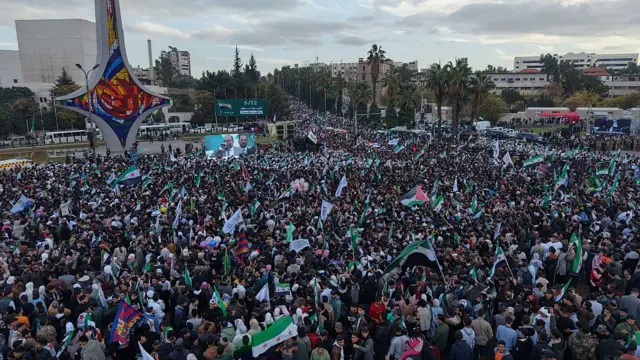
    Syrians gather in thick crowds to wave flags as evening descendsImage source, Reuters

    A year on from the fall from the Assad regime, insurgent turned interim President Ahmed al-Sharaa, declared the "beginning of a new chapter" in a speech to the nation.

    As Syrians gathered to celebrate, our team of BBC correspondents were in Damascus, and across the country, to report on Syria's changing reality.

    Middle East correspondent Hugo Bachega said that while Syrians celebrate their new freedoms they also face huge challenges., externalIn the midst of the celebrations, one man in Damascus told him the "main game here" is freedom, while a young boy talked about how the world's perception of his country had changed.

    In Aleppo – the first city seized by the rebels ahead of capturing Damascus last year – thousands gathered in celebration in Saadallah al-Jabiri Square. Our correspondent Lina Sinjab said a new era has started, but some minorities remain frightened.

    She also reported on the "immense" destruction and displacement in Syria, and added that the money needed to rebuild the country has not yet come.

    International editor Jeremy Bowen, also in Damascus, reported Syria's interim President Ahmed al-Sharaa has found the going easier abroad than at home, where people still live in skeletal buildings gutted by war.

    And, our chief international correspondent Lyse Doucet noted that al-Sharaa donned the same kind of military fatigues he wore when his forces last year stormed into the capital Damascus – and while many Syrians say a weight has been lifted, he spoke to a country still marred by sectarian violence.

    We're now bringing our live coverage to an end, but you can read more in our InDepth piece from Jeremy Bowen.

  2. In aftermath of Assad's fall, al-Sharaa vowed to govern for all Syrianspublished at 16:58 GMT 8 December 2025

    Jeremy Bowen
    International Editor, in Damascus

    We've just heard the Syrian president vow to build a Syria for all Syrians during a speech in Damascus, he told our international editor similar in the immediate aftermath of Assad's fall.

    A few days after Assad fled with his family to Russia, I interviewed Syria's victorious new leader in the presidential palace.

    It perches high on a crag overlooking Damascus, designed as an ever-visible reminder for the city's citizens of the all-seeing power of the Assads. By then Jolani had discarded his name, along with his combat fatigues.

    Sharaa sat down in the chilly halls of the unheated palace wearing a smart jacket, pressed trousers and shiny black shoes.

    He told me that the country was exhausted by war and was not a threat to its neighbours or to the West, insisting that they would govern for all Syrians. It was a message that many Syrians and foreign governments wanted to hear.

    Israel dismissed it, however. And jihadist hardliners branded Sharaa as a traitor, selling out his religion and his own history.

    I had packed in a hurry to report on a war, never expecting the regime to crumble so fast. My formal attire was back at home in London. After the interview one of his aides complained that I should have worn a suit to interview a national leader.

    His grumble was about more than my sartorial choices. It was the continuation of a long campaign that had started years earlier as Sharaa built up his power in Idlib.

    The campaign was designed to present him as a man who had outgrown his jihadist roots to become a worthy leader of all Syria, a leader the rest of the world should take seriously and treat with respect.

    Media caption,

    Watch: BBC speaks to Syrian rebel leader Ahmed al-Sharaa in aftermath of Assad fall

  3. Analysis

    Syrians celebrate, but call for accountability from their leaderspublished at 16:42 GMT 8 December 2025

    Lyse Doucet
    Chief international correspondent, reporting from Damascus

    Tonight, Syrian president Ahmed al-Sharaa is in the same kind of military fatigues he wore when his military forces, in the early hours of 8 December a year ago, stormed into the capital Damascus.

    It followed a lightning sweep by armed groups across Syria, taking one city after another with hardly any resistance.

    One year on, Syrians are celebrating that moment. But it's also a time of reflection about what kind of new Syria is being built.

    So many Syrians tell us they still feel a weight was lifted, with the end of the oppressive rule of the Assad family. But there are still worries on the minds of some Syrians, including its many communities.

    They include the Alawite minority, in their coastal heartland; in March this year 1,400 were massacred, including hundreds by forces aligned with Syria’s interim government. In July, there was attacks on Druze communities in the south.

    Violence creates new raw wounds. One year on, as Syrians celebrate, they also call for accountability and a safe place in the new Syria.

  4. Analysis

    'A Syria for all Syrians, the beginning of a new chapter': Al-Sharaa declares complete break from Assad's legacypublished at 16:19 GMT 8 December 2025

    Hugo Bachega
    Middle East correspondent, reporting from Damascus

    In his speech marking the first anniversary of the fall of the Assad regime, President Ahmed al-Sharaa, again, vowed to build a Syria for all Syrians, saying the country had broken away from its past of repression and violence.

    The old regime – Bashar al-Assad and his father, Hafez, ruled for more than five decades – had "sowed discord, spread doubt and erected walls" between the authorities and the people, Sharaa said, and that "words had become a crime".

    "We declare a complete break from that legacy, an end to that era, and the beginning of a new chapter – the chapter of building the nation," he added in the address televised to the nation. Their victory, he said, was only the start.

    Sharaa, a former al-Qaeda commander, led the rebel offensive that toppled Assad, and became the country’s leader. Since coming to power, he has tried to consolidate his position as a statesman, and has gained considerable international support.

    Last month, he met with US President Donald Trump at the White House and secured the lifting of sanctions on the country. Earlier this year, he became the first Syrian representative to address the United Nations General Assembly.

    Syria, however, remains extremely poor, with families struggling amid an economy in crisis. It is also deeply divided. Sharaa does not have control over the entire country, and minorities still mistrust the authorities, with forces loyal to the government being involved in sectarian killings in the past year.

    Media caption,

    BBC joins crowds at joyous Damascus celebrations

  5. Al-Sharaa: 'Victory is only the start'published at 16:09 GMT 8 December 2025

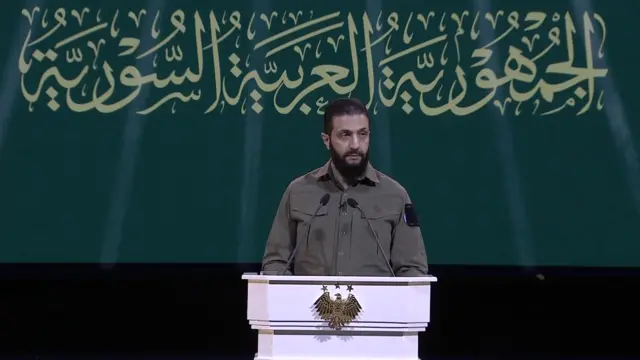
    Syrian President Ahmed al-Sharaa.Image source, ATV News

    We can now bring you some of Syrian President Ahmed al-Sharaa's speech in Damascus.

    He says "victory is only the start", one year on from the fall of Bashar al-Assad's regime. Assad was toppled by the Islamist militant group Hayat Tahrir al-Sham (HTS), which was led by Sharaa.

    "Let's turn this victory into a responsibility manifested in hard work to take our country [to] the forefront among the leading countries worldwide," the Syrian president says, according to a translation by Qatari broadcaster Al Jazeera.

    The former regime "always drove a wedge among our people", said Sharaa, who hails a "new story of bravery and triumph" for Syria.

    Sharaa says the country's government promised to rebuild the country - which had been devastated by civil war - and has spent the last year "listening to people's concerns and grievances".

  6. 'The scale of destruction is immense' - BBC reports from Aleppopublished at 15:46 GMT 8 December 2025

    While we're working on gathering the latest from the Syrian president's address, we can bring you a report from BBC Middle East correspondent Lina Sinjab in Aleppo, in northern Syria.

    She's taken a look at the aftermath of the country's civil conflict, including the cities destroyed and millions of people displaced.

  7. Al-Sharaa addressing nationpublished at 15:36 GMT 8 December 2025
    Breaking

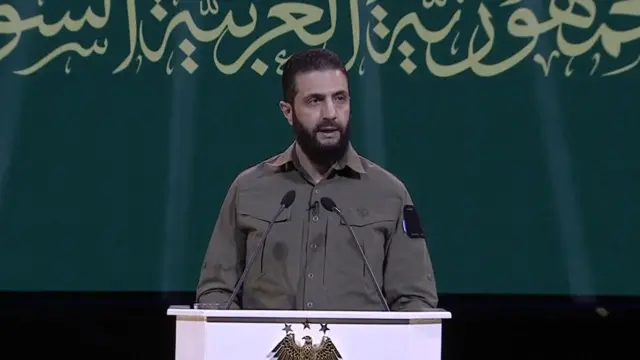
    President Ahmad al-Sharaa.Image source, ATV News

    President Ahmad al-Sharaa is now speaking at the palace outside Damascus.

    We're working to bring you the key lines as we get them.

  8. Celebratory event gets under way, as Syrian president due to address nationpublished at 15:32 GMT 8 December 2025

    People with flags, including Syrian flags, gather in front of a screen in Umayyad Square in DamascusImage source, Getty Images
    Image caption,

    The speech will be broadcast to Syrians celebrating in Umayyad Square

    President Ahmad al-Sharaa is shortly due to speak at an event at the palace outside Damascus.

    The event began with the reading of the Quran and crowds have gathered in Umayyad Square to hear what he has to say.

    Across the city, fireworks are being set off.

    We'll be keeping across the speech from the Syrian president, stay with us.

  9. How has Syria changed since Assad's fall?published at 15:13 GMT 8 December 2025

    While we're waiting for Ahmed al-Sharaa to begin his speech in Damascus, we've taken a look at the ways life in Syria has altered since the downfall of Bashar al-Assad a year ago.

    People have returned from exile: Prominent figures, including journalists and activists, have been able to return to Syria. That includes the BBC's Middle East correspondent, Lina Sinjab - who fled Damascus 2013 as it was engulfed in war.

    The arts scene is gradually returning: All kinds of books are on display in shops around Damascus – even political titles. That said, some warn that repression by clerics could lead to some forms of "anti-religious" art being banned.

    Concerns of a lasting democracy: Syria is currently under the control of an transitional government, led by Ahmed al-Sharaa, that is following a temporary constitution. Syria held an election in October but the first session of the People's Assembly has yet to take place.

    Women's freedom: According to research by University College London and McGill University, women's rights advocates have raised concerns over the Islamist militant group, Hayat Tahrir al-Sham (HTS) enforcing an interpretation of Islamic law. It could, for example, severely restrict women's mobility, dress and public participation.

    Freedom of religion: There have been no new laws or rulings restricting social life, but some Syrians report that they have seen what appear to be attempts to enforce Islamic rule.

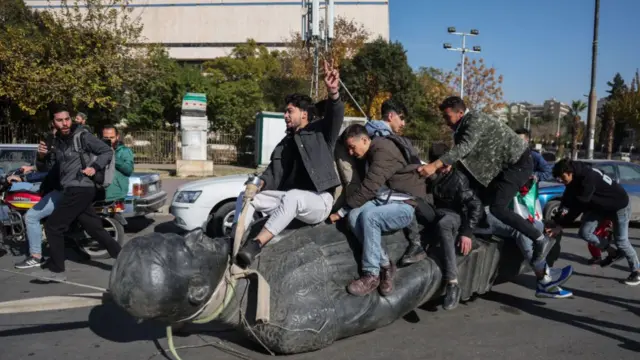
    Among the scenes of jubilation in December 2024, students in Syria toppled a statue of the late president Hafez al-Assad, father of Bashar al-AssadImage source, Getty Images
    Image caption,

    Among the scenes of jubilation in December 2024, students in Syria toppled a statue of the late president Hafez al-Assad, father of Bashar al-Assad

  10. Al-Sharaa set to address Syriapublished at 14:53 GMT 8 December 2025

    As a reminder, we're due to hear from President Ahmed al-Sharaa who will give a speech at the palace outside Damascus. The speech will also be broadcast to Syrians celebrating in Umayyad square in the capital.

    We'll bring you the key lines once that speech has begun.

    Syrian President Ahmed al-SharaaImage source, Reuters
    Image caption,

    Al-Sharaa earlier attended the Umayyad Mosque in Damascus for dawn prayers

  11. After a year of new governance, Syria remains at a crossroads, says head of UN's refugee agencypublished at 14:47 GMT 8 December 2025

    Lyse Doucet
    Chief international correspondent, reporting from Damascus

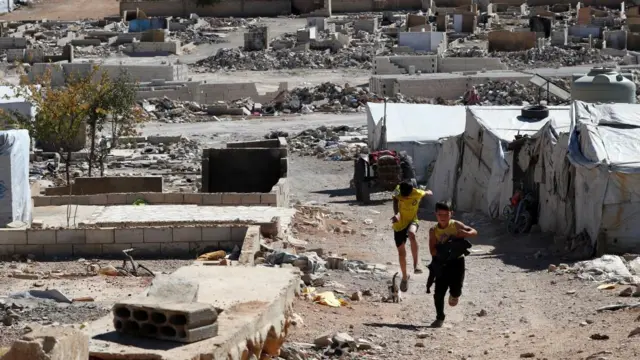
    Syrian refugee children run outside their makeshift shelters of the Syrian refugee camp in Lebanon.Image source, EPA
    Image caption,

    More than one million Syrian refugees fled the country to nearby Lebanon

    "Enormous” – that's how the head of the UN’s refugee agency described the return of more than three million Syrians over the past year.

    That's far more than anyone expected.

    But Filippo Grandi, the UNHCR’s outgoing High Commissioner, warned that if lives don’t improve, many may decide to leave again, and millions more still outside Syria would not come back. He regretted that refugees and the displaced were returning to "almost nothing".

    "Houses that are shells... services on their knees...no jobs," he told me as I spoke to him in Sudan where he is making his last trip as High Commissioner. He called for more urgent aid and investment for Syria.

    He said he'd learned, in his ten years at the helm, that reconstruction and peace building means moving fast, and "taking some risks" to avoid conflict erupting again.

    He acknowledged there was still a "lot of apprehension" over issues like minorities and the rights of women under the new government of Ahmed al-Sharaa.

    "After one year of a new government, Syria is still at a crossroads," he declared.

    "Let’s help Syrians pick the right way, not the wrong one."

  12. 'I escaped like a criminal and came back as a hero' - voices of returning Syrianspublished at 14:39 GMT 8 December 2025

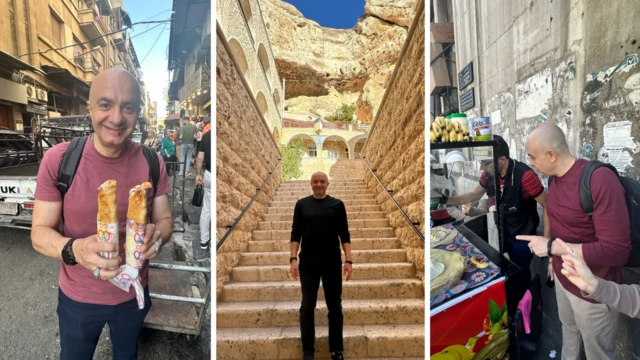
    Three photos side-by-side across the screen, showing Imad Alarnab during his visit to Syria. On the left, he is shown standing in a busy street with traffic behind him, holding two wraps and looking at the camera, smiling. In the middle, he is standing at the bottom of a set of stone steps at a historical site. On the right, he is standing in front of a kiosk at a street food stall, talking to a man who is preparing some food.Image source, Imad Alarnab
    Image caption,

    Imad Alarnab during his return to Damascus in November, which included visiting the Cathedral of St George

    When chef Imad Alarnab fled from Syria to London in 2015, he thought he would never return - but last month he went back for the first time since Assad was overthrown.

    "I escaped Syria like a criminal and came back as a hero. Assad's blacklist is now our honour list," he told the BBC.

    He described how carrying a camera was "more dangerous" than carrying a gun during the Assad regime, "because they were more afraid of free speech".

    He was worried he would return to find the same Damascus but says this has not been the case.

    "It's a city trying to build itself all over again with a much better image – an image of freedom, of rebuilding, of new government, most importantly without a dictatorship."

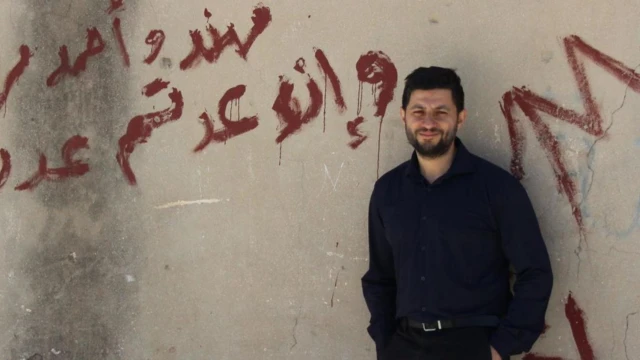
    Ammar Azzouz, a Middle Eastern man with a short, dark beard and short, dark hair, standing in front of a wall and smiling at the camera. The wall behind him has some writing in Arabic in red paint.Image source, Anas Al Taweel
    Image caption,

    Ammar Azzouz has returned to Syria three times this year - first in March - to visit family and complete academic research

    Ammar Azzouz, a lecturer and research fellow at the University of Oxford, also returned to Syria for the first time in 14 years in March.

    He found the experience challenging.

    "Death was everywhere in Homs. In my street in every building there's a story of forced disappearance or torture," he said.

    Azzouz described the legacy of almost 14 years of war – he saw cemeteries with "numbers, but no names", and a medical system which had "collapsed".

    While there was excitement about reconstruction, he said international companies were rushing for a "slice of the cake".

    "We need to document the horrors of war, not as a place of constant grief and mourning, but to build a hopeful future."

    Read more from our interviews with Syrians.

  13. Thousands gathering to celebrate in Aleppopublished at 14:32 GMT 8 December 2025

    Lina Sinjab
    Middle East correspondent, reporting from Aleppo

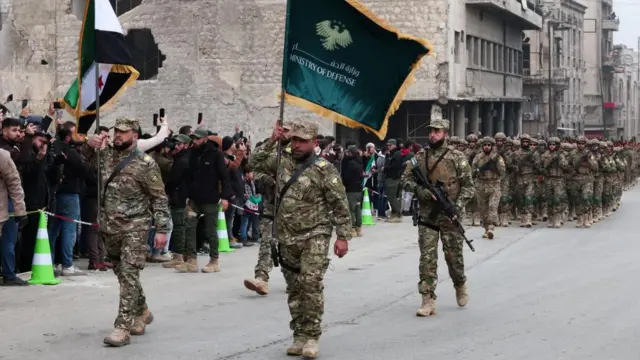
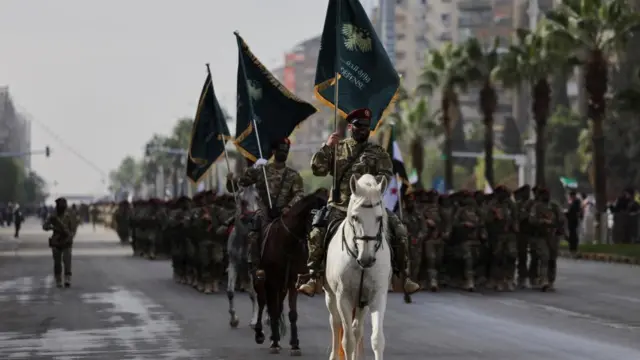
    Members of the military, some carrying guns, others carrying flags, file past civilians during a military parade on the streets of AleppoImage source, Reuters
    Image caption,

    A military parade took place in Aleppo on Monday

    Thousands are powering into the streets of Aleppo, Syria's second-largest city, gathering at Saadallah al-Jabiri Square where they celebrated the fall of Assad last year.

    It is a day that sees Syrians gather at home and abroad in celebration, whether they agree with al-Sharaa or oppose him.

    Almost everyone feels a heavy weight lifted off their chest and it is a moment worth celebrating after 50 years of dictatorship by the Assad family that were full of fear and oppression are gone.

    A new era has started and many feel committed to helping this country stand on its own feet again. But the money needed to rebuild the country has not come yet.

    The government has been criticised for inefficiency and for making appointments to key positions based on nepotism rather than qualifications. But the society is outspoken and people are learning how to work politics and help rebuild the country.

    Some minorities though are frightened, and so are some secular Syrians among the Sunni majority. They see this government as an Islamist-lead one, with many trying to enforce a hard-line agenda.

  14. More beautiful days await Syria, says Turkey's foreign ministerpublished at 14:29 GMT 8 December 2025

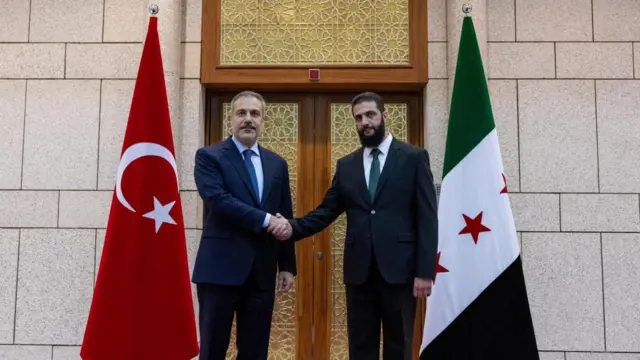
    Fidan and al-Sharaa shake hands in front of a Turkish flag and a Syrian flag. Both men wear suits, shirts and tiesImage source, Reuters
    Image caption,

    Fidan pictured meeting al-Sharaa last year

    The Turkish foreign minister has taken to X to mark the anniversary of the fall of Bashar al-Assad's regime.

    In a post, Hakan Fidan says the new Syrian government has taken on a struggle "deserving of appreciation" to recover from "years of destruction" in the country.

    He adds: "I sincerely believe that much more beautiful days await our Syrian brothers and sisters."

  15. Al-Sharaa promises to rebuild Syria on first anniversary since Assad's fallpublished at 14:10 GMT 8 December 2025

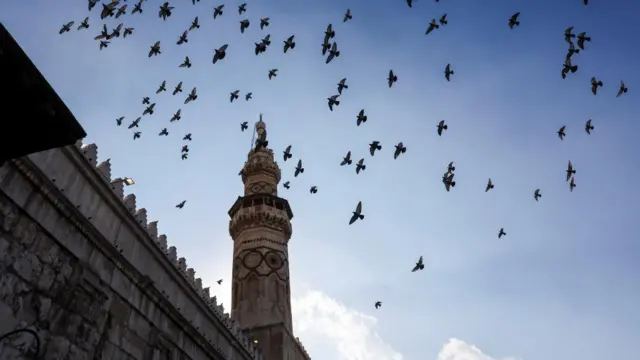
    Birds are seen flying near Umayyad's minaret in the Damascus old cityImage source, Reuters
    Image caption,

    Syria's president al-Sharaa performed dawn prayers at Damascus' Umayyad Mosque, according to reports

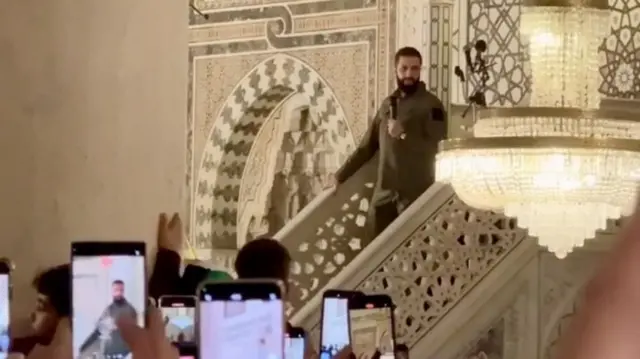
    Ahmed al-Sharaa, who became interim president of Syria following the fall of Bashar al-Assad, marked the anniversary by performing dawn prayers at the iconic Umayyad Mosque in Damascus, the Reuters news agency reports.

    Citing Syrian news agency SANA, Reuters says Sharaa was dressed in military fatigues and promised to build a just and strong Syria.

    "From north to south and from east to west, God willing, wewill rebuild a strong Syria with a structure befitting itspresent and past," he said.

  16. 'Syria has freedom now': BBC hears from those celebrating in Damascuspublished at 13:56 GMT 8 December 2025

    BBC's Middle East correspondent Hugo Bachega is in Damascus speaking to Syrians about how life has changed in the year since Assad's fall:

  17. Analysis

    Syria is in ruins, but feels lighter without crushing weight of the Assadspublished at 13:43 GMT 8 December 2025

    Jeremy Bowen
    International Editor, in Damascus

    Syria is still in ruins. In every city and village I have visited this last 10 days, people were living in skeletal buildings gutted by war.

    But for all the new Syria's problems, it feels much lighter without the crushing, cruel weight of the Assads.

    Sharaa has found the going easier abroad than at home. He has won the argument with Saudi Arabia and the West that he is Syria's best chance of a stable future.

    In May, the Crown Prince of Saudi Arabia arranged a brief meeting between Sharaa and US President Donald Trump. Afterwards, Trump called him a "young attractive tough guy".

    At home, Syrians know his weaknesses and the problems Syria faces better than foreigners.

    Sharaa's writ does not run in the north-east, where the Kurds are in control, or parts of the south where Syrian Druze, another minority sect, want a separate state backed by their Israeli allies.

    On the coast, Alawites – Assad's sect – fear a repeat of the massacres they suffered in March.

  18. Crowds cheer as sky-diving display brings military parade to an endpublished at 13:33 GMT 8 December 2025

    As we've been reporting, a military parade has already taken place in Umayyad Square in the Syrian capital, Damascus.

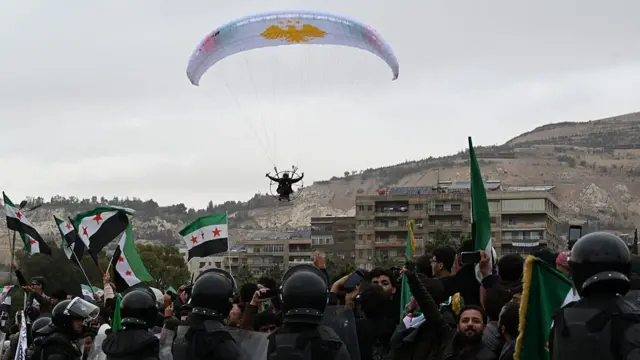
    Crowds watched on, waving flags and cheering, as the celebration culminated in a sky-diving display.

    There are more celebrations expected throughout the day, but here's a selection of the latest pictures from Damascus:

    A paraglider is seen flying over crowds of people waving Syrian flags in DamascusImage source, Getty Images
    Image caption,

    A paragliding display brought the military parade in Damascus to an end

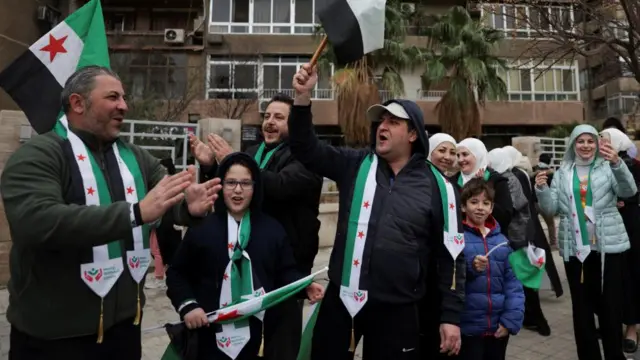
    Syrian men, women and children, wearing coats and scarves adorned with the Syrian flag, cheer and smile during a paradeImage source, Reuters
    Image caption,

    Syrians gathered to mark the first anniversary of Bashar al-Assad's fall

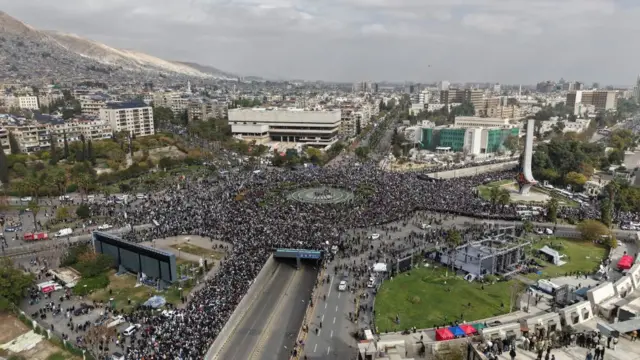
    A drone view of a roundabout in Damascus showing a huge gathering of people for the military parade on MondayImage source, Reuters
    Image caption,

    A huge crowd gathered, with a sense of the scale captured in this drone image

    A man in a camouflage military outfit with a beret and sunglasses on is seen riding a horse and carrying a flag during the paradeImage source, Reuters
    Image caption,

    Syrian army members also took part in the military parade

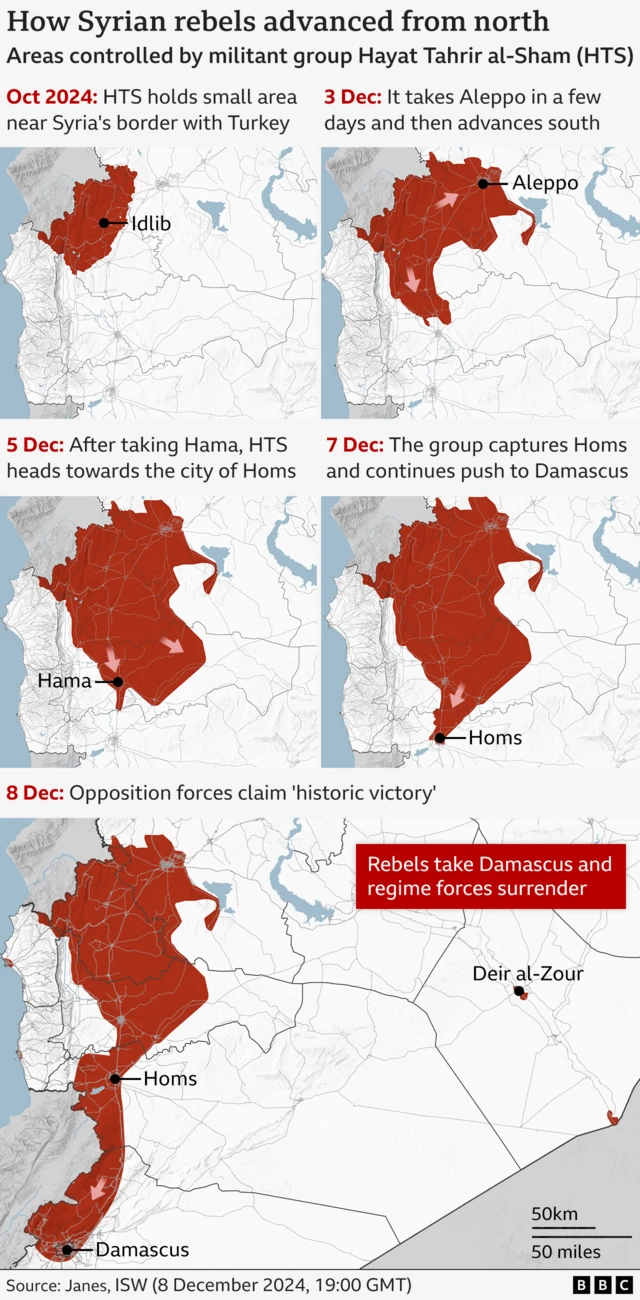
  19. Damascus fell within days - a timelinepublished at 13:24 GMT 8 December 2025

    27 November: Islamist militant group Hayat Tahrir al-Sham (HTS) and its allies launch an offensive, accusing the government and allied Iran-backed militias of escalating attacks on civilians following a 2020 ceasefire.

    3 December: Rebels take Aleppo, north-east of Idlib, where the group had consolidated power prior to the offensive. They encounter little resistance from government forces, though face Russian airstrikes. They then turn south towards Hama.

    5 December: Hama falls to the rebels after days of fierce fighting. The insurgents declare their next goal is to take Homs, Syria's third-largest city.

    7 December: Homs is captured after a day of fighting. At the same time, other rebel factions reach the suburbs of Damascus.

    8 December: Early that day, HTS-led rebels announce they have entered Damascus and released detainees at the country's most notorious military prison, Saydnaya. Less than two hours later, they declare that Bashar al-Assad has fled.

    A geographical breakdown of the rebel advance by date.
  20. How Assad lost his grasp of powerpublished at 13:16 GMT 8 December 2025

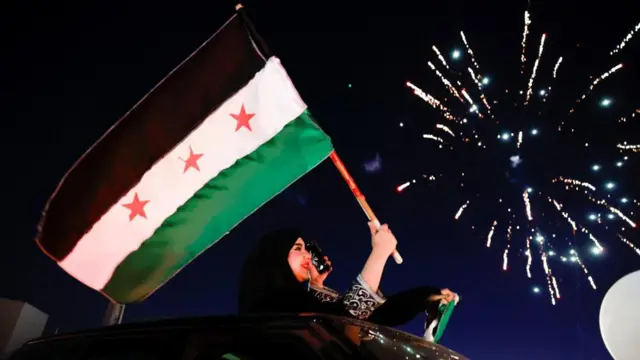
    A woman holds up the flag adopted by the new Syrian rulers, as people celebrate after fighters of the ruling Syrian body ousted Syria's Bashar al-Assad, in the Damascus old city, SyriaImage source, Reuters

    Bashar al-Assad's ousting from power came as a surprise to the world, as city after city fell to advancing rebel forces.

    Since coming into power in 2000, Assad had ruled over Syria with an iron fist, much like his father, Hafez, did before his death.

    In 2011, a civil war ravaged the country after his violent clampdown on peaceful protests, leaving millions of refugees scattered across the globe.

    But after a decade of unrest, he lost his grasp of power in a rapid uprising.

    Led by militant group Hayat Tahrir al-Sham (HTS), the rebels first seized Aleppo, the country's second largest city, with very little resistance. Next it was Hama, and days later it was the vital hub of Homs.

    As news of their progress spread, allied rebels also started an uprising from the country's east and south – their offensive from all sides isolated the capital, Damascus.

    The fallen leader and his family fled to Russia – an allied nation of his regime – where they remain today.

    In our next post, we'll take a closer look at the days leading up to Assad's fall.