Summary

  1. 'Too little, too late': Covid inquiry highlights failures by UK's four governmentspublished at 20:45 GMT 20 November 2025

    Adam Goldsmith
    Live reporter

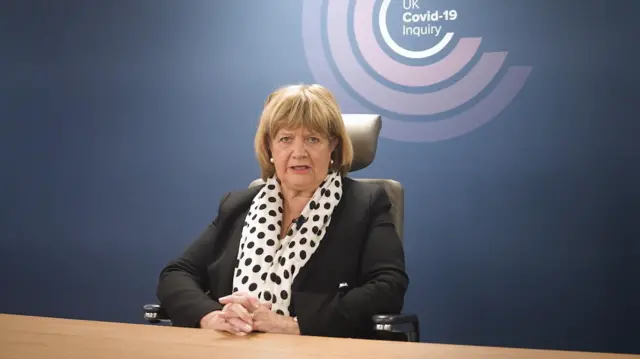
    Baroness HallettImage source, PA Media

    An 800-page Covid inquiry report today criticised the UK and devolved governments' reaction to the start of the coronavirus pandemic in early 2020.

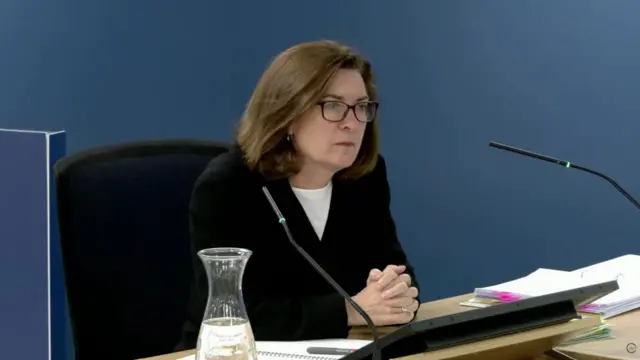
    Summing up part two of 10 different subject areas - this time addressing decision making and political governance - inquiry chair Baroness Hallett said the actions of the UK's four governments "repeatedly amounted to a case of ‘too little, too late’".

    Had the government recognised the urgency and taken certain actions sooner, she suggested, the nationwide lockdown that began on 23 March 2020 may have been avoided - and 23,000 lives potentially saved in the first wave.

    "That these same mistakes were repeated later in 2020 is inexcusable," she said.

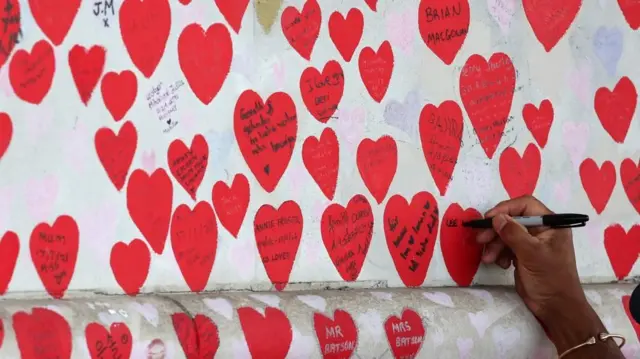
    It was a view shared by the Bereaved Families for Justice group, who today mourned the loss of relatives as they reacted next to the National Covid Memorial Wall - where hearts bear the names of some of the 227,000 who died between March 2020 and May 2023.

    What next? Prime Minister Keir Starmer says he'll carefully study Baroness Hallett's key recommendations, which include greater parliamentary scrutiny of emergency powers and improving consideration of vulnerable groups. And there will be further reports from the inquiry.

    That brings our live coverage to a close, but for further reading our colleagues have news stories on the response to the report in Scotland, Wales, and Northern Ireland, or we have a full overview here.

  2. 'I don't want people to lose family members like we did'published at 20:17 GMT 20 November 2025

    Elliot Burrin
    Live reporter

    A young man in a suit leans towards his elderly grandma. They are happily talking to each other. He is wearing a suit with a pink tie and matching pocket square. She's in a white jacket and scarf with flowers on.Image source, Amos Waldman
    Image caption,

    Amos Waldman and his grandmother at his wedding in 2019, where she was the guest of honour

    When Amos Waldman's grandmother died during the pandemic, her funeral was held on Zoom.

    It was in the early days, when a lot of people didn't know how to do video calls. He says there was one person who couldn't turn their microphone off, so the camera kept flicking from his grandmother's coffin to someone eating crisps and talking to their children.

    What was meant to be a solemn occasion "just wasn't that," he says. "It was completely surreal."

    Waldman is now part of a group campaigning for justice for bereaved family members from the pandemic.

    He says he wants to make sure that, "when the next pandemic hits, people don't lose family members or friends in the circumstances that we did".

  3. Lockdown was a 'weird' time for a lot of young peoplepublished at 20:07 GMT 20 November 2025

    Peter Gillibrand
    BBC Newsbeat

    Newsbeat’s been out in Birmingham where some people have described the lockdown as a "weird" time in their lives.

    Some said they were constantly online and the impact on school has had a knock-on effect.

    One group of mates even said they "can’t remember" what happened. I asked what they meant, and they said they'd rather just forget about it.

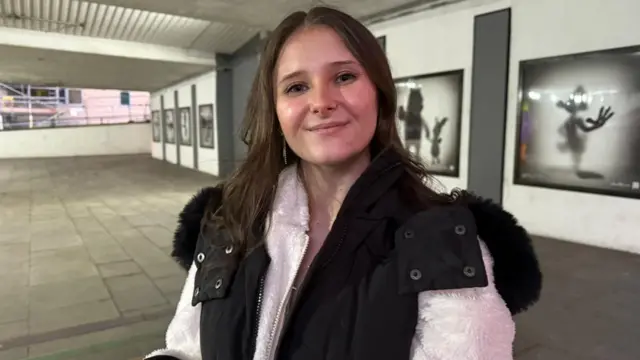
    Maddie, 17, "regrets" that it happened, but her friend and their family isolated with hers meaning it was like a "big sleepover" when she was 13.

    "It was really negative, like what happened... For me it wasn't a fun experience, but it was made into a positive experience. I was too young to realise what was going on."

    Maddie, 17, speaks to Newsbeat in BirminghamImage source, BBC / Maddie
    Image caption,

    Maddie “regrets” that lockdown happened

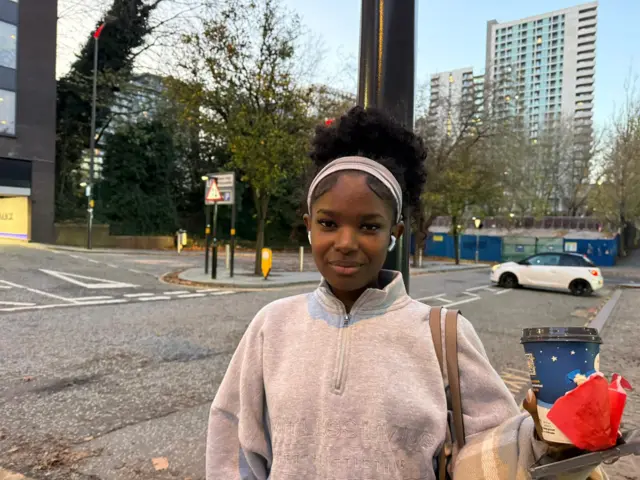
    We also spoke to Sarah Leytah, 19, who admits she "quite liked" lockdown because she got closer to family. It also meant she could focus on skills. It "made me who I am", she says, but admits "it was hard" for many.

    We ask them about the inquiry's report and Maddie reckons the government "weren’t really bothered about it" when reports of Covid infections were happening in early 2020.

    For Sarah, she can see ministers were under pressure but says "they should have taken it more seriously".

    "Come on now, it shows you guys weren't serious about it. Like you should have taken more precautions and been more careful and, you know, planned it out more properly."

    Sarah Leytah, 19, speaks to NewsbeatImage source, BBC / Sarah Leytah
    Image caption,

    Sarah says lockdown made her the person she is today

  4. UK leaders, past and present, react to reportpublished at 20:01 GMT 20 November 2025

    Today's report criticised the response by all UK governments during the pandemic - read more about comments on their four different approaches here.

    Let's see some reaction from past and current leaders.

    Wales: First minister Eluned Morgan says the Welsh government "was committed to learning lessons from the pandemic".

    Former first minister Mark Drakeford defended the government's handling of the pandemic, saying it "acted in the best way that we were able"".

    Scotland: Deputy First Minister Kate Forbes told MSPs at Holyrood: "It's vital that we learn lessons from the pandemic to make improvements for the future."

    Then first minister Nicola Sturgeon said: "I will carry an acute sense of responsibility for this for the rest of my life."

    Northern Ireland:First Minister Michelle O'Neill says the report is a "welcome milestone in the long journey of recovery after the pain and trauma" of the pandemic.

    England:Prime Minister Keir Starmer says his government will "carefully consider" the findings.

    Special adviser to Boris Johnson during the Covid pandemic, Dominic Cummings, accused the report of a mix of "coverups and rewriting history".

    We're yet to hear a response from former PM Boris Johnson or then Northern Irish first minister Arlene Foster.

  5. Ministers 'slow to acknowledge seriousness of long Covid'published at 19:41 GMT 20 November 2025

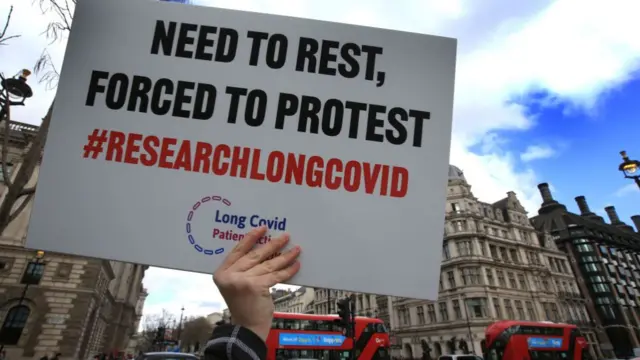
    A protester holds up a placard demanding research into Long Covid-19 during a demonstrationImage source, Getty Images

    Today's report also addresses long Covid, and whether the government offered sufficient warning of the risks of the condition.

    Even once it became clear there were risks, there were "no public health campaigns" focused on this area, the report says.

    This meant people were "unable to make their own, fully informed decisions about the levels of risk they were prepared to tolerate".

    "The UK government – in particular Mr Johnson – remained slow to acknowledge the seriousness and prevalence of the condition," the report adds.

    It concludes that long-term conditions must be built into any strategy for future pandemics.

    Long Covid groups have welcomed the inquiry's recognition of those still suffering, but some see it as just the first step.

    "Our stories do not end with this inquiry and should be a wake-up call for what needs to change now as those with long Covid still have more questions than answers," says Lucy Moore, chair of the charity long Covid SOS.

  6. What we've learned after 800-page Covid inquiry report releasedpublished at 19:25 GMT 20 November 2025

    A woman holds the Covid inquiry report. The camera is close up on her hands holding the pagesImage source, Reuters

    Here's a quick summary of what we've heard so far:

    The report:

    • Suggests March 2020's nationwide lockdown might have been avoided had steps including social distancing and isolating been introduced earlier – with February 2020 declared a "lost month"
    • Baroness Hallett says all four UK nations faced "unenviable choices", but "failed to appreciate the scale and urgency" of the threat - she set out more on their four different approaches
    • A key issue was a "lack of trust" between Edinburgh and London, our Scotland political correspondent writes
    • Our correspondent at the inquiry says modelling shows how there could have been 23,000 deaths in the first wave – though it's unclear whether earlier measures might have reduced the overall death toll
    • Meanwhile political correspondent Leila Nathoo delves into the "toxic and chaotic" culture in government which the report blames for poor decision making

    The reaction:

  7. 'Things to know in case I die' - doctor wrote email to wifepublished at 19:12 GMT 20 November 2025

    Owain Clarke
    Wales health correspondent

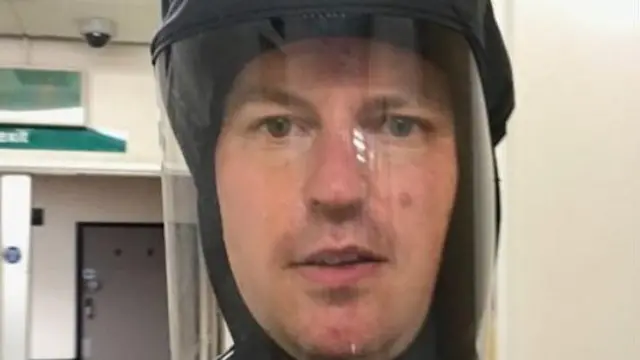
    A man in a protective mask looks at the cameraImage source, Matt Morgan
    Image caption,

    Matt Morgan

    "I have had a bloody wonderful life. I have found love, travelled, partied, had two amazing children, spent time with friends, family and done things I had never dreamed of."

    It sounds like the parting letter of an elderly person on their death bed, reflecting on a happy life well lived.

    But it is in fact an email a 40-year-old Dr Matt Morgan wrote to his wife, scared he would not survive the coronavirus pandemic on the intensive care ward at Cardiff's University Hospital of Wales.

    Dr Morgan was working the day Wales' busiest hospital got its first Covid patient, and as the pandemic worsened, he wrote an email to his wife called: "Things To Know In Case I Die."

    "Look at old photos, remember me on my birthday, but don't stay sad too long. We only have one life, as I now realise. Go and live it," he wrote.

    Now 45, Dr Morgan said he was now concerned about a lack of preparation for another pandemic, particularly with Wales having some of the lowest intensive care bed numbers in Europe per head of population.

  8. Repeating Covid mistakes in autumn 2020 was 'inexcusable'published at 19:03 GMT 20 November 2025

    Jim Reed
    Health reporter, reporting from the inquiry

    The report is clear that governments across the UK were too slow to act in early 2020 as Covid started spreading – although stresses politicians were dealing with a new virus at the time.

    But it goes on to say that the same mistakes were repeated in autumn 2020 as rates started rising again, something it describes as "inexcusable".

    It says Boris Johnson should have ordered a short "circuit-breaker" lockdown in England in late September or early October, perhaps lasting just a couple of weeks to dampen down infections.

    By doing that, the second full national lockdown - which started in England on 5 November - could have been shorter or even avoided entirely, it adds.

    Instead, officials relied on "milder interventions" – such as a 10pm curfew and more localised rules – which it says lacked scientific support.

    "The failure to get a grip on the second wave sooner contributed to greater mortality and the inevitability of a second lockdown – one that was longer and, thus, more damaging," the report says.

    A person writes a message on the National Covid Memorial WallImage source, Reuters
  9. Government failed to consider impact on children, report sayspublished at 18:56 GMT 20 November 2025

    Nick Triggle
    Health correspondent, reporting from the inquiry

    Children were – in general – at less risk of serious harm from Covid, but suffered from the closure of schools and stay-at-home orders.

    In a nutshell, the inquiry says, the pandemic brought normal childhood to a halt – so it comes as no surprise that the report questions whether children were prioritised as much as they should have been.

    It says the UK government was not adequately prepared for the sudden and enormous task of educating most children in their homes, and it failed to consider the consequences of school closures for children’s education, and physical and mental health.

    This is something, the report says, that must be improved – calling for more consideration to be given to those who are in the most vulnerable groups.

  10. Some pandemic messaging was confused and complex, report sayspublished at 18:52 GMT 20 November 2025

    Jim Reed
    Health reporter, reporting from the inquiry

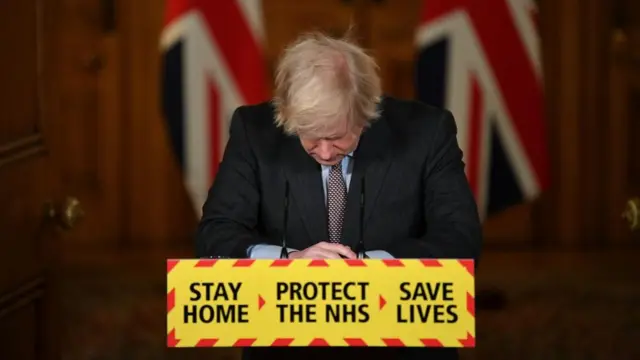
    Prime Minister Boris Johnson looks down at the podium during a media briefing, with the words: Stay home, protect the NHS, save lives on the podiumImage source, PA Media

    In the pandemic, the public were told – repeatedly – on billboards and on TV adverts to "stay home, protect the NHS, and save lives".

    The report says that this kind of messaging was effective at "maximising compliance" in the first lockdown, but it also had risks – such as discouraging those needing medical treatment from coming forward.

    It says some of the Covid rules were also confusing - with the public unsure if they were listening to advice or a legally binding restriction.

    That made enforcement by the police "practically impossible or legally uncertain" in some cases, it says – particularly when different rules were introduced across the four nations of the UK at different times.

  11. What we've heard, and what's coming uppublished at 18:50 GMT 20 November 2025

    Ben Hatton
    Live reporter

    The UK Covid-19 Inquiry was launched in June 2022 with a remit to examine the country's response to the virus, and the impact of the pandemic.

    So large is the undertaking, that the inquiry has been broken up in 10 different subject areas, or modules. Today we've received the report on the second area - decision-making and political governance.

    It's lengthy - 800 pages - and there's plenty of detail.

    We've recapped the key takeaways here, and the recommendations here. And you can read more on what the inquiry has to say about decision-making in the devolved governments here.

    We've heard reaction from the Covid-19 Bereaved Families for Justice group, and key players in pandemic decision-making including Dominic Cummings and Nicola Sturgeon.

    But we haven't yet heard from the person at the helm of the UK government during those years - Boris Johnson.

    We're now going to take a closer look at key areas of the report's findings - stick with us.

  12. Starmer: Government will 'carefully consider' report and respond 'in due course'published at 18:37 GMT 20 November 2025

    Keir StarmerImage source, PA Media

    Prime Minister Keir Starmer says the government will "carefully consider" all of Baroness Hallett's findings and recommendations set out in today's report and respond in "due course".

    In a written statement, Starmer says that improvements have been made in how the government would react to a major crisis, but adds: "It is clear that local government and our public services, including the NHS, are under immense pressure and in many cases have not fully recovered from the pandemic.

    “The cost of the pandemic still weighs heavily on the public purse.

    "This is why this Government is committed to driving growth in the economy and reform of public services, so that when we face the next crisis, we do so from a position of national resilience."

    The prime minister thanks Hallett and also says he would "like to take the opportunity to acknowledge the pain and suffering the pandemic caused".

  13. The report's key recommendationspublished at 18:14 GMT 20 November 2025

    Inquiry chair Baroness Hallett says a key objective of today's report is to identify "critical lessons" for future pandemics.

    Her report sets out the following recommendations:

    • Improving consideration of vulnerable groups and how they are impacted by decisions made in an emergency
    • Broadening participation in SAGE, the Scientific Advisory Group for Emergencies, through open recruitment of experts and representation from the devolved administrations
    • Reforming and clarifying the structures for emergency decision-making within each nation
    • Ensuring that decisions and their implications are clearly communicated to the public
    • Enabling greater parliamentary scrutiny of emergency powers and how they are used
    • Establishing structures to improve communication between the four nations during an emergency

    Although each recommendation is "important in its own right", the report says they should be "implemented in concert", both with each other and with the recommendations outlined in the inquiry's first report, published in July 2024.

  14. At a glance: Eight key findings from the reportpublished at 18:12 GMT 20 November 2025

    Alex Smith
    Reporting from the inquiry

    • All four governments “failed to appreciate” the scale of the threat, or the urgency of response required, early in 2020
    • When the possibility of a first lockdown was initially being considered, “it was already too late and a lockdown had become unavoidable” - lockdowns became inevitable “because of the acts and omissions of the four governments”
    • Had initial restrictions been introduced sooner, the first lockdown “might have been shorter or not necessary at all”
    • Based on modelling in England alone, “there would have been approximately 23,000 fewer deaths in the first wave up until 1 July 2020” had there been an earlier lockdown
    • None of the four governments had a strategy for when or how they would exit the first lockdown and they didn’t give “enough attention to the possibility of a second wave"
    • They had not "adequately prepared for the challenges and risks" of lockdown, and did not scrutinise “its wider societal, workforce and economic impacts” - in particular for the vulnerable, disadvantaged, and children
    • It “rejects the criticism” that the governments were wrong to impose the lockdown, saying they had all “received clear and compelling advice to do so” - but “their failure to act promptly and effectively had put them in this position"
    • The report adds that the four UK governments must now “learn the lessons” if they are to avoid lockdowns in future pandemics
  15. Lack of trust between devolved governments and Westminster, report findspublished at 17:58 GMT 20 November 2025

    Leila Nathoo
    Political correspondent, reporting from the inquiry

    Baroness Hallett digs into how the devolved administrations responded differently to the spread of the virus – and their relationship with Westminster.

    The report finds that at the start of 2020, while all four nations lacked urgency in their response, the devolved administrations were overly reliant on the UK government to lead the response.

    The four nations diverged in their strategy for exiting the first national lockdown – with Scotland, Wales and Northern Ireland adopting a more cautious approach – which the report says was undermined by no restrictions on travel from England, in which the majority of restrictions had been eased.

    Baroness Hallett says there was also a lack of trust between Boris Johnson and some of the leaders of the devolved nations that impacted working together.

    The report finds that in autumn 2020, Holyrood was the only government to learn lessons from the first lockdown - Scotland used stringent locally targeted measures and avoided a nationwide lockdown.

    Decision-making in Northern Ireland, on the other hand, was described as "chaotic".

    The report says the Welsh government's approach resulted in the highest age-standardised mortality rate of the four nations between August and December 2020.

  16. Covid response in Wales 'inadequate', report findspublished at 17:57 GMT 20 November 2025

    We're currently focusing on the report's findings related to the decisions made by the devolved governments - you can see more on Scotland and Northern Ireland below.

    The Welsh government's initial response to Covid was "inadequate", with ministers in Cardiff "overly reliant" on the UK government to take the lead, the report finds.

    More than 12,000 people died in Wales as a result of Covid between 2020 and August 2024.

    The report also says decisions taken by Welsh ministers in the final months of 2020 were the "likely" reason why Wales had the highest mortality rate of the four UK nations at that time.

    In a statement, first minister Eluned Morgan says the Welsh government "was committed to learning lessons from the pandemic", adding it would "take time to read the report and work with the other UK governments over the coming months to carefully consider and act on its recommendations".

    Read more on what the inquiry says about decisions that were made in Wales

    Eluned Morgan giving evidence at the covid inquiryImage source, UK Covid-19 Inquiry/PA Wire
    Image caption,

    Eluned Morgan giving evidence to the inquiry last November

  17. Covid decision-making in Northern Ireland 'chaotic'published at 17:50 GMT 20 November 2025

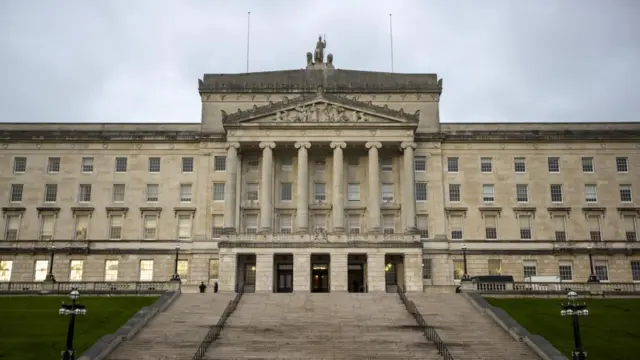
    Buildings at Stormont Estate, in Northern IrelandImage source, PA Media

    The Northern Ireland Executive’s approach to tackling the pandemic was incoherent as a result of political divides, the inquiry says.

    the report says some meetings at Stormont during the period were "deeply divided along political lines and beset by leaks”.

    The report adds Northern Ireland’s devolved structures offered an opportunity to show decisions were being made “by all parties collectively for the greater good”.

    But “on multiple occasions” decision-making was “marred by political disputes between Democratic Unionist Party (DUP) and Sinn Féin ministers”.

    First Minister of Northern Ireland Michelle O'Neill says the report is a "welcome milestone in the long journey of recovery after the pain and trauma" of the pandemic.

    "Covid was an unprecedented global emergency and this report will provide further lessons from the experience at all levels of society," O'Neill adds.

  18. Sturgeon says she accepts mistakes were madepublished at 17:47 GMT 20 November 2025

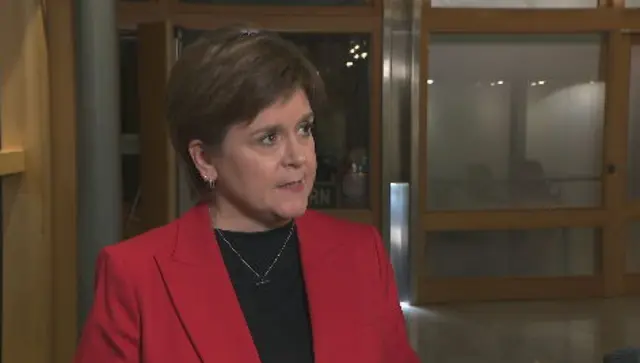
    Former First Minister Nicola Sturgeon

    Responding to the report, former First Minister Nicola Sturgeon says: "Given the unprecedented and highly uncertain nature of the situation we faced, it was inevitable that mistakes would be made, and I know that I made my share.

    "I will carry an acute sense of responsibility for this for the rest of my life."

    The former first minister adds: "While all of my ministers and relevant officials played a full role in decision-making, it is certainly the case that I decided at the outset to lead from the front and make clear that the buck stopped with me. I stand by that."

    "At every stage, in absolute good faith and based on the best information and advice available to me, I took decisions that I judged most likely to minimise harm to people in Scotland," she says.

    • Read more on the report's conclusions about decision-making in the Scottish government in our news story
  19. Scottish government says 'lessons must be learned'published at 17:37 GMT 20 November 2025

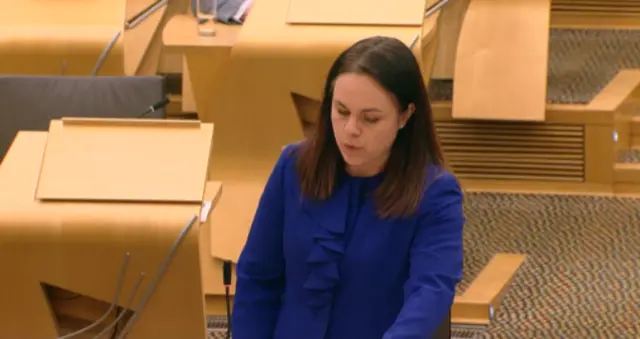
    Scotland's Deputy First Minister Kate Forbes gives the Scottish government response to the pandemic

    Deputy First Minister Kate Forbes tells MSPs at Holyrood: "It's vital that we learn lessons from the pandemic to make improvements for the future".

    The minister welcomes the publication of today's report and says the Scottish government is committed to learning from the past.

    She says: "With the benefit of hindsight we acknowledge that some choices, made in good faith at the time and under immense pressures, may not have always been the right ones."

    Forbes says the government will take time to consider the report's recommendations and a group has been set up to facilitate this.

  20. 'Lack of trust' between Edinburgh and London - inquiry chairpublished at 17:34 GMT 20 November 2025

    Phil Sim
    Scotland political correspondent

    Former first minister Nicola SturgeonImage source, PA Media
    Image caption,

    Then first minister Nicola Sturgeon was criticised for her approach of taking decisions within a small group

    The Scottish government headed by Nicola Sturgeon was too reliant on UK ministers to lead the response to the Covid-19 pandemic and was "significantly under-prepared" for what was to come, the inquiry finds.

    Baroness Hallett says there was a "lack of trust" between ministers in Edinburgh and London which coloured the approach to decision-making.

    While the report says Sturgeon was a "serious and diligent leader", it criticises the former first minister's clashes with Boris Johnson and her approach of taking decisions within a small group.