Summary

  1. 'I'm angry about the state of the country'published at 12:13 BST

    BBC Radio Merseyside

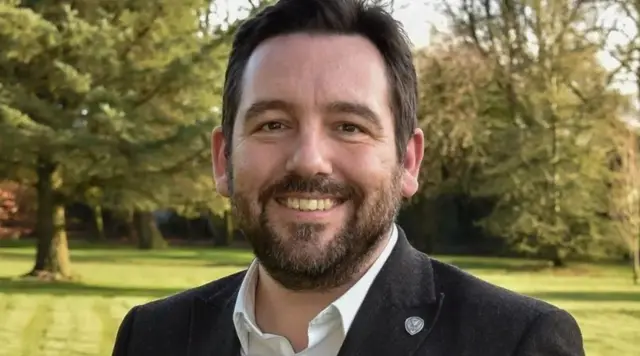
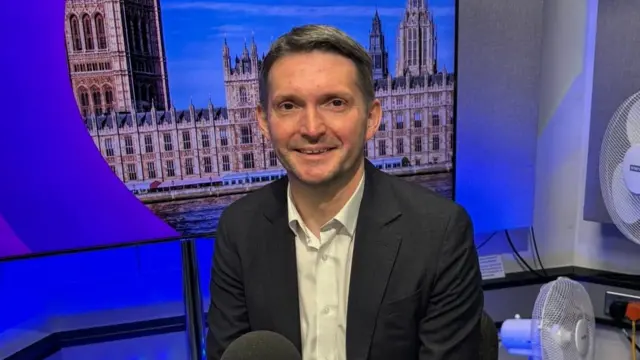
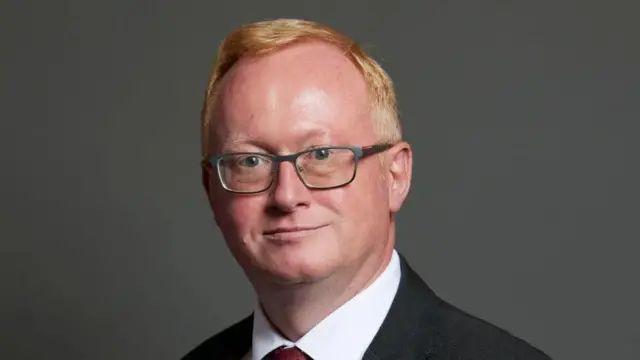
    David Baines, a man in a black blazer and white shirt, smiles into the camera, standing in a field with grass and trees.

    David Baines, a former primary school teacher and MP for St Helens, said he was angry about the state of the country.

    He had been asked by Leanne Campbell at BBC Radio Merseyside if people may drift away from Labour.

    He acknowledged people were angry about the state of the country and said: "I’m angry about the state of the country.”

    The answer to improving the state of the roads, NHS, schools and local councils was strong public investment and public services, and “not to vote for the same people who caused those problems," he said.

    “For 14 years, we had a right-wing government that cut public spending, now the very same people who caused those problems are selling the solution.

    “Next Thursday is about who is in charge of your local services. If you don’t want Nigel Farage in charge of your social care and children’s services, vote Labour.”

    Elections take place in St Helens, Sefton, Knowsley and Halton on 7 May.

  2. Bin strike deal 'gets done when it gets done'published at 12:05 BST

    BBC Radio WM

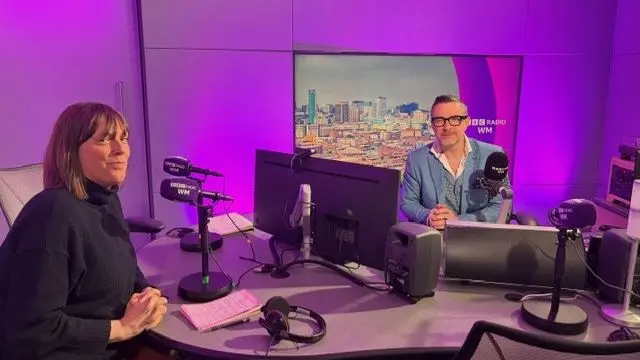
    Jess Phillips has been speaking to BBC Radio WM about the bitter 14-month-long dispute by bin workers in Birmingham.

    Responding to cynicism over the timing of a deal being put to members which could see the end to the strike, the Yardley MP told Ed James: “It gets done when it gets done.”

    “It would be terrible if a deal was agreed and wasn’t said until after the elections,” she added.

    “I have no idea why anyone thinks it would be politically expedient for this not to have been dealt with sooner.

    "I can only speak as a Brummie myself, just be glad when it’s over, I want [my] recycling taken.

    Jess Phillips, in a black jumper, and a man in a blue suit, pose for a photo in the BBC Radio WM radio studio.

    Speaking about the length of time it had taken, the Minister for Safeguarding and Violence Against Women and Girls said people had been “stretching any sinew” to get a deal made, but could not make an offer that could create a future equal pay dispute.

    “The council cannot agree to anything that will cause an equal pay claim which is terrible for the citizens of Birmingham but also terrible for the women of the world,” she said.

  3. Housing Secretary refuses to predict election resultspublished at 11:55 BST

    Paul Rowley
    BBC Political Correspondent

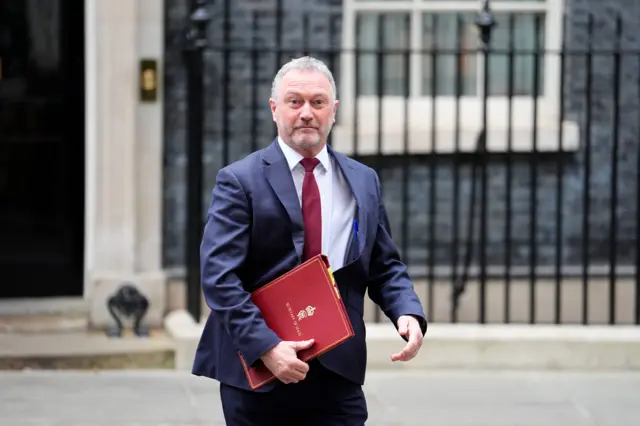
    Housing Secretary Steve Reed leaves following a Cabinet meeting in Downing Street, wearing a suit and carrying a red folder.Image source, PA Media

    The Housing Secretary, Steve Reed, is refusing to predict the outcome of the council elections on 7 May in London.

    Labour are currently in control of 21 of the capital's 32 boroughs where every seat is being contested.

    He was challenged by BBC London political correspondent Susana Mendonca over comments by the Mayor of London, Sir Sadiq Khan, that he fears the party will get "stonked" in the "most difficult" local authority elections in 40 years.

    But Reed, who’s also the MP for Streatham and Croydon North said: "I've seen the polls and they're not easy.

    "Anyone who tells you they know what the results are going to be, you should ask them for tips on the horses because if they can tell you the future, they're better than I am".

  4. Leeds City Council a 'wonderful example'published at 11:46 BST

    BBC Radio Leeds

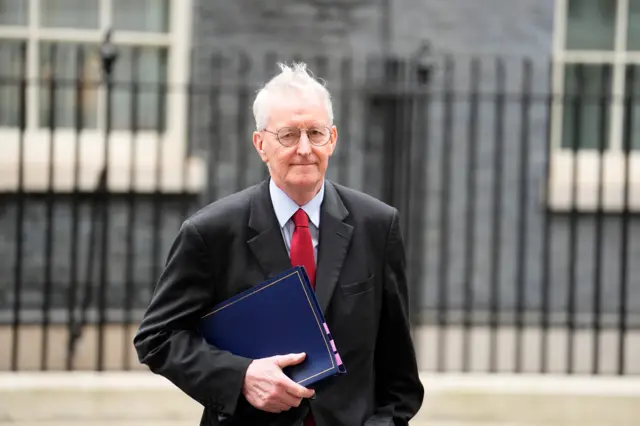
    Northern Ireland Secretary Hilary Benn leaves following a Cabinet meeting in Downing StreetImage source, PA Media

    Hilary Benn, MP for Leeds South, was asked what his party was doing to win voters back for the local elections.

    He told BBC Radio Leeds' Gayle Lofthouse the city council was a “wonderful example” of what authorities had been doing right.

    “Because of a partnership with the Labour government, for the first time this year Leeds is able to support its social care budget without having to cut any other services," he said.

    The Northern Ireland Secretary said this meant the authority was able to put more money back into other issues, such as repairing potholes and Labour’s West Yorkshire mayor Tracy Brabin was working hard to bring buses back into local control.

    “Having worked with the Labour council in Leeds for a long time, this is really well run council that is passionate about the people of Leeds," he said.

  5. Why wasn't Keir Starmer available today?published at 11:38 BST

    Elly Zaniewicka
    Senior political reporter, BBC Westminster

    There have been questions across the interviews so far about why Sir Keir Starmer hasn’t been made available to speak to BBC local radio stations, in the same way as other party leaders have done.

    On BBC London the Communities Secretary Steve Reed said: “I’m sorry I’m not the Prime Minister, but he's dealing with aftermath of the Golders Green attack.”

    BBC Radio WM told Safeguarding Minister Jess Phillips they had spoken to all the party leaders this week and many people had been expecting the Prime Minister to take part. Her response?

    Jess Phillips said “I was called to come instead of the Prime Minister" after the events in Golders Green.

    She went on to explain that she "was asked by Number Ten to come in and talk to you today” and “Prime Ministers have very, very, very busy lives”.

    MPs speaking to other BBC local radio stations this morning have given a similar explanation.

  6. 'Of course Starmer will still be PM at end of month'published at 11:27 BST

    BBC Radio Sussex

    Chris Ward, MP for Brighton Kemptown and Peacehaven, told BBC Radio Sussex Sir Keir Starmer will "of course" still be prime minister after May's local elections.

    "I remember when people said he [Starmer] wouldn't win the Labour leadership. He won it," he said.

    "I remember when people said he couldn't win the election. He won that by a long way.

    "I am very confident he [Starmer] can win another term and put this Labour government back on track.”

    Chris Ward, in a blazer and white shirt, smiles towards the camera, sitting in a radio studio.

    Sir Keir had been asked to come on BBC Radio Sussex, as the leaders of all other major political parties have done.

    But Ward, the parliamentary secretary in the cabinet office, said the PM was "tied up" responding to the "appalling events” in Golders Green, which saw two Jewish men stabbed.

    "That is quite right given the severity of what happened,” he said.

  7. 'No one can predict the future'published at 11:15 BST

    BBC Radio London

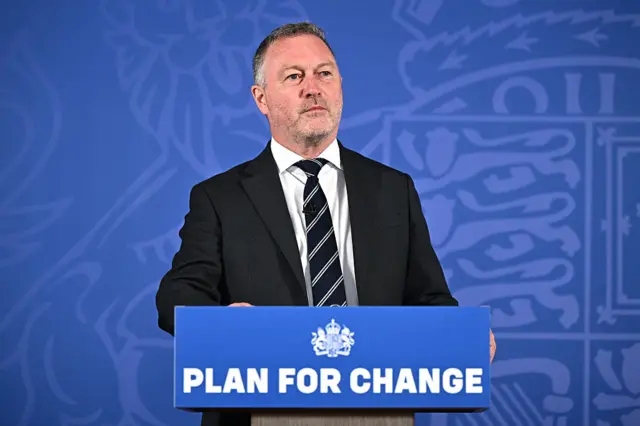
    Steve Reed, Secretary of State for Housing, Communities and Local Government of the United Kingdom, delivers a speech at a blue podium with the words 'Plan For Change' on it. He is wearing a suit and tie.Image source, Getty Images

    Research and data pollsters YouGov predicts this year could be Labour's worst local election result in London for almost 50 years.

    Housing, communities and local government minister Steve Reed batted off the prediction by insisting “no one can predict the future”, and repeated “you don’t know how people are going to vote until they vote” in his interview with BBC Radio London.

    Asked if the scandal surrounding Peter Mandelson would hurt the party’s chances the MP for Streatham and Croydon North said it was not an issue people brought up at the “hundreds of doors” he knocked on during this election campaign.

    Instead, he said people focussed on “things like housing, cost of living and really local things like potholes”.

    On the recent spate of attacks on the Jewish community, he said keeping everyone safe was the immediate priority.

    He also said: “We also have to tackle the root causes of this antisemitism" by things like “new programmes to train up teachers and getting speakers into schools to teach kids about the Holocaust."

  8. Keir Starmer's history in politicspublished at 11:05 BST

    Paul Rowley
    BBC Political Correspondent

    Keir Starmer was a late entrant to front line politics, but secured one of the biggest parliamentary landslides of any Prime Minister.

    He became an MP in 2015 in the central London seat of Holborn and St Pancras at the age of 52, having served in one of the most senior positions in the UK legal system as Director of Public Prosecutions and head of the Crown Prosecution Service. He was knighted in 2008.

    He campaigned for the UK to stay in the European Union in the 2016 referendum, but when the British people voted to leave he was appointed to the new post of Shadow Brexit Secretary in Jeremy Corbyn's front-bench team, even though his politics were markedly different from his boss.

    After Labour's defeat to Boris Johnson in the 2019 General Election, he succeeded him as party leader.

    Prime Minister Keir Starmer gives a statement following a COBRA meetingImage source, Getty Images

    In 2024 he became only the fourth Labour figure to win a General Election after Clem Attlee, Harold Wilson and Tony Blair. He won three times as many seats as the Conservatives, who suffered their worst ever Westminster election result.

    Yet Labour only won a third of votes cast, the smallest share of any majority government.

    His time in Downing Street has seen a raft of U-turns after rebellions by his MPs, a series of high profile resignations, and controversies such as the appointment, and then dismissal, of Lord Peter Mandelson as the UK's man in Washington.

    The 63-year-old, whose father was a toolmaker, still plays football when he can, and is a season-ticket holder at Arsenal, who've been top of the Premier League for much of the season seeking their first title in a generation.

    So far during this election campaign, eight local stations have spoken to the leaders of the Conservatives, Liberal Democrats, the Green Party and Reform UK. Of course, we also asked Labour for an interview with the Prime Minister, Sir Keir Starmer. He wasn’t available but stations will be speaking to local Labour MPs.

  9. Listen live to Labour interviewspublished at 10:58 BST

    So far we have heard from MPs Luke Akehurst in Newcastle, Steve Reed in London and Chris Ward in Sussex/Surrey.

    Jess Philips is currently talking to Radio WM - to listen press the watch live button at the top of the page.

  10. Should Labour stronghold areas look to other parties?published at 10:47 BST

    BBC Radio Newcastle

    A picture of MP Luke Akehurst. He was giner hair and glasses, wearing a suit with a black blazer and red tie.Image source, UK Parliament

    BBC Newcastle's Anna Foster asked MP Luke Akehurst if it was time for people living in Labour strongholds to give another party a chance to run their councils.

    She said many people in Tyne and Wear had been led by Labour for decades but still struggled with issues such as litter and potholes.

    Akehurst, Labour MP for North Durham, warned against voting for another party and used Durham County Council as an example, where Reform UK took control at the last election.

    "They haven't waved a magic wand but have done things that are quite destructive like removing some of the benefits - such as council tax reduction, which the 30,000 least well-off families in the county received," he said.

    When asked why areas in the North East still felt austere, he said Labour councils had invested in large regeneration projects such as those taking place in Sunderland.

  11. Does Labour have reason to be cheerful?published at 10:35 BST

    Tony Bonsignore
    Political reporter, BBC Westminster

    Reasons to be cheerful are hard to find for Labour, but here are some possibilities.

    First, the rise of multi-party politics means many of these races will be tight, and the winning margins slim. Just a few extra votes here and there might translate into some vital victories.

    Second, expectations in politics are important, so even a slightly less awful result than expected would give Labour figures something to cling on to in the nervous days and weeks after polling.

    And third...the party may argue that local elections invariably end in heavy defeat for the incumbent government, especially given the economic headwinds and the cost of living crisis, and that it would be a mistake to read too much into the result.

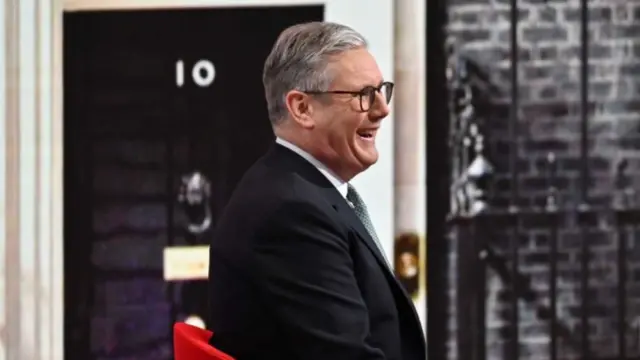
    Sir Keir Starmer being interviewed by Laura Kuenssberg

    It will be a tough sell though, for Sir Keir Starmer, as Labour MPs try to work out what it all means for their chances of keeping their seats under his leadership at the next general election.

  12. How are things looking for Labour?published at 10:24 BST

    Tony Bonsignore
    Political reporter, BBC Westminster

    Thursday May 7 could be bad for Labour. Very bad.

    The party is defending more than 2,500 council seats in England. Some projections have them losing up to 1,500 of these, others even more. They could face a near wipeout in some of their strongest traditional heartlands, in the North, the Midlands and London.

    It's similar story in devolved elections. Labour faces the prospect of losing control of the Welsh Senedd for the first time and being pushed into third place in Scotland.

    In terms of the national vote share, there are fears Labour could be pushed into fourth or fifth place, behind Reform, The Conservatives, the Lib Dems and Greens.

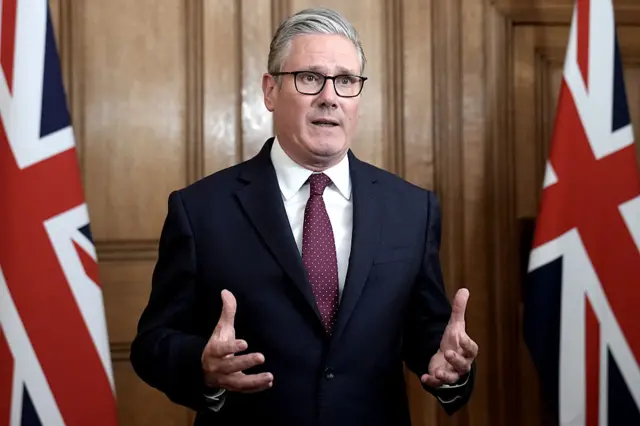
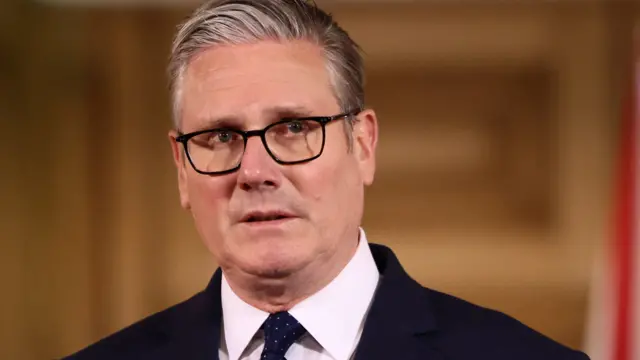
    Sir Keir Stamer looking to the right of the camera with a serious expression. He is wearing black framed glasses, a black suit jacket and tie, and a white shirtImage source, PA Media
  13. Which elections are taking place on 7 May?published at 10:17 BST

    This is going to be the biggest set of elections since the 2024 general election.

    Voters in Scotland and Wales will elect representatives to their national parliaments, while a number of local council and mayoral polls will take place in England.

    This includes elections in 30 English councils that will now go ahead after the government abandoned previously announced plans to delay them.

    In Northern Ireland, local council and Assembly elections are scheduled for May 2027.

    You can check what elections are taking place in your local area here.

  14. Welcome to our live coveragepublished at 10:11 BST

    Labour MPs are about take part in interviews on BBC local radio stations across England.

    Every day this week, a different party leader has been in the hotseat as we count down to the local elections on 7 May.

    We’ve already heard from Zack Polanski (Green Party), Sir Ed Davey (Liberal Democrat), Nigel Farage (Reform UK) and Kemi Badenoch (Conservatives).

    Labour are doing things slightly differently by having a local MP interviewed on each station. This is who we’re expecting to hear from:

    • Newcastle - Luke Akehurst
    • London - Steve Reed
    • Sussex/Surrey - Chris Ward
    • WM - Jess Philips
    • Leeds - Hilary Benn
    • Merseyside- David Baines

    Tap the button at the top of the page to listen live, and stay with us for updates and analysis on all the key lines.