Summary

  1. Rubio doubles down on commitment not to use US taxpayer dollars to prop up Venezuelapublished at 16:47 GMT
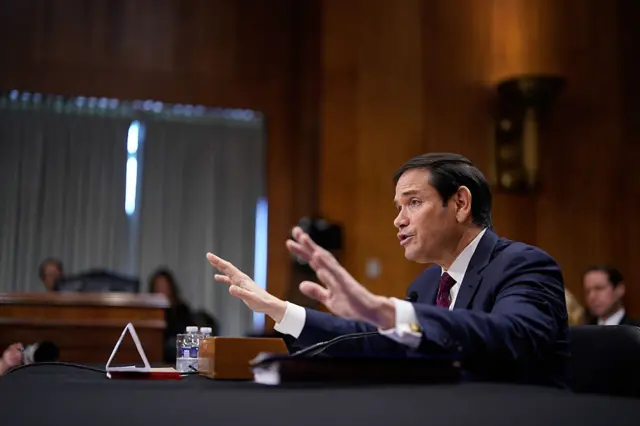
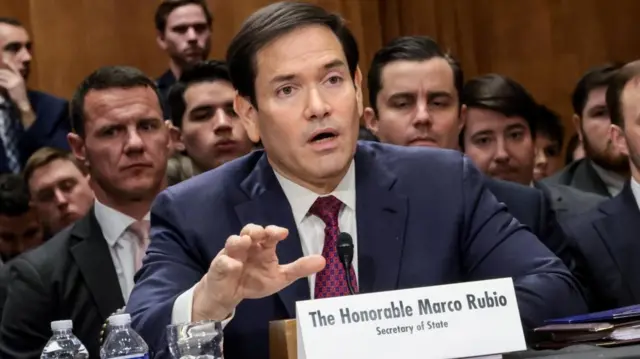
    Marco Rubio in Senate with hand raised, image shows his profile.Image source, Al Drago/Bloomberg via Getty Images

    We're now hearing from Democratic Senator Jeff Merkley, who tells Rubio on Venezuela: "We had a dictator we didn't like; we've replaced it with a dictator we think we can manipulate."

    But he then adds that he did like Rubio's remark about "no US taxpayer dollars" being used to prop up the state of Venezuela. "Can you restate commitment to that?" he asks.

    Rubio says the US is "not spending money in Venezuela now", other than costs like embassy operations.

    Merkley then says Rubio has a "way too rosy sense of the oil economy" in Venezuela, before running through a series of risks faced by oil companies considering investing there.

    Rubio disagrees, saying: "It's not a rosy projection". He also adds that there's "no world" in which the US will subsidise investment in Venezuelan oil.
  2. US operation in Venezuela was not an act of war, Rubio insistspublished at 16:32 GMT

    Republican Senator Rand Paul says that a declaration of war is constitutionally a power of Congress.

    He hints at the Trump administration's argument that their seizure of Maduro was not an act of war.

    But he asks Rubio if a foreign country bombed the US air defence system, "captured and removed" its president and "blockaded" the country, would that be considered an act of war?

    Rubio rejects that the US military's mission in Venezuela "comes anywhere close" to the constitutional definition of an act of war, since it only took a few hours hours, and was, he claims, a "law enforcement operation" and because the US does not recognise Maduro as a head of state.

  3. 'US does not intend to take military action in Venezuela,' Rubio says after quickfire questionspublished at 16:20 GMT

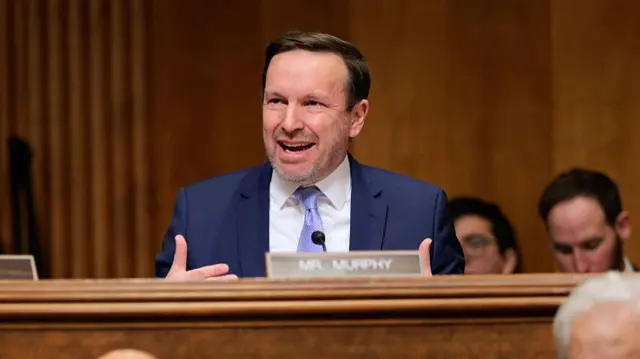
    Democrat Senator Chris MurphyImage source, Getty Images
    Image caption,

    Democrat Senator Chris Murphy

    Democrat Senator Chris Murphy is next, and he's critical of the operation, describing the attempts to stabilise Venezuela through managing its oil funds as "destined for failure".

    He then sets out three questions for Rubio.

    First, he asks Rubio to commit that companies who bid to sell Venezuelan oil will be chosen through a "fair, open selection process".

    Second, if current interim leader Delcy Rodríguez is still in power six months from now, does that mean the US policy has been a success or failure? he asks.

    Thirdly, he asks Rubio about comments that the US reserves the right to use force again in the future. What would cause this, and do you accept that you might need congressional approval?

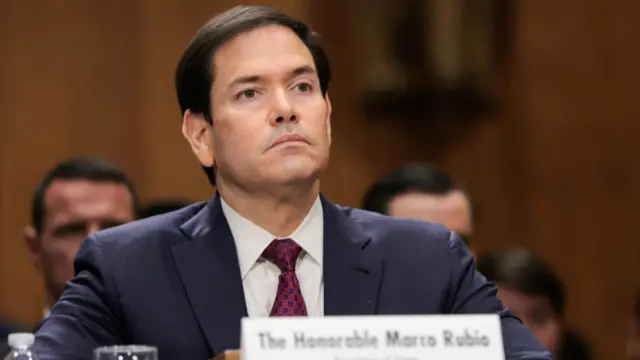
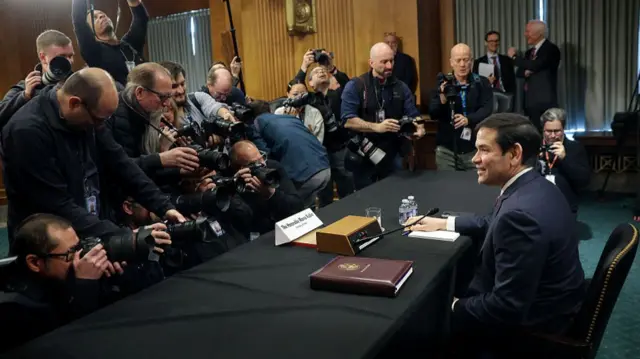
    Marco Rubio facing cameras and press sat behind a table in the Senate.Image source, Getty Images

    In answering, Rubio says first that Venezuela was experiencing oil storage issues. This is why two companies were selected in the short term very quickly, he says.

    On the second question Rubio says he can't give a timeline, but says "we have to be much further along" in six months' time.

    Finally, on the third question, the secretary of state says Trump never rules out his options, but clarifies the administration does "not intend or expect to have to take any military action in Venezuela at any time".

  4. What has the US got planned for Venezuela's opposition leader?published at 16:17 GMT

    Vanessa Buschschlüter
    Latin America editor

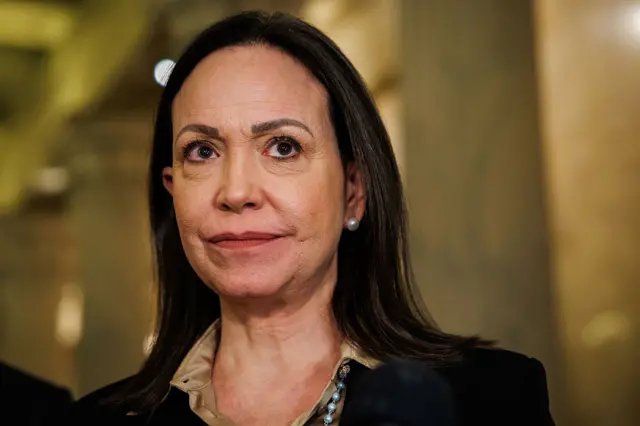
    María Corina Machado.Image source, Samuel Corum/Getty Images

    When US forces seized Maduro, many in Venezuela - and abroad - assumed that the Trump administration would work with opposition leader María Corina Machado to restore democracy in the South American country.

    Marco Rubio has had a good relationship with Machado, who was awarded the Nobel Peace Prize for her fight for democracy in her homeland.

    But Trump said shortly after the US raid that she lacked the "support" and "doesn't have the respect" of the Venezuelan people.

    His administration has instead been working with Interim President Delcy Rodríguez, who is a Maduro loyalist and who has repeatedly called for his release.

    Marco Rubio has just said that the Trump administration is going to judge Rodríguez's government "based on actions not their words".

    Opposition supporters in Venezuela are frustrated by this.

    They have repeatedly pointed out that Rodríguez - while she may be doing the US bidding on some issues - is "one of the main architects of the Maduro regime".

    They will be listening out for any indication as to what - if any - role the US envisions for María Corina Machado.

    Machado managed to unite the opposition behind her before the 2024 election and voting tallies the opposition collected suggest that Edmundo González - the candidate she backed when she was barred from running for president - won the election by a landslide.

  5. Co-operating with the US is in Venezuela's interest, Rubio sayspublished at 16:07 GMT

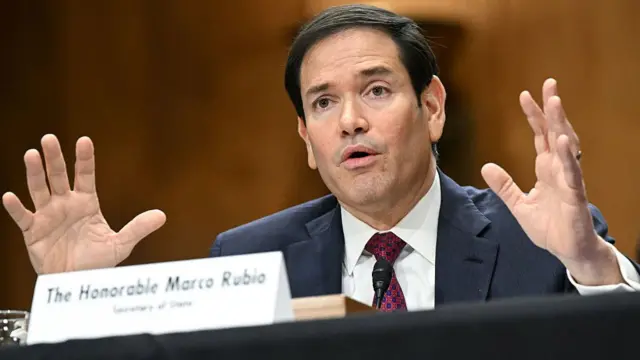
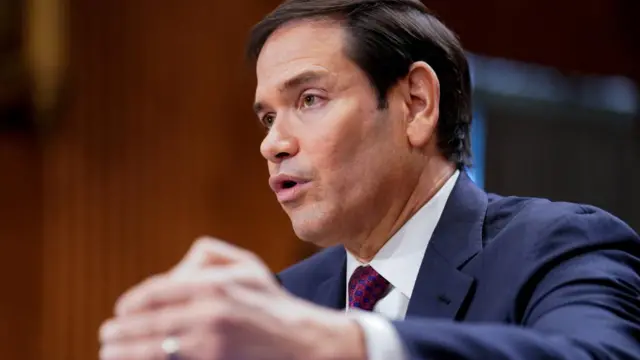
    Marco Rubio speaking in Senate with hands raised.Image source, Getty Images

    Senator Dave McCormick now asks Rubio what is being put in place to prevent "malign actors" from having influence in Venezuela.

    Rubio says co-operation with the US is in line with Venezuela's interests. The US will be a "far better partner" for a future Venezuelan government - and even for the current authorities - than some of the partners they are signed up with now, he adds.

    It is not in Venezuela's interest to have an "Iranian presence" or the "sale of Iranian weaponry into their country", Rubio says.

    He describes some of the "criminal elements" they have "allowed in the past" as a "deal with the devil". In the long term, it has created "real destabilisation", Rubio says.

  6. Rubio defends decision to keep Congress in dark over Venezuela strikespublished at 16:03 GMT

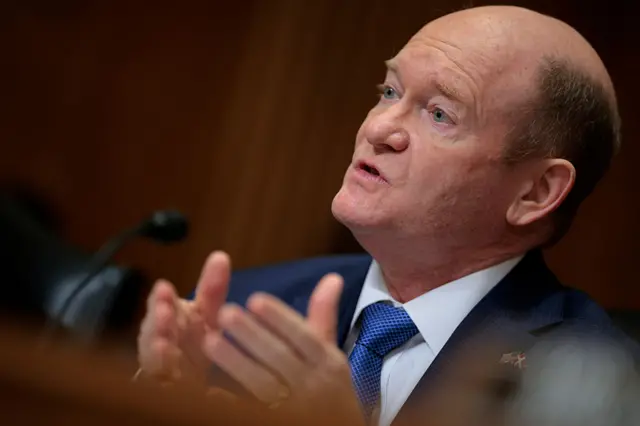
    Democratic Senator Chris Coons says that the President has the power to defend the American people against an "imminent threat", but he is also required to consult Congress.

    He says that Congress was told in briefings before the capture that military action was not planned and argues that if there was "time to practice [the mission], there's time to consult".

    Rubio says rehearsals were held to see if the operation was feasible, adding that Congress was not briefed because "it wasn't even in the realm of the possible until very late in December".

    He also says it is to do with the risk of leaks, and that he has since learned that the plan to capture Maduro was leaked by a contractor at the Department of War, but that this wasn't published in the media.

    Democratic Senator Chris CoonsImage source, Getty Images
    Image caption,

    Democratic Senator Chris Coons

  7. Analysis

    What does this all mean for Venezuelans?published at 15:59 GMT

    Will Grant
    Central America and Cuba Correspondent

    The audience watching Rubio's comments extends well beyond the confines of Capitol Hill.

    Across the hemisphere, people have wanted to hear a comprehensive update on the Trump Administration's idea of what comes next in Venezuela since the US military operation on 3 January.

    Secretary Rubio has already indicated that he sees the interim government in Caracas, led by Delcy Rodriguez, as willing to work in exactly the ways which Washington wants.

    That means the use of any proceeds from the country's lucrative oil industry being entirely dictated by the US Treasury and spent on US-made products — foods, medicines, energy infrastructure — for use in the economically stricken nation.

    It's a plan that gives Washington the final say, something which might seem hard for many figures in the leftist government in Venezuela to stomach.

    Yet Rubio remains confident the Trump Administration now has an ally in power in Caracas rather than an enemy.

    The other main audience is in Havana. The Cuban Revolution has been, as Marco Rubio puts it, "propped up" by Venezuelan crude oil. In his written statement to the committee, he said interim-President Rodriguez has "pledged to end Venezuela’s oil lifeline to the Cuban regime."

    If that claim is accurate, it represents nothing less than an existential threat to the communist-run government in Cuba.

    The island has lived under the Cuban Revolution for more than six-and-a-half decades. But it's clear that Washington's strategy in removing President Maduro from power is as much about forcing regime change in Cuba as it is about changing Venezuela itself.

  8. US wants a 'friendly, stable and prosperous Venezuela... and democratic' - Rubiopublished at 15:56 GMT

    Gary O'Donoghue
    Chief North America correspondent

    The US wants a transition to a "friendly, stable, and prosperous Venezuela” says the Secretary of State in his opening remarks, adding "and democratic".

    "Democratic" wasn’t quite an afterthought, but almost. None of this is going to happen in "three weeks", Rubio added.

    Venezuela’s oil industry won’t be dominated by "cronies" or "graft and corruption", he says.

    Though critics will argue that he’s replacing those with an American monopoly on a sovereign country’s assets.

  9. US not spending any money in Venezuela, Rubio sayspublished at 15:50 GMT

    Republican Senator Pete Ricketts is up next with a few quickfire questions for Marco Rubio.

    His string of questions around the operation into arresting Nicolás Maduro are all answered in the affirmative by Rubio - including whether the US had a bounty on the Venezuelan leader, and whether the US is better off with Maduro under arrest.

    Ricketts then moves on to ask if there's anything Congress can do to help with the transition in Venezuela.

    "There will be in time," Rubio replies, before mentioning how companies may require licenses to explore economic activity in Venezuela, which the treasury can assist with. But, he stresses, Venezuela is a wealthy country and won't need propping up by the US.

    "The problem is that the wealth of the country was being stolen," he adds, saying the US needs to ensure it leaves in place a "prosperous Venezuela" that benefits its people and economy.

    "We don't expect that it is going to require any spending on our part," he says adding: "We're not spending any money in Venezuela right now."

  10. Rubio says Venezuela was 'held together by corruption', but is now in transitionpublished at 15:48 GMT

    Marco Rubio.Image source, Reuters

    Democratic Senator Jeanne Shaheen asks Rubio if he agrees with the Drug Enforcement Administration (DEA) that Interim President Delcy Rodríguez is a "significant actor in the drug trade".

    Rubio replies that Rodríguez is "not indicted" in the same way as Maduro and his wife. He adds that the system of government in Venezuela was "not a normal system", but a regime "held together by corruption".

    She also wants to know how he is going to assure the American people that US money going into Venezuela is not going to cartels or drug running.

    "We are in the transition and stabilisation phase... you have to work with the people that are in charge", he adds.

  11. Venezuelans waiting to see what Rubio says about interim presidentpublished at 15:40 GMT

    Vanessa Buschschlüter
    Latin America editor

    Many Venezuelans will be listening closely to Rubio's statement today to see what he says about Interim President Delcy Rodríguez - and whether he turns up the pressure on her.

    One of the things the US has been asking her government to do is to release the hundreds of political prisoners locked up in Venezuelan jails.

    More than 250 have been freed, but according to NGO Foro Penal more than 730 remain in captivity. And those who have been released have been told not to speak out in public and have not had the criminal charges against them dropped - leaving them in legal limbo.

    Their release is something the Venezuelan opposition leader María Corina Machado has demanded time and time again.

    A little earlier, Rubio told the Senate this release was starting.

  12. 'You couldn't make a deal with this guy,' Rubio says on Maduropublished at 15:35 GMT

    Marco Rubio.Image source, Reuters

    Senator Risch asks Rubio how the US government negotiated with the parties in Venezuela that would be in control of the country after Maduro's capture.

    Rubio says the operation required planning and eliminating "anything that was a threat to the forces" entering Venezuela.

    He says multiple attempts were made to get Maduro to leave the country voluntarily, adding that "you couldn't make a deal with this guy".

    "He's broken so many deals, not even the Vatican has been willing to interact with Maduro in the past... he's just simply not a guy you can make a deal with."

    Rubio adds that this is the first time in 20 years that the US is having "serious counter-narcotic talks with Venezuelan authorities" and also talks about eliminating the Iranian, Chinese and Russian presence in the country.

  13. Who's been running Venezuela since Maduro's capture?published at 15:33 GMT

    Vanessa Buschschlüter
    Latin America editor

    Marco Rubio is now taking questions in the Senate on the US handling of the situation in Venezuela - before we bring you the key developments here's a reminder of who is now running the country.

    After Nicolás Maduro was captured by US forces on 3 January, Donald Trump said the US would "run" Venezuela until a "safe, proper and judicious transition" could be ensured.

    An ally of Maduro, Delcy Rodríguez, was quickly sworn in as the acting president by Venezuela's National Assembly, which is dominated by lawmakers loyal to Maduro.

    Rodríguez has been co-operating with the Trump administration on some issues but when she addresses government supporters, she continues to sound defiant, calling Maduro's seizure a "kidnapping" and demanding his release.

    So far, she has had the backing of Trump, who has called her an "excellent person".

  14. 'US making big strides in Venezuela' - Rubiopublished at 15:32 GMT

    Rubio finishes off his address to the Senate claiming the US has made big strides in Venezuela in a short amount of time, including the start of the release of political prisoners.

    in almost four weeks, he says "we are much further along in this project than we thought we would be".

  15. Rubio touches on US handling of Venezuelan oilpublished at 15:30 GMT

    Continuing his opening statement, Marco Rubio describes how the US is handling reserves of Venezuelan oil that it has sanctioned.

    He says the US is allowing sanctioned and quarantined oil to be moved to market - but the funds must be deposited into an account that the US "has oversight over".

    "You will spend that money for the benefit of the Venezuelan people," he explains, suggesting the country was running out of storage capacity.

    "We've got plenty of oil," Rubio continues, and says he hopes to enable a transition in Venezuela to a "normal oil industry", not dominated by "cronies" or corruption.

  16. Venezuela an 'untenable situation' that needed to be addressed, Rubio sayspublished at 15:27 GMT

    Marco RubioImage source, Reuters

    Rubio calls Venezuela a "massive strategic risk", and refers to a "narco-trafficking regime" that "openly co-operated" with other drug-trafficking organisations.

    He says this was happening "not halfway around the world... but in the hemisphere in which we all live".

    It was an "untenable situation and it needed to be addressed," he says.

    For context, the Department of State has previously posted on X, external saying: "This is OUR Hemisphere, and President Trump will not allow our security to be threatened"

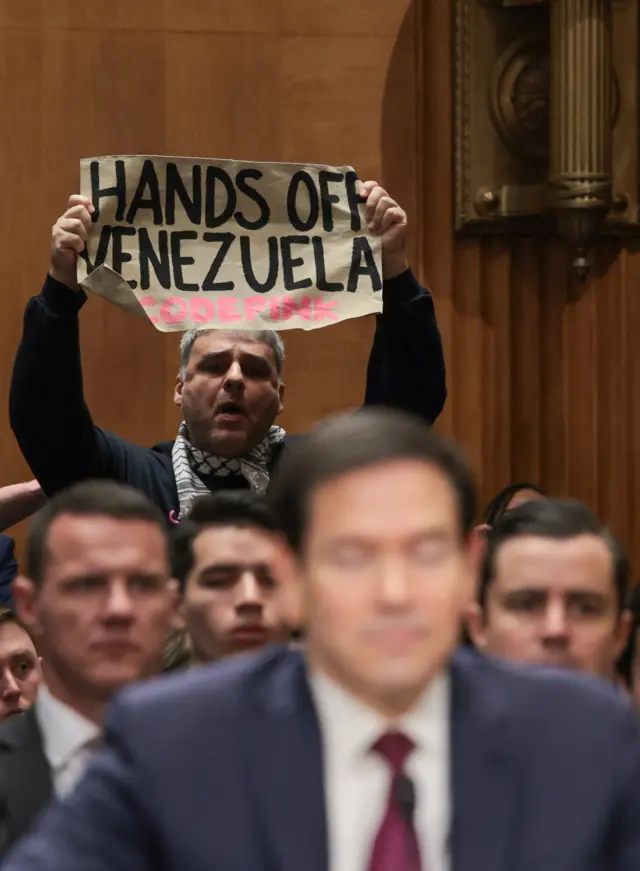
  17. Protester interrupts Rubio's opening statementpublished at 15:21 GMT

    Just as Rubio begins giving his opening statement he is interrupted by a protester in the viewing gallery.

    He stands up holding a sign and is dragged out of the chamber by security.

    "You know the drill, off to jail," the chair of the committee tells the protester.

    Rubio in Senate, behind him a man holds a sign saying 'hands off venezuela'.Image source, Reuters
  18. Rubio begins speakingpublished at 15:18 GMT
    Breaking

    Marco Rubio is now testifying to the Senate Foreign Relations Committee.

    Stay with us for the key lines, and watch live above.

  19. Chair of Senate Foreign Relations Committee kicks off hearingpublished at 15:13 GMT

    senator RischImage source, Reuters

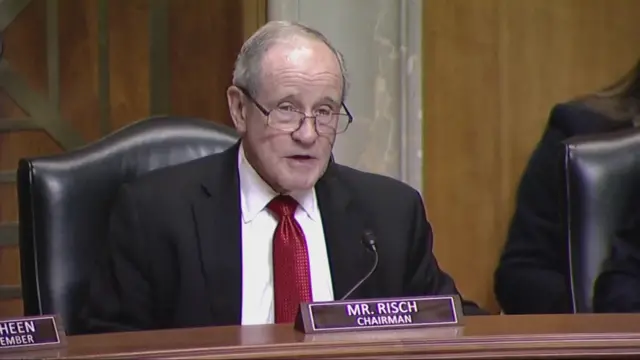
    Before we hear from Secretary of State Marco Rubio, we've been hearing from Republican Senator James Risch, who chairs the Senate Foreign Relations Committee.

    He praises Rubio's involvement in the arrest of Nicolás Maduro, which he says should bring stability to Venezuela.

    He concludes by commenting that he hopes to see free and fair elections in the country soon.

  20. Analysis

    Rubio to make uncompromising stand at Senate hearingpublished at 15:03 GMT

    Gary O'Donoghue
    Chief North America correspondent

    Rubio looks set to take an uncompromising and muscular stand as he begins giving evidence to the Senate Foreign Relations committee on Venezuela – the first time since Nicolás Maduro was seized from the country and brought to the United States.

    In his opening remarks, there will be a straightforward and unambiguous threat of further violence if the US doesn’t get its way.

    "Make no mistake, as the president has stated, we are prepared to use force to ensure maximum cooperation if other methods fail," we expect him to say.

    Washington is insisting on Venezuela giving preferential treatment to US oil and gas companies; also using revenues to buy US goods and end oil shipments to Cuba.

    But he’s likely to face stiff questioning from Democrats and some Republicans about any plans to restore democracy to the country – something which the administration has been silent on since the military action.