Summary

  • The Year of the Fire Horse is here - and is being celebrated by millions across Asia from Beijing to Bangkok

  • The Lunar New Year, which coincides with the first new moon of the lunar calendar, is a 15-day festival held between between 21 January and 20 February every year

  • Food is key to the celebrations. In Malaysia and Singapore, yusheng - a raw fish salad - is popular but it can only be eaten after being tossed by everyone with chopsticks. In South Korea, tins of luncheon meat are popular New Year gifts

  • In China, authorities have launched their annual crackdown on what they deem antisocial content. This year that includes posts celebrating the virtue of not having children, writes our China correspondent Stephen McDonell

  • Meanwhile in South Korea, people are continuing a recent trend of opting for simpler rituals, Seoul correspondent David Oh reports. More than 60% have said they will not hold the traditional, and elaborate, charye tables honouring ancestors this year

  1. Wishing you all a prosperous Year of the Fire Horsepublished at 09:54 GMT 17 February
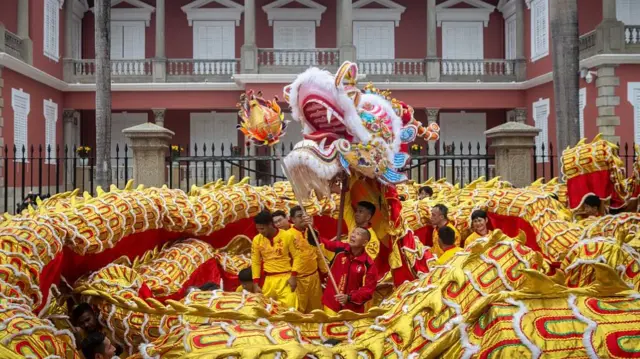
    A giant golden dragon surrounding Lunar New Year dancersImage source, Getty Images

    Thank you for joining our dragon dance around around the world this Lunar New Year.

    We have had our fill of mandarin oranges, sticky rice cakes and rowdily-tossed fish salad. Now it's time to gallop into the Year of the Fire Horse with hopes that it will be an auspicious one.

    Here's a roundup of the festivities from our teams across the Asia Pacific and beyond.

  2. In China, a very beep boop new yearpublished at 09:48 GMT 17 February

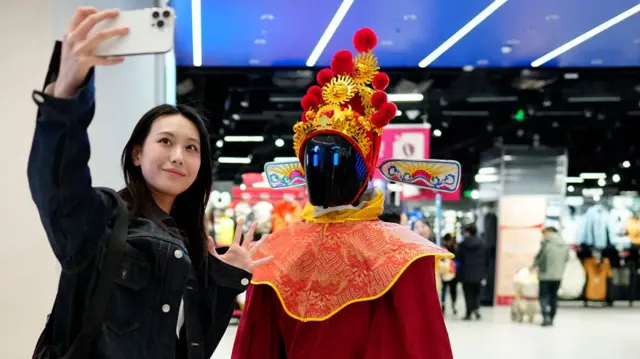
    A young woman taking a selfie with a robot dressed in a red traditional Chinese costumeImage source, Getty Images

    In recent years, robots have increasingly featured in Lunar New Year celebrations across China.

    Last week, Shanghai-based start-up Agibot hosted an hour-long variety show, in which humanoid robots took centre stage in segments spanning dance, comedy and music.

    On this year's Spring Festival gala, China's signature new year TV programme, we'll see humanoids from four start-ups performing on stage for a national audience.

    China has made massive investments in robots and artificial intelligence, and experts say Chinese firms are well positioned to dominate the global humanoid robot market.

  3. What's on the table in Vietnam?published at 09:42 GMT 17 February

    Thuong Le
    BBC World Service

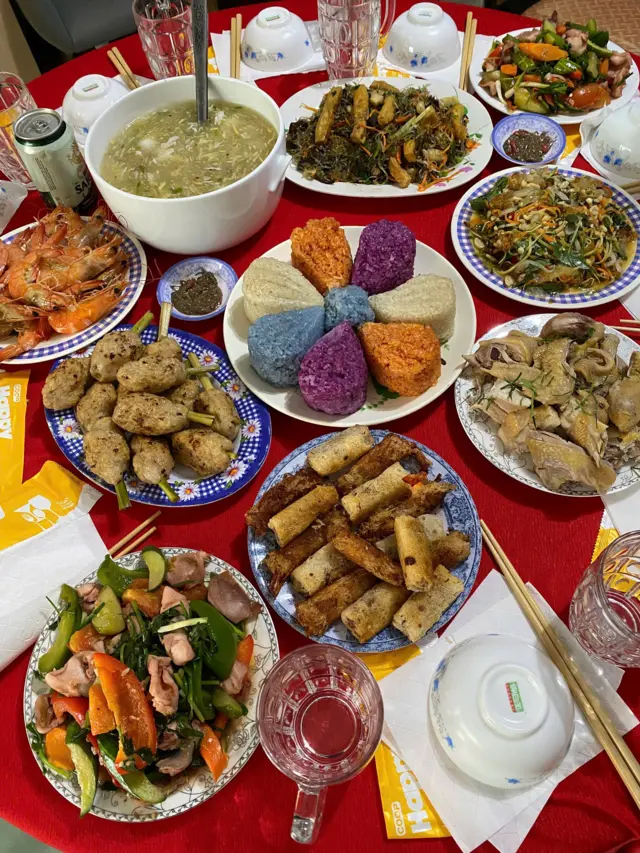
    A spread of Vietnamese food on a table covered in red tablecloth

    Food plays a central role in the Vietnamese new year celebration, locally known as Tet. Dishes vary by region but often include sticky rice cakes.

    In the north, families prepare bánh chưng-a square cake wrapped in banana leaves and filled with glutinous rice, mung beans and pork. In the south, a cylindrical version known as bánh tét is more common.

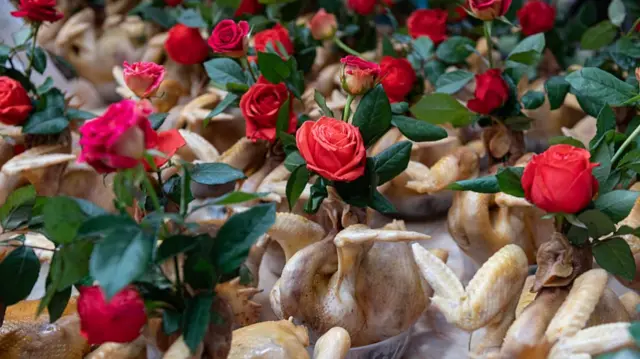
    One offering stands out for both its simplicity and symbolism: a whole boiled chicken, often presented with a red rose placed carefully in its beak. The chicken is served intact, with its head and feet attached, symbolising completeness and unity-qualities families hope to carry into the new year.

    Arranged upright on a platter, sometimes with its wings neatly folded, it conveys alertness and dignity.The bright red rose provides a vivid contrast against the chicken’s golden skin.

    Red, strongly associated with luck, happiness and prosperity in Vietnamese culture, reinforces wishes for good fortune in the year ahead.

    Rows of boiled whole chickens decorated with red rosesImage source, Getty Images
  4. Draco Malfoy: An unlikely Lunar New Year mascot in Chinapublished at 09:36 GMT 17 February

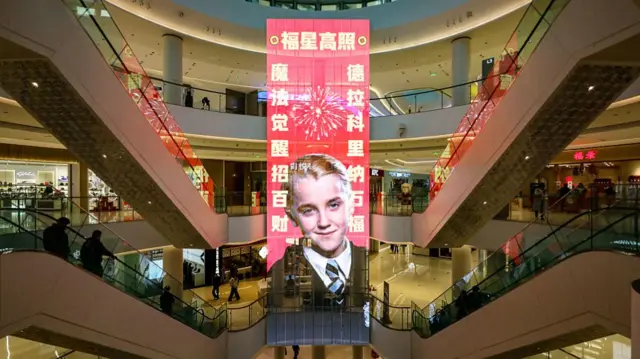
    A red banner featuring a photo of Draco Malfoy hanging in the middle of a shopping mallImage source, AFP via Getty Images

    Draco Malfoy is best known as the young antagonist in the Harry Potter series. But now, the character is also making a festive appearance in China.

    Images of Malfoy, played by actor Tom Felton, have popped up as new year decorations in China, sold on e-commerce sites, pasted on front doors and cast as a giant banner in one shopping mall.

    His sudden popularity is thanks to the Chinese translation of his name Malfoy, Ma-er-fu. It contains the words for horse and fortune, ringing especially auspicious for the upcoming Year of the Horse.

    The meme also took off thanks to Harry Potter's massive popularity in China. Next year Shanghai is set to welcome the largest Making Of Harry Potter studio tour.

    "[It's an] oriental new year with magical elements," one user on social media site Weibo commented.

  5. Money trees and no time off in London's Chinatownpublished at 09:24 GMT 17 February

    George Wright
    BBC News in London's Chinatown

    Wendy Chan

    The Lunar New Year celebrations are yet to kick off in London's Chinatown, with only a scattering of people unloading vans ahead of the big day.

    One woman sheltering from the cold was Wendy Chan, owner of Loon Fung supermarket, who was having a sandwich and cup of tea ahead of what she was expecting to be a busy day.

    "Every new year I'm working. So many people buy something - trees, flowers, lucky treats, money trees," she says, handing me a red envelope, a decoration symbolising prosperity and good luck.

    Wendy came to the UK from Hong Kong as a teenager 45 years ago and her children were born here.

    As much as she says it's an important day for her and her family, she won't be taking time off.

    "I've no time to celebrate!" she laughs.

  6. Family reunions and the traditional dress in Vietnampublished at 09:13 GMT 17 February

    Thuong Le
    BBC World Service

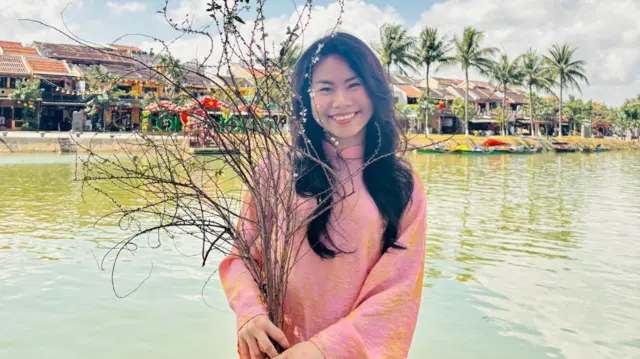
    Woman wearing a pink traditional dress by the river in Vietnam

    In Vietnam, the Lunar New Year or Tet is the most important festival of the year. It is both a public holiday and a deeply personal occasion centred on family, tradition and hopes for renewal.

    Vietnam’s celebration has its own distinct character, shaped by centuries of history and cultural identity. For many Vietnamese people, Tet is synonymous with reunion. In the days leading up to the holiday, major cities grow noticeably quieter as migrant workers, students and overseas Vietnamese return to their hometowns.

    “Always proud to be a Vietnamese, always be home for Tet,” says Nhi Nguyen, who comes home to family every year for the holiday.

    Nhi notices how quickly her country is transforming. “People’s living standards have improved. For example, eating at restaurants or traveling is no longer considered a luxury but has become part of everyday life.

    She also notices how the traditional dress - the áo dài - has become more common, when before it is only worn on special occasions.

  7. 'Crying horse' toys go viral in Chinapublished at 09:02 GMT 17 February

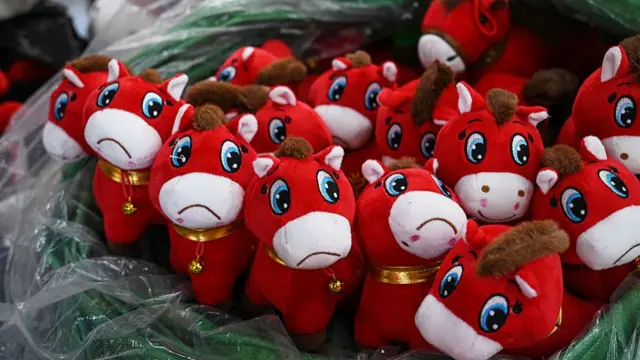
    A bunch of crying horse stuffed toys sitting on a clear plastic sheetImage source, AFP via Getty Images

    A frowning horse plush has become a viral bestseller ahead of Lunar New Year celebrations for the year of the horse in China.

    The sad-looking soft toy was originally made in error after a worker sewed a smile on the horse upside down, the owner of Happy Sister - a shop in the eastern city of Yiwu - has told Reuters.

    After an image of it started circulating online, the horse began selling out. Some say the animal's gloomy expression resonated with young workers.

    "A lot of customers like it, and they said it makes sense: that it suits the spirit of today's corporate slaves," said Zhang Huoqing, Happy Sister's owner.

    "People joked that the crying horse is how you look at work, while the smiling one is how you look after work."

  8. World welcomes Lunar New Yearpublished at 08:51 GMT 17 February

    With fireworks and dragon dances, millions ushered in the Year of the Fire Horse.

    Media caption,

    Lunar New Year 2026: Celebrations around the world

  9. China’s tech giants race to unveil new AI modelspublished at 08:41 GMT 17 February

    Suranjana Tewari
    Asia Business Correspondent

    China has placed robotics and artificial Intelligence (AI) at the centre of its manufacturing strategy - and this Lunar New Year, its tech giants are racing to unveil new AI models.

    DeepSeek is reportedly preparing to launch its next-generation V4 model, following the success of V3, which briefly overtook ChatGPT to top Apple’s US app store rankings.

    TikTok-owner ByteDance has upgraded Doubao, China’s most-used AI chatbot, and released Seedance 2.0, a video-generation model capable of producing cinematic clips from minimal prompts.

    Alibaba has rolled out Qwen 3.5, promoting “agentic commerce” - AI-driven online shopping - after a $400m coupon campaign generated more than 120 million orders in six days.

    Start-ups Zhipu AI and MiniMax, dubbed China’s “AI tigers”, have launched new open-source models and raised hundreds of millions in Hong Kong listings.

    Meanwhile, Tencent, iFlytek, NetEase Youdao and robotics firm Dexmal have introduced models targeting mobile devices, enterprise users and real-world robotic applications.

    Depseek logo shown on mobile phoneImage source, Getty Images
  10. When was the last Year of the Fire Horse?published at 08:32 GMT 17 February

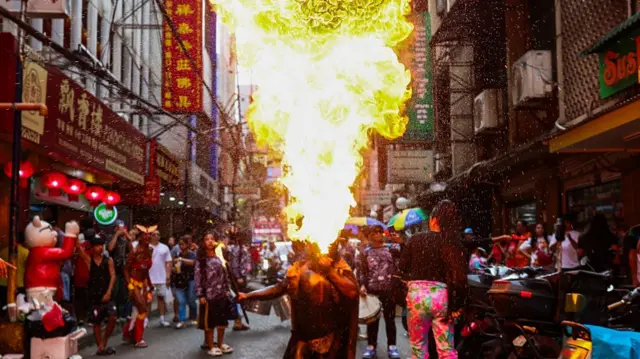
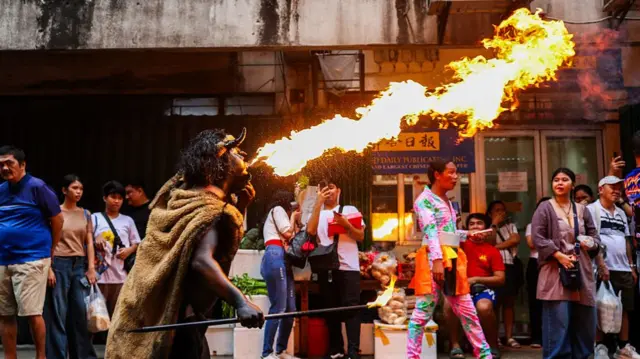
    Street performer breathes fire at a Chinatown streetImage source, Getty Images

    It was in 1966.

    As we posted earlier, the combination is a result of a pairing between one of the 12 animals in the zodiac and one of the five elements - wood, fire, earth, metal and water.

    Each unique pairing between an animal and element carries a different energy and comes around once every 60 years.

    In the Chinese zodiac, the horse is known for its vitality and confidence. These traits may be fuelled further by the fire element, say Chinese astrology experts.

  11. Scenes from Bangkok's Chinatownpublished at 08:27 GMT 17 February

    Thanyarat Doksone
    Producer, BBC News Bangkok

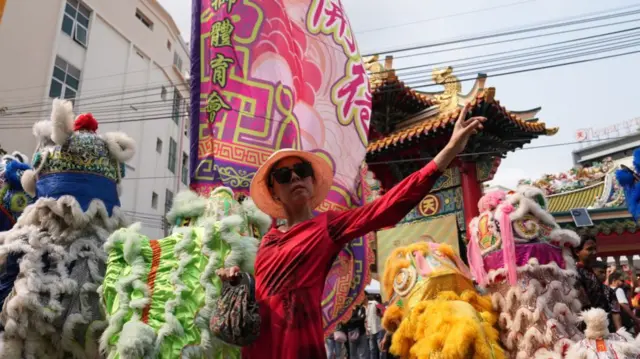
    Woman in red surrounded by lion dancers

    Yu Kanticha, a 50-year-old resident of Chachoengsao province in Thailand, drove more than one hour to Bangkok’s Chinatown so that her young niece and two nephews could see the dragon dance this morning.

    “The kids like the dragon dance. They’re so excited. Two of them have never seen it before," she tells us.

    "It’s still worth coming here even though it’s visibly less festive than the previous years. I’ve been coming here every year to pray at a temple here."

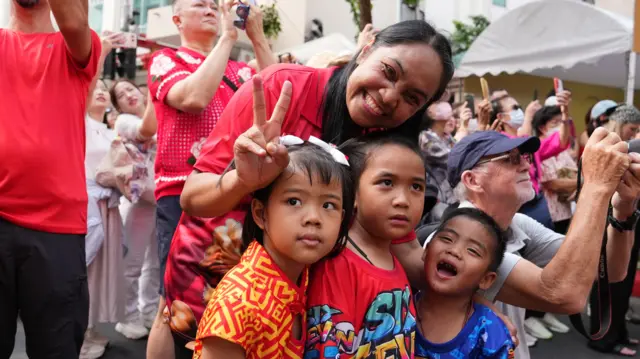
    A woman flashes the peace sign while holding three children

    Watchara Tantajiranuwat, 39, from Nonthaburi province in Bangkok’s outskirts, is in Chinatown with her mother, her husband and their five-year-old son.

    Praying at the temple for good fortune has become an annual ritual, she tells us.

    “My ancestors are Chinese, so naturally we have to come. I made a wish for everything in this new year to run smoothly. I asked for good luck and good health for everyone in the family."

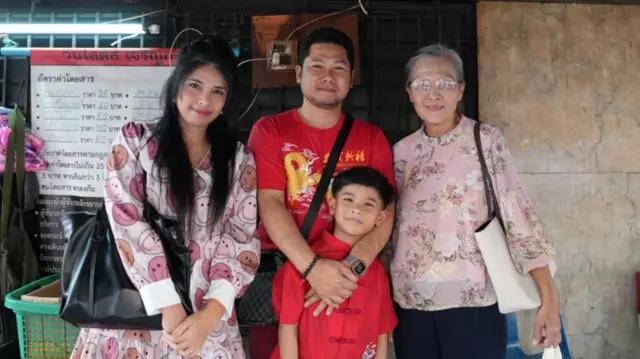
    A family of four, including one boy, posing for a photo
  12. More pictures of celebrations from around the worldpublished at 08:20 GMT 17 February

    Here are more images of Lunar New Year festivities from around the world.

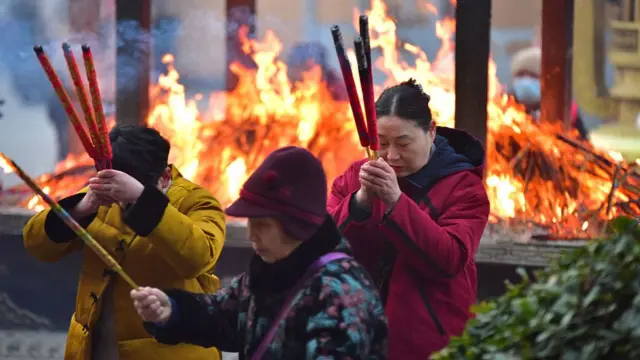
    People holding large incense sticks while praying with a fire burning in the backgroundImage source, Getty Images
    Image caption,

    People pray for good fortune as they hold burning incense in Fuyang, Anhui Province in China

    Man breathing fire at a parade in Manila ChinatownImage source, Getty Images
    Image caption,

    A man entertains the crowd at Manila Chinatown by breathing fire

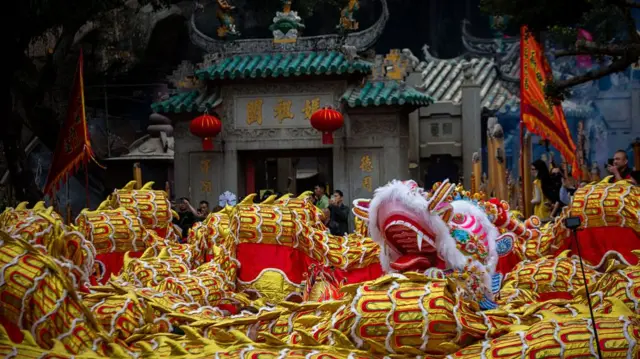
    A dragon dance in MacauImage source, Getty Images
    Image caption,

    A dragon dance in Macau covers a temple gate in yellow

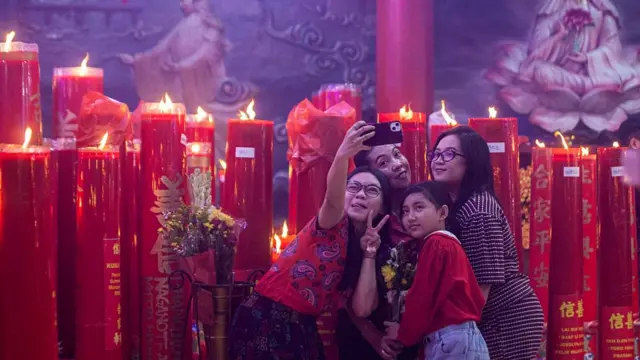
    People take a selfie at a temple in Indonesia during Lunar New YearImage source, Getty Images
    Image caption,

    People take a selfie at a temple in Indonesia

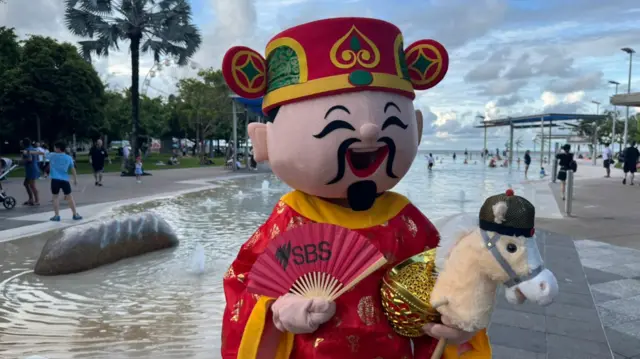
    A mascot holds a stuffed horse in Cairns, AustraliaImage source, Simon Atkinson/BBC
    Image caption,

    A mascot holds a stuffed horse in Cairns, Australia

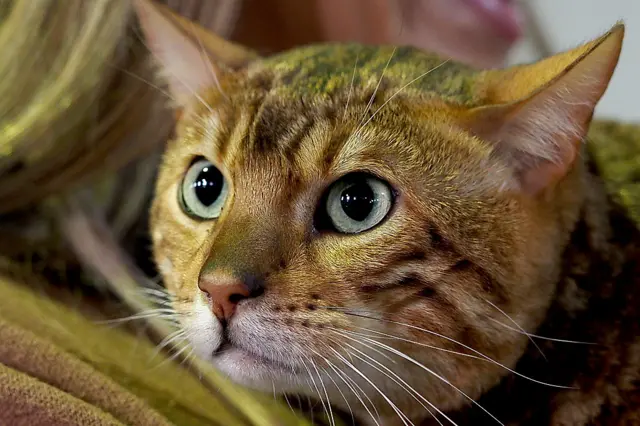
  13. Why isn't the cat in the Chinese zodiac?published at 08:13 GMT 17 February

    Legend has it that the Chinese zodiac was created when the Jade Emperor invited all the animals to a race across a river on his birthday.

    According to these myths, the Cat too was one of the contenders. But it dropped out of the race after getting tricked by the Rat. There are different tales as to how this deceit unfolded.

    In one of them, the Rat and Cat were both riding the Ox, when the competitive rodent pushed the Cat into the river, leaving it struggling for survival.

    In another version, the Cat was said to have overslept and missed out on the race.

    Thus, the legend goes, began the enmity between cats and rats - and it's the reason why the cat is not in the Chinese zodiac.

    However, the cat's legacy lives on in Vietnamese culture - it replaces the rabbit in their zodiac.

    A portrait of a pedigree feline during the International Cat Show organized by ANFI Campania (Associazione Nazionale Felina Italiana).Image source, Getty Images
  14. What is the 'Chinamaxxing' trend on social media?published at 08:07 GMT 17 February

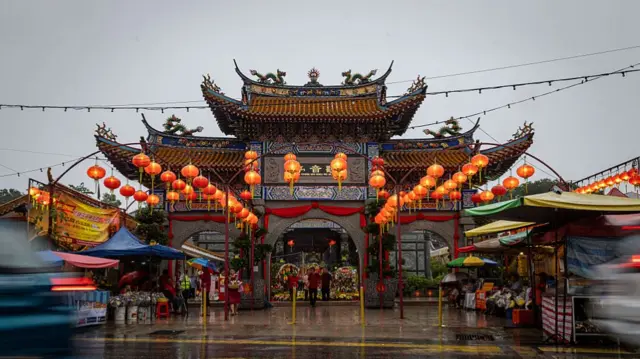
    A Buddhist temple in Malaysia is lit up for the Lunar New YearImage source, Getty Images

    A TikTok trend called "Chinamaxxing" has taken off in the West, just in time for Lunar New Year.

    Chinese wellness practices, once associated with the tacky and geriatric, have suddenly found themselves in vogue, largely among Americans.

    From warm apple-boiled water to indoor slippers and longevity exercises, people are sharing videos of themselves "learning to be Chinese". Many come with the Fight Club-inspired caption "you met me at a very Chinese time in my life", or the hashtag #newlychinese.

    We are all Chinese now, it seems. Read the full story here.

  15. 'We took the kids out of school for a culture day'published at 07:51 GMT 17 February

    Lana Lam
    BBC News, Sydney

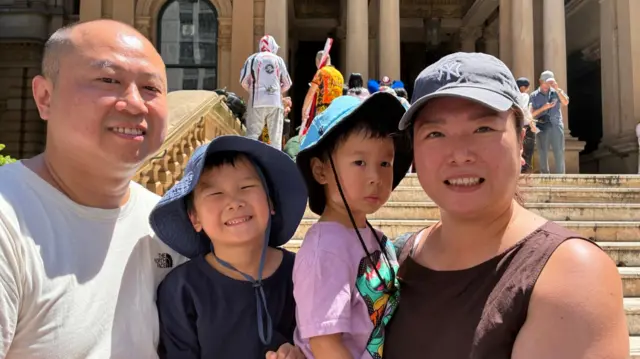
    A family of four - a man, a woman and two young boys

    Hong Kong-born Australian Christina Yuen, 42, and her husband Frank Bui, 45, have taken their two young sons out of school today but for good reason.

    "It's a culture day," Christina tells the BBC on the steps of Sydney's Town Hall where the family have just watched a traditional Chinese lion dance.

    "It's important for them to learn about their roots and understand Lunar New Year while growing up in Australia."

    "Both our families are quite traditional and we want to keep that going but it's a bit lost on their generation now. For example, we try to maintain Cantonese, but it's hard."

    Harrison, 4, and his big brother Oliver, 6, are in the front row when the Chinese lions make a beeline for them, so they both get to stroke the nose of the lion, which is meant to bring good luck for the new year.

    As the dance finishes, the family are heading to a toy shop - looks like the kids' luck has already started.

  16. In Chinese workplaces, the horse becomes a double-edged symbolpublished at 07:30 GMT 17 February

    Sylvia Chang
    BBC Chinese, Hong Kong

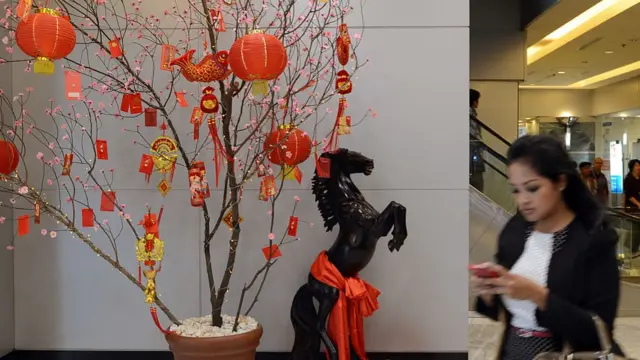
    Blurred image of a woman typing on her mobile phone with a horse statue and a plant adorned with red money envelopes in the backgroundImage source, Getty Images

    Dr Christian Yao, a senior lecturer at Victoria University of Wellington's School of Management in New Zealand, tells the BBC that expressions using horse imagery are likely to appear widely in workplace speeches, presentations and email subject lines in 2026.

    He said such language in the workplace becomes a tool of "soft governance" whereby employees are encouraged to reflect the proactive, speedy attributes of the Fire Horse.

    Many young professionals now use animal imagery as shorthand for their working lives. In corporate and official settings, they echo the slogans about speed, momentum, and "success at a gallop" in the Year of the Horse.

    At the same time, some describe themselves as "niuma" - literally "ox-horse", a slang term for an overworked beast of burden.

    "The coexistence of these two languages", Dr Yao says, "captures the most typical tension in today's Chinese workplace: the need to keep up an uplifting narrative in public, while privately admitting burnout and powerlessness.”

  17. Vietnamese people remember their dead during the festive seasonpublished at 07:13 GMT 17 February

    Duc Ha
    BBC World Service

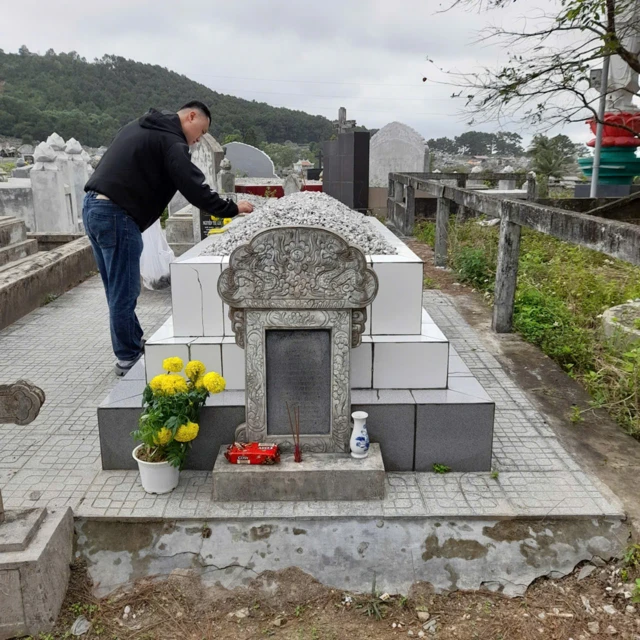
    The first day of the Lunar New Year in Vietnam is traditionally dedicated to family. While some visit temples to pray for peace, many others flock to cemeteries to offer incense in memory of their dead.

    It is a day of remembrance, where the scent of burning incense symbolises the enduring bond between the living and their ancestors. Believing that the deceased share the same needs as the living, many families include contemporary snacks alongside their traditional offerings.

    In certain regions, the tradition extends beyond family. Visitors light incense on graves of people unrelated to them. It's a gesture of respect and sincerity.

    Man offering food and incense at a tomb in Vietnam
  18. Scenes from Myanmar's Chinatownpublished at 07:01 GMT 17 February

    BBC Burmese Service

    We bring you now to Myanmar, in Yangon's Chinatown also known as Latha.

    Before the 2021 military coup, this area was a famous tourist spot. The Lunar Year is still celebrated, but in a less festive way.

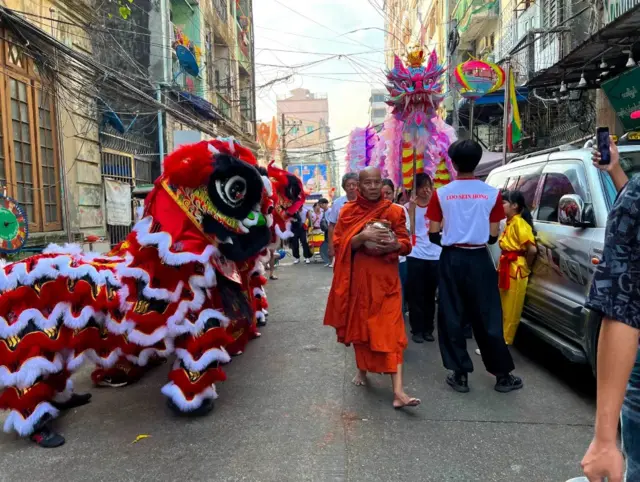
    A monk walks past a row of lion dancersImage source, Phyo Ra Tha
    Image caption,

    A Buddhist monk walks past a row of lion dancers

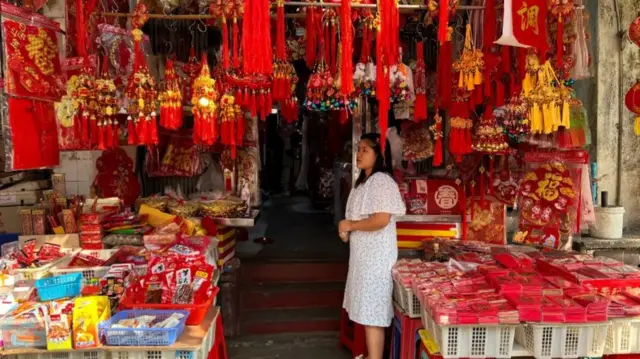
    Woman standing in a store filled with Lunar New Year charmsImage source, Phyo Ra Tha
    Image caption,

    A woman selling Lunar New Year ornaments waits for customers

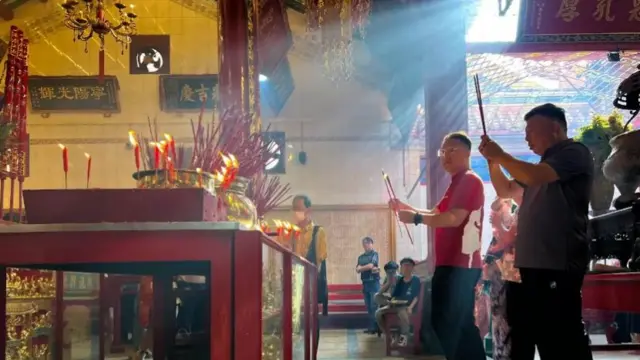
    People praying in front of lit incense sticks at a templeImage source, Phyo Ra Tha
    Image caption,

    People light incense sticks and pray at a temple

  19. In Indonesia, Lunar New Year is a celebration of cultural harmonypublished at 06:50 GMT 17 February

    Mustofa
    BBC Indonesia

    In Indonesia, Lunar New Year is seen as a moment to reflect on centuries of cultural harmony in the country.

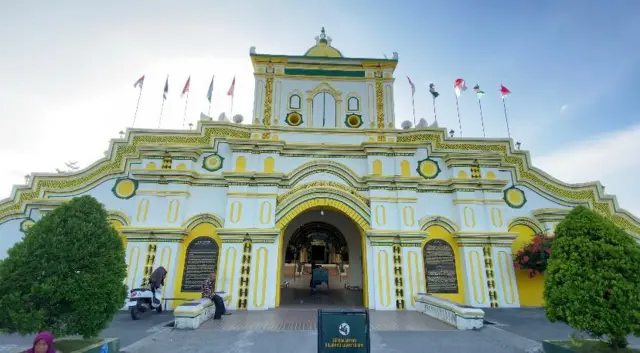
    The historic Masjid Jamik Sumenep stands as a symbol of Chinese–local culture.

    Built between 1779 and 1787 and designed by Lauw Piango, an architect of Chinese descent, the mosque blends Chinese and local architectural elements, reflecting a long tradition of mutual respect.

    Historical records show Chinese migrants arrived in Sumenep around 1740 seeking refuge during unrest in Java.

    They were welcomed by local rulers and communities. Many married locals, forming a Chinese-Muslim community.

    Herman Susanto, 37, a Chinese Muslim, says he still celebrates Lunar New Year or Cap Go Meh, although not on a large scale. “Just as a form of respect. Many of my cousins are non-Muslim and celebrating the day,” he said.

    Masjid Jamik Sumenep
  20. Over enthusiastic 'lohei' celebrations get Singapore students in troublepublished at 06:37 GMT 17 February

    To mark the Lunar New Year, families in Singapore and Malaysia toss a fish salad for luck and prosperity. It's a fun - and messy - tradition known as lohei.

    But a group of students at Singapore's Nanyang Technological University (NTU) have gotten into trouble for getting a little too carried away with their lohei.

    A video of around 100 students, external engaging in what can only be described as a very noisy food fight was posted to TikTok a few days ago. In addition to tossing the salad, students can also be seen throwing plastic cups and salad at each other.

    While some saw it as typical campus fun, many online were outraged by what they saw as food wastage and rowdy behaviour.

    The university has since said that the students in the video will "receive counselling".

    Not a very auspicious start to their year of the Horse...

    And for those who want to know what lohei looks like, watch the video below.

    Media caption,

    Chinese New Year food: How to get rich tossing fish