Summary

  1. Seven days into the conflict - here's what you need to knowpublished at 00:31 GMT

    As the conflict sparked by US-Israeli attacks on Iran last Saturday hits the one week mark, with Iran's retaliation drawing the wider region into the crisis. Here's a recap of developments from Friday:

    • Trump's insistence on "unconditional surrender" from Iran signals he may have given up on negotiating a deal to end the war, the BBC's North America editor Sarah Smith writes
  2. Hegseth says Trump is 'aware of who's talking to who' amid reports Russia aided Iranpublished at 00:13 GMT

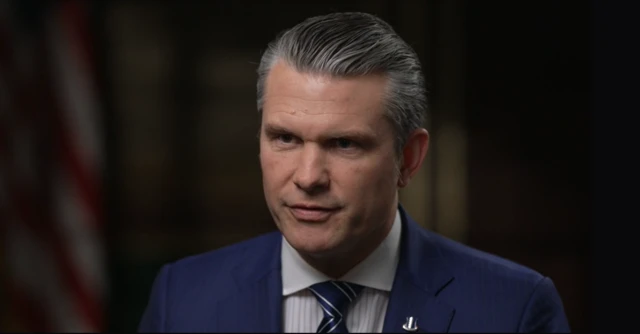
    close-up of Pete Hegseth talking in 60 Minutes interviewImage source, CBS 60 Minutes

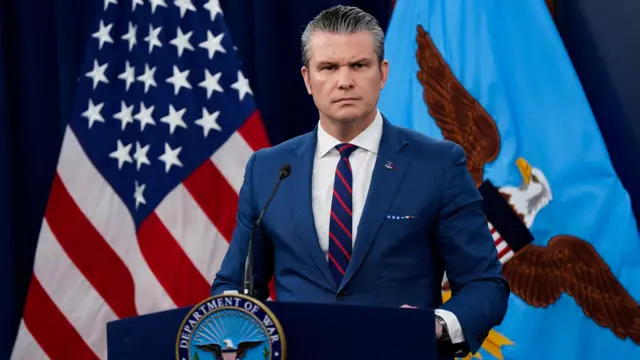
    Speaking to CBS News' 60 Minutes, US Secretary of Defence Pete Hegseth answered questions about reports that Russia has been informing Iran of US military movements in the region.

    Hegseth says the US is "tracking everything" and incorporating it all into its battle plans.

    "The American people can rest assured their commander-in-chief is well aware of who's talking to who," Hegseth told CBS. "And anything that shouldn't be happening, whether it's in public or back-channeled, is being confronted and confronted strongly."

    Hegseth added: "We're putting the other guys in danger, and that's our job. So we're not concerned about that. … But the only ones that need to be worried right now are Iranians that think they're gonna live."

    Earlier today, a senior US official told CBS News, the BBC's US partner, that Russia has been providing intelligence to Iran on US positions in the region.

    The Kremlin says President Vladimir Putin spoke with Iran's president today to offer condolences and voice Russia's stance that hostilities need to end. Both parties agreed to continue their communications, according to a statement from Putin's office.

  3. US says it has struck over 3,000 targets in Iranpublished at 23:54 GMT 6 March

    US Central Command, which directs the country's military operations, says it has hit more than 3,000 targets in Iran.

    Some 43 ships have also been damaged or destroyed as part of Operation Epic Fury, it announced in a post on X.

    The strikes are being prioritised according to "locations that pose an imminent threat" with the goal to "dismantle the Iranian regime's security apparatus".

    BBC Verify analysis of satellite images and videos has shown that Iranian schools, a hospital and landmarks are among the civilian sites that have been hit by US and Israeli strikes.

  4. Trump says US doing 'phenomenally' at taking out Iranian forcespublished at 23:35 GMT 6 March

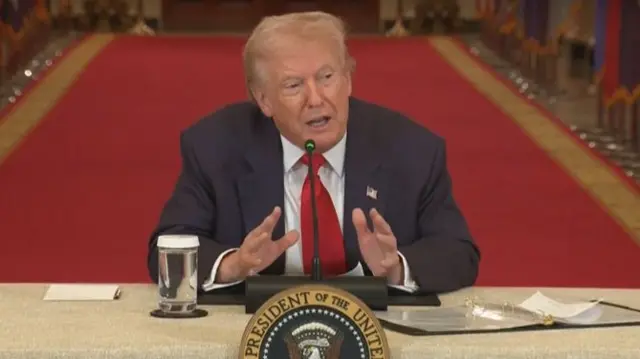
    Trump sitting at a table, speaking into a microphone and using his hands to illustrate a point, in front of a red carpetImage source, Reuters

    Speaking at a White House roundtable event focused on college sports, US President Donald Trump is asked about the conflict in Iran.

    He says the US military is doing "phenomenally" in destroying Iran's military forces, telling reporters, "their army is gone".

    "Their navy is gone. Their communications are gone. Two sets of their leaders are gone. They're down to their third set. Their air force is wiped out entirely," he says.

    "They have 32 ships. All 32 are at the bottom of the ocean."

  5. UN peacekeeping mission in Lebanon condemns attack as possible war crimepublished at 23:19 GMT 6 March

    The UN Interim Force in Lebanon (UNIFIL), a peacekeeping mission in south Lebanon, is condemning the Friday attack on its base that left three Ghanaian soldiers injured.

    "It is unacceptable that peacekeepers performing Security Council-mandated tasks are targeted," UNIFIL says, adding that it is launching an investigation into the attack.

    "Any attack on UNIFIL peacekeepers constitutes a grave violation of international humanitarian law and of the Security Council Resolution 1701 and may amount to a war crime," UNIFIL adds.

    UNIFIL said the most seriously injured soldier has been transferred to a hospital in Beirut, while the two others are being treated at a UNIFIL facility.

    This isn't the first time in recent months the UNIFIL mission in Lebanon has been targeted. In November, the IDF fired heavy artillery just a few metres away from a UNIFIL foot patrol, though no one was injured, according to the UN, external.

  6. Israel detects incoming missiles launched from Iranpublished at 22:58 GMT 6 March

    The Israel Defense Forces (IDF) says a new wave of missiles is approaching Israel from Iran.

    In its latest update on Telegram, the IDF says "defensive systems are operating to intercept the threat" and a "precautionary directive" has been issued to residents in relevant areas.

    "Upon receiving an alert, the public is instructed to enter a protected space and remain there until further notice," the force adds.

  7. Fresh explosions heard in Tehran as Israel launches new strikespublished at 22:44 GMT 6 March

    Our colleagues from BBC Persian report that explosions have resumed in the Iranian capital.

    Writing on Telegram, the Israel Defense Forces (IDF) says it "has begun a broad-scale wave of strikes on the Iranian terror regime infrastructure in Tehran".

    Earlier, a young woman in Tehran told us that "every few hours there are strikes again, almost every day".

  8. Drone strikes oil facility in southern Iraqpublished at 22:39 GMT 6 March

    A fire has broken out at an oil facility in Basra in southern Iraq following a drone strike.

    Security sources have told Reuters and AFP news agencies Iran targeted the oil complex housing foreign energy companies, with the latter reporting that while two drones were intercepted, a third got through.

  9. Iranian ambassador to UN says more than 1,300 civilians killed in strikespublished at 22:22 GMT 6 March

    Iranian ambassador to the UN, Amir Saeid Iravani, says 1,332 civilians have been killed as a result of US-Israeli strikes on the country since Saturday.

    Speaking to reporters at the UN headquarters in New York, Iravani said that according to the Iranian Red Crescent Society, women and children were among the dead.

    "Thousands more have been injured, and the numbers continue to rise," he said, adding that schools, hospitals and other civilian infrastructure had been "deliberately" targeted.

    The US has denied targeting civilian infrastructure though is investigating a deadly strike on a girls' school in Iran, while Israel has accused Iran of targeting its civilians.

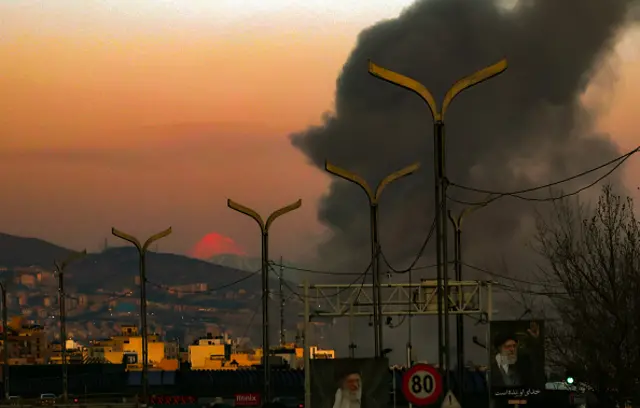
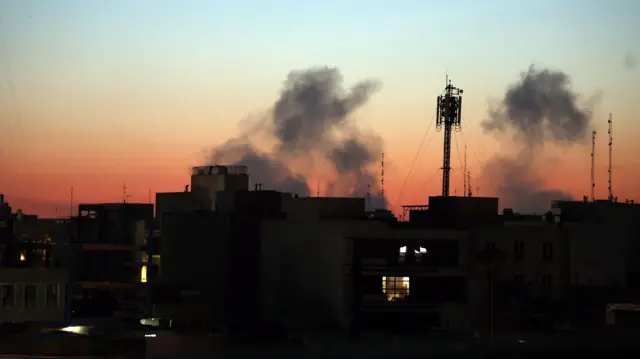
    Smoke rises over part of Tehran after strikes on the city.Image source, Getty
  10. Starmer pledges UK support for Saudi defence if neededpublished at 22:00 GMT 6 March

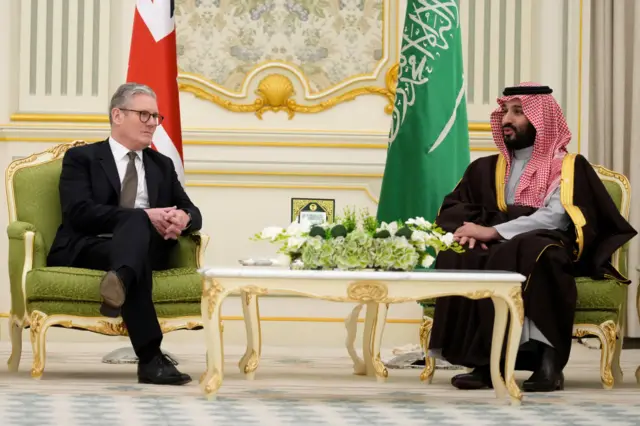
    Keir Starmer and MBS sit in ornate chairs with a coffee table between them and their national flags behind themImage source, Getty Images
    Image caption,

    Sir Keir Starmer and Saudi Crown Prince Mohammed bin Salman Al Saud during a December 2024 meeting in Riyadh

    Prime Minister Keir Starmer says the UK stands ready to help defend Saudi Arabia should it be needed.

    Starmer made the pledge to the country's de facto leader Mohammed bin Salman on Friday evening, according to a Downing Street read-out of a phone call between the two.

    "Additional British fighter jets, helicopters and a destroyer were being sent to the region, and the UK stood ready to support the defence of the Kingdom of Saudi Arabia should it be needed," a spokeswoman quoted the prime minister as having said.

    "The leaders also discussed stepping up intelligence cooperation to support defensive operations and protect civilians."

  11. Iran warns Europe not to get involved in warpublished at 21:48 GMT 6 March

    The deputy foreign minister of Iran said European nations have been warned they'll become legitimate targets if they become involved in the war.

    If any country "joins America and Israel in the aggression against Iran, they will be also legitimate targets for Iran's retaliation," Deputy Foreign Minister Majid Takht-Ravanchi told media outlet France 24.

    He noted that Iranian officials have been "negotiating in good faith" with the US.

  12. US bomber lands at UK airbasepublished at 21:32 GMT 6 March

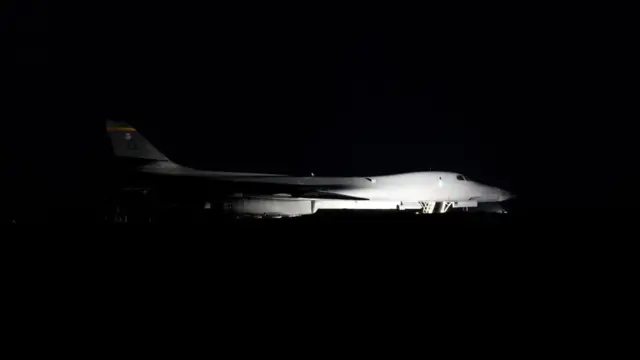
    side view of a white bomber craft with black backgroundImage source, Press Association
    Image caption,

    A Rockwell B-1 Lancer, a supersonic variable-sweep wing, heavy bomber used by the United States Air Force arrives at RAF Fairford in Gloucestershire

    A US B-1 bomber has arrived today at Royal Air Force station Fairford in Gloucestershire, UK, according to the Press Association.

    UK Prime Minister Keir Starmer agreed earlier this week to allow the US to use British bases to launch defensive strikes on Iranian missile sites, after initially denying access.

    The B-1 bomber, nicknamed "the Bone", is a long-range, multi-mission supersonic conventional bomber and the fastest bomber in the US Air Force inventory, according to Boeing.

  13. Putin speaks with Iranian Presidentpublished at 21:17 GMT 6 March

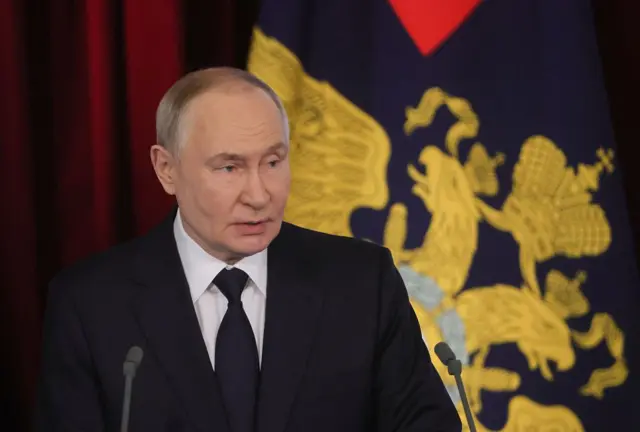
    Vladimir Putin pictured standing in front of a large flag with a yellow crest on a dark blue backgroundImage source, Getty Images

    Russian President Vladimir Putin spoke with Iranian President Masoud Pezeshkian over the phone, according to a statement from Putin's office.

    During the call, Putin expressed his condolences for the deaths of Iran's supreme leader, other government officials and civilians around the country, the Kremlin says.

    Putin also reiterated Russia's stance that the hostilities must end immediately, and that a diplomatic resolution must be found, his office adds.

    For his part, Pezeshkian expressed gratitude for Russia's support, and provided a detailed report of Iran's developments, says the statement.

    Both countries agree to continue communications with each other, the Kremlin says.

  14. US defence manufacturers agree to 'quadruple production' of weapons - Trumppublished at 21:05 GMT 6 March

    President Donald Trump has shared an update following a meeting with leading US weapons manufacturers earlier today.

    Writing on his social media platform, Truth Social, he says the defence companies have agreed to "quadruple Production of 'Exquisite Class' Weaponry".

    "We have a virtually unlimited supply of Medium and Upper Medium Grade Munitions, which we are using, as an example, in Iran, and recently used in Venezuela," he writes. "Regardless, however, we have also increased Orders at these levels."

    Trump previously claimed the US has a "virtually unlimited supply" of key weapons.

    Mark Cancian, a former US Marine colonel with the Washington-based Center for Strategic and International Studies (CSIS), says that the US could keep the current short-range level of fighting going on "almost indefinitely".

    But the longer the war lasts, the list of targets also gets smaller – meaning a gradual slowing down in the tempo of operations.

    READ MORE:How depleted weapons stockpiles could affect the Iran conflict

  15. Macron condemns Israeli strike on UN site in southern Lebanonpublished at 20:54 GMT 6 March

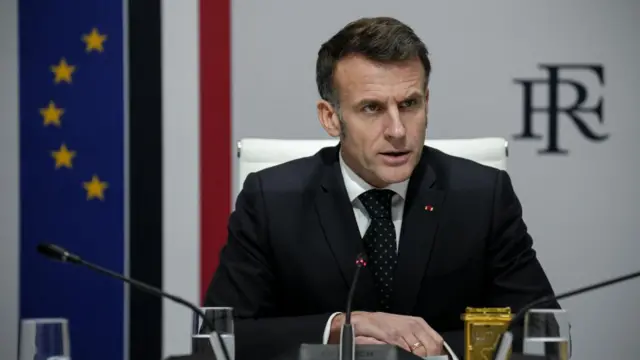
    French President Emmanuel Macron speaks during a National Defence and Security Council meetingImage source, AURELIEN MORISSARD/POOL/EPA/Shutterstock

    We've just seen an update from French President Emmanuel Macron, who has condemned an Israeli strike that hit a United Nations (UN) site in Lebanon earlier today.

    As a reminder, two Ghanaian soldiers serving with the UN's peacekeeping mission in southern Lebanon were critically injured following the strike, according to Ghana Armed Forces.

    "While the United Nations Force in Lebanon plays a key stabilization role in southern Lebanon, I strongly condemn the unacceptable attack that struck members of its contingent today," says Macron.

    After speaking with Syrian President Ahmad Al-Charaa and Lebanese President Joseph Aoun, he also reiterates the need to respect the "sovereignty and territorial integrity" of both nations.

    "The ongoing destabilisations leave no room for terrorism. France will ensure this," vows Macron.

  16. Qatar says it has intercepted nine Iranian dronespublished at 20:39 GMT 6 March

    Qatar's defence ministry says the country was "subjected to waves of attacks" from Iran involving 10 drones, starting from dawn on Friday until the early evening.

    Nine drones were intercepted and one struck an uninhabited area without causing casualties, it says in a statement on social media.

  17. Analysis

    Trump signals he intends the war to continue until Tehran fully capitulatespublished at 20:26 GMT 6 March

    Sarah Smith
    North America editor

    Smoke rises after an airstrike in central Tehran, Iran, 06 March 2026.Image source, EPA
    Image caption,

    Smoke rises after an air strike in Iran's capital Tehran

    By insisting on “unconditional surrender’ from the Iranian regime, Donald Trump seems to be ruling out the possibility of a negotiated solution that could bring the war to a swift end.

    When he first launched the attacks on Iran, Trump speculated that the conflict could be over in two or three days if Iran agreed to a deal - or could last for four to five weeks.

    The president’s social media post signals that US intends to continue the war until the government in Tehran fully capitulates.

    Trump is also insisting that he should have a personal say in who will become Iran’s next supreme leader.

    He has said he needs to be involved in the appointment, and wrote in social media post today that “after… the selection of a Great and Acceptable leader… America will work to Make Iran Great Again”.

    He said that the US had several people in mind who could take over Tehran but they have all been killed in US and Israeli air strikes.

  18. BBC Verify

    Verified video shows drone strike in Iraq town close to Iranian borderpublished at 20:11 GMT 6 March

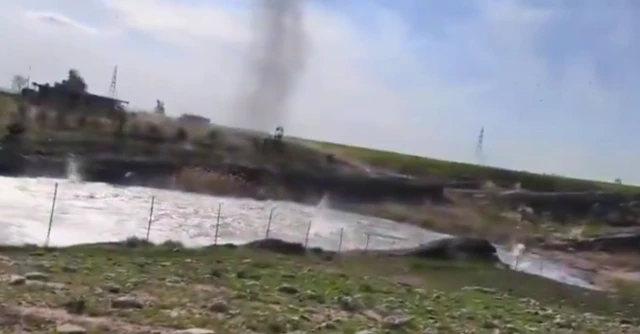
    A screengrab from the verified video

    By Peter Mwai

    We’ve verified a video of a drone strike in the Iraqi town of Koy Sanjaq, close to the Iranian border.

    The video shows a delta-wing object falling from the sky and exploding close to a small lake as gunshots and the distinctive sound of a drone can be heard in the background.

    The person filming the video dives to the ground at the moment of impact and then turns back to film smoke rising near the lake.

    We were able to pinpoint the location from where the video was filmed by matching two nearby pylons to satellite images of the area.

    Koy Sanjaq sits in the Kurdistan region of Iraq. It is reportedly home to many Assyrian families displaced from the Iraqi city of Mosul in 2014, when the so-called Islamic State seized the city from the Iraqi army.

  19. Mixed messaging from the US about how the war with Iran could endpublished at 19:54 GMT 6 March

    Bernd Debusmann Jr
    Reporting from Washington DC

    U.S. Secretary of Defense Pete Hegseth holds a briefing amid the U.S.-Israeli conflict with Iran, at the Pentagon in Washington, D.C., U.S., March 2, 2026.Image source, Reuters
    Image caption,

    US Secretary of Defense Pete Hegseth pictured holding a briefing on Iran on Monday

    There's been mixed messaging coming from the White House and the wider administration on how the war in Iran ends.

    A short while ago, White House Press Secretary Karoline Leavitt told reporters that the campaign could last between four and six weeks - similar to what President Trump said in the days immediately following the initial strikes last week.

    Pentagon officials and Defence Secretary Pete Hegseth, however, have largely declined to offer any timeline, saying that the strikes could drag on longer if the president deems it necessary so that the United States military can achieve its various objectives.

    Earlier today, Trump took to social media to say that he expects "unconditional surrender" from Iran - a suggestion that Iran's government so far seems, at least publicly, unwilling to consider.

    These shifting timelines are likely to prompt more questions about the administration's "day after" planning - the metrics by which they will assess success and how exactly they see the campaign progressing.

    The longer the fighting continues, the more politically complicated these questions will become for Trump, who campaigned on a promise of ending the type of "forever wars" that the US found itself embroiled in during the "Global War on Terror" that began after 9/11.

  20. Schools in Beirut transformed into shelters for displaced familiespublished at 19:39 GMT 6 March

    Alice Cuddy
    Reporting from Beirut

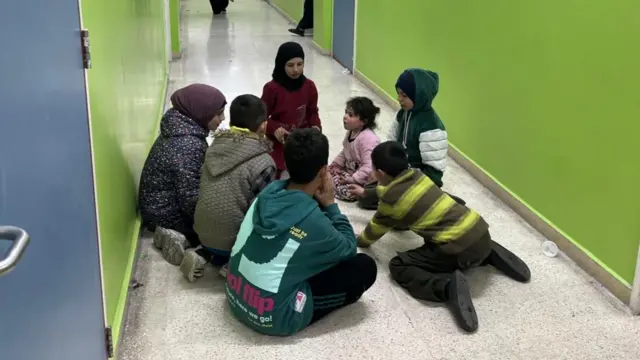
    Children sheltering in a school, transformed into a makeshift shelter in Beirut

    Schools here in the Lebanese capital Beirut have been transformed into shelters as growing numbers of people are forced from their homes.

    At one housing dozens of displaced families, a mother and daughter grinned as they were told this evening that there was room for them to stay.

    “We’re trying our best to carry on… we didn’t want this to happen but it’s not in our hands,” 45-year-old Hamida from the southern Beirut suburb of Dahieh told me. “God knows [how long this will go on]. Maybe longer than the last war,” she said.

    Another woman who had fled from the southern city of Tyre said she stayed here during the last war between Israel and Hezbollah.

    “Because of that we knew to come here straight away this time,” 65-year-old Hala al-Zein said. “Of course, everyone is afraid, but we always have to have hope - we have to have hope for our kids.”

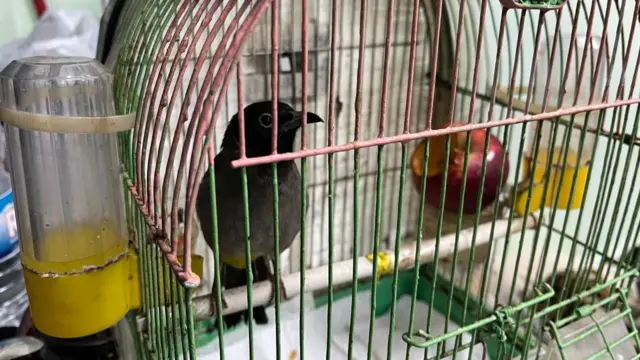
    Photo of Bassima's pet bird, Bulbul, in a case at a shelter in Beirut
    Image caption,

    Fifty-five-year-old Bassima brought her pet bird Bulbul and a bag of essentials with her to a school acting as a shelter

    At another school in the city, volunteers this evening prepared mattresses for displaced families.

    Fifty-five-year-old Bassima was among those staying there, after fleeing from her home in Dahieh on Monday, bringing her pet bird Bulbul and a bag of essentials with her.

    “We’re really overwhelmed… this is always happening and we’re getting tired but this is our destiny. Hopefully in the end something good will happen."