Summary

  1. Ukraine secures EU loan as Russia blames Kyiv for 'unleashing war'published at 16:10 GMT 19 December 2025
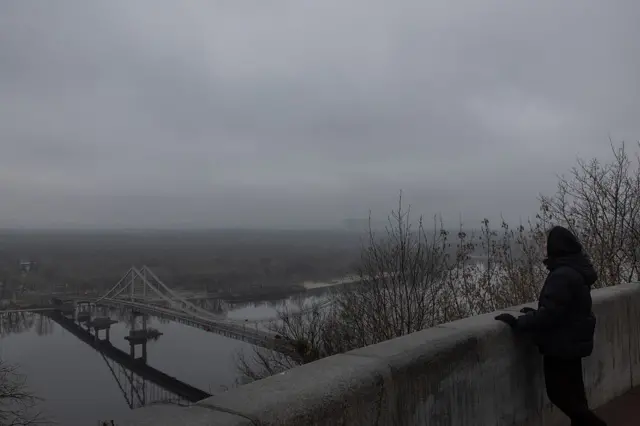
    A woman looks out over the Dnipro River and the city skyline in KyivImage source, Getty Images
    Image caption,

    A gloomy Dnipro River and the city skyline in Kyiv this morning

    Russian President Vladimir Putin marked the end of the year with a mammoth address, taking questions from the media and the public and outlining his view of the world.

    Ukraine's Volodymyr Zelensky was in Poland to highlight the important role Kyiv and Warsaw play for the security of Europe. He also thanked EU leaders for agreeing to provide his country with a €90bn (£79bn; $105bn) loan - although approval only came after a fraught, at times heated, summit.

    We'll be ending our live coverage of those two headlines shortly - but before we do, here's a quick recap of what's happened today:

    • The €90bn loan to Ukraine agreed by EU leaders was reached as an alternative to using €200 billion of frozen Russian assets to fund Ukraine's war effort - more on those assets here
    • Belgium - where most of Moscow's assets are held - refused to release the cash without assurances that it would be protected in case the Kremlin decided to sue
    • Responding to the news, Kremlin envoy Kirill Dmitriev says: "law and sanity win… for now"
    • But the war continues, as Ukraine claims it has struck - for the first time - a Russian tanker in the Mediterranean Sea - read why that matters here
    • Meanwhile in Russia, Putin tells the BBC that Western leaders are "making Russia the enemy" during his end-of-year address
    • The Russian president accuses Ukraine of 'unleashing the war' and says it's "refusing to end this conflict using peaceful means" - these are familiar justifications, our Russia editor Vitaliy Shevchenko writes
  2. What Putin said about Ukraine peace negotiationspublished at 15:42 GMT 19 December 2025

    Elizaveta Fokht
    BBC News Russian

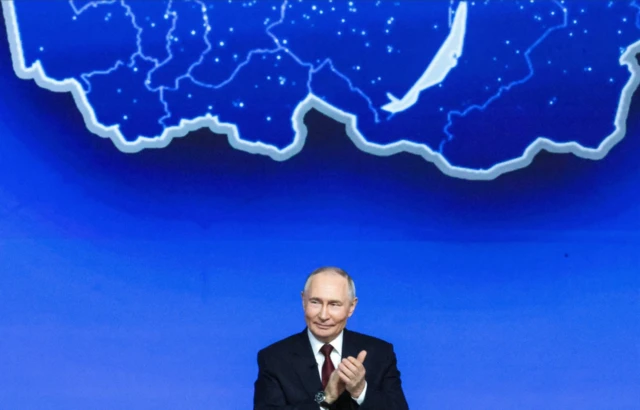
    Wide shot of Vladimir Putin clapping as he sits in front of a blue screen showing the lower portion of a graphic of RussiaImage source, Reuters

    After talks on ending the war in Ukraine in Berlin earlier this week, the US representatives said that 90% of the problems standing in the way of peace had been resolved at the meeting.

    It is quite hard to believe this after watching the first 20 minutes of Vladimir Putin’s press conference.

    In his speech, he repeated the now-familiar phrase that Russia is ready for negotiations — on the conditions he outlined at a meeting of the Foreign Ministry last summer. This is the toughest and most maximalist version of the demands.

    Among them are the withdrawal of the Ukrainian Armed Forces from all regions that Russia considers its own (moreover, within their administrative boundaries), Ukraine’s refusal to join Nato, its non-nuclear and neutral status, as well as “demilitarization” and “denazification”— that is, reductions in the army and armaments and political changes demanded by Moscow.

    If Moscow truly expects precisely these concessions, it is impossible to imagine that the Kremlin would agree, for example, to a package of security guarantees that European leaders and a US delegation discussed last week with Ukrainian President Volodymyr Zelensky.

    The sense that Russia is preparing for the end of the war was also dispelled by Putin’s subsequent statements.

    He spoke in detail about successes at the front, and a military officer was also invited to the press conference, who told those gathered about allegedly-committed crimes by the Ukrainian Armed Forces against civilians (without evidence).

    However, it had already become clear from Putin’s speech at the Collegium of the Russian Ministry of Defense earlier this week: Russia is preparing to continue military operations in 2026 as well.

  3. Slovakia says it still supports Ukraine's EU ambitions - but won't contribute to the loanpublished at 15:18 GMT 19 December 2025

    Rob Cameron
    BBC Prague Correspondent

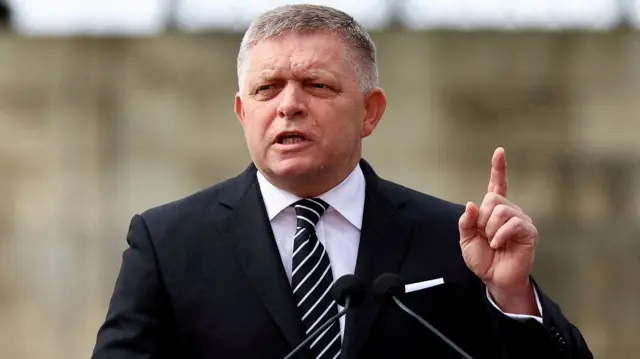
    Slovak Prime Minister Robert FicoImage source, Reuters

    “I have fulfilled my task,” Slovakia’s Robert Fico announced in an official statement released via the Slovak government office.

    “Slovakia will not be part of any loan when it comes to Ukraine’s wartime needs,” he went on, adding that his country believed there was no military solution to the war.

    Critics say Fico - along with Hungary’s Viktor Orban - has become one of the Kremlin’s most valuable assets in the European Union, consistently adopting the positions and rhetoric of Moscow.

    The Slovak PM has met Vladimir Putin three times in the past 12 months, and has said the Russian leader has been "wrongly demonised" by the west. He says the roots of the conflict go back long before 2022, and has spoken of “the rampages of Ukrainian neo-Nazis” in 2014.

    However, he stressed Slovakia remained a strong supporter of Ukraine’s EU ambitions, and pointed out his country was supplying Ukraine with electricity and also allowed reverse flows of gas.

  4. Analysis

    How much does a €90bn loan affect EU finances?published at 15:03 GMT 19 December 2025

    Dearbail Jordan
    Senior business and economics reporter

    Just how much of a dent does a €90bn (£79bn; $105bn) loan put in the EU’s coffers? There are a few things to bear in mind.

    The EU budget covers a seven-year period. The current one runs up to 2027 and is €1.2 trillion (£1 trillion; $1.4 trillion).

    It might seem like oodles of dough but break it down and it works out at an annual average of around €171bn (£150bn; $200bn). A €90bn loan looks pretty significant against that.

    However, the loan will not be coming out of the EU’s budget. Instead, the EU will go to financial markets to raise the money for the loan to Ukraine.

    It will be guaranteed against what is known as the budget headroom, or a buffer. This is the difference between the maximum amount the European Commission (EC) – the EU’s executive arm – can ask countries to contribute to the budget and spending.

    In addition, €90bn will not be handed over to Ukraine in one fell swoop. The interest-free loan will be given to Ukraine over 2026 and 2027, according to Melanie Debono, senior Europe economist at Pantheon Macroeconomics.

    She adds that it is “unlikely” that the EU’s credit rating will be affected by having to borrow more money.

    That, she says, is “dependent on a number of things, not least among them the stability of the governments issuing the debt which, of course, includes the likes of Germany which no-one thinks is about to fail on its debt”.

    In the end, this is a loan and therefore should be repaid by Ukraine. So, what are the chances of that?

    The EC said the “loan would be repaid by Ukraine only once reparations are received”.

    In other words, that’s very difficult to say.

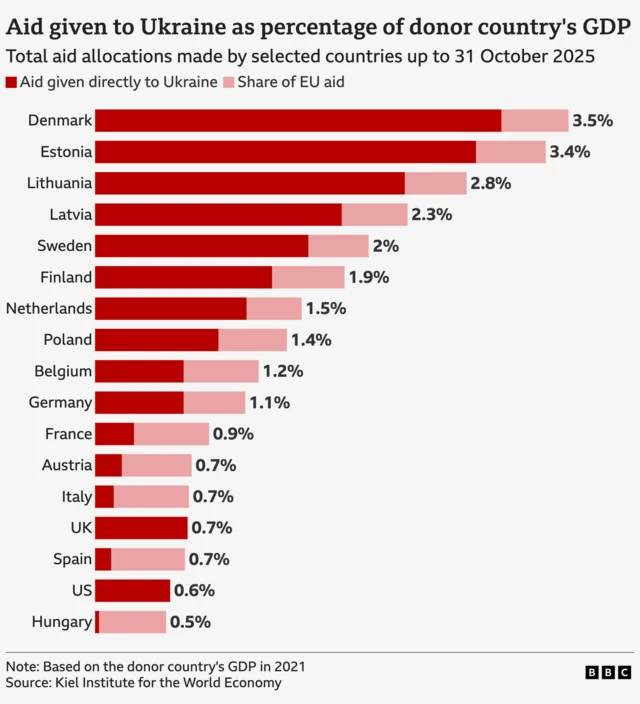
    A horizontal bar chart titled “Aid given to Ukraine as percentage of donor country's GDP” showing total aid allocations by selected countries up to 31 October 2025. Denmark ranks highest at 3.5%, followed by Estonia (3.4%), Lithuania (2.8%), Latvia (2.3%), Sweden (2%), Finland (1.9%), Netherlands (1.5%), Poland (1.4%), Belgium (1.2%), Germany (1.1%), France (0.9%), Austria (0.7%), Italy (0.7%), UK (0.7%), Spain (0.7%), US (0.6%), and Hungary (0.5%). Bars are split into dark red for bilateral aid and light pink for share of EU aid. Source: Kiel Institute for the World Economy.
  5. Watch: Putin tells BBC western leaders deceived Russiapublished at 14:44 GMT 19 December 2025

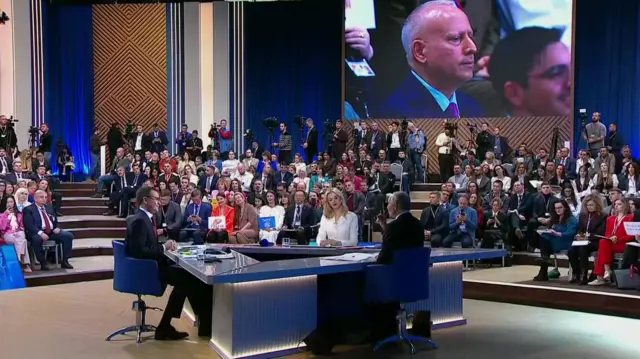
    A little earlier on, the BBC's Russia editor Steve Rosenberg had the opportunity to ask Vladimir Putin about his plans for the future of the country.

    You can see how the Russian leader responded in the clip below - as he called for greater respect from other western leaders.

    Media caption,

    Putin says Western leaders deceived Russia

  6. What we heard in Putin's marathon annual news conferencepublished at 14:25 GMT 19 December 2025

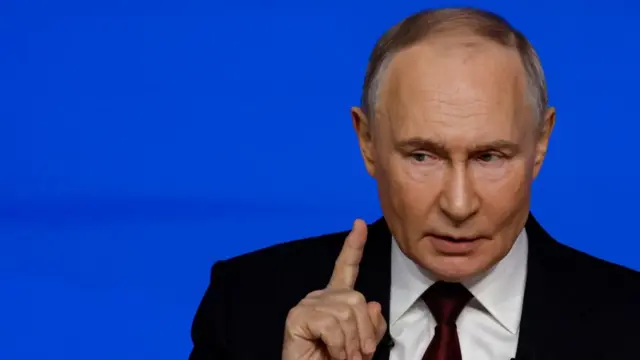
    Russian presidend Vladimir Putin in front of a blue background. He has one finger on one hand raised.Image source, EPA
    Image caption,

    Putin has blamed Ukraine for the war, but some messages from the public have been critical

    Russian President Vladimir Putin has wrapped up an annual news conference. At the end of each year, the Russian leader takes questions from Russian and foreign press - and in some cases, members of the public.

    Here's what we heard this year:

    • Putin blamed Ukraine for "unleashing the war" and alleged Kyiv is "refusing to end this conflict using peaceful means"
    • Putin says "we did not start this war" when asked by NBC whether he would consider himself responsible for the deaths of Ukrainians and Russians if he rejected US President Donald Trump's peace plan proposal
  7. Analysis

    Putin makes familiar claims and accusations in this year's presserpublished at 14:15 GMT 19 December 2025

    Vitaliy Shevchenko
    Russia editor, BBC Monitoring

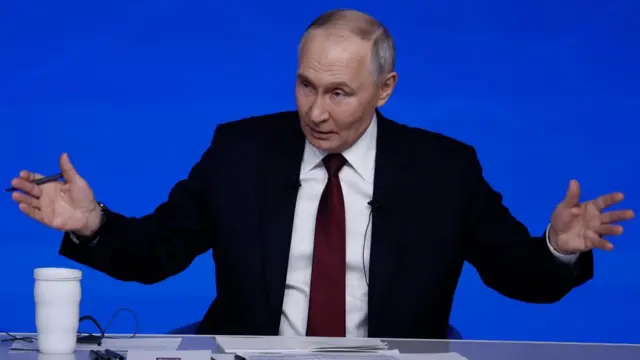
    Russian President Vladimir Putin gestures with his arms outstretched as he sits behind a desk and against a blue background.Image source, EPA

    There were no surprises in Vladimir Putin's presser this year, which has now come to an end.

    In a session lasting nearly five hours, there were familiar accusations of Ukraine being to blame for the ongoing war, claims of Russia making advances on the battlefield, and no indication that the Russian president is any more willing to compromise than when he launched the full-scale invasion in 2022.

    One key difference from past years is that America is no longer presented as an enemy.

    Since Donald Trump's re-election, it is Europe that is portrayed as Russia's enemy number one in the West.

  8. Ukrainian and Polish independence enable freedom across eastern Europe – Zelenskypublished at 14:08 GMT 19 December 2025

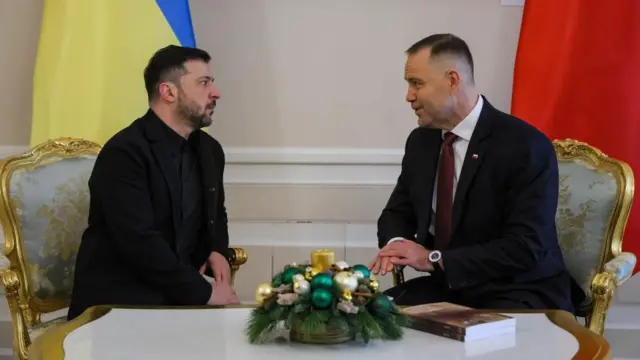
    Ukrainian President Volodymyr Zelensky, left, sits with Polish President Karol Nawrocki, right, in an ornate setting.Image source, EPA

    Ukraine's Volodymyr Zelensky has been in Warsaw today visiting Poland's new president, Karol Nawrocki.

    He says the trip "opens a new, even more meaningful stage" in relations between the countries.

    "Relations not merely between neighbors, but between two European elements without which there would be no freedom and no reliable security in our entire part of Europe," he writes in a post on X.

    He says he discussed Europe's security with Nawrocki, as well as the war in Ukraine.

    "Ukrainian independence and Polish independence are the foundation that enables every nation in our part of Europe to live freely – without Moscow’s rule," Zelensky says.

    "That is why it is essential that we cooperate, support one another, and coordinate our efforts to defend Europe and our nations."

  9. Putin's battlefield claims 'not borne out with facts' - UK military chiefpublished at 13:55 GMT 19 December 2025

    Samira Hussain
    Reporting from Kyiv

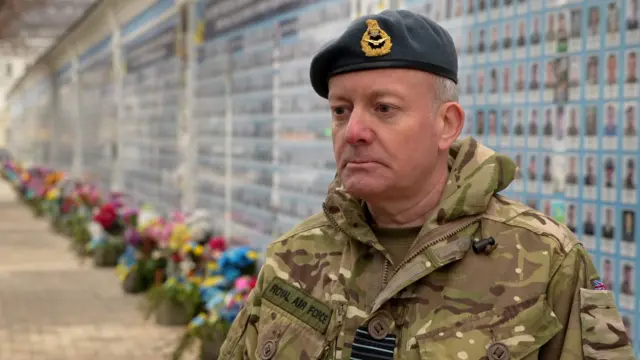
    Sir Richard Knighton in military fatigues and beret.
    Image caption,

    Sir Richard Knighton says Russia's battlefield gains are slow

    Putin devoted the early part of his marathon press conference to Russia's alleged battlefield accomplishments, claiming Ukrainian forces were being pushed back along the whole front line and seeing "no success".

    The UK’s Chief of the Defence Staff says Russian claims of taking large swaths of Eastern Ukraine are "nonsense".

    Sir Richard Knighton has just returned from visiting Ukrainian troops close to the front line. Speaking to me in Kyiv, he says the progression of Russian forces has been slow.

    ”I have seen the data to show me what the situation really is and Ukraine continues to fight hard against Russian aggression and continues to inflict huge casualties, so the claims that Putin makes are simply not borne out with the facts on the ground,” Knighton says.

  10. Both gratitude and pessimism on the streets of Kyivpublished at 13:33 GMT 19 December 2025

    Callum Tulley
    Reporting from Kyiv

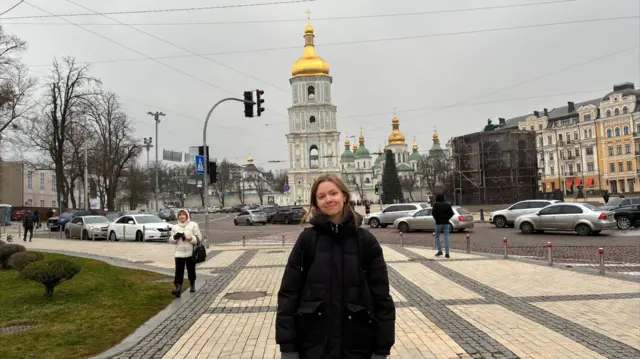
    Yelyzaveta Horiaieva wears a black winter coat with Kyiv buildings in the background.
    Image caption,

    'We need this,' says student Yelyzaveta Horiaieva

    In central Kyiv - as some go about their Christmas shopping, and others attend yet another military funeral in St Michael’s monastery - we’ve been speaking to people about their views on the EU's €90bn loan.

    Yelyzaveta Horiaieva, a 19-year-old student from Lviv, says she’s grateful.

    "We need this, our people need this, but every day is so hard because you feel the cost of war. We have lost many people and money can not change this. I am hopeful for peace in the new year but we can’t give up the territories our people are dying for," she says.

    Tetiana Cherniavska, 33, from Kyiv, starts telling me that the loan will "help us hold onto our lands" before her partner interrupts.

    “I have no faith that the money will help our fighters or our people”, says Denis Kozhemiakin. “Our authorities are corrupt.”

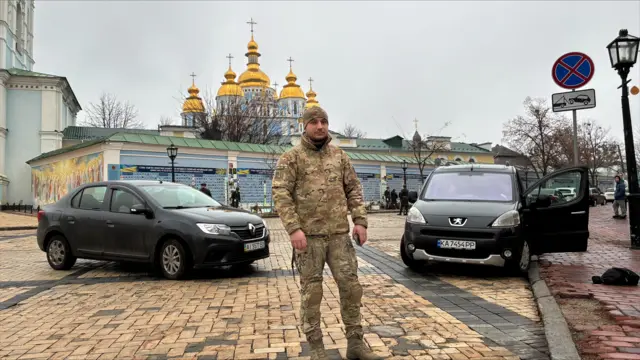
    Oleksiy Ostapovych, an officer in the Ukrainian army, shares Denis Kozhemiakin's concern about corruption.

    “It’s very good that our partners are giving us the loan, but I would like these funds to be controlled so that they are not stolen," he says while standing outside St Michael’s monastery before the funeral of a comrade.

    On the chances of peace he says, “I don’t see any prospects for peace in the new year because neither me nor my people are ready to give up the territories for which so many people have died.”

    Oleksiy Ostapovych wears camouflage fatigues and stands in front of two cars in a Kyiv street.
    Image caption,

    Oleksiy Ostapovych is concerned about corruption

  11. What is the 'shadow fleet'?published at 13:12 GMT 19 December 2025

    We earlier brought you an update from BBC's Samira Hussain, reporting from Kyiv, about Ukraine's claim it has struck a tanker in Russia's "shadow fleet" in the Mediterranean sea.

    But what is the shadow fleet, and why does it matter in Russia's war?

    The term commonly refers to tankers used to bypass a cap on Russian oil exports. Many Western nations imposed sanctions on Russian energy after the full-scale invasion in 2022, with Moscow accused of attempting to dodge them using tankers with unclear ownership.

    Former UK foreign secretary David Lammy described Russian oil revenues as "fuelling the fires of war and destruction in Ukraine" when he announced a raft of sanctions in November 2024.

  12. Analysis

    Sources in Ukraine's SBU say tanker in Russia's 'shadow fleet' struckpublished at 12:39 GMT 19 December 2025

    Samira Hussain
    Reporting from Kyiv

    Ukraine says its security forces have, for the first time, hit a Russian tanker in the Mediterranean Sea, using an aerial drone.

    Sources in the Security Service of Ukraine (SBU) have shared a video showing a large vessel engulfed in flames. The video has not been independently verified by the BBC.

    The vessel was a part of Russia’s “shadow fleet,” a collection of tankers used to avoid Western sanctions, Ukraine claims. Kyiv says the money earned from such fleets goes directly to fund the war.

    They say the operation took place in neutral waters of the Mediterranean Sea, some 2,000km (1,242 miles) from Ukrainian shores. Sources in the SBU say the Russian ship was not carrying any cargo.

    If confirmed, this would be an audacious attack thousands of miles away from the front lines and a continuation of Kyiv’s message to Moscow that they will fight the Russian war machine wherever it is.

  13. Analysis

    Czech prime minister makes radical departure from predecessorpublished at 12:26 GMT 19 December 2025

    Rob Cameron
    BBC Prague Correspondent

    Czech Republic Prime Minister Andrej BabisImage source, REUTERS/Yves Herman

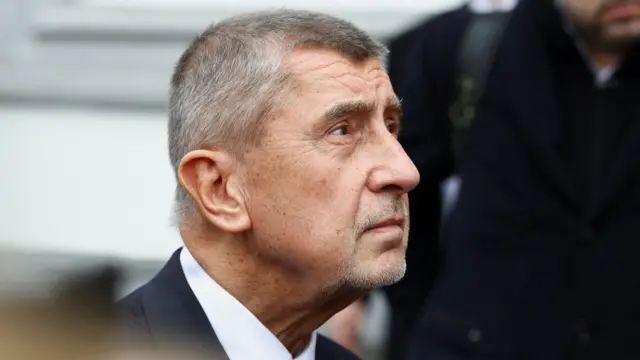
    The decision by the newly-appointed Czech prime minister, Andrej Babis, to join Hungary's Viktor Orban and Slovakia's Robert Fico in refusing to guarantee the loan is being interpreted in Prague as a radical departure from the Czech Republic's heavily pro-Ukraine foreign policy under his predecessor.

    "I'm surprised we're giving [Ukraine] money for the next two years, when it's been announced that a peace deal is getting close," Babis said after EU leaders agreed the loan - with the Czechs, Hungarians and Slovaks granted an exemption from stumping up any cash.

    Babis - a billionaire populist who formed his second administration this week - had signalled a change of course for policy on both Ukraine and the EU. He has been firm that Czech taxpayers should not bear the cost of arming Kyiv.

  14. Western leaders 'making Russia the enemy', Putin tells BBCpublished at 12:15 GMT 19 December 2025

    Steve Rosenberg on a screen above Putin's news conferenceImage source, Reuters

    The BBC's Russia editor Steve Rosenberg has just asked a question of Vladimir Putin at the Russian president's annual news conference.

    What is the future you are planning for Russia and its people, Rosenberg asks. Will there be new special military operations?

    Putin delivers a lengthy response, in which he defends Russia's political system, raises the problem of "fake news", and references Donald Trump's lawsuit against the BBC.

    The Russian leader also accuses western leaders of "dirty tricks", and says that Nato member countries are continuing this through statements that they are preparing for a confrontation with Russia.

    "Are we truly going to attack Europe? This is nonsense," he adds. "They are creating the image of an enemy and they are making Russia the enemy."

    He continues that Russia is willing to work with countries like the US and UK "but on par" with "due respect" for one another.

  15. Analysis

    Putin speaks in front of map of Russia - which includes parts of Ukraine and Crimeapublished at 12:04 GMT 19 December 2025

    Vitaliy Shevchenko
    Russia editor, BBC Monitoring

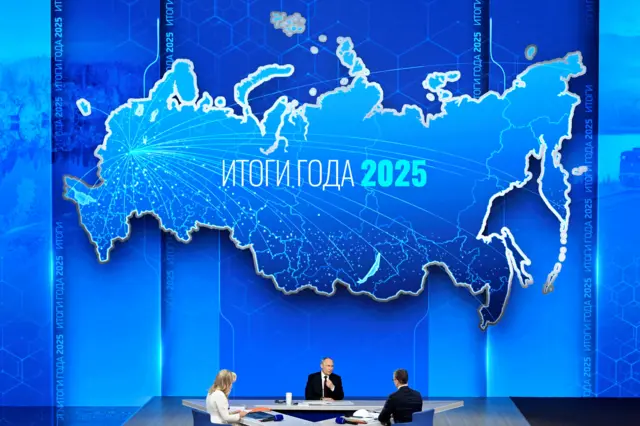
    A map showing Russia above Putin - which includes Ukraine and CrimeaImage source, Reuters

    Vladimir Putin's set-piece events are often rife with symbolism, and this time around even the set is sending an uncompromising message to Ukraine and its allies.

    The Russian president is speaking against a huge map of Russia in the background - including parts of Ukraine's southeast such as Crimea. Crimea was illegally annexed by Russia in 2014.

    He's said it many times in the past, and now even the visuals say: Ukraine's territory is ours.

  16. Three EU countries are exempt from Ukraine loan - what have they said?published at 11:51 GMT 19 December 2025

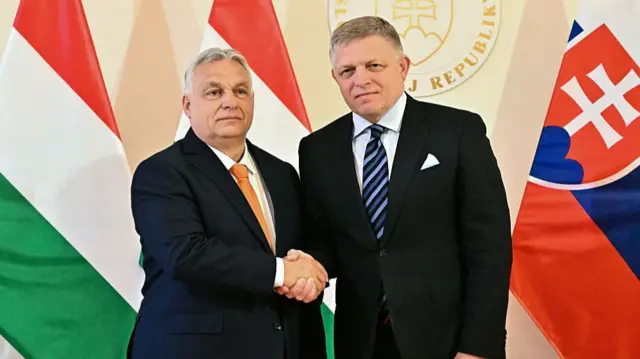
    Hungarian Prime Minister Viktor Orban (L) and Slovakia's Prime Minister Robert Fico shake hands during an official welcome ceremony.Image source, JOE KLAMAR/AFP via Getty Images
    Image caption,

    Hungarian Prime Minister Viktor Orban (L) and Slovakia's Prime Minister Robert Fico

    Hungary, Slovakia and the Czech Republic are exempt from paying towards the €90bn loan for Ukraine agreed by the EU.

    Here's what we've heard from them following last night's agreement:

    Hungary PM Viktor Orban says: "Hungary remains the voice of peace in Europe and will not let Hungarian taxpayers’ money be used to finance Ukraine." He adds that their exemption means they have "spared our children and grandchildren from the burden of this massive €90 billion loan".

    Slovakia's Prime Minister Robert Fico says "Slovakia will not ​be part of any military loan for Ukraine", and adds that he rejects any further financing "because we ‍do not believe in ‍a military solution to the conflict", according to a translation of his earlier address by Reuters News Agency.

    Czech Prime Minister Andrej Babis says the EU delegations "agreed on further support for Ukraine in the form of a loan; I supported the conclusions and ensured that the Czech Republic will not guarantee the loan. Exactly as I promised".

  17. Ukraine strikes Russian oil tanker in Mediterranean Sea - reportspublished at 11:40 GMT 19 December 2025
    Breaking

    Ukraine says it has struck a Russian "shadow fleet" tanker in the Mediterranean Sea, according to AFP and Reuters news agencies.

    The agencies quote a source in Ukraine's Security Service who says drones hit the tanker, which was unoccupied and sitting some 2,000km (1,243 miles) from Ukraine's borders.

    The source says critical damage was caused to the vessel in the attack.

  18. Do you consider yourself responsible for deaths in the war, NBC asks Putinpublished at 11:35 GMT 19 December 2025

    Laura Gozzi
    Europe reporter

    The first question to Putin from foreign media came from Keir Simmons from NBC, who asked whether the president would consider himself repsonsible for the deaths of Ukrainians and Russians if he rejected US President Donald Trump's peace plan proposal.

    No, Putin said, adding: "We did not start this war." This is a statement we have heard before from the Russian president, despite the fact that Russia illegally annexed Ukraine's Crimean peninsula in 2014, triggered a war in Ukraine's eastern Donbas region, set up rebel states supported by Moscow and later, in 2022, launched a full-scale invasion of Ukraine.

    He praised Trump's "sincere" efforts to end the war and pushes back against the idea that Russia is blocking efforts towards a peace deal. "It's incorrect to say that we reject something. The ball is in the hands of our Western opponents," Putin said.

    But in reality Moscow has been immovable on its demands for Ukrainian territory, specifically demanding that Kyiv withdraws from some sections of the Ukrainian region of the Donbas. More talks between US and Russian officials are planned for this weekend, but there has been no sign that Russian position has changed.

  19. This morning's key news lines, recappedpublished at 11:24 GMT 19 December 2025

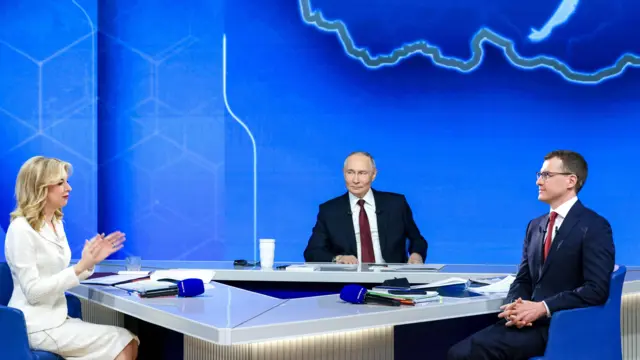
    Putin sits in between two presenters at national addressImage source, Reuters

    While we continue to bring you lines from Vladimir Putin's annual address, let's recap the what we've heard today.

    The EU's loan deal for Ukraine

    • The EU last night announced a €90bn (£79bn; $105bn) loan for Ukraine, but failed to reach an agreement on using frozen Russian assets - more in our earlier post

    Vladimir Putin's annual speech

    Volodymyr Zelensky visits Poland

    • Ukraine's leader this morning met with Polish President Karol Nawrocki in Warsaw
    • His trip comes as the Ukrainian National Guard says there has been a significant increase in the number of clashes between Ukrainian and Russian forces in the past 24 hours
  20. Significant increase in clashes on Thursday, says Ukrainepublished at 11:14 GMT 19 December 2025

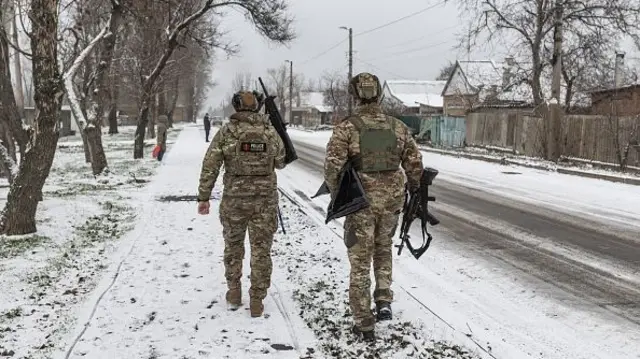
    Two Ukranian soldiers holding guns walk on a snow covered street. They are facing away from the cameraImage source, Diego Herrera Carcedo/Anadolu via Getty Images

    There has been a significant increase in the number of clashes between Ukrainian and Russian forces in the past 24 hours, according to the National Guard of Ukraine.

    Russia lost around 1,220 troops on Thursday and Ukrainian forces also destroyed one tank, 10 armoured vehicles, 18 artillery systems, one multiple rocket launcher, 426 operational-tactical UAVs and 111 vehicles, the National Guard says.

    It also explains that the number of Russian troops being killed each day has increased and for the third day in a row a Russian multiple rocket launcher has been destroyed.