Summary

  • Ireland, Spain, the Netherlands and Slovenia say they will boycott next year's Eurovision Song Contest after it was decided Israel could compete - here's how we got here

  • They and several other members of the European Broadcasting Union, which organises Eurovision, had called for Israel to be excluded over the humanitarian toll of the war in Gaza

  • Those countries suggested there should be a secret ballot on Israel's participation, which EBU members could vote on

  • But at a meeting on Thursday, where a vote was held on new safeguards, a "large majority" of members agreed there was no need for a further vote on participation and that Eurovision 2026 could proceed as planned, the EBU says

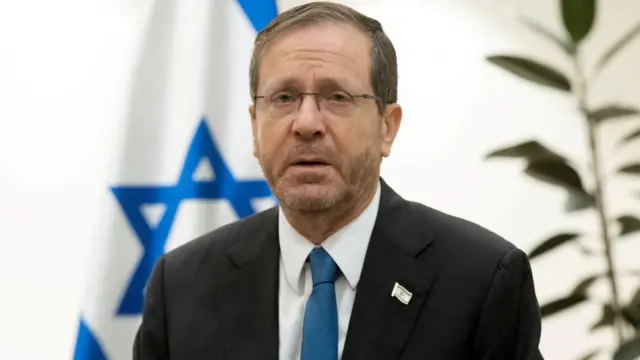
  • Israeli President Isaac Herzog thanks "friends who stood up" for Israel, saying his country "deserves to be represented on every stage around the world"

  • This is the most severe crisis in the history of Eurovision - the ties that have been cut today will be hard to stitch back together, writes the BBC's Mark Savage

  1. Several countries boycott Eurovision as it's revealed Israel can competepublished at 22:41 GMT 4 December 2025

    Alex Smith
    Live reporter

    A deep rift has emerged in one of the world's most well-known singing competitions.

    Ireland, Spain, the Netherlands and Slovenia announced they would not take part in next year's Eurovision Song Contest, after it was decided Israel would be allowed to compete.

    It’s a situation that’s been brewing for years, and has seen a group of participating countries call for Israel to be excluded over the war in Gaza, as well as accusations of unfair voting practices. Israel has not responded to the claims but frequently argues it has faced a global smear campaign.

    The European Broadcasting Union subsequently announced it was tightening the competition’s voting rules to limit the influence of governments on the results.

    And in a statement earlier, EBU said its members - which includes the BBC - had now voted to decide whether they were happy with the new measures. It also said a "large majority of members agreed that there was no need for a further vote on participation and that the Eurovision Song Contest 2026 should proceed as planned".

    The speed at which boycotting countries then issued their press releases suggests they were anticipating the result in advance, writes our music correspondent Mark Savage.

    A number of broadcasters - including in Norway, Denmark, Germany, and the BBC in the UK - have suggested they will not join those withdrawing from the contest. Others are yet to decide - see who's said what in our last post.

    Meanwhile, Israel says the decision "demonstrates solidarity, fellowship, and cooperation, and reinforces the spirit of affinity between nations through culture and music".

  2. The countries out of next year's contest - and those still decidingpublished at 22:17 GMT 4 December 2025

    So far, four countries have vowed to boycott Eurovision next year in response to Israel being allowed to compete. They are:

    • Ireland, where broadcaster RTÉ says its participation "remains unconscionable given the appalling loss of lives in Gaza"
    • Spain, whose broadcaster RTVE says the denial of a secret ballot over Israel's participation in Eurovision "increases ... distrust of the festival's organisation"
    • The Netherlands, whose broadcaster Avrotros says "participation cannot be reconciled with the public values that are fundamental to our organisation"
    • Slovenia, where Natalija Gorščak, president of RTV, says the broadcaster will not participate

    Some countries' broadcasters have indicated they are yet to decide whether they will participate in the 2026 Eurovision contest, taking place in Vienna, Austria. They include Belgium and Iceland, while Sweden's SVT is yet to take a position.

    Norway's NRK says it doesn't engage in boycotts, Denmark's DR said in September it supported the event as a cultural unifier, and Germany's ARD says it regrets the withdrawal of countries but respects their choices.

    JJ representing Austria celebrates after winning the Grand Final of the 69th Eurovision Song ContestImage source, Getty Images
    Image caption,

    Austrian singer JJ won this year's Eurovision Song Contest in Basel, Switzerland, with a song titled Wasted Love

  3. Have countries boycotted Eurovision before?published at 21:52 GMT 4 December 2025

    Bans have been a big focus in recent years - see our previous post on Russia. But has anyone ever boycotted the contest before?

    The answer is yes. And not just because of political tensions. Contest-related drama has also been a cause.

    Several countries (Finland, Portugal, Norway and Sweden) withdrew from the competition in 1970, following a controversy that saw four contestants jointly winning the contest the year before.

    The UK, Spain, France and the Netherlands were declared joint winners in 1969 after all securing 18 points. The European Broadcasting Union (EBU) introduced a tiebreak rule a year later.

    There have also been political boycotts, including by Greece and Turkey in 1975 and 1976 respectively, following Turkey's invasion of Cyprus in 1974.

  4. Russia was banned over Ukraine war - so launched its own competitionpublished at 21:44 GMT 4 December 2025

    Israel is not the first country to have its participation in Eurovision subjected to debate.

    Russia was banned from the competition in February 2022, a day after it launched its full-scale invasion of Ukraine.

    The organisers of the contest, the European Broadcasting Union (EBU), said the decision was made because Russia's inclusion could bring the competition into disrepute "in light of the unprecedented crisis in Ukraine".

    Ukraine's public broadcaster UA:PBC and several other media outlets had called on the EBU to ban Russia from the contest. The EBU said it consulted its membership before making the decision, adding that it was an "apolitical member organisation."

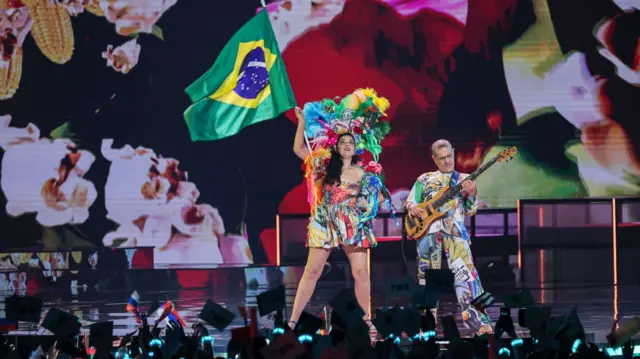
    Russia has since organised the Intervision Song Contest - an alternative to Eurovision, which was attended by 23 countries this year, including Uzbekistan, China, India, Brazil, Qatar and Saudi Arabia.

    Brazil's entrant in Russian-led Intervision 2025Image source, EPA
    Image caption,

    Brazil's entry at the Russian-led Intervision Song Contest this year

  5. Israel pressing ahead with preparations for Eurovision 2026published at 21:30 GMT 4 December 2025

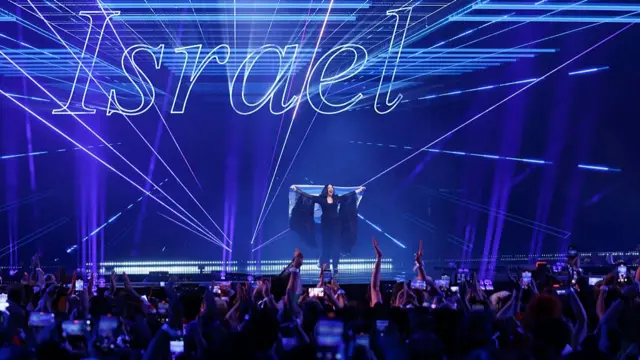
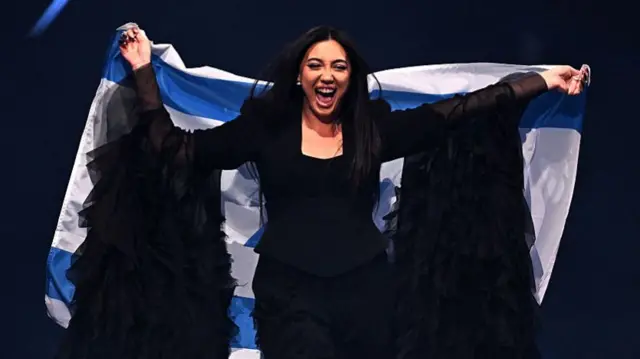
    Yuval Raphael holding an Israeli flag behind her in front of the Eurovision audience. The word 'Israel' is lit up behind her on the stageImage source, Getty Images
    Image caption,

    Israeli contestant Yuval Raphael represented Israel at this year's Eurovision

    On Wednesday, pre-empting the EBU's general meeting, Israeli public broadcaster Kan confirmed it was pressing ahead with its preparations for the 2026 contest.

    In September, the broadcaster issued a statement expressing "its firm hope that the Eurovision Song Contest will continue to uphold its cultural and non-political identity".

    Sources within Kan said before today's announcement that it believed discussions about excluding Israel were unjustified, asserting that the broadcaster was in full compliance with EBU rules.

  6. An important detail in the EBU responsepublished at 21:11 GMT 4 December 2025

    Mark Savage
    Music correspondent

    Amidst all the drama, there’s a small detail in the EBU’s press release that sheds some light on why many countries were keen to keep Israel’s broadcaster, Kan, in the contest.

    During a "wide-ranging discussion", it says, fellow broadcasters "took the opportunity to stress the importance of protecting the independence of public service media and the freedom of the press to report, not least in conflict zones such as Gaza".

    That’s because Kan is independent of Israel’s government, and has often found itself at odds with Prime Minister Benjamin Netanyahu’s administration.

    But Kan’s association with Eurovision is believed to have protected it from threats of closure or funding cuts - because the government recognises the positive PR power of taking part in the contest.

    If Israel had been excluded today, there’s the possibility of a future in which the country’s access to an independent press could have been limited.

  7. Boycotts and secret ballots: What's behind the controversy?published at 20:41 GMT 4 December 2025

    Several countries have announced that they will boycott next year's Eurovision Song Contest, after it was decided Israel will be allowed to compete.

    Here's the latest:

    • Four countries have announced boycotts so far - Ireland, Spain, the Netherlands and Slovenia
    • It follows a sustained period of controversy. Israel's participation in the contest invited debate in both 2024 and 2025 in light of the humanitarian crisis in Gaza. In 2025, Israel finished in second place with some accusing the country of artificially boosting its position through a paid advertising campaign. Israel says it has faced a global smear campaign
    • Last month, the European Broadcasting Union (EBU), which organises Eurovision, announced it was tightening voting rules to limit the influence governments could have on the results. Members voted on the measures in a "secret ballot"
    • But boycotting members don't feel this went far enough - they wanted a vote on Israel's participation - and that didn't happen
    • Our music correspondent Mark Savage calls it "the most severe crisis" in the history of the song contest, adding that more countries may choose to boycott it
    • Several other members - in addition to the four who have announced their boycott - have called for Israel's exclusion, and are yet to announce their decisions
    • Israeli President Isaac Herzog says he is pleased his country will participate, saying the decision demonstrates "solidarity, fellowship, and cooperation"
  8. German broadcaster 'regrets but respects' decision by others to boycottpublished at 20:25 GMT 4 December 2025

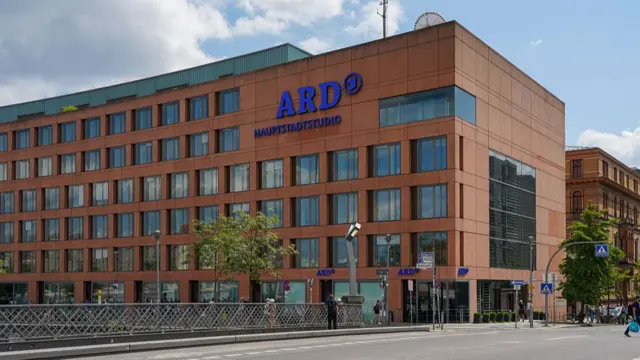
    ARD headquarters building.Image source, Michael Nguyen/NurPhoto via Getty Images

    A little earlier we brought you a statement from German broadcaster ARD welcoming the decision taken by the EBU today - which prevented a direct vote on Israel's participation in Eurovision, and was described as strengthening its rules.

    ARD has now issued a new statement, which reiterates its position and says it is looking forward to participating in the competition next year and "embracing it as a celebration of cultural diversity and solidarity".

    But it adds: "At the same time, we deeply regret the decisions of individual EBU members to withdraw from the Eurovision Song Contest 2026 but, of course, respect the choices made by the respective broadcasters."

  9. Audiences get fewer votes in next year's competitionpublished at 20:16 GMT 4 December 2025

    JJ representing Austria celebrates after winning Eurovision 2025. He is kissing the trophy, a translucent retro microphone, and wearing a shiny black outfit.Image source, Getty Images
    Image caption,

    Austria will host Eurovision 2025 after its artist, JJ, won this year

    Part of the new rules introduced by Eurovision’s organisers are changes to the number of votes per person in the public vote.

    In previous years, you could vote a maximum of 20 times per payment method.

    That’s now been reduced to 10, and organisers say fans will be actively encouraged to spread the votes across multiple entries.

    After this year’s contest, a Flemish politician said that allowing 20 votes was “a system that encourages manipulation”.

    Juries, currently only used for the grand final, are also being brought back to the semi-final stage - meaning they’ll be weighed 50/50 against the audience role.

  10. EBU says it's introduced safeguards without a direct vote on participationpublished at 20:10 GMT 4 December 2025

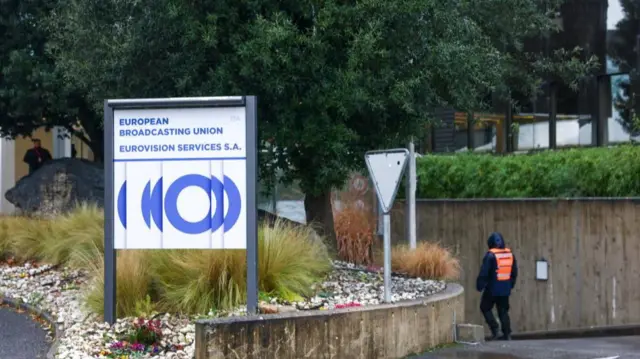
    EBU signage outside it's headquarters in Geneva.Image source, Reuters

    As we've been reporting, the European Broadcasting Union (EBU) says a "large majority" of its members have voted for new "safeguards" intended to "reinforce trust, transparency and the neutrality" of Eurovision.

    "Attendees representing EBU members were asked to vote in a secret ballot on whether they were sufficiently content with the new measures and safeguards announced last month without having a vote on participation in next year’s event," it says in a statement.

    A majority voted in favour, it says, adding the result means "all EBU members who wish to participate in the Eurovision Song Contest 2026 and agree to comply with the new rules are eligible to take part".

    "Ahead of the vote, there was a wide-ranging discussion where members expressed a variety of views on participation in the Eurovision Song Contest.

    "Many Members also took the opportunity to stress the importance of protecting the independence of public service media and the freedom of the press to report, not least in conflict zones such as Gaza," it says.

    EBU president Delphine Ernotte Cunci says: "These discussions have led to meaningful changes to the rules of the Eurovision Song Contest, ensuring it remains a place for unity and cultural exchange.”

  11. Other Nordic countries expected to take part in Viennapublished at 20:02 GMT 4 December 2025

    Iceland is the only Nordic country that has conveyed any doubt about its participation in Eurovision in Vienna. Public broadcaster RUV's board will decide next week.

    The other Nordic countries look like they're taking part.

    Finnish broadcaster Yle has indicated it will, after it set a series of conditions for the EBU to meet. Norway's NRK has made clear it does not engage in boycotts and Denmark's DR said in September that it supported the contest as a European cultural event that brought nations together.

    Sweden's SVT hasn't yet taken a position but its director of programmes Michael Österlund has backed the EBU's new measures. He's told the Aftonbladet website that Sweden's participation is conditional on there being broad political support and keeping the contest as apolitical as possible.

  12. Analysis

    Eurovision faces severe crisis - ties that have been cut will be hard to stitch back togetherpublished at 19:49 GMT 4 December 2025

    Mark Savage
    Music correspondent

    This is the most severe crisis in the history of the Eurovision Song Contest. Four countries have already pulled out, and more may follow.

    It’s a situation that’s been brewing for years, amid festering tension over Israel’s conduct during the war in Gaza.

    At the 2024 contest in Malmo, Sweden, streets were closed and contestants were sequestered in their hotel rooms as protestors took to the streets.

    This year, in Basel, Switzerland, two audience members tried to storm the stage and throw paint over Israel’s entrant, Yuval Raphael.

    As the death toll in Gaza rose, several countries ramped up pressure on the EBU to hold a vote on Israel’s future in the contest. It was badly handled. A vote was scheduled, then cancelled after a ceasefire was announced in October.

    Today in Geneva, Spain led a bloc of eight countries in calling for another vote. Organisers denied the request, and instead tied Israel’s participation to a separate vote, regarding new measures to tighten up voting procedures.

    When that motion passed, Ireland, Spain, Slovenia and the Netherlands immediately announced a boycott of the 2026 event. The speed at which they issued their press releases suggests they were anticipating the result in advance.

    The rift goes even deeper than concerns over Israel’s human rights record. The president of Spain’s broadcaster, José Pablo López Sánchez, said he had lost faith in the contest’s organisers.

    On his way into today’s meeting, he posted an angry statement on social media saying, “this point should never have been reached”.

    He said the EBU had been swayed by “political and commercial interests” and accused it of mismanaging the contest.

    The ties that have been cut today will be hard to stitch back together.

  13. German broadcaster welcomes new Eurovision measurespublished at 19:41 GMT 4 December 2025

    We're now hearing from German broadcaster ARD, which says it welcomes today's decision on new "safeguarding" measures for Eurovision without the need for a vote on participation.

    "The measures are designed to reinforce transparency, neutrality, and fairness in the voting and organisational processes," it says.

    "They underline the shared commitment to preserve the integrity of the competition and continue to advocate for cultural diversity and artistic exchange."

  14. BBC says it supports EBU decisionpublished at 19:17 GMT 4 December 2025

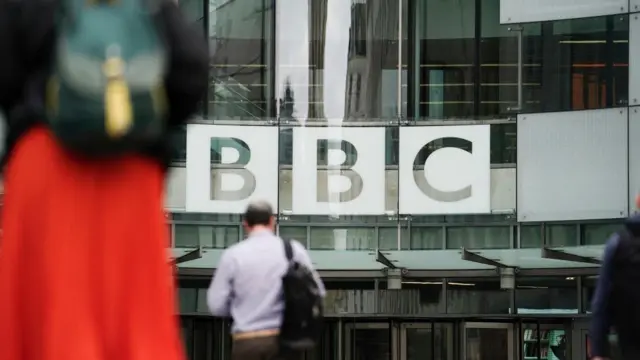
    A file photo of the outside of the BBC building - the letters BBC feature above the entranceImage source, PA Media

    The BBC is a member of the European Broadcasting Union, the organisation behind Eurovision.

    A spokesperson for the corporation has responded to this news, saying: "We support the collective decision made by members of the EBU. This is about enforcing the rules of the EBU and being inclusive."

    As we've been reporting, the EBU says its members held a ballot today on whether to introduce additional "safeguards" with the intention to "reinforce trust" in the event.

    That vote was not a direct vote on whether Israel could participate, but on whether EBU members were satisfied with the changes without a further vote on participation. Had a majority of members voted against, a vote on Israel's participation was anticipated.

  15. Eurovision shouldn't be used as political theatre - director of contestpublished at 19:06 GMT 4 December 2025

    Noor Nanji
    Culture reporter

    Martin GreenImage source, Getty Images

    We’ve just had some reaction from the director of the Eurovision Song Contest.

    Martin Green says he is "pleased" that members were given an "opportunity to debate" Israel's place in the contest before the vote.

    "It was a full, frank and honest and quite moving debate, but as we can see from the emphatic result, they really came together on a belief that the Eurovision Song Contest shouldn't be used as a political theatre,” he says.

    “It must retain some sense of neutrality."

  16. How today's decision was decided - in 150 wordspublished at 18:56 GMT 4 December 2025

    Eurovision Song ContestImage source, Getty Images

    Eurovision is organised by the European Broadcasting Union (EBU), a group of public service media organisations.

    Last month, the EBU announced it was tightening the competition’s voting rules to limit the influence of governments on the results.

    It follows accusations that Israel artificially boosted its position through a broad, paid-for advertising campaign. It has not responded to the claims but frequently argues it has faced a global smear campaign.

    In a statement, the EBU says its 68 members - which includes the BBC - voted in a "secret ballot" today on whether they were happy with the new measures.

    "A large majority of members agreed that there was no need for a further vote on participation and that the Eurovision Song Contest 2026 should proceed as planned, with the additional safeguards in place," it says.

    Had the membership voted against the new measures, it's thought a vote on Israel's participation would've been held.

  17. Icelandic broadcaster to consider 2026 role next weekpublished at 18:43 GMT 4 December 2025

    Iceland's RÚV was one of the public broadcasters calling for Israel to be banned from next year's contest in Vienna.

    It has not yet decided whether or not it will boycott the 2026 show. RÚV's board says it will decide next Wednesday whether the country will take part.

  18. Belgian broadcaster yet to decide on 2026 festivalpublished at 18:43 GMT 4 December 2025

    Belgian coverage of Eurovision is shared by Flemish broadcaster VRT and French-language RTBF, and they alternate so that VRT broadcast the 2025 competition and RTBF is due to cover next year's show.

    RTBF has not yet announced a decision and has said it will take a position in the coming days.

    Meanwhile, VRT has released a statement saying its continued commitment to the song contest depends on how the European Broadcasting Union (EBU) handles concerns about peace, human rights and compassion in the coming years.

    During the semi-final of this year's contest on VRT, Belgian public sector union ACOD put up a political message on a black screen at the start and end of the broadcast, condemning what they called Israel's "human rights violations".

  19. How did we get here?published at 18:28 GMT 4 December 2025

    Yuval Raphael, a young, female singer wearing an all-black, frilly dress with long sleeves - is holding an Israeli flag and smiling into the crowdImage source, Getty Images
    Image caption,

    Yuval Raphael represented Israel in the 2025 Eurovision Song Contest, finishing in second place

    For the past two contests, Israel’s inclusion in Eurovision has drawn controversy. Anti-Israel protestors attempted to disrupt both the 2024 and 2025 contests - so why is a vote on its inclusion happening now, and how did we get here?

    • January 2024: Eurovision Broadcasting Union (EBU) boss Noel Curran confirms Israel will compete in the 2024 contest, despite “many, external voices calling to exclude”, external the country, because it says its broadcaster complies to the EBU’s neutrality rules
    • May 2024: Israel performs in Eurovision after changing the lyrics of its song - originally called October Rain and renamed Hurricane - over suggestions it referenced the Hamas attacks of 7 October 2023
    • May 2025: Israel’s Yuval Raphael takes second place in the contest, winning the public vote despite coming 14th in the jury. This prompted calls to examine the results and voting system
    • September 2025: The EBU announces that all 68 member countries will vote on whether Israel should participate in Eurovision next year. The vote is delayed until December due to a ceasefire in the Gaza Strip on 10 October
    • November 2025: The EBU announce stronger voting rules, reducing the number of votes fromaudience members from 20 to 10 and explicitly discouraging “disproportionate promotion campaigns”, external
    • December 2025: EBU members have a general assembly meeting in Geneva. Members approved a new set of rules intended to protect the integrity of the contest, but did not vote on Israel's participation
  20. Israeli president: Allowing us to compete shows solidarity and fellowshippublished at 18:24 GMT 4 December 2025

    A file photo of Isaac Herzog in front of an Israeli flagImage source, Reuters

    We're now hearing from Israel, where President Isaac Herzog says his country "deserves to be represented on every stage around the world".

    He says in a statement on social media:

    "I am pleased that Israel will once again participate in the Eurovision Song Contest, and I hope that the competition will remain one that champions culture, music, friendship between nations, and cross-border cultural understanding.

    "Thank you to all our friends who stood up for Israel’s right to continue to contribute and compete at Eurovision.

    "This decision demonstrates solidarity, fellowship, and cooperation, and reinforces the spirit of affinity between nations through culture and music."