Summary

  • Chancellor Rachel Reeves says she plans to help "those who need it most" if energy bills jump over the Iran war

  • Reeves tells the Commons "contingency planning is taking place for every eventuality, so that we can keep costs down for everyone, and provide support for those who need it most"

  • We haven't seen any of these plans, so any detail of exactly who could be helped and how remains unclear, writes our cost of living correspondent

  • The chancellor announces a"new anti profiteering framework" with powers to tackle companies exploiting price rises to rip customers off

  • Typical household energy costs will fall on 1 April when the new energy price cap takes effect, but could rise sharply this summer due to a jump in oil prices since the start of the war

  • The price for a barrel of oil moved back above $100 this morning, after plunging on Monday - it's still substantially higher than it was before the war

Media caption,

Reeves: 'Contingency planning is taking place for every eventuality'

  1. Reeves promises targeted support if energy bills rise amid US-Israel war with Iranpublished at 14:29 GMT
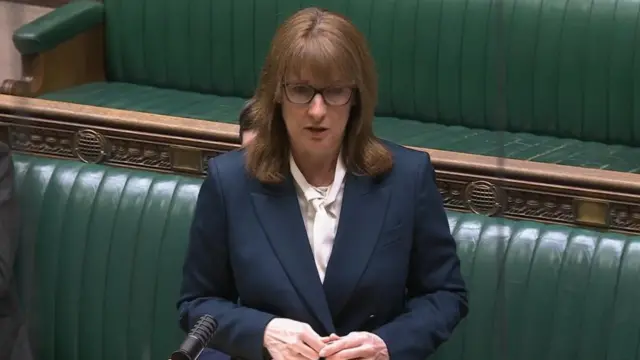
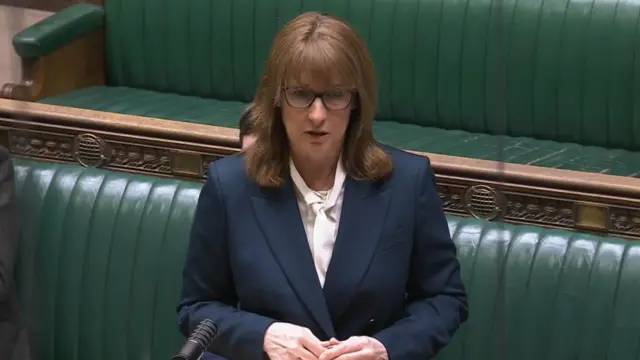
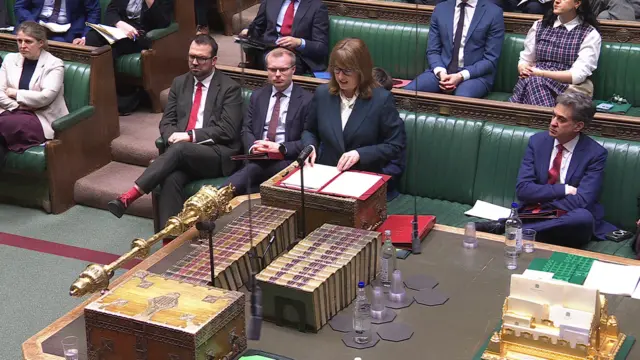
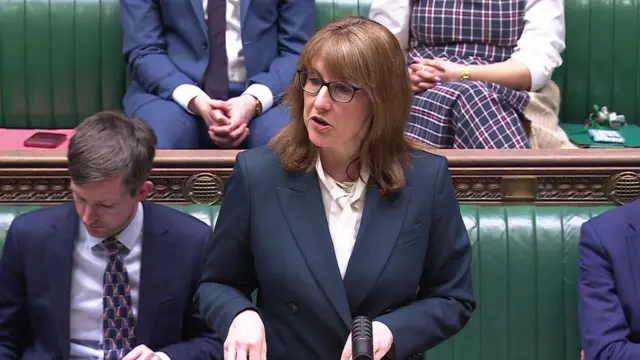
    Reeves stands and she speaks in the House of CommonsImage source, HOUSE OF COMMONS

    Chancellor Rachel Reeves has vowed to deliver economic support to Brits "who need it most" if energy bills rise, as the UK continues to grapple with the domestic impacts of the US-Israeli war with Iran.

    Addressing the Commons earlier, Reeves said the government has begun contingency planning for "every eventuality".

    Among the pledges made today by the chancellor is a "new anti-profiteering framework" to prevent companies from "exploiting the crisis". She also promised to back "critical energy projects".

    In response, shadow chancellor Mel Stride accused Reeves of leaving the "increasingly fragile" UK economy "in tatters".

    Reeves's remarks come shortly before household energy bills are due to fall, with a new energy price cap taking effect come 1 April. However, they could sharply increase this summer due to a jump in oil prices since the war began.

    Our live coverage of Reeves's speech to the Commons has now ended, but you can read more in our news story here.


  2. Social tariff better than universal support – think tankpublished at 14:19 GMT

    Kevin Peachey
    Cost of living correspondent

    The chancellor has made it clear that energy bill support, were it to come, would not be for everyone.

    Poverty-focused think tank, the Resolution Foundation, suggests that a discount for those most in need would be better for them, and no more expensive for taxpayers.

    Its research suggested that a new social tariff - a discount for lower-income households - could provide around £300 a year of support, on average, to around two-in-five customers.

    It said this would cost £3.7bn a year – the same as giving all customers, including those who are already protected by fixed price deals, around £100 off their bills.

  3. Private firms tell of need to pass on higher costs to customerspublished at 14:04 GMT

    Jemma Crew
    Business reporter

    Private sector firms say they need to pass on higher fuel and raw materials costs to customers, according to a key business survey.

    In March the UK’s manufacturing sector saw its biggest monthly rise in input price inflation in more than 30 years, according to S&P Global's Purchasing Managers' Index (PMI).

    S&P Global said the rapid cost increases to businesses were being driven by the rising costs of fuel, transport and energy-intensive raw materials.

    There has also been a sharp acceleration in how much private firms are charging on average since February, it added.

    They “overwhelmingly commented on fuel surcharges and the need to pass on higher raw material prices to customers”.

    Manufacturers also reported a drop in global demand due to the Middle East conflict.

    But there was a marginal rise in new business from abroad in March. And some firms noted their customers have started to stockpile products in response to rising prices and worries about disruption to supply chains.

  4. Analysis

    Government trying to deploy the limits of its powers to massage down an inevitable inflationary spikepublished at 13:52 GMT

    Faisal Islam
    Economics editor

    The approach to “price gouging” and “profiteering” from the chancellor is rather striking.

    It was just last year that the competition authorities were given a dressing down for getting in the way of business growth. Government ministers effectively ousted the chair of the Competition and Markets Authority (CMA)

    Now the CMA is being beefed up with new powers, at least temporarily, to target profiteering and limit price rises.

    The CMA has already stepped up statutory monitoring of fuel prices, according to the chancellor and will now “monitor the cost of household essentials for price rises and disruption”.

    The Chancellor is also calling in the supermarkets and banks for a roundtable.

    What does this mean in practice? The cost of crude oil, natural gas, and of long term borrowing have all gone up sharply since the war began meaning inevitably higher petrol, energy and mortgage costs for consumers.

    In petrol, in practice, the CMA’s powers appear to be fines, if retailers do not comply with new price transparency initiatives.

    This seems to be an effort to communicate an intense governmental and regulatory glare on these processes, which could limit any excessive attempt to gold plate these rises in costs. The chancellor did not actually assert that this had definitively occurred yet.

    All of this comes just as the impact of the government's conscious attempt to manage down the inflation rate this year will be seen in the price of prescriptions, rail fares and the overall inflation rate.

    The energy shock will upend these numbers. The government is trying to deploy the limits of its powers to massage down an inevitable inflationary spike.

  5. Targeted support 'for those who need it most' - a recappublished at 13:42 GMT

    • Reeves said the challenges of the ongoing US-Israel war with Iran "may be significant" and the full economic impact "remains unclear"
    • "Contingency planning is taking place for every eventuality so we can keep costs down for everyone and provide support for those who need it most", she said
    • We haven't seen any of these plans, so any detail of exactly who could be helped and how remains unclear, writes our cost of living correspondent
    • Reeves also announced a "new anti-profiteering framework" for the Competition and Markets Authority, which she says will have powers to tackle companies exploiting price rises
    • She also said the government was developing options to back "critical energy projects", because "energy security is national security"
    Chancellor of the Exchequer Rachel Reeves making a statement to MPs in the House of CommonsImage source, House of Commons
  6. Government's response 'progressive' and 'universal' - Reevespublished at 13:18 GMT

    Deputy leader of the Liberal Democrats, Daisy Cooper, asks the chancellor to commit to various measures - including halving energy bills over the next decade through reforming pricing structures, and returning to Parliament with a broader package for struggling families should bills rise significantly.

    Reeves reiterates the government has introduced measures to help households reduce energy bills.

    She says the government's "progressive" and "universal" response is "the right one" - including she says, cutting £150 off everyone's bills with measures taken in the Budget, and then providing targeted support for those "who need it most".

  7. Chancellor asked how support would be targeted to those that need it mostpublished at 13:13 GMT

    Back to the Commons now, where Chancellor Rachel Reeves continues to take questions from MPs - you can watch live at the top of the page.

    Labour MP Meg Hillier asks the chancellor "what she is doing to ensure the data is available to help target support to those who need it most".

    Reeves says the government is working with the Department for Work and Pensions to ensure it will be able to target this support to those that need it most.

  8. Analysis

    Clearest steer yet that any energy bill help would be targeted away from the richestpublished at 13:08 GMT

    Faisal Islam
    Economics editor

    ReevesImage source, House of Commons

    The chancellor has given the clearest steer that any significant package of help with domestic energy bills will not apply to the richest households.

    She said publicly what has been whispered privately, that this government believes the Truss administration's Energy Price Guarantee wasted billions on subsidising the wealthiest households, who did not need the support in its £42bn package in late 2022.

    The Treasury has calculated that the top 10% richest households, as users of the most amount of gas, got the biggest support, averaging £1,350.

    So this is a message aimed to manage the expectation of households, that help will be targeted away from the richest.

    But it is also a message aimed at markets for government debt, which have responded across the world to the coming inflationary energy shock.

    As the effective interest rate rises on government debt rises, it has pushed up mortgage rates too. This is partly an effort to communicate to nervous markets that limits on borrowing will be maintained.

  9. Reeves says shadow chancellor 'utterly out of his depth'published at 13:05 GMT

    Stride continues, asking the chancellor about support for energy bills: "What fiscal capacity does she believe she has to support those in need?"

    Reeves responds by saying that Stride's statement shows he is "utterly out of his depth" - mentioning a number of economic indicators, including interest rates, that have fallen since she took office.

    The government has more than double the fiscal headroom than the previous Conservative government left with, she adds.

  10. 'We are getting poorer and our economy is increasingly fragile' - shadow chancellorpublished at 13:01 GMT

    Speaking now in response is Shadow Chancellor Mel Stride, who accuses Reeves of leaving the UK economy "in tatters".

    Stride says Reeves's "mismanagement and foolish choices" have given the UK the highest inflation in the G7, and the highest borrowing costs of any advanced economy.

    "We are getting poorer and our economy is increasingly fragile," he says.

    The shadow chancellor says that Energy Secretary Ed Miliband's Net Zero "obsession" have led to the "absurdity" of reduced extraction of oil and gas despite the UK having "fields ready to go".

    Media caption,

    Stride: We have oil and gas fields 'ready to go'

  11. Plans are being drawn up – but we haven’t seen them yetpublished at 13:01 GMT

    Kevin Peachey
    Cost of living correspondent

    The chancellor has just said there could be targeted support for those most in need of support with their energy bills.

    There was “contingency planning for every eventuality”, she told the Commons.

    But – stating the obvious – there are so many eventualities in the war, the geopolitical situation, and the impact of it all on the UK economy.

    And we haven’t seen any of these plans, so any detail of exactly who could be helped and how remains unclear.

  12. Analysis

    Don't expect help for every household like in 2022published at 12:58 GMT

    Henry Zeffman
    Chief political correspondent

    The most revealing part of Rachel Reeves’s statement was the section right at the end, where she talked about how the government was conducting “contingency planning … for every eventuality”.

    Despite the uncertainty over how great the impact of this conflict will be on energy prices here in the UK, the chancellor laid out principles for the approach the government will take.

    She said there would be “support for those who need it most” but, crucially, any package would be constrained by the government’s borrowing rules and its wish to keep inflation and interest rates “as low as possible”.

    In other words: do not expect a universal household energy subsidy of the sort that Liz Truss deployed after Russia’s full-scale invasion of Ukraine in 2022.

    Of course, if it comes to it, there are likely to be intense arguments about where to draw the line between those who do and do not need support.

    And it is worth stressing, again, that this is still some way down the track because the energy price cap protects most household energy bills until the end of June.

  13. Chancellor says she plans to help 'those who need it most'published at 12:56 GMT

    "Contingency planning is taking place for every eventuality so we can keep costs down for everyone and provide support for those who need it most," Reeves says.

    She adds that this includes aiming to keep inflation and interest rates as low as possible.

    "This is not a war we started, nor is it a war that we joined unlike the advice of the parties opposite. But it is a war that will have an impact on our country," she says.

    Reeves adds that the challenges of the war "may be significant" but she promises to do "what is right and fair", adding that this includes being "responsive in a changing world and responsible in the national interest".

    Media caption,

    Reeves: 'Contingency planning is taking place for every eventuality'

  14. Analysis

    Suggestion of profiteering risks intensifying a row with petrol retailerspublished at 12:54 GMT

    Kevin Peachey
    Cost of living correspondent

    The chancellor was very careful with her words about profiteering – saying the government will strengthen regulators’ powers in case there is evidence of it happening.

    But the very suggestion of profiteering risks intensifying a row with petrol retailers.

    Previous statements by ministers brought a sharp response from petrol forecourt retailers who said the government’s “inflammatory language” had led to the abuse of staff.

    It will be some time before competition authorities finish gathering evidence and conclude whether questionable pricing is going on.

  15. Reeves says government 'will not tolerate any company exploiting the crisis'published at 12:54 GMT

    The chancellor says the government is bringing in a new "anti-profiteering framework" for the Competition and Markets Authority (CMA) - saying she "will not tolerate any company exploiting the crisis".

    From next week, Reeves says households "will benefit from £150 off their energy bills due to energy bill price cap'"

    She adds that the government will act responsibly by not putting economical stability at risk, but "must be agile in responding to the conflict".

  16. Chancellor pledges to protect UK's energy securitypublished at 12:47 GMT

    Reeves says the UK will legislate to implement the Fingleton Review - a review into nuclear regulations published last year which criticised "overly complex" bureaucracy around the sector - in the next parliamentary session.

    She says the UK is developing options to back "critical energy projects" so that "we don't waste a single moment in protecting our energy security, because energy security is national security".

    The chancellor then lists a number of measures aimed at helping with the cost of living that the government has rolled out - and some planned for the future.

    She says that later this week she will meet with supermarkets and banks to discuss how these businesses can further support their customers.

  17. Full economic impact of war 'remains uncertain' - Reevespublished at 12:43 GMT

    Reeves begins by paying tribute to the armed forces and those whose lives have been disrupted by the ongoing war in the Middle East.

    She says "the full economic impact of the war remains uncertain", making the government's economic plan even more important.

    Reeves says the government will explore new defence financing and procurement mechanisms with Netherlands, Finland and other Nato and EU partners.

  18. Watch live as Reeves gives update from Commonspublished at 12:34 GMT

    Reeves in CommonsImage source, House of Commons

    Chancellor Rachel Reeves is on her feet in the Commons and about to give an update on the impact of the Iran war on the UK economy.

    Watch live at the top of the page and follow the latest updates and analysis right here.

  19. Analysis

    Reeves's statement will be watched closely for hints at plan for if energy bills soarpublished at 12:29 GMT

    Ben Wright
    Political correspondent

    The economic shockwaves from the war in Iran mean grizzly political choices for the government.

    Will the state step into help people with rising energy bills? Who would they target and how to pay for it?

    With the energy price cap set to fall in April many households will actually see their bills fall in the following three months. But steep rises are possible come autumn and winter.

    As they work on various contingency plans it's clear ministers are currently not envisaging the sort of universal help for everyone that followed Russia's invasion of Ukraine - that scheme lasted two years and cost around £40bn, paid for by government borrowing.

    "I am acutely aware of how much it cost last time round", the prime minister told MPs yesterday. In other words, there isn't the cash.

    Their preference is clearly a more targeted intervention - but for whom and by what mechanism?

    And while the work in Whitehall goes on, the political arguments over what to do intensify.

    The Conservatives have warned the government not to repeat the 2022 bailout of energy bills and instead remove more green levies from bills.

    Reform UK says VAT should be scrapped from household energy bills, while the Green Party argues the government should freeze energy bills for everyone from the summer.

    In the Commons, Rachel Reeves is likely to set out the economic impact of the war so far and put more pressure on petrol suppliers not to profit from the crisis by jacking up prices.

    But her statement will be watched closely for clues as to what the government's planning if energy bills soar.

  20. Level of support offered following Russian invasion of Ukraine won’t be repeatedpublished at 12:25 GMT

    Kevin Peachey
    Cost of living correspondent

    Energy prices soared following Russia’s invasion of Ukraine. Without government intervention, the prices charged to UK households would have been astronomical.

    The Conservative government at the time, of which Liz Truss had just become leader, stepped in to cap what households would pay.

    That support was set up quickly, and was universal.

    Energy prices are set to rise again owing to the Iran war, but the situation is very different.

    Firstly, forecasts so far put the potential annual bill for a typical household at £2,000, not £4,000, although that could still rise sharply.

    Secondly, the chancellor has regularly stated that any support – were it to come – would be much more targeted at those most in need.

    Even so, it is worth remembering that a period of high energy prices has left consumers with a collective debt to suppliers of well over £4bn.