Summary

  • The World Health Organization (WHO) is due to give an update after it declared an Ebola outbreak in the Democratic Republic of Congo a public health emergency of international concern

  • There have been more than 390 suspected cases and at least 100 reported deaths, according to the Africa Centres for Disease Control and Prevention

  • The WHO previously said the outbreak did not meet the criteria of a pandemic emergency, but warned it could be "much larger" than what's been detected so far

  • The strain of Ebola is caused by the Bundibugyo virus, for which there are no approved drugs or vaccines

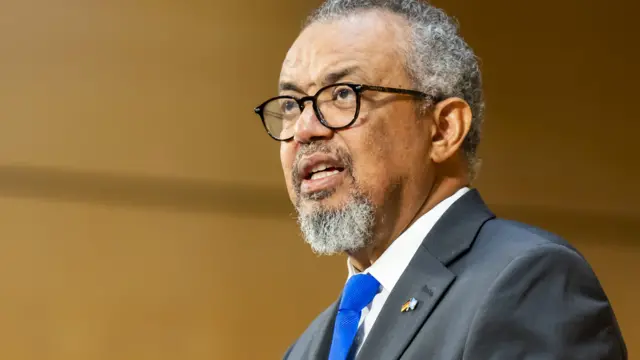
  • In a speech, the WHO chief Dr Tedros Adhanom Ghebreyesus is also expected to address a hantavirus outbreak onboard a cruise ship - here's the latest

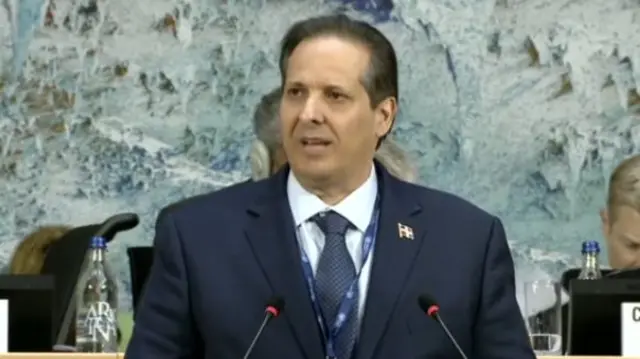
  1. Spanish PM speaking now - we will return with more when WHO chief speakspublished at 16:18 BST
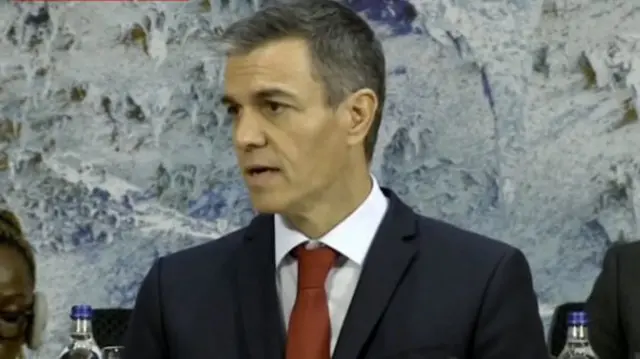
    Spanish PMImage source, WHO

    We were expecting an update from World Health Organization (WHO) director general Tedros Adhanom Ghebreyesus at the World Health Assembly.

    However, the schedule seems to have changed. Now it's the Spanish prime minister taking the floor, and it's unclear when Tedros will speak.

    We'll pause our live coverage for now, but we'll be back if he gives us any news on the Ebola and hantavirus outbreak.

  2. Additional Ebola treatment centres being set up in DR Congopublished at 15:54 BST

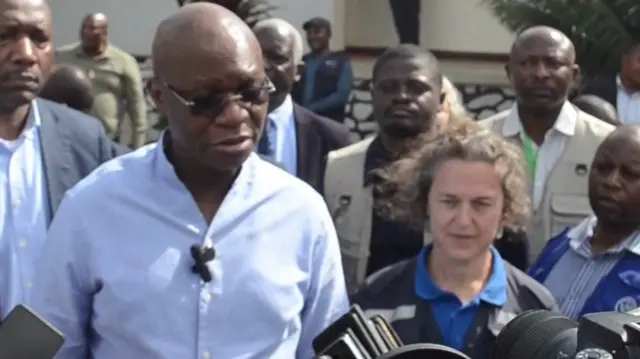
    Samuel Roger Kamba, health minister of the DRCImage source, AP
    Image caption,

    Health Minister Samuel Roger Kamba says hospitals are under stress in DR Congo

    Health authorities in DR Congo say new treatment centres are being established in Bunia, the capital of Ituri province that is the centre of this Ebola outbreak, to take the pressure off hospitals taking in a growing number of patients.

    "This morning, we brought all the tents in order to set up the treatment centres," DR Congo's Health Minister Samuel Roger Kamba told the AP news agency on Sunday on a visit to Bunia.

    "We know that the hospitals are already under stress because of the patients. I would like to inform the population here that we have 59 patients who are currently being actively cared for. But we are preparing to have treatment centres... in order to be able to expand our capabilities."

    World Health Organization representative in DR Congo Anne Ancia said the equipment was a "first response" and would not be enough.

    "We emptied our stock in Kinshasa and brought it here," she said.

    "We are in the process of preparing a C-130 cargo plane, which is already in [Kenya's capital] Nairobi at the moment, which is being loaded at our depot, which will then leave for Kinshasa, and which will bring additional equipment."

  3. How past Ebola outbreaks have impacted DR Congo and other countriespublished at 15:23 BST

    The Democratic Republic of Congo is experienced in dealing with Ebola as this is now the 17th outbreak of the virus in the country.

    Ebola was first discovered in 1976 in what is now DR Congo, and is thought to have spread from bats.

    The country saw the deadliest outbreak between 2018 and 2020, during which nearly 2,300 people died.

    The virus gained more global attention over a decade ago when it spread in West Africa - focused on Guinea, where it started, Liberia and Sierra Leone. Between 2014 and 2016, at least 28,600 people were infected and 11,325 people died.

    A small handful of cases were also seen in seven additional countries: Italy, Mali, Nigeria, Senegal, Spain, the UK, and the US.

    This Flourish post cannot be displayed in your browser. Please enable Javascript or try a different browser.

  4. How worrying is the Ebola outbreak in DR Congo?published at 14:46 BST

    James Gallagher
    Health and science correspondent

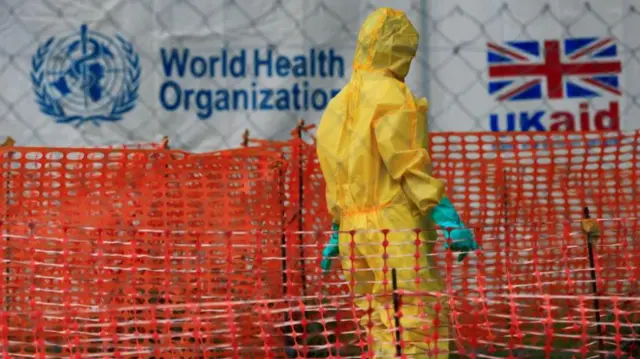
    A person dressed in Ebola protective clothing is seen outside an Ebola care facility at the Bwera general hospital neat the border of DRC in Bwera, UgandaImage source, Reuters

    We're continuing to monitor the assembly session from the World Health Organization, and will bring you the key lines on Ebola and hantavirus as we get them.

    The outbreak of Ebola in the Democratic Republic of Congo is concerning, writes our health and science correspondent James Gallagher.

    It has been spreading for weeks undetected in a part of the world where civil war makes getting on top of the virus difficult.

    The species of Ebola involved is rare, so there are fewer tools to stop a virus that kills about a third of people infected.

    This is a critical moment in an outbreak where there is uncertainty about how far it has spread.

    Most Ebola outbreaks tend to be small, but specialists are haunted by the 2014-16 outbreak. Then, 28,600 people in West Africa were infected in the largest ever outbreak of the disease.

  5. Assembly now discussing session agendapublished at 14:24 BST

    Victor Atallah Lajam, president of the World Health Assembly, is speaking about the health challenges facing the world and possible solutions.

    He says global health is not measured in documents, but in lives, and urges attendees to make this assembly a "historic moment" for humanity.

    Delegates are now discussing the agenda for the session.

    After this, we expect an update on Ebola and hantavirus from WHO director general Tedros Adhanom Ghebreyesus.

  6. WHO assembly session beginspublished at 14:03 BST

    Victor Atallah LajamImage source, WHO

    The World Health Assembly session has started.

    Right now, Victor Atallah Lajam, president of the assembly, is speaking.

    Next, we'll hear from WHO director general Tedros Adhanom Ghebreyesus.

    You can follow our updates here or watch live at the top of this page.

  7. Increasing number of Ebola cases 'biggest worry' for Africa health bodypublished at 13:50 BST

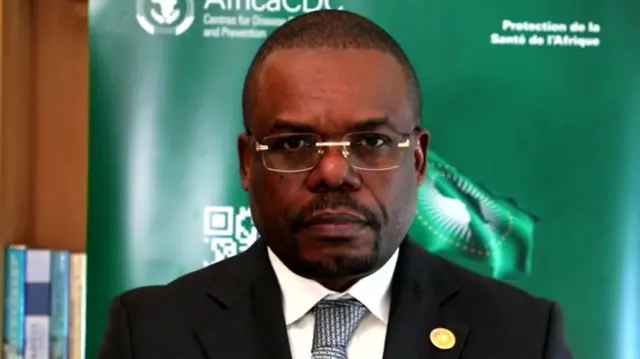
    Jean Kaseya, Director General of Africa Centres for Disease Control and Prevention

    While we wait for Tedros Adhanom Ghebreyesus to speak, here's a comment from the director general of Africa Centres for Disease Control and Prevention, who has just spoken to BBC News.

    Jean Kaseya says his biggest worry is the increasing number of cases of the Ebola virus in the Democratic Republic of Congo and Uganda.

    "Now we have at least 395 suspected cases, if I combine the two countries," Kaseya says. The vast majority of these are in DR Congo as only two cases have been reported so far in Uganda.

    "We have more than 100 people already passed on, and we don't have a vaccine, we don't have medicine available to support."

    "This is my biggest worry because we need to see how to stop the transmission and we are working with the government of DRC and the government of Uganda to stop the transmission of this outbreak."

    He says he believes that with all the mechanisms being put in place, this can happen "very quickly".

  8. What is Ebola and how does it spread?published at 13:35 BST

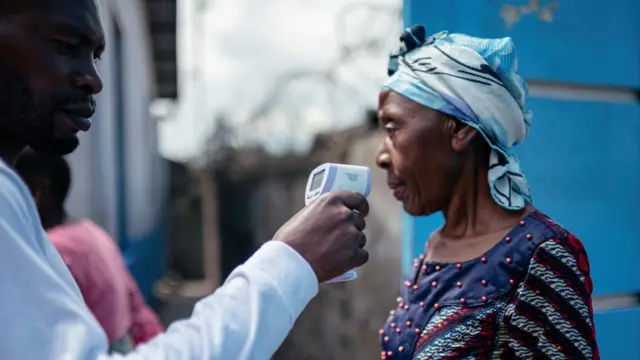
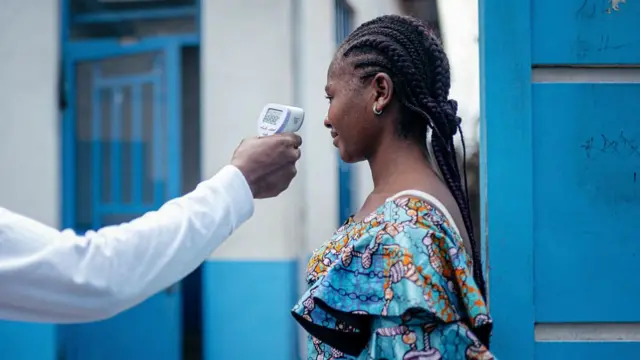
    A man in a white shirt holds a contactless infrared thermometer close to a woman's face. She is looking away from the camera and is wearing a blue headscarf and a patterned red, blue and white dress with red beads on it.Image source, AFP via Getty Images
    • What is causing this outbreak? Ebola is a disease caused by a virus - it is rare, but severe and often deadly. There are three species of Ebola virus that cause outbreaks, and this one is known as Bundibugyo
    • How is Ebola transmitted? It spreads between people through infected bodily fluids, such as blood and vomit
    • How deadly is it? About 30% of people have died in previous Bundibugyo outbreaks
    • What is the incubation time? Symptoms appear between two and 21 days after being infected
    • What are the symptoms? The initial symptoms appear suddenly and are flu-like, such as a fever, headache and tiredness. As the disease progresses, vomiting and diarrhoea develop and the body's organs do not work as well. Some patients may develop internal and external bleeding
    • Where does Ebola come from? Outbreaks start when somebody catches Ebola from infected animals, such as fruit bats
    • Is there a vaccine? There are vaccines for the Zaire species of Ebola, but not for Bundibugyo

    Tedros Adhanom Ghebreyesus is expected to speak soon - you can watch live at the top of this page.

  9. What is hantavirus?published at 13:27 BST

    This Flourish post cannot be displayed in your browser. Please enable Javascript or try a different browser.

  10. Tedros thanks Spain for help with hantavirus outbreakpublished at 13:16 BST

    Director General of the World Health Organization (WHO) Tedros Adhanom Ghebreyesus addresses his statement during the opening of the 79th World Health Assembly (WHA79) at the European headquarters of the United Nations in Geneva, Switzerland, 18 May 2026Image source, EPA

    World Health Organization (WHO) director general Tedros Adhanom Ghebreyesus has given his opening remarks at the World Health Assembly in Switzerland this morning, ahead of his speech this afternoon.

    Tedros outlined how the WHO has changed over the years to "meet the changing needs" of its member states. He also highlighted WHO's new science division and the "groundbreaking" HIV drug lenacapavir, which was prequalified by the organisation in 2025.

    He thanked Spanish officials for their help in dealing with the hantavirus outbreak, after Spain allowed the ship to sail to the Canary Islands and co-ordinate the repatriation of those on board.

    Tedros also told the assembly he would provide more details on both hantavirus and the Ebola outbreak in his afternoon address.

    As a reminder, we're expecting to hear from Tedros at about 13:30 BST (12:30 GMT).We'll be providing live updates here and you can watch live at the top of this page.

  11. What about the hantavirus outbreak on the cruise ship?published at 12:57 BST

    Media caption,

    Hantavirus-hit cruise ship and crew arrive in Rotterdam

    Earlier this month, a ship carrying about 150 passengers and crew from 23 countries was forced to quarantine after an outbreak of hantavirus on board.

    Three people - a Dutch couple and a German woman - died after travelling on the Dutch-flagged MV Hondius, with two of them confirmed to have had the virus.

    The number of infections among cruise passengers has now reached 11, after Canadian authorities confirmed another case on Sunday.

    Earlier, WHO director general Tedros Adhanom Ghebreyesus said "there is no sign that we are seeing the start of a larger outbreak", but added that "given the long incubation period of the virus, it's possible we might see more cases in the coming weeks".

    After more than a month at sea, the Hondius reached its final destination in Rotterdam on Monday, with only the ship's crew remaining on board.

  12. What’s the latest on the Ebola outbreak in DR Congo and Uganda?published at 12:46 BST

    A woman in an African print dress has her temperature taken. A hand, holding an electronic thermometer, can be seen stretching out from the left of the picture.Image source, AFP via Getty Images

    An Ebola outbreak in the Democratic Republic of Congo and Uganda has been declared a "public health emergency of international concern" by the World Health Organization (WHO).

    DR Congo’s eastern Ituri province has seen more than 390 suspected cases and at least 100 reported deaths, the head of the Africa Centres for Disease Control and Prevention Jean Kaseya told the BBC.

    The virus has spread beyond the country with two confirmed cases, including one death, reported in neighbouring Uganda - both of those infected had travelled from DR Congo.

    Two other neighbours - Rwanda and South Sudan - are also now on "high alert".

    The current strain of Ebola is caused by the Bundibugyo virus, the health agency says, for which there are no approved drugs or vaccines.

    The WHO warns the outbreak could be "much larger" than what’s currently being detected and reported, with significant risk of local and regional spread.

    It does not meet the criteria of a pandemic emergency, WHO says.

    Health officials are urging those in affected areas to maintain strict hygiene to prevent its spread. Speaking to the BBC, Africa's top health official Jean Kaseya said special care had to be taken around funerals of those infected.

  13. Tedros to speak at World Health Assemblypublished at 12:45 BST

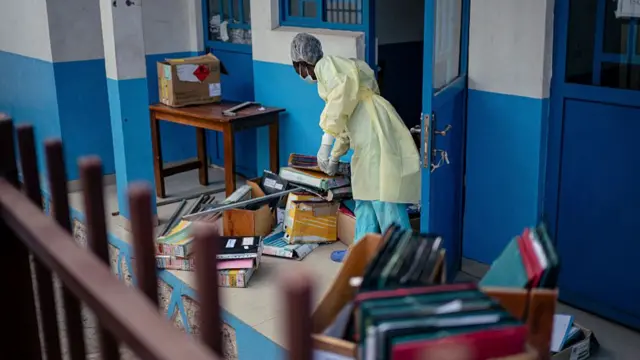
    Staff members at CBCA Virunga Hospital prepare rooms intended for possible suspected Ebola cases following official announcements in Goma, on May 17, 2026Image source, Getty Images

    We’ll be hearing soon from World Health Organization (WHO) director general Tedros Adhanom Ghebreyesus, after the organisation declared the Ebola virus outbreak in the Democratic Republic of Congo an international emergency.

    So far, the DR Congo health ministry has reported around 350 suspected cases and 91 deaths.

    This comes as at least six Americans have been exposed to the virus in the outbreak, according to sources who spoke to CBS News, the BBC’s US partner.

    We’re also expecting Tedros to mention the hantavirus outbreak on cruise ship MV Hondius earlier.

    We’ll bring you all the key updates on these outbreaks as soon as we get them. You will also be able to watch live at the top of this page. Stay with us.