Summary

  1. Flu cases rise across UK as NHS warns peak yet to comepublished at 17:37 GMT 11 December 2025

    Elliot Burrin
    Live reporter

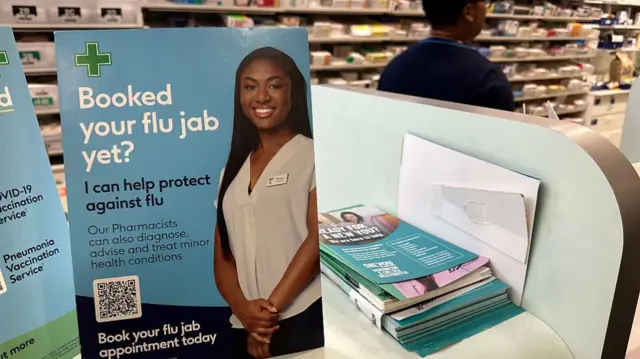
    A sign with 'booked your flu jab yet?' written on it, in a pharmacyImage source, Getty Images

    Today, NHS figures revealed that patients in hospital in England with flu are at the highest level ever for this time of year.

    Cases are up 55% from the week before. They're also rising in Scotland, Wales and Northern Ireland - and there's no peak in sight.

    We've heard from public health systems that are under pressure to keep up with demand, with one A&E unit taking over a former care home to create extra beds. That's before a potential five-day walkout by resident doctors next week, which Keir Starmer's called "irresponsible".

    The highest flu rates are in children and young people aged five to 14. In some places, schools have closed because of large flu outbreaks.

    Some pharmacies have struggled with the higher demand, with stocks in Scotland running low. Despite a "tidal wave of flu", the Department of Health and Social Care says there's still plenty of vaccine supplies.

    The NHS is urging anyone eligible to get their flu vaccination to help prevent them getting seriously ill.

    We're ending our coverage here for today, but you can keep reading here:
  2. Starmer says doctors' strike would be 'irresponsible' as flu cases soarpublished at 17:00 GMT 11 December 2025

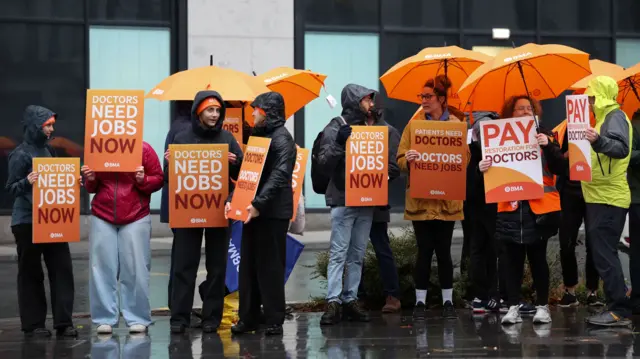
    Resident doctors picket outside the Royal Liverpool University Hospital in Liverpool, 14 November 2025.Image source, ADAM VAUGHAN/EPA/Shutterstock

    One major factor contributing to anxiety within government is the prospect of a five-day resident doctors' strike next week.

    Earlier, Prime Minister Keir Starmer said it would be "irresponsible" of the British Medical Association to go ahead with its industrial action plans, "particularly in the run up to Christmas, particularly when we've got a problem with flu".

    The planned walkout is set to begin on 17 December unless an agreement is reached. It comes at a difficult time, after the number of patients in hospital with flu hit a record level for this time of year.

    Health Secretary Wes Streeting has accused the BMA of "threatening to douse the NHS in petrol" and "light a match".

    But Jack Fletcher, chair of the BMA's resident doctor committee, said the BMA wrote to the health secretary on 19 November before strikes were planned, but received no reply.

    A last-minute offer was put forward by ministers earlier this week, and could still avert the strike. It includes a rapid expansion of specialist training posts as well as covering out-of-pocket expenses such as exam fees. It does not include any promise of extra pay.

  3. A 'tidal wave of flu' but no shortage of jabs, government sayspublished at 16:53 GMT 11 December 2025

    The torso of a person getting a flu jab in their armImage source, Getty Images

    It's going to a "tough winter" for the NHS, says the Department of Health and Social Care (DHSC), but it adds that there is no national shortage of flu vaccines.

    “There is a tidal wave of flu tearing through our hospitals... which is why we began preparations earlier than ever before and have taken decisive action to protect the health service," the statement reads.

    "It is vital that patients and staff can get protected. Over 17 million vaccines have been delivered this autumn - 170,000 more compared to this time last year... there is no national shortage."

  4. How health leaders have responded to the 'unprecedented' super-flu wavepublished at 16:49 GMT 11 December 2025

    News the NHS is facing a "worst-case scenario" for this time of year due to the super-flu wave has led health leaders to respond with critical advice for the public, while others have criticised the ability of the system to cope.

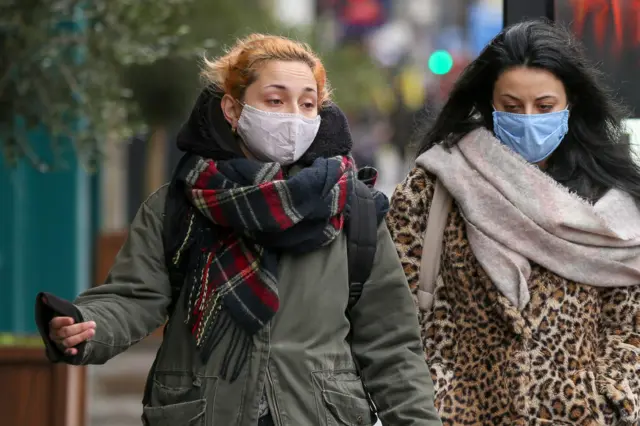
    • Dr Suzanna McDonald from the UK Health Security Agency advises those with symptoms - such as coughing and sneezing - to consider wearing a face mask and stay at home to limit the spread of infection. If you need to leave the house, stick to outdoor spaces
    • Dr Elizabeth Whittaker, from the department of infectious disease at Imperial College London, says the latest flu stats tally with what she's seeing in the emergency department and wards
    • The latest cases show "just how dangerous the situation is getting," says Professor Nicola Ranger, chief executive of Royal College of Nursing. She warns hospitals could soon be overwhelmed, with many already at capacity
    • But for Dr Vicky Price, president of the Society for Acute Medicine, the strain on the NHS is caused by clinicians being overloaded throughout the country, not just the surging flu
  5. Avoiding flu over the Christmas periodpublished at 16:35 GMT 11 December 2025

    Katie Williams
    Live reporter

    Happy group of friends looking very excited celebrating Christmas at a nightclubImage source, Getty Images

    I've just spoken with John Puntis, retired hospital doctor and co-chair of the organisation Keep Our NHS Public. I asked him what advice he would give to people concerned about the spread of flu as we enter the busy Christmas social season.

    He says it's a "bit like the Covid advice" - keep rooms well ventilated where possible with windows open. "If you're already unwell, don't go out and spread it around," he adds.

    Wearing a face mask may also be "sensible" in some circumstances, he says.

    Puntis has chosen to wear one on recent train journeys. He also advises against visiting elderly or vulnerable relatives if you think you are unwell.

  6. Do you have time to get a flu jab before Christmas?published at 16:25 GMT 11 December 2025

    Earlier, we heard from Professor Meghana Pandit, national medical director for the NHS.

    She says there's just a week left to get a flu jab to ensure "maximum immunity" on Christmas Day.

    That's because flu vaccines can take up to 14 days to take effect.

    We'll also bring you some advice on staying healthy during the festive season.

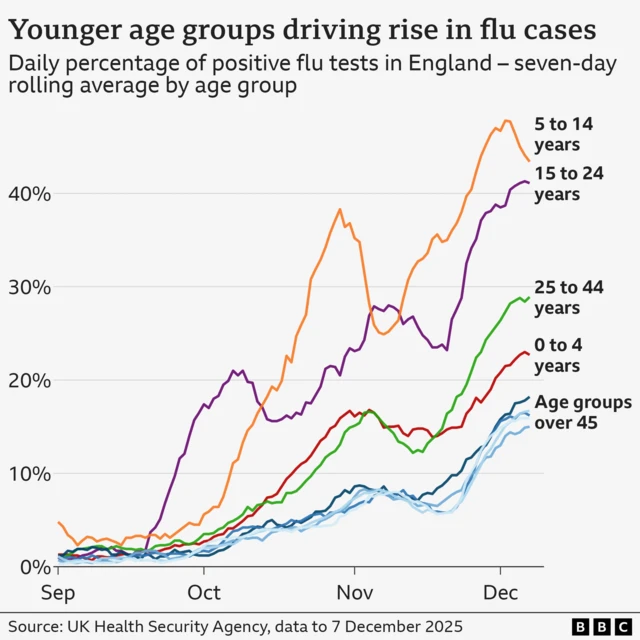
  7. Charting infection rates by age grouppublished at 16:05 GMT 11 December 2025

    We've been talking a lot about positivity tests today, this is the percentage of tests for an illness - in this case flu - that come back positive.

    And since September of this year, it's the younger age groups that have seen the highest numbers of positive returns on tests.

    You can see how different age brackets compare in the graph below.

    Line chart showing the percentage of positive flu tests in England by age group, from September 2025 onwards. Those aged 5 to 14 years and 15 to 24 years have shown the highest positivity rates throughout, currently more than 40% . Those groups for people over 45 are climbing but still below 20%.
  8. Community flu rates still rising... but slower than last weekpublished at 15:54 GMT 11 December 2025

    Nick Triggle
    Health correspondent

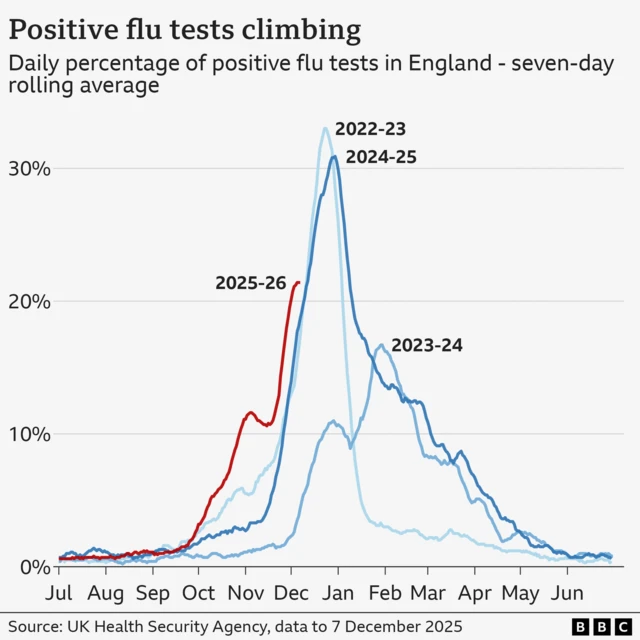
    Line chart showing that positive tests for flu are climbing this year and just over 20% but look to be slowing down, compared to the previous bad flu seasons in 2022 and 2024 when they were at around 17% and 19% respectively at the same time. The chart shows that flu cases this year started rising earlier than in 2023 and 2024.

    We've been bringing you the latest data from the UK Health Security Agency. Earlier it published its weekly report on infection levels, which takes account of spread in the community as well as hospitals.

    The agency says flu rates are still rising, but not as sharply as they were last week.

    On some measures flu levels have flattened in recent days - you can see that in the chart here.

    But experience of previous years shows that flu can be unpredictable, and a slow down can be followed by another surge.

    And data coming in from hospitals suggests cases of people seriously ill continue to rise quickly.

  9. Secondary school closes after 270 pupils and 32 staff fall sickpublished at 15:46 GMT 11 December 2025

    Lisa Young
    BBC News, South West

    Head teacher Dominic Wilkes in a classroom setting
    Image caption,

    Head teacher Dominic Wilkes said it was hoped the school would open again on Monday

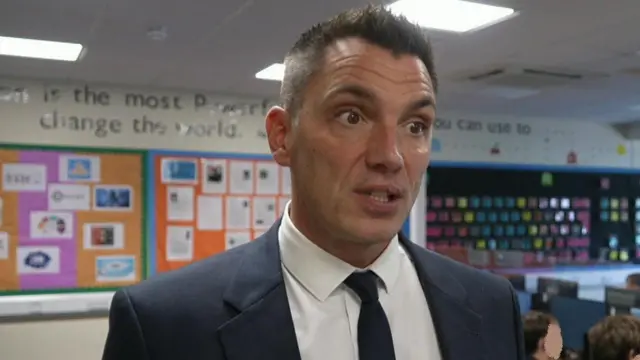
    A secondary school has closed for two days because of an outbreak of flu and streptococcus infection.

    Dominic Wilkes, head teacher of Budehaven Community School in Bude, said there had been more than 270 pupils and 32 members of staff off sick with the illnesses on Wednesday.

    He said following advice from the UK Health Security Agency (UKHSA), Cornwall Council and the school's governors and senior staff agreed "a firebreak" was "the best decision was to move to a remote curriculum to try and break the spread of infection".

    The latest NHS figures show hospital admittances for flu are at their highest levels on record for this time of year.

  10. Will flu cases come down?published at 15:36 GMT 11 December 2025

    This question's for Dr Lindsay Broadbent, Surrey lecturer in virology: Will flu cases slow down after the early spike?

    This is what Dr Broadbent says: As many people have been infected quite quickly, we may see a slowdown and, as we heard from Scotland, it seems that may be happening in Scotland.

    It's too early to say yet if this is an early peak that we'll see come down quite quickly, or if we'll see a sustained flu season.

    There are a lot of factors at play here, including how many people are infected and how many people are vaccinated.

    That concludes our question-and-answer segment.

    A red banner with the words ‘Your Voice’ written in white with a lighter red graphic paintbrush effect behind it
  11. What are the symptoms for flu, and when should I seek help?published at 15:28 GMT 11 December 2025

    A lot of people have asked what the symptoms are for flu - and at what point should you seek medical help.

    Catherine Burns, BBC health correspondent, says:

    Flu is that nasty virus where you get fevers, muscle aches, and exhaustion - someone once described it as, if you had a hundred pounds at the bottom of your bed, you'd be too tired to pick it up and take it.

    Most people get over it with one or two weeks' bed rest, but for some it can develop into pneumonia.

    The first port of call if you think you should seek medical help is to call 111 or go to your GP. However, if you're struggling to breathe or getting chest pain, then call 999 or go to hospital.

    Your Voice banner
  12. Should we be wearing face masks?published at 15:10 GMT 11 December 2025

    Woman wears face maskImage source, Getty Images

    Many are asking if we would be safer wearing face masks, like we did during the Covid pandemic.

    Surrey University lecturer in virology Lindsay Broadbent says:

    It's very difficult to know how effective masks are at different viruses. It's a very hard question to study.

    What we would say is that if you feel ill and you're going to be around people, particularly people that are more vulnerable, it may be worth following advice we've heard in previous years, from Covid.

    Things like wearing a mask, good ventilation, washing your hands.

    We're certainly not suggesting everyone go back to wearing a mask all of the time, but in certain situations they could be beneficial.

    Your voice banner
  13. Are flu vaccines still effective against this strain?published at 15:04 GMT 11 December 2025

    A lot of you have asked what type of strain is this flu virus. Here, Dr Lindsay Broadbent, a lecturer in virology, explains:

    Flu is a very weird virus. It's divided into two main groups, As and Bs. And the one we're talking about this year is an 'A' type virus.

    When we're talking about an 'A' type virus, it's those ones we hear about - like H1N1 and H3N2 - and the one that's predominantly affecting people this year is H3N2.

    However, flu viruses can mutate all the time and they mutate into little groups called clades and subclades.

    The reason why we're a bit worried about this virus is because it belongs to subclade K, so there are some mutations in that virus we're paying particularly close attention to - looking out for vaccine efficacy and antiviral treatments.

    What we do know is that vaccines are still effective for H3N2.

    Our experts have now finished answering your questions in our live stream - but stay with us as our team continues to bring you some of their advice around this flu season.

    Your voice banner
  14. Why can't I get an appointment for a flu jab?published at 14:55 GMT 11 December 2025

    A child gets a flu vaccineImage source, Getty Images

    Adam in Salford says he hasn't been able to get an appointment for a flu vaccine. He asks if there is a shortage, and if that's not the case, why can't he get an appointment for a jab?

    Catherine Burns, BBC health correspondent, answers:

    The Department of Health and Social Care say there's no shortage, but some private pharmacies might be temporarily out of stock.

    But, overall, there shouldn't be any kind of shortage.

    Lisa Summers, BBC Scotland Health Correspondent:

    It's a similar picture in Scotland. There are plenty of free NHS vaccines, extra drop-in clinics for people who are eligible for a free jab but haven't yet got an appointment.

    But there's also private pharmacies that are short on supplies, or who have run out already.

    You should always check if you're eligible for a free vaccine, since there's been some confusion with patients going to private pharmacies when they could get a jab for free on the NHS.

    Your Voice banner
  15. How can I tell if it's the flu or just the common cold?published at 14:48 GMT 11 December 2025

    The first question in today's Q&A is whether the rise we are seeing in hospital admissions is down to Covid, the flu or the common cold?

    Surrey University lecturer in virology Lindsay Broadbent responds:

    A lot of respiratory viruses share very similar symptoms.

    One thing that we can say about flu is that it tends to be a more severe illness for a lot of people.

    If you're experiencing symptoms like a fever, aches and pains, then you're likely to have the flu, rather than a general common cold.

    banner for your voice
  16. We're answering your questions on rising flu casespublished at 14:31 GMT 11 December 2025

    Have you had the flu or are you concerned around the latest surge in cases?

    There's a lot to unpack - so over the next hour or so we'll be answering some of your questions.

    A team of experts will begin picking through your queries from 14:30 GMT and you can follow along here or by pressing watch live above.

    And if there's something you want answered, you can get in touch here.

    A red banner with white writing that reads 'your voice'
  17. Children aged five to 14 most hit as flu cases jump sharply in Englandpublished at 14:29 GMT 11 December 2025
    Breaking

    We're now receiving more data from the UK Health Security Agency.

    They say the positivity rate of influenza (flu) increased to 21% in the week ending 10 December - up from 17% last week.

    The positivity rate is the percentage of tests for an illness that come back positive.

    Children and young people aged 5 to 14 had the highest positivity rates at 45.9%.

    That's an increase from 43.6% last week.

  18. 'This very much feels like the pandemic'published at 14:12 GMT 11 December 2025

    Simon Jones
    BBC News

    At the Darent Valley Hospital in Dartford, Kent, staff say this very much feels like the pandemic.

    People are being asked to wear masks in all clinical settings, there’s a new emphasis on hand hygiene, and the hospital is under huge pressure due to flu cases.

    Doctors are currently caring for 50 patients with the virus, and they saw more people with flu in the first week of December than in the whole of November (a trend we've seen elsewhere).

    There is also the added challenge of some staff being off sick.

    Fortunately though a bit of festive cheer is being brought by the Pets As Therapy dogs - who are visiting to cheer up some of hospital’s poorly patients.

    Two dogs wearing tinsel and blue coats on a wooden floor
    Image caption,

    Therapy dogs have been brought in to Darent Valley Hospital to lift the mood

  19. England's busiest A&E treating nearly 1,000 each day - many with the flupublished at 13:56 GMT 11 December 2025

    Hugh Pym
    Health editor

    We visited Leicester Royal Infirmary over two days, the busiest emergency department in England. More than 900 patients are coming through the doors each day, many with respiratory conditions including flu.

    Richard Mitchell has been the chief executive of University Hospitals Leicester NHS Trust since 2021 - and has witnessed first-hand how it gets harder to cope with each winter that passes.

    "We are already seeing very high levels of flu," he tells us. He expects numbers to climb into January. "That is one of the many things I am concerned about at the moment.

    "At this point I feel we are working at the limits of our ability."

    The trust has taken over a former care home in Leicester and has created extra beds for less seriously ill patients.

    But managers are bracing for intense pressure in the new year, which is always the busiest time for the NHS.

  20. In Scotland, hospital visitors are urged to wear maskspublished at 13:44 GMT 11 December 2025

    Claire McAllister
    BBC Scotland health reporter

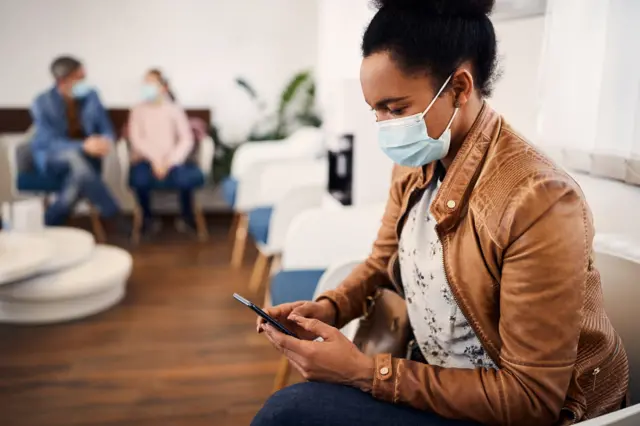
    A woman reads her phone and wears a face maskImage source, Getty Images

    Most Scottish health boards are now asking people to wear masks when they visit hospitals.

    It comes as the number of people admitted to hospital because of the flu has risen for the sixth week in a row.

    The rate has started to slow, but it is still adding pressure on the NHS Scotland at a busy time of year.

    People are being urged to get vaccinated to protect against severe illness, but some community pharmacies have run out of private flu jabs and are struggling to replenish stocks.

    Officials say there are still plenty of NHS supplies.