Summary

  • Four astronauts who left the International Space Station a month early have returned to Earth, splashing down off the coast of California

  • Crew-11 disembarked the Dragon Endeavour at about 01:30 local time (09:30 GMT) after a nearly 11 hour journey back to Earth

  • The astronauts, Mike Fincke and Zena Cardman, Japan's Kimiya Yui and cosmonaut Oleg Platonov are in "good spirits" and will now receive medical checks, Nasa says

  • Dr Helen Sharman, the first Briton in space, tells the BBC it will be a relief and a "luxury" for them to sleep in their own beds, adding they will "enjoy simple things"

  • It's the first time astronauts have been evacuated due to a health issue since the ISS was put into Earth's orbit in 1998

Media caption,

Watch: Astronauts return to Earth after medical evacuation

  1. Astronauts in 'good spirits' after splashdown following ISS medical issuepublished at 12:06 GMT 15 January

    The crew of Dragon Endeavour has returned to Earth safely after one of the astronauts developed a medical issue on the International Space Station.

    In a splash down earlier today, Crew-11 landed in the Pacific Ocean off the Californian coast.

    Americans Mike Fincke and Zena Cardman, Japan's Kimiya Yui and cosmonaut Oleg Platonov were in space for 167 days before their mission was cut short.

    The astronauts appeared jubilant before being taken for medical evaluation.

    In a news conference, Nasa administrator Jared Isaacman said the crew were safe and "in good spirits", adding that Nasa would share updates on the affected crew member’s health "as soon as it is appropriate to do so."

    Nasa's Joel Montalbano acknowledged the crew would have been saddened by the mission being cut short, but hailed their professionalism, adding they understood "what happens when you fly in space".

    We are closing our live coverage now, but you can read more in our news story.

  2. Team remaining on the ISS will probably be taking this in their stridepublished at 11:44 GMT 15 January

    Georgina Rannard
    Science correspondent

    The International Space Station is designed to run best with a crew at of least seven.

    The early departure of these four astronauts leaves just three living on the space station at the moment - they are Nasa’s Chris Williams along with cosmonauts Sergey Kud-Sverchkov and Sergei Mikaev.

    Those three can still run the ISS, although they will probably need to reduce the scientific work that goes on. Instead, they are likely to focus on general maintenance and housekeeping.

    Another crew of four should arrive next month.

    Astronauts are highly trained, and the space station is run with military precision, so the team up there will probably be taking this in their stride.

  3. Why did all four astronauts return for one medical emergency?published at 11:32 GMT 15 January

    Georgina Rannard
    Science correspondent

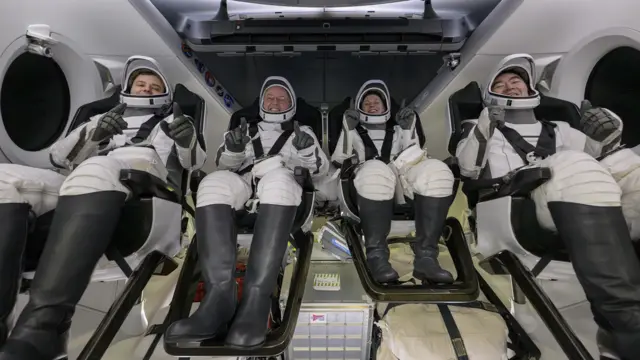
    Roscosmos cosmonaut Oleg Platonov, NASA astronauts Mike Fincke, Zena Cardman, and JAXA (Japan Aerospace Exploration Agency) astronaut Kimiya Yui inside the SpaceX Dragon EndeavourImage source, NASA/BILL INGALLS HANDOUT/EPA

    Astronauts must travel back from the ISS at least in pairs for safety reasons - it’s a dangerous and long journey that requires immense technical skill.

    For example, if one person fainted or fell ill during the return flight, they need someone else there to fly the craft.

    But why did all four members of Crew-11 cut short their stay for this medical evacuation?

    Space flight relies on a lot of complex logistics. The crew travelled to the ISS on the Dragon Endeavour capsule, which remained docked at the ISS during their five-month stay - essentially acting as their lifeboat.

    If just two had returned on it, it would have left the remaining pair without a craft to return on - a problem if another rapid evacuation was needed.

    Nasa prides itself on putting astronauts’ safety and well-being first, and it won’t have wanted to take any risks.

  4. Isaacman asked about his feelings at the end of the missionpublished at 11:31 GMT 15 January

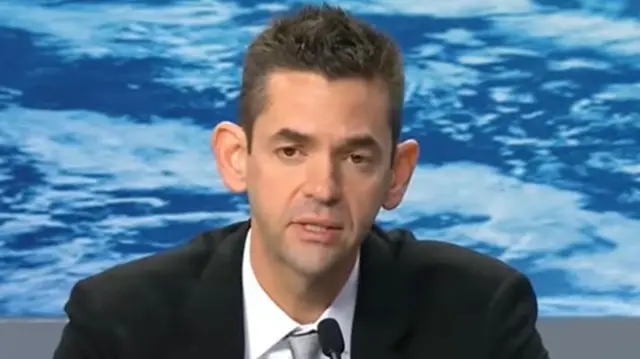
    Jared Isaacman in a black suit, white shirt and grey tie, sitting at a desk in front of a microphone.Image source, NASA TV

    Isaacman is asked about his emotional response to the return of the astronauts given he has been on multiple spaceflights himself.

    He says he was simply happy watching Nasa's plans going as expected from the time the medical situation developed to the conclusion of the flight.

    He adds that the "best moment" is seeing the reactions of the astronauts' families when "their loved ones come back safely".

    The press conference has now ended.

  5. These astronauts 'understand what happens when you fly in space', Nasa sayspublished at 11:20 GMT 15 January

    Isaacman and Montalbano are asked how they support astronauts psychologically and emotionally, especially given that their mission was cut short.

    "Obviously, it affects you a little bit", Montalbano says, adding that "some of the best trained astronauts" were on this mission.

    They were sad to return but they were ready, he says, explaining that they are professional and "understand what happens when you fly in space".

  6. 'Premature' to speculate if astronaut will return to spacepublished at 11:14 GMT 15 January

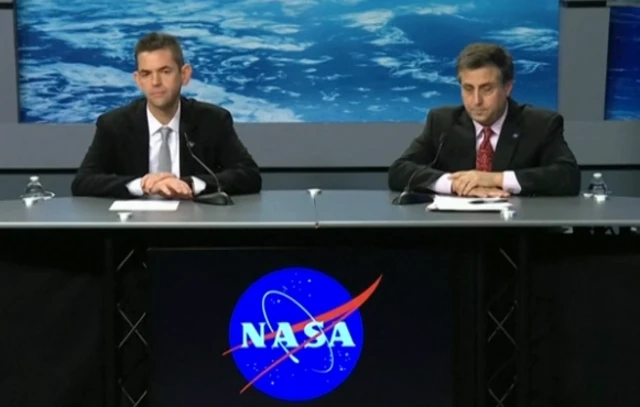
    Nasa employees giving press conferenceImage source, Nasa TV

    More now from Isaacman, who says the crew were evacuated because of an astronaut's "serious medical condition".

    He adds that the astronaut in question is "fine right now" and in "good spirits".

    On whether the astronaut's medical issue would prevent them from embarking on future missions, Isaacman says that is an "incredibly premature" consideration.

    He then lauds the job of the entire crew during their return to Earth.

  7. What would Nasa do differently?published at 11:06 GMT 15 January

    Asked if there is anything they would do differently moving forward, Nasa's Joel Montalbano says that "right now, nothing has really jumped out".

    He says they were able to use the standard process for undocking and landing, and that a lot of preparation work went into the return to Earth - including practice runs to the hospital in the helicopter.

    There will be a review of lessons learned, so the team can "carry them forward", Montalbano says.

    Nasa administrator Isaacman adds that he thinks through the debrief, the team will "learn a lot about what we got right" too.

  8. Nasa: Crew member with medical issue 'doing fine'published at 11:04 GMT 15 January

    The panel is asked whether the astronaut who had the medical issue in space is faring better or worse now they're back on Earth.

    Isaacman reiterates that all crew members are safe and in good spirits as they go through standard, post-splashdown medical checks.

    He adds that the crew member with the medical condition is "doing fine".

  9. Astronauts to be taken to medical facility in San Diegopublished at 11:00 GMT 15 January

    Joel Montalbano, the deputy associate administrator of Nasa's space operations is now giving details.

    He says they decided to bring the crew home early a week ago, and followed the same process that would have been used if they returned as initially scheduled.

    It was an awesome landing for the astronauts who spent just under 170 days in space and did almost 900 hours of science experiments, he adds.

    Montalbano says the four astronauts will be taken to a medical facility in San Diego where they will stay overnight, and are expected to return to Houston tomorrow, pending their medical tests.

  10. Crew in good spirits, Nasa sayspublished at 10:50 GMT 15 January

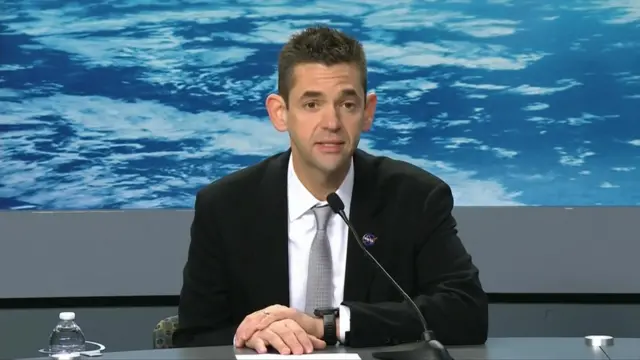
    Jared IsaacmanImage source, Nasa TV

    Nasa administrator Jared Isaacman starts by saying that the crew are "all safe and in good spirits" and are undergoing medical examinations following splashdown this morning.

    The "crew member of concern" is doing fine, he says, adding that they will share updates on their health "as soon as it is appropriate to do so".

  11. Watch live as Nasa holds news conferencepublished at 10:47 GMT 15 January

    Nasa is now holding a news conference after the astronauts' return to Earth.

    You can follow it by tapping watch live at the top of the page, and we'll bring you the key lines.

  12. What type of medical care is there in space?published at 10:42 GMT 15 January

    Georgina Rannard
    Science correspondent

    Astronauts are trained to deal with minor problems, and the station has medical equipment including supplies of medicine and even an ultrasound scanner.

    A few years a blood clot was discovered in an astronaut and was treated on the station without the need to return anyone home.

    The crews check in with doctors on Earth through their daily communications with the space agencies, and they can be remotely diagnosed or treated.

    Medical problems arise fairly often, due to the effects of microgravity on the astronauts.

    The journey from Earth to space and the first few days on the ISS can also cause sickness as crews need to adjust to microgravity impacting their balance and orientation.

    But the ISS does not have a trained doctor or everything required to fully diagnose medical issues, including for example an MRI scanner.

  13. Mike Fincke spends 549 days in space to datepublished at 10:34 GMT 15 January

    Astronaut Mike Fincke has now accumulated 549 days in space - meaning that among Nasa astronauts, he has spent the fourth most cumulative days in space, according to the agency.

    Among Nasa astronauts, only Peggy Whitson, Suni Williams and Don Petit have spent more cumulative days in space.

    Fincke, the pilot for Crew-11, is a veteran of four space missions, after embarking on his first expedition in 2004.

    Crew-11 spent a total of 167 days in space before returning to Earth today.

  14. Eleven-hour journey from ISS ends with splashdown - hitting Pacific Ocean at 15mphpublished at 10:18 GMT 15 January

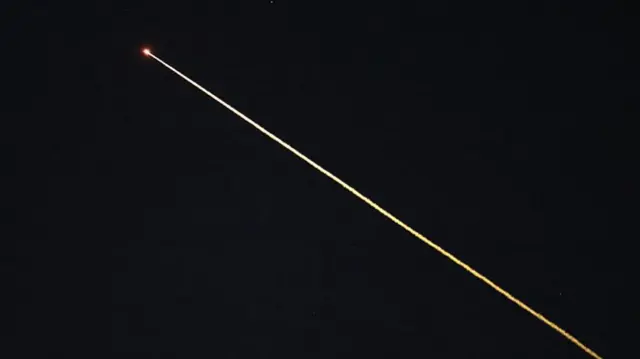
    Dragon Endeavour flies through the night sky leaving a bright coloured jet trail behind itImage source, Getty Images
    Image caption,

    Dragon Endeavour flying through the night sky

    Dragon Endeavour re-entered the Earth's atmosphere a short while ago, following its almost 11-hour descent from the International Space Station (ISS).

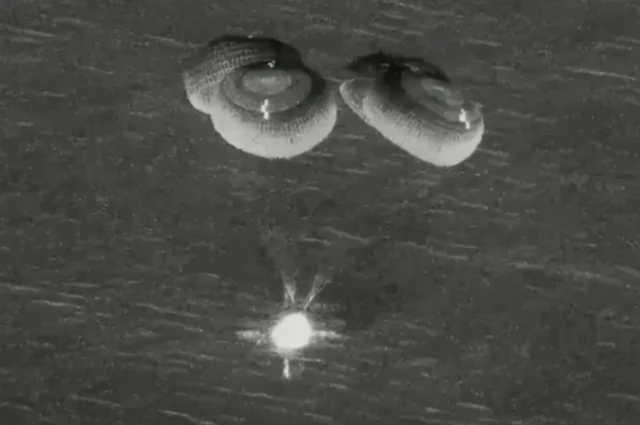
    Once the parachutes were deployed, as shown below, the capsule completed the final part of its journey descending at 15mph (25kph), before hitting the Pacific Ocean off the coast of California.

    The splash down ended the 167 day mission, and as we have been reporting, this is the first time the ISS has had to be evacuated for medical reasons.

    Parachutes release from the Dragon Endeavour as it approaches the Pacific OceanImage source, Nasa TV
    Image caption,

    Splashdown

  15. What will happen to the crew now?published at 09:47 GMT 15 January

    Georgina Rannard
    Science correspondent

    The astronauts on the Dragon Endeavour are now breathing their first fresh air in five months.

    It’s the first time they’ll have been in gravity since August, and their bodies will take time to adjust. Living in microgravity on the ISS puts considerable pressure on our muscles, bones, and even eyeballs can change shape.

    The flight back to Earth with all the jostling and journeying through plasma in Earth’s atmosphere can also cause sickness. The four crew will need to adapt to the change in special Nasa facilities - and of course the astronaut who has fallen ill will require medical treatment.

  16. First images of astronauts disembarking after return to Earthpublished at 09:29 GMT 15 January
    Breaking

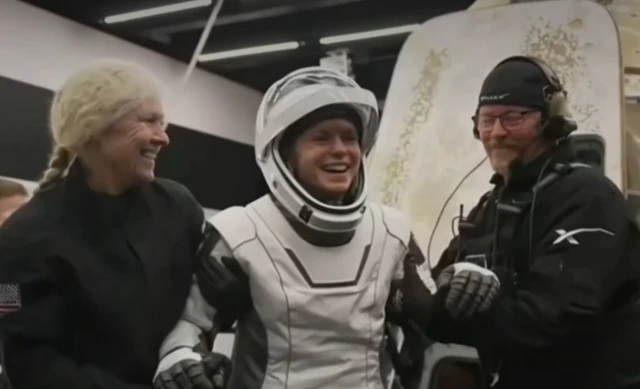
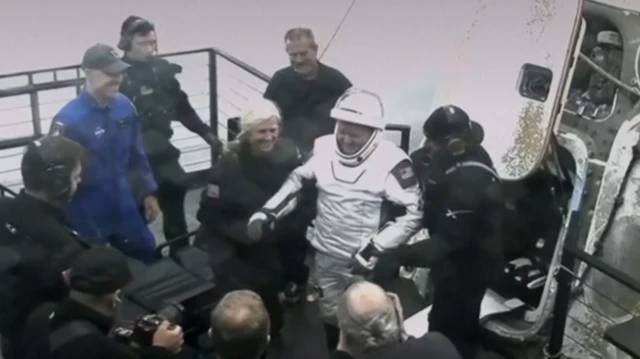
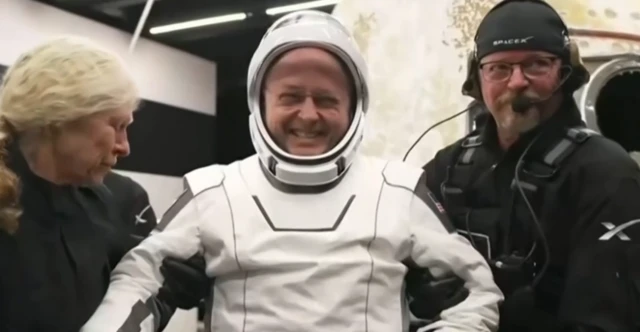
    The four astronauts on board Dragon Endeavour are now leaving the spacecraft following its splash down to Earth off the coast of California.

    Astronaut leaves space craft with two people dressed all in black help her standImage source, Nasa TV
    People surround astronaut leaving space craftImage source, Nasa TV
    Smiling astronaut held up by two peopleImage source, Nasa TV
  17. It will be a luxury to sleep in their own beds, first Briton in space sayspublished at 09:28 GMT 15 January

    Dr Helen Sharman, the first Briton in space, tells the BBC the crew will go through a program to get them reconditioned to Earth after several months in space.

    “It’s not like they open the hatch, given them a quick once over and then say, ‘okay, go home’,” she says, adding they will spend time with trainers and go through medical debriefing.

    She adds when they do return home, it will be a relief and a “luxury” to sleep in their own beds, adding they will “enjoy simple things”.

    “It’s just getting used to those normal aspects of everyday life,” she says.

  18. Astronauts wave from inside spacecraftpublished at 09:23 GMT 15 January

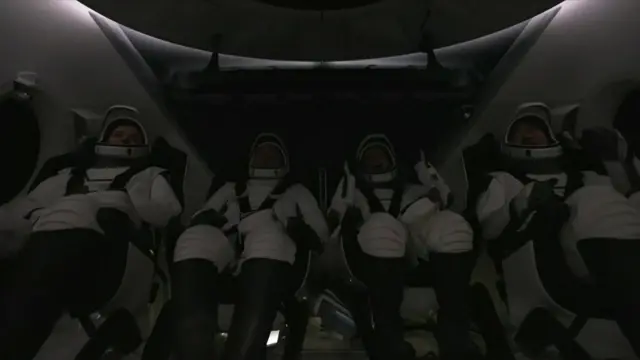
    The four astronauts inside the Dragon Endeavour sat in a line. They are wearing white space suits and strapped in by black strapsImage source, Nasa TV

  19. Recovery teams checking Dragon Endeavourpublished at 09:16 GMT 15 January

    The astronauts are still strapped into their seats in the pod.

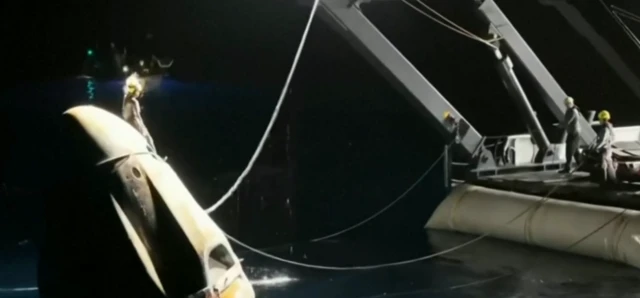
    Recovery teams are climbing onto the Dragon, preparing final checks before the astronauts disembark.

    Rescuer climbs to the top of space capsuleImage source, Nasa TV
    Dragon Endeavour capsule being pulled out of the water by a rope onto the back of a boat.Image source, Nasa TV
  20. This evacuation from the ISS is unprecedentedpublished at 09:09 GMT 15 January

    Georgina Rannard
    Science correspondent

    Crew-11, who have just splashed down to Earth, were meant to stay on the ISS for another month. They arrived last August for a standard six and a half month stay.

    But last Thursday, Nasa called off a planned spacewalk abruptly and four hours later, the agency said that a crew member had a medical issue. It quickly became clear that the problem was serious enough that Nasa would rescue the astronaut, bringing them home early.

    They did not disclose details of the illness due to privacy reasons. But Nasa cannot just bring home one person at a time - for reasons of safety, crew must travel in at least twos - and Nasa needed to return all of Crew-11 on the same capsule that they used to travel to the ISS.