Summary

Media caption,

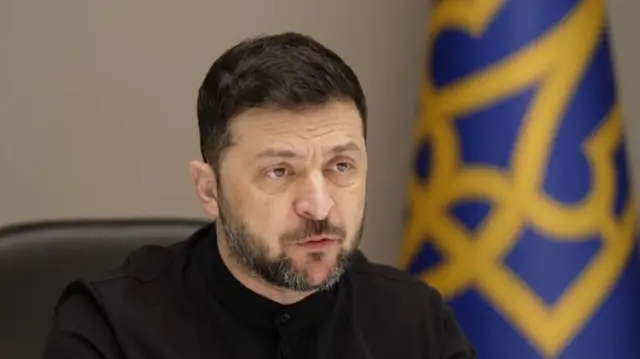
Watch: Zelensky says 'main problem' in talks is Putin's demand for legal recognition of new borders

  1. Trump cautiously optimistic on peace - but is agreement any closer?published at 14:29 GMT 24 November 2025
    Adam Goldsmith
    Live reporter

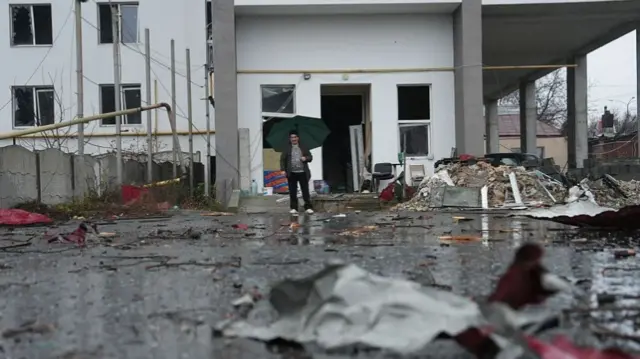
    A man walks in the rubble of KharkivImage source, Getty Images
    Image caption,

    Four people were killed as Russian drones hit Kharkiv overnight

    After a weekend of talks in Geneva around the Donald Trump-approved 28-point plan, are we any closer to peace in Ukraine?

    The US president is cautiously optimistic.

    "Don’t believe it until you see it, but something good just may be happening," Trump wrote as he woke up this morning.

    A first plan - backed by Trump - drew criticism from European leaders who suggested its conditions were too favourable to Moscow.

    Now, details of a counter-proposal have emerged. You can compare the two side-by-side in our earlier post.

    Vladimir Putin's Russian administration is yet to respond to these new peace deal terms, and questions remain around a possible exchange of territory from Ukraine to Russia. Zelenksy insists his country's borders "cannot be changed by force".

    Tomorrow, the "Coalition of the Willing" - a group of countries united in their resolve to support Ukraine - will meet virtually for further talks on the peace proposals. The European Commission's chief spokesperson says there's still a "lot of work" to do on the plans.

    We're bringing this live page to a close now but you can continue reading with our latest stories:
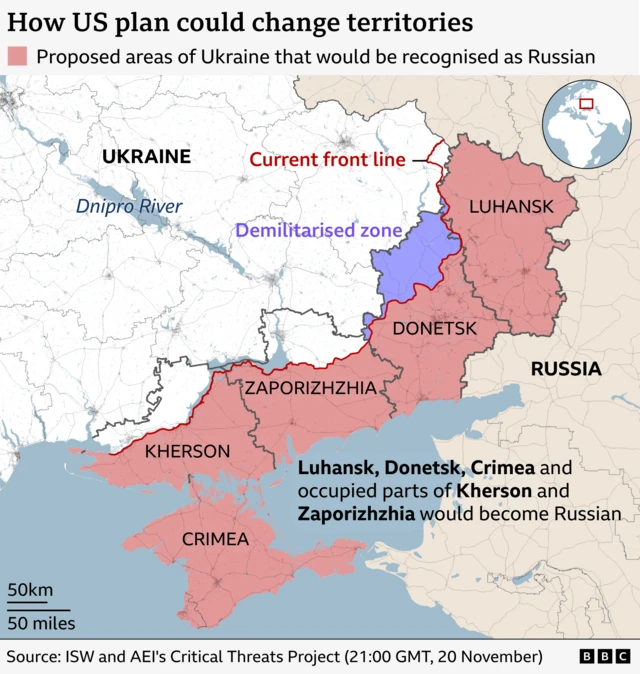

  2. How US 28-point peace plan could change Ukraine's landscapepublished at 14:20 GMT 24 November 2025

    A major sticking point for any peace agreement between Ukraine and Russia appears to be the settlement of occupied territories in the east and south of the country.

    Ukrainian President Zelensky has emphasised that his country's borders cannot be changed by force and says Russia's President Putin "wants legal recognition to what he has stolen".

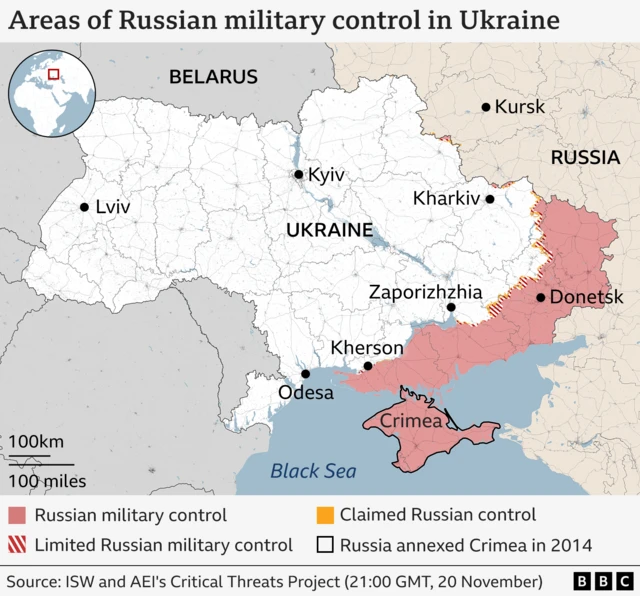
    However, the map below shows how Donald Trump's initial 28 point peace plan could change Ukrainian territories should Kyiv agree to hand over control of certain regions.

    A map marking in red the territories in the east of Ukraine that would become part of Russia under a proposed peace plan
  3. Analysis

    What happened at the Geneva talks - in 130 secondspublished at 14:15 GMT 24 November 2025

    Media caption,

    Watch: The BBC's eastern Europe correspondent analyses the Geneva talks for peace in Ukraine

    The closed-door talks in Geneva that have wrapped today were triggered by a US proposal for peace in Ukraine, and an ultimatum of sorts issued by President Trump, who demanded that an agreement be reached by Thanksgiving on Thursday.

    The US has since said "revisions and clarifications" were made to the plan in Geneva and the BBC's eastern Europe correspondent Sarah Rainsford says "what we seem to have now is the result of push back by Ukraine and its European allies".

    "It seems like we're back where we were before Donald Trump made his ultimatum," she says in this short video analysis, while reporting from Geneva in Switzerland.

  4. 'I think it’s a capitulation proposal renamed,' Ukrainian in London sayspublished at 13:49 GMT 24 November 2025

    Peter Gillibrand
    BBC Newsbeat

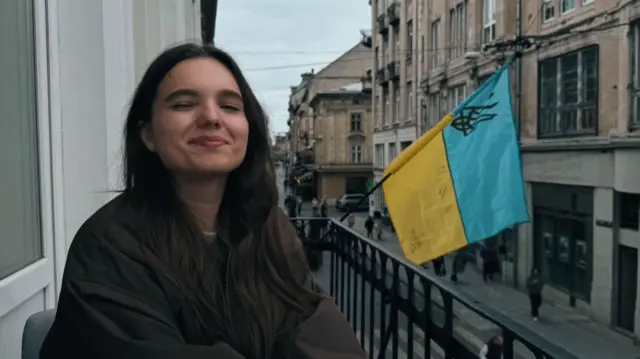
    Woman smiling whilst sat on a balcony

    When Anna, 26, walks around London at the moment the shoppers and decorations remind her of festivities back home in Ukraine.

    She's been speaking to BBC Newsbeat a month before Christmas Eve, when Ukrainian families gather to eat 12 traditional dishes.

    As much as Anna wishes to sample her mother's and grandmother’s cooking again, the main thing on her wish list is peace.

    But she does not believe the initial peace plan put forward by the United States is likely to achieve it. “I think it’s a capitulation proposal, renamed,” she says.

    A major sticking point for Anna is the demand to cut Ukraine’s military to 600,000 personnel. Strong armed forces are one thing that would convince her to “build a family and future” in Ukraine.

    For now, though, Anna says the overriding feeling is one of "anxiety" that Ukraine could be "forced to sign something we wouldn't have signed otherwise".

  5. 'Coalition of the Willing' to hold meeting tomorrow, European Commission sayspublished at 13:40 GMT 24 November 2025

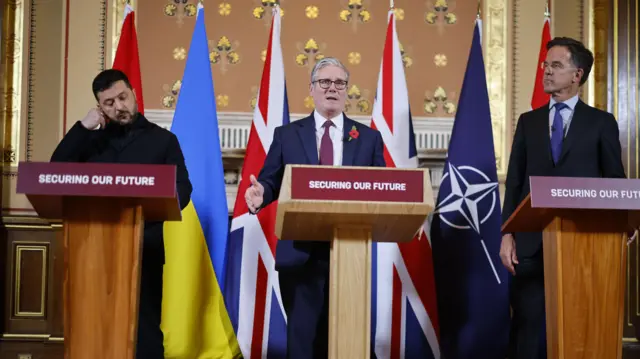
    Ukraine's President Volodymyr Zelensky, British Prime Minister Keir Starmer and NATO Secretary General Mark Rutte speak to the media following the 'Coalition of the Willing ' meeting in London, Britain, 24 October 2025.Image source, EPA
    Image caption,

    Ukraine President Zelensky (left), UK PM Starmer (centre) and Nato chief Rutte (right) pictured in London last month following a "Coalition of the Willing" meeting

    The European Commission's chief spokesperson Paula Pinho says there’s a “lot of work” to do before a Ukrainian peace deal is secured, but adds that European engagement in talks has “yielded constructive progress” in negotiations.

    Pinho says tomorrow the "Coalition of the Willing" will hold a virtual meeting - a group of countries that aim to support Ukraine and increase pressure on Russia.

    The UK and France have been leading efforts to provide a "reassurance force" in the event of a ceasefire, through a "Coalition of the Willing".

    “It is critical that the aggressor - Russia - pays for the destruction that it has been doing,” she says.

    Meanwhile, we've heard that foreign ministers from several European countries met Ukraine's Foreign Minister Andrii Sybiha this morning to discuss the peace negotiations.

  6. Ukrainian delegation returning home from Geneva, Zelensky sayspublished at 13:15 GMT 24 November 2025
    Breaking

    We've just seen a new comment from Ukraine's President Zelensky on the messaging app Telegram.

    He says that the Ukrainian delegation is now returning home after talks in Geneva.

    Zelensky says that he is "awaiting a full report" from them on the progress of negotiations, which will come this evening.

    Zelensky says he will decide on the next steps and timing once he has received their updates.

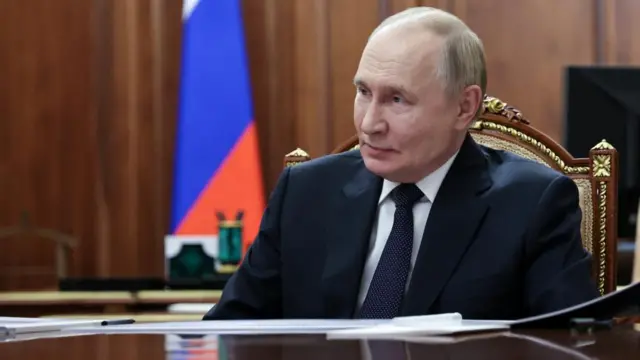
  7. Putin 'reaffirms commitment to diplomatic settlement of the conflict' - Kremlinpublished at 13:13 GMT 24 November 2025

    Russian President Vladimir PutinImage source, Reuters

    Russia's President Vladimir Putin has discussed the US proposal to end the war in Ukraine with Turkey's President Recep Tayyip Erdogan during a phone call, according to the Kremlin.

    Putin said the US proposal on Ukraine could form the basis for a peace settlement.

    The Russian president also said Russia has "reaffirmed" its commitment to a "political and diplomatic settlement to the conflict", the Kremlin says.

    Erdogan told Putin that Turkey is ready to support the peace process, suggesting Istanbul as a location for negotiations.

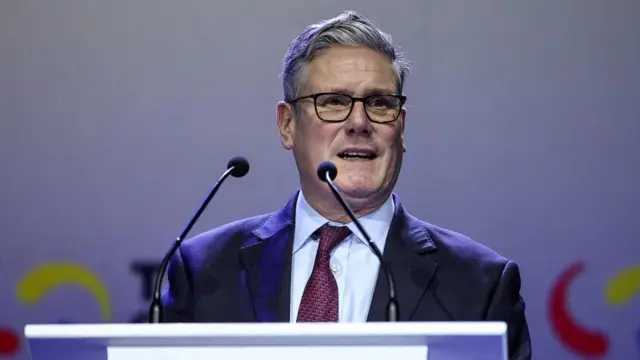
  8. 'Outstanding issues' to be discussed in coming weeks, Starmer sayspublished at 12:54 GMT 24 November 2025

    Keir StarmerImage source, Reuters

    UK Prime Minister Keir Starmer has welcomed progress made in peace talks, his spokesperson tells reporters.

    There are still "some outstanding issues" which he says will be discussed in the coming weeks.

  9. Ukraine's destiny in its own hands - latest reactions from European leaderspublished at 12:49 GMT 24 November 2025

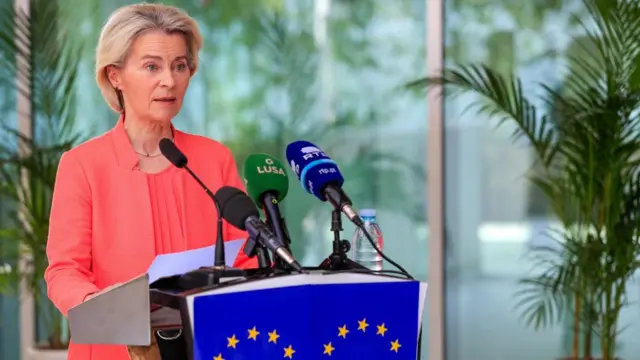
    President of the European Commission Ursula von der Leyen speaks during a press conferenceImage source, EPA
    Image caption,

    Ursula von der Leyen says there is now a "solid basis" for the peace deal to move forward

    European leaders have just met to discuss the Ukraine-Russia peace deal on the sidelines of an EU-African Union summit in Angola. We're hearing from some of them now.

    Polish Prime Minister Donald Tusk tells journalists that no agreement regarding Ukraine can be allowed to undermine the security of Poland and Europe, Reuters news agency reports.

    German Chancellor Friedrich Merz says Europe needs to safeguard Ukrainian interests permanently, adding that Ukraine needs strong armed forces and security guarantees to do this.

    European Council PresidentAntónio Costa says decisions on EU matters - such as sanctions, enlargement or immobilised assets - should be made with the full involvement of the EU.

    President of the European CommissionUrsula von der Leyen says that while work on the peace deal still needs to be done, there is now a "solid basis for moving forward".

    "Only Ukraine as a sovereign country can make decisions regarding its armed forces. The choice of their destiny is in their own hands," she adds.

  10. Reported Europe-drafted peace plan and reactions from all parties - a recappublished at 12:31 GMT 24 November 2025

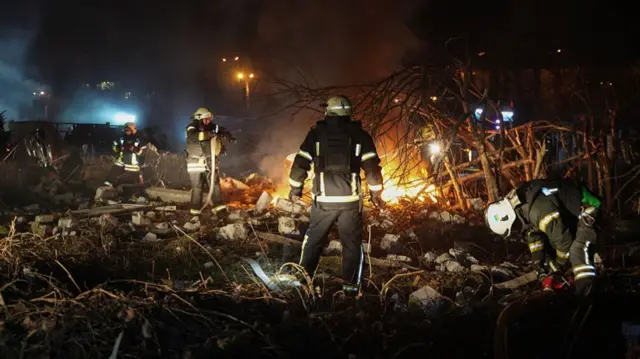
    Rescue workers at a site in Kharkiv dig through rubble near a fireImage source, Getty Images
    Image caption,

    Russian drone strikes killed four overnight in Kharkiv as peace talks came to a close in Geneva

    After the peace talks in Geneva, there are still mixed messages about progress towards reaching an agreement - here’s what we know this morning.

    • Media have reported an updated peace plan drafted by European countries, which includes new terms such as the US providing security guarantee - the BBC has not independently verified its content
    • Donald Trump has teased "big progress" after the weekend’s peace talks, saying "something good just may be happening"
    • Russia says it has yet to receive any new peace plans, but is open to US contacts and talks
    • Ukraine’s Volodymyr Zelensky says Russia’s reported demands to recognise the territory they have "stolen" is the "main problem" stopping an agreement
    • Meanwhile, Russian strikes on Ukraine continue, as four people were killed in Kharkiv after an overnight attack
  11. 'No one will support it': Ukraine's soldiers react to US peace planpublished at 12:22 GMT 24 November 2025

    Jonathan Beale, Anastasiia Levchenko and Volodymyr Lozhko
    Reporting from Kyiv

    Ukrainian soldiers on a frontlineImage source, Reuters

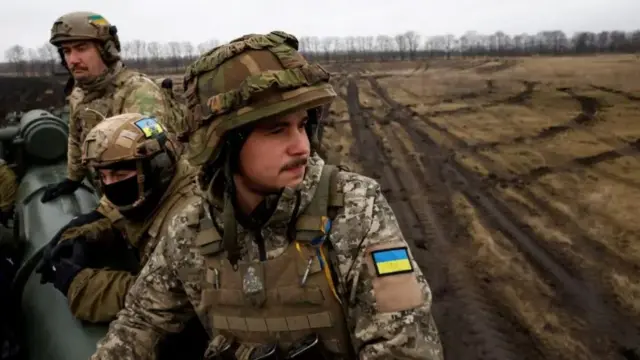
    Ukraine's frontline soldiers have reacted to draft US peace proposals with a mixture of defiance, anger and resignation.

    Yaroslav, in eastern Ukraine, says it "sucks… no one will support it", adding that the proposal simply "won't work".

    An army medic with the call sign Shtutser dismissed it as an "absolutely disgraceful draft of a peace plan, unworthy of our attention". He says Ukraine's army "is the only thing separating us from defeat and enslavement".

    But one soldier with the call sign Snake told us "it's time to agree at least on something".

    "Let them take it," Snake told the BBC. "There's practically no one left in the cities and villages… We're not fighting for the people but for the land, while losing more people."

    The one clear message from those we talked to is that many are tired of fighting.

    Andrii, an officer in Ukraine's general staff, has concerns about some of the proposals but concludes: "If it stops the war, then it works for me."

  12. 'Borders cannot be changed by force' - Zelenskypublished at 12:12 GMT 24 November 2025

    Ukrainian Presdent Zelensky speaking remotely at the Swedish parliamentImage source, X

    Ukraine's President Volodymyr Zelensky has been sharing updates on social media.

    He says he has informed President of Finland Alexander Stubb, President of the European Council António Costa, and President of Lithuania Gitanas Nausėda about the meeting in Geneva on Sunday.

    "Ukraine is working as constructively as possible," he says. "And now it is especially important that every step we take together with partners is carefully balanced, and all decisions are workable and ensure lasting peace and guaranteed security."

    In a separate social media post, Zelensky shared his earlier address to the Swedish parliament, stressing that "borders cannot be changed by force", and "the aggressor must pay fully for the war he started".

  13. Europe's reported counter-proposal to US peace planpublished at 12:04 GMT 24 November 2025

    We've heard that an updated peace framework has been drawn up after talks during the weekend - though details haven't been announced.

    But several media outlets, including Reuters news agency, have reported the text of an alternative plan drafted by Kyiv's European allies. The BBC has not independently verified its contents, and US Secretary of State Marco Rubio has denied any knowledge of its existence.

    Let's take a look at some of the key differences between the two reported plans.

    Europe's reported counter-proposal includes:

    • A cap on the Ukrainian armed forces at 800,000 personnel during peacetime
    • Ukraine can join Nato depending on consensus of Nato members, which it says does not exist
    • Nato agrees not to "permanently" station troops in Ukraine
    • The US to offer Ukraine a security guarantee similar to Nato's Article 5 response in the face of the Russian invasion - this means that an attack on Ukraine would be treated as an attack against all in Nato
    • Security taskforce involving the US, Ukraine, Russia and Europeans to enforce the agreement
    • Ukraine commits to not recover occupied sovereign territorythrough military means, but through negotiations

    Here are some points from the initial reported US proposal, for comparison:

    • Kyiv to cut its army to 600,000 personnel
    • Ukraine must commit in its constitution to not joining Nato, and Nato must include this in its statutes
    • Nato must commit to not stationing troops in Ukraine
    • Joint US-Russia working group to enforce the agreement
    • Crimea, Luhansk and Donetsk regions recognised as "de-facto Russian" and borders frozen to reflect Russian territorial gains
  14. Germany 'very positive' about progress made in Geneva talkspublished at 11:53 GMT 24 November 2025

    German government spokesperson Sebastian Hille has praised "progress" made in negotiations to end the war in Ukraine over the weekend.

    Speaking to reporters in Berlin, he says Germany sees it "very positively that there is finally progress again" and welcomes things "moving forward".

    This follows comments made by German Chancellor Friedrich Merz, who said earlier that he had stressed to US President Donald Trump the negative consequences for Europe if Ukraine were to collapse following defeat in the war.

  15. Moscow suspects updated plan will not be as favourable to Russiapublished at 11:38 GMT 24 November 2025

    Steve Rosenberg
    Russia editor, in Moscow

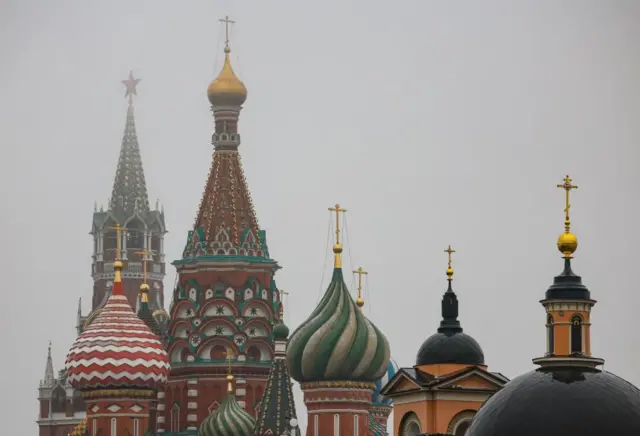
    The Spaskaya tower of the Kremlin and St. Basil's Cathedral seen in the mist during rainy day in Moscow, Russia, 24 November 2025Image source, EPA

    President Putin’s spokesman Dmitry Peskov says that officially the Kremlin has not received any information on the results of the Geneva talks.

    Asked by the BBC whether he expects Russian and American officials to meet this week, Peskov replies “not yet” – though Moscow, he says, is “open to such contacts and talks”.

    Last week Vladimir Putin announced that the Trump administration’s 28-point draft peace plan could form the basis for a final settlement. That proposal was widely seen as favouring Russia. The Kremlin will want to know what changes have been made to the draft in Geneva.

    The suspicion here in Moscow is that the updated version will not be as favourable to Russia. This morning the Russian tabloid Mosovsky Komsomolets wrote: “The European and Ukrainian gang will 'correct' Trump’s plan in such a way that it becomes completely unacceptable for Russia.”

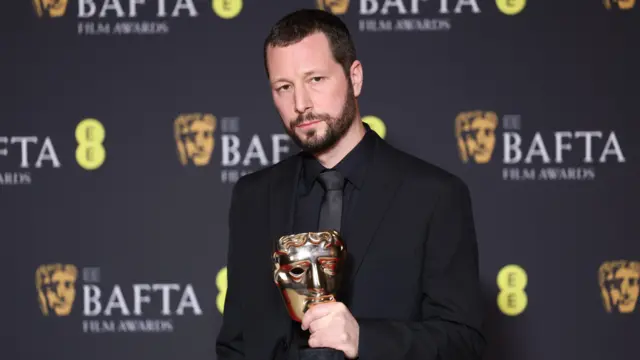
  16. 'I know the bitterness of that' - Oscar-winning Ukrainian filmmaker on giving land to Russiapublished at 11:22 GMT 24 November 2025

    Mstyslav Chernov holds an OscarImage source, EPA

    Oscar-winning Ukrainian filmmaker Mstyslav Chernov says Ukrainians would "fight to the end" to save the Donbas territories from coming under Russian control.

    As we've been reporting, Donald Trump's 28-point plan says Kyiv's troops must withdraw from parts of the Donetsk region they currently control, which would then be recognised internationally as under Russian control.

    Chernov tells the BBC's Global Story podcast: "We should ask Ukrainians what they think about it."

    He describes the regions under discussion in peace talks as "places of my childhood".

    "Maybe for the sake of saving lives there will be some sort of agreement, but I know the bitterness of that."

    "It's burnt and it's my home," he adds. "Ukraine is not only the land, Ukraine is a community or community of communities. So as long as that idea survives, Ukraine will survive."

    Chernov won an Academy Award in 2024 for his documentary 20 Days in Mariupol, which documented the Russian siege of the city at the start of the conflict.

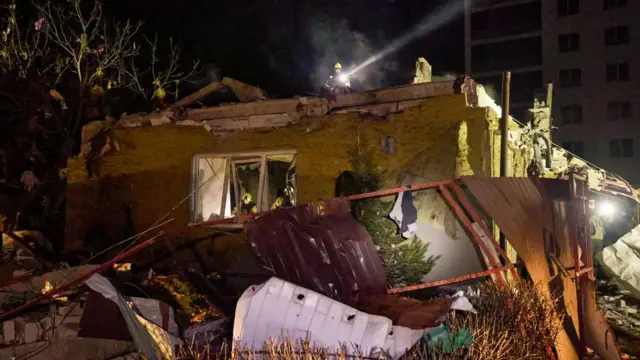
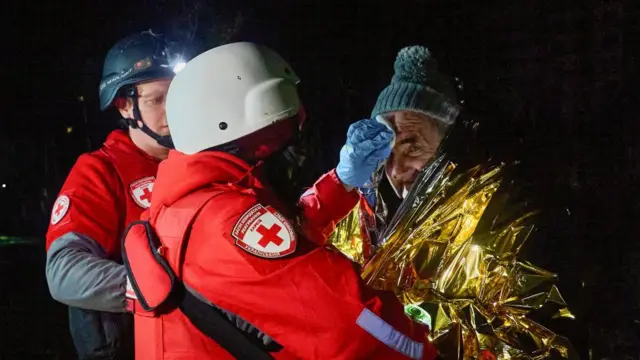
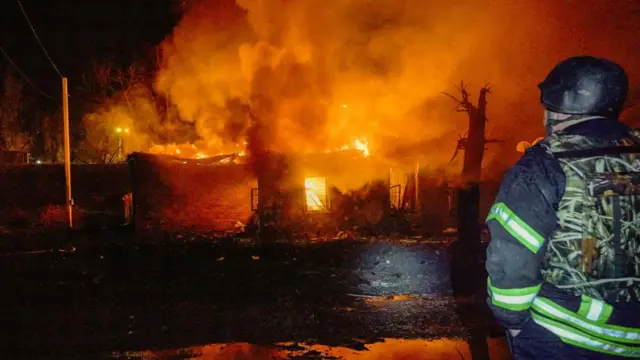
  17. Pictures show deadly Russian attack in Kharkivpublished at 11:05 GMT 24 November 2025

    Here are some pictures of the aftermath in Ukraine's eastern city of Kharkiv, where four people have died after Russian attacks.

    "Every night and every day are new challenges for our city, new destruction and new work for all services that have been continuously saving people," the city's Mayor Ihor Terekhov writes following the strikes.

    Demolished building in KharkivImage source, EPA
    Man with emergency services having injury treatedImage source, EPA
    Firefighter looks upon building set ablazeImage source, EPA
  18. 'Something good just may be happening,' Trump says on peace talkspublished at 10:53 GMT 24 November 2025
    Breaking

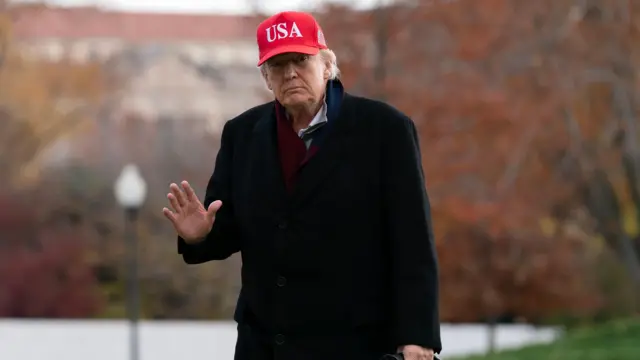
    Donald Trump waves in USA hatImage source, AP

    We've just heard from US President Donald Trump about the weekend's peace talks in Geneva.

    "Is it really possible that big progress is being made in Peace Talks between Russia and Ukraine??? Don’t believe it until you see it, but something good just may be happening. GOD BLESS AMERICA!" he writes in a social media post.

  19. Analysis

    Allowing Russia to seize land by force sets a dangerous precedent, Zelensky sayspublished at 10:40 GMT 24 November 2025

    Laura Gozzi
    Europe reporter

    Earlier today, Zelensky said a major issue was that Putin wanted "legal recognition to what he has stolen, to break the principle of territorial integrity and sovereignty" - a reference to Russia's repeated demand that Ukrainian troops withdraw from several embattled eastern regions.

    With this, Zelensky is making the point that allowing Russia to seize land by force would set a dangerous precedent.

    International law recognises Ukraine's territorial integrity and sovereignty. Russia's annexation of Crimea in 2014 and its occupation of several other regions directly challenged this principle - and the idea that a peace settlement could reward Moscow for its aggression is unacceptable, Zelensky says.

    The US peace plan draft proposes to freeze the front line in Kherson and Zaporizhzhia, giving Moscow control of huge areas of those regions. Perhaps more concerningly for Ukraine, it also says Kyiv should hand over the areas of the industrial eastern Donbas region still under Ukrainian control to the de facto control of Russia.

    Zelensky has repeatedly said that giving up the Donbas would leave Ukraine vulnerable to Russian attacks in the future - not to mention the thousands of casualties Ukraine has suffered, and is still suffering, trying to protect the region.

    It would be very difficult for Zelensky to justify the loss of the Donbas to Ukrainians.

    Map showing which areas of Ukraine are under Russian military control or limited Russian control.
  20. Ukraine's parliament speaker sets out rules 'no-one can violate' for peace dealpublished at 10:25 GMT 24 November 2025

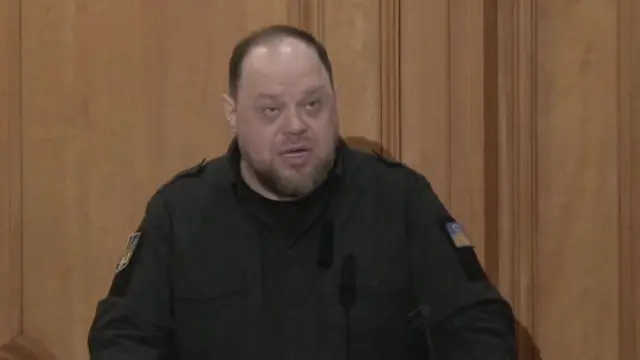
    Man speaking in front of brown wallImage source, Reuters

    Following Volodymyr Zelensky's address to Sweden, the speaker of the Ukrainian parliament says Ukraine will not accept legal recognition of the Russian-occupied territories, restrictions on Ukraine's forces, or limits on Ukraine's future alliances.

    Ruslan Stefanchuk describes these as rules that "no-one can violate" in the peace negotiations.

    He also tells the Swedish parliament that Ukraine's membership of the EU and Nato must be part of any peace plan.