Summary

Media caption,

Trump on new Iran strikes: Ceasefire 'still on' but they better sign their agreement

  1. US and Iran exchange fire but Trump says ceasefire still in placepublished at 03:10 BST

    Earlier today, Iran accused the US of violating its 7 April ceasefire agreement after explosions rung out in the Strait of Hormuz.

    Iran has described today's flare-up as an “exchange of fire” between Iranian armed forces and the “enemy”:

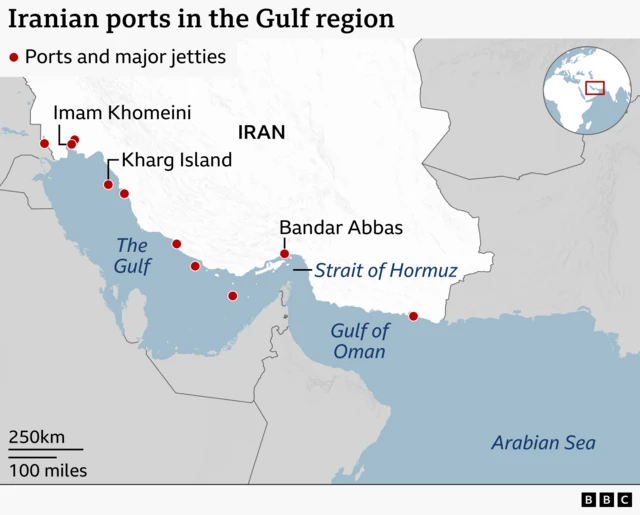
    • Iranian news agencies said that "several explosions" were heard near the Iranian city of Bandar Abbas, with commercial parts of a pier in Qeshm - the largest island in the Gulf - being "targeted".
    • Iran's top military command alleged the US targeted an Iranian oil tanker moving towards the strait, as well as another vessel entering the strait opposite the Emirati port of Fujaira

    The US response:

    • US President Donald Trump confirmed that three US naval destroyers in the strait were attacked, but were not damaged.
    • He added that "great damage" was done to Iranian "attackers"
    • The ceasefire and the US blockade of Iran remain in place, he said. He referred to the exchange of fire as a "love tap" in an interview with ABC News.
    • Before Trump's update, US Central Command (CENTCOM) announced that US forces intercepted "unprovoked Iranian attacks" and responded with self-defence strikes as US Navy guided-missile destroyers transited the strait. It added that no US assets were struck.
    • "CENTCOM does not seek escalation but remains positioned and ready to protect American forces," CENTCOM said.

    What effect might this have on the ceasefire or escalation?

    • "This is a significant flare-up further endangering the four-week-old truce between the US and Iran, but it so far remains unclear who fired first," writes the BBC's US State Department correspondent Tom Bateman.
    • Trump has said in recent days that the war in Iran will be "over quickly" and has been pushing a 14-point memorandum of understanding with Iran, pushing for it again today.
    • A senior member of Iran's parliament has dismissed the memorandum as a "wish list", while an Iran foreign ministry spokesman on Wednesday said the latest US proposal was being considered and that Tehran would share its views with Pakistani mediators.

    This live coverage is ending now, but you can read more on the latest here.

  2. What has Iran been saying?published at 02:34 BST

    Ghoncheh Habibiazad
    Senior reporter, BBC Persian

    Iranian President Masoud Pezeshkian had said recently that Iran was ready for diplomacy despite its “mistrust” of the US.

    But there still remains the question of how much power Pezeshkian’s government actually holds compared with the parallel power structure in Iran in the form of the IRGC, the Islamic Revolutionary Guard Corps.

    The person who holds ultimate authority over the IRGC among other entities is the Commander-in-Chief of the Armed Forces, Mojtaba Khamenei, Iran’s third Supreme Leader.

    We are yet to see Mojtaba Khamenei in public since his succession to his father’s position two months ago.

    But reading between the lines of the messages attributed to him, he appears determined to maintain Iran’s “control” over the Strait of Hormuz and has repeatedly criticised the US.

    Given the current situation, it is not very clear whether or when the US and Iran will reach a deal, or whether everyone within the Iranian establishment supports such an agreement.

    What is clear, however, is that Tehran for now continues to view the US with the same “mistrust” repeatedly expressed by several officials in their rhetoric.

  3. Trump on new Iran strikes: Ceasefire 'still on'published at 02:13 BST

    President Donald Trump tells reporters on Thursday evening that the US is "negotiating with the Iranians".

    He said the ceasefire was still in place after the US and Iran exchanged fire.

    "You probably heard we took about three destroyers and we rammed them through some pretty big stuff today, and we knocked the hell out of it," the President said.

    He emphasised that "there's zero chance" the US will allow Iran to have a nuclear weapon. Trump said Iran has "agreed to that", adding, "Let's see if they are willing to sign it".

    "The talks are going very well, but they have to understand if it doesn't get signed, they're going to have a lot of pain", the president threatened.

    “I believe they want the deal more than I do,” he said of Iran.

    Media caption,

    Trump on new Iran strikes: Ceasefire 'still on' but they better sign their agreement

  4. Oil prices gain after US and Iran trade strikespublished at 01:40 BST

    Oil prices rose on Friday morning trade in Asia after the US and Iran exchanged fire in the key Strait of Hormuz waterway.

    The US military said it intercepted Iranian attacks - including missiles, drones and small boats - and carried out its own strikes as its ships were heading out of the Gulf through the strait.

    The price of global oil benchmark Brent rose by 2.3% to $102.40 (£75.53) a barrel, while US-traded crude was 2.1% higher at $96.80.

    The flare-up further endangers the US-Iran ceasefire, which President Donald Trump extended indefinitely on 21 April to allow more time for peace talks.

    Read more here.

  5. Congressman Greg Landsman tells BBC he hopes for no further escalationpublished at 00:57 BST 8 May

    Democratic lawmaker Greg Landsman has been speaking to BBC, reacting to the recent US military strikes on Iranian forces in the Strait of Hormuz.

    The congressman says he hopes those tensions do not escalate further, and that the "regime has been weakened significantly".

    Trump "should have ended our military involvements after the targets had been dealt with," he adds, "Instead, he has the entire global economy wrapped up in the Strait of the Hormuz because of the blockade."

  6. Where is the deal?published at 00:39 BST 8 May

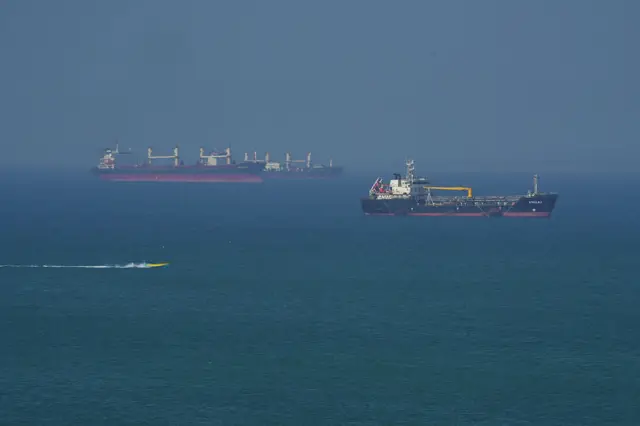
    The Ateela 2 Oil Tanker boat navigates the sea on 28 April on Qeshm Island, Iran in the Strait of HormuzImage source, Getty Images

    President Donald Trump has said in recent days that the war in Iran will be "over quickly".

    He has been pushing a 14-point memorandum of understanding with Iran, which could set a framework for more detailed nuclear negotiations.

    On Thursday, the president pushed for it once again while also confirming the latest confrontation.

    "...we’ll knock them out a lot harder, and a lot more violently, in the future, if they don’t get their Deal signed, FAST!," the president wrote on Truth Social.

    A senior member of Iran's parliament has dismissed the 14-point memorandum of understanding as a "wish list".

    Meanwhile, a foreign ministry spokesman on Wednesday said the latest US proposal was being considered and that Tehran would share its views with Pakistani mediators.

  7. Analysis

    A significant flare-up, even as Trump suggests ceasefire still in effectpublished at 00:19 BST 8 May

    Tom Bateman
    US State Department correspondent

    This is a significant flare-up further endangering the four-week-old truce between the US and Iran, but it so far remains unclear who fired first.

    The Pentagon says that US Navy destroyers heading out of the Gulf through the Strait of Hormuz came under "unprovoked" attack from Iranian missiles, drones and small boats - to which the Americans responded by striking Iranian military facilities, including launch sites and command centres. That would likely explain the Iranian reports of explosions on land on Qeshm Island and the port city of Bandar Abbas.

    The Iranian Revolutionary Guard Corps (IRGC) Navy, however, says it was the Americans that started the skirmish by what it called "aggression" against an Iranian oil tanker and another vessel - to which it retaliated with the missile and drone fire towards the US ships.

    US officials are trying to suggest this is a limited exchange of fire that does not mean a resumption of war, but Tehran describes it as a violation of the ceasefire by the Americans.

    The latest outbreak of fighting follows tensions between Washington and its Gulf Arab allies, some of whom reportedly believe the US did not respond aggressively enough earlier this week when Iran fired at the United Arab Emirates in retaliation for President Trump's now-suspended military operation to try to reopen the Strait of Hormuz by force.

  8. 'Great damage' was done to Iranian attackers, Trump sayspublished at 00:04 BST 8 May

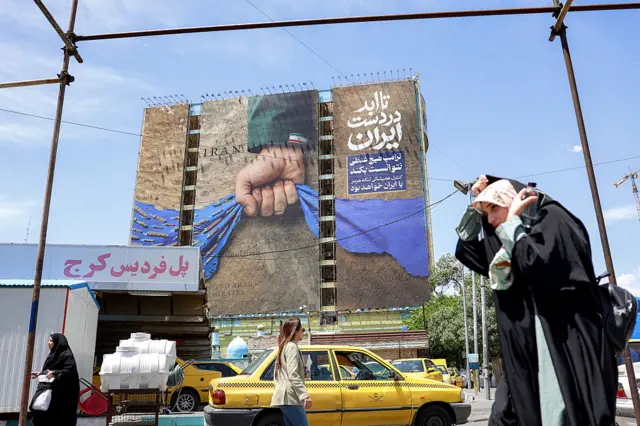
    A woman adjusts her headdress as she walks near a billboard on the facade of a building depicting the Strait of Hormuz with a caption in Persian reading "Forever in Iran's Hand"Image source, AFP via Getty Images
    Image caption,

    A billboard depicting the Strait of Hormuz with a caption in Persian reading "Forever in Iran's Hand"

    We have now heard directly from the president, who says three US naval destroyers came under attack in Iran, but were not damaged.

    In a post on Truth Social, Trump says that "great damage" was done to the Iranian attackers and that numerous small boats were completely destroyed..

    "These boats went to the bottom of the Sea, quickly and efficiently. Missiles were shot at our Destroyers, and were easily knocked down. Likewise, drones came, and were incinerated while in the air," he writes.

    "They dropped ever so beautifully down to the Ocean, very much like a butterfly dropping to its grave! A normal Country would have allowed these Destroyers to pass, but Iran is not a normal Country. They are led by LUNATICS," he adds.

    Trump reiterates his stance on Iran's nuclear capabilities, saying that if Tehran had a chance to use a nuclear weapon "they would do it, without question".

    "[T]hey’ll never have that opportunity and, just like we knocked them out again today, we’ll knock them out a lot harder, and a lot more violently, in the future, if they don’t get their Deal signed, FAST!"

    He also mentions that the US blockade on Iran is still in effect, saying that the three naval destroyers that came under attack will rejoin this "Wall of Steel".

    On Tuesday, the US paused an operation to guide stranded vessels through the Strait of Hormuz, citing “great progress” that Trump said had been made toward a deal with Iran.

    No details about the proposed deal have been shared, but on Wednesday, Iran’s foreign ministry said the latest US proposal was being considered.

  9. Trump reportedly says ceasefire still in effect - 'It's just a love tap'published at 23:49 BST 7 May

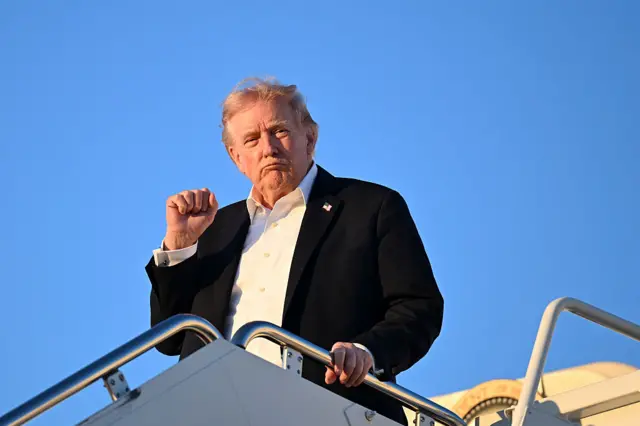
    President Donald Trump disembarks from Air Force OneImage source, Getty Images

    As we hear reports of explosions in other parts of Iran, President Donald Trump says the ceasefire is not over.

    "The ceasefire is going. It's in effect," he tells ABC News in a phone call.

    Referring to the strikes, the president says: "It's just a love tap."

    The White House has not released an official statement.

  10. Explosions reportedly heard in other parts of Iran, state media sayspublished at 23:43 BST 7 May

    Explosions were reportedly heard in other parts of Iran, near the city of Sirik, Iranian state media reports.

    The source of the sounds, however, remain unclear, the report states.

  11. Not the first attack since 7 April's ceasefirepublished at 23:35 BST 7 May

    This latest confrontation isn't the first time the US and Iran have exchanged fire since a ceasefire call on 7 April.

    On Monday, the US military's Central Command said American destroyers transited the Strait of Hormuz as part of “Project Freedom", a US effort to keep shipping lanes open.

    It said that two US Navy destroyers - the USS Truxtun and USS Mason - entered the Persian Gulf despite coordinated attacks during the passage, including from Iranian small boats, missiles and drones.

    The US military said neither ship was hit and that it destroyed six Iranian small boats while intercepting cruise missiles and drones.

    Iran has said it will target US ships in the region, claiming its forces have fired on US warships to deter passage and warning of “decisive action” against ships that do not follow its approved route through the strait.

  12. US blockade on Iranian ports continuespublished at 23:23 BST 7 May

    The US has been blockading Iranian ports in the Strait of Hormuz, after forces announced last month that they would intercept or turn back vessels travelling to or from Iran's coast.

    The US wants to restrict Tehran's ability to profit from oil exports in an attempt to put pressure on the country, and says it has stopped dozens of ships.

    Just yesterday, US Central Command said it had shot and disabled an Iranian-flagged oil tanker in the Gulf of Oman that was trying to break the blockade.

    Iran has also been preventing the passage of vessels through the strait since the start of the war, causing traffic in the waterway to drop dramatically. Ordinarily, around a fifth of global energy supplies pass through the passage.

    On Sunday, Trump announced that the US would begin a military operation to "guide" trapped ships out of the Gulf - known as "Project Freedom". But days later, he announced the project had been paused.

  13. No casualties in Bandar Abbas - Iranian state TVpublished at 23:03 BST 7 May

    Ghoncheh Habibiazad
    Senior reporter, BBC Persian

    A reporter on Iranian state TV says that there have been no casualties or injuries following US attacks in Bandar Abbas.

    "Life is moving on as normal," he reports.

  14. US has violated ceasefire, Iran sayspublished at 23:00 BST 7 May

    Iran’s Islamic Revolutionary Guard Corps (IRGC) Navy has released a statement, saying the US has violated the ceasefire.

    In a social media post, the IRGC says the US army acted against an Iranian oil tanker near the port of Jask.

    Iran's navy responded with "intense explosive warheads" and "intelligence surveillance indicates significant damage to the American enemy, and three enemy invading ships quickly fled the Strait of Hormuz area", it posted on X.

  15. US Central Command responds to 'unprovoked Iranian attacks'published at 22:37 BST 7 May
    Breaking

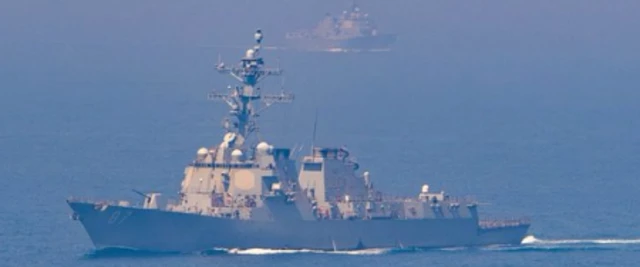
    US Navy warshipImage source, US Central Command

    We've just received a statement from US Central Command (Centcom).

    Here's what it says in full:

    "U.S. forces intercepted unprovoked Iranian attacks and responded with self-defense strikes as U.S. Navy guided-missile destroyers transited the Strait of Hormuz to the Gulf of Oman, May 7.

    "Iranian forces launched multiple missiles, drones and small boats as USS Truxtun (DDG 103), USS Rafael Peralta (DDG 115), and USS Mason (DDG 87) transited the international sea passage. No U.S. assets were struck.

    "U.S. Central Command (CENTCOM) eliminated inbound threats and targeted Iranian military facilities responsible for attacking U.S. forces including missile and drone launch sites; command and control locations; and intelligence, surveillance and reconnaissance nodes.

    "CENTCOM does not seek escalation but remains positioned and ready to protect American forces."

    We'll bring you more on this shortly.

  16. Iranian military accuses US of ceasefire violationpublished at 22:28 BST 7 May
    Breaking

    Iran's top military command has accused the US of a "violation of the ceasefire" and alleges it targeted an Iranian oil tanker moving towards the Strait of Hormuz, according to a statement published on Telegram by Iran's IRIB state broadcaster.

    The statement, attributed to a spokesperson, says another vessel entering the strait opposite the Emirati port of Fujairah was also targeted.

    It says "aerial attacks" were also carried out along the coasts of Bandar Khamir, Sirik and Qeshm Island.

    The statement says Iran's armed fores "immediately responded" by attacking US military vessels, inflicting "significant damage".

    As a reminder, the US has not commented on the situation so far and the BBC has not yet independently verified the reports.

  17. Iranian state media says explosions in multiple Iranian citiespublished at 22:16 BST 7 May

    Iran's semi-official Fars news agency reports that "several explosions" were heard near the Iranian city of Bandar Abbas. It says the "exact origin and location" of the sounds is still "unknown".

    Fars adds that its investigations show that there was "exchange of fire" between Iranian armed forces and "the enemy" with commercial parts of a pier in Qeshm - the largest island in the Gulf - being "targeted".

    Meanwhile, Tasnim news agency says "several explosions" were heard near Qeshm Island and Bandar Abbas.

    It also says there is still "no exact information", but adds that "some sources" say the sounds are related to the operations of the IRGC Navy "to warn some ships about unauthorised passage through the Strait of Hormuz".

    Explosions have also been heard in Tehran, local media says.

    The US has not commented on the situation so far, and the BBC has not yet independently verified the reports.

    Map titled “Iranian ports in the Gulf region” showing Iran’s southern coastline along the Persian Gulf and the Gulf of Oman. Ports and major jetties are marked with red dots, including Imam Khomeini, Kharg Island and Bandar Abbas. The Strait of Hormuz is labeled between the Gulf and the Gulf of Oman, with surrounding waters and the Arabian Sea shown in blue. Iran and neighbouring land areas are shaded grey, with a distance scale in kilometres and miles and a BBC logo in the bottom right corner.
  18. Explosions in Strait of Hormuz, says Iran's state broadcasterpublished at 21:52 BST 7 May
    Breaking

    Ione Wells
    Foreign correspondent

    Iran’s state broadcaster has reported explosions in the Strait of Hormuz which it has described as an “exchange of fire” between Iranian armed forces and the “enemy”.

    An Israeli source has told the BBC there was “no Israeli involvement” in reported attacks on Thursday evening in the Strait of Hormuz.

    Iran’s state broadcaster, citing an unnamed military official, said it followed an attack by the US military on an Iranian tanker, saying that “enemy units” in the strait came under Iranian missile fire.

    The US has so far not commented on the reports.

    On Tuesday, the US paused an operation to guide stranded vessels through the Strait of Hormuz, citing “great progress” that Donald Trump said had been made toward a deal with Iran.

    On Wednesday, Trump said that the US military operation towards Iran dubbed “Operation Epic Fury” would end if Iran “agrees to give what has been agreed to”, without giving more detail. Iran’s foreign ministry said the latest US proposal was being considered.

    Israel’s Prime Minister Benjamin Netanyahu, addressing his security cabinet on Wednesday evening, said that there was “full coordination” between the US and Israel; there are no surprises”.

    • This is a breaking story - stay with us for the latest updates as they come in