Summary

  1. Goodbyepublished at 15:46 GMT 19 November 2025

    Matt Fox
    BBC News NI

    Thank you for joining us as we heard reaction to a ruling that the Christian religious education taught in schools in Northern Ireland is unlawful.

    This live page was written by Jessica Lawrence, Eimear Flanagan, Simon Doyle and Jamie McColgan and edited by Amy Stewart and myself.

    We'll be closing this page now but you can read more on this story here.

    Good afternoon.

  2. What were the main points of today's Supreme Court ruling?published at 15:43 GMT 19 November 2025

    Eimear Flanagan
    BBC News NI

    For those just joining us, here's a quick recap of today's events:

    • The UK's most powerful court has ruled Christian-focused religious education (RE) in Northern Ireland schools is unlawful because it is not objective, critical or pluralist
    • When the parents queried the child's RE provision with the school, staff replied they were just following Northern Ireland's Bible-based, Christian-focused curriculum
    • The girl and her father subsequently took legal action, concerned that pupils in Northern Ireland were being taught to assume that Christianity was "an absolute truth"
    • The court heard the girl's family "strongly support" the provision of religious education, "provided it does not amount to indoctrination"

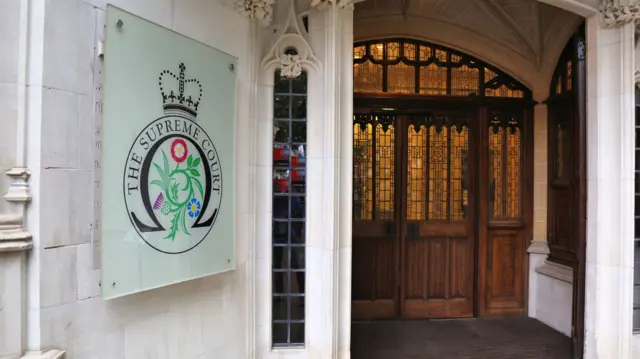
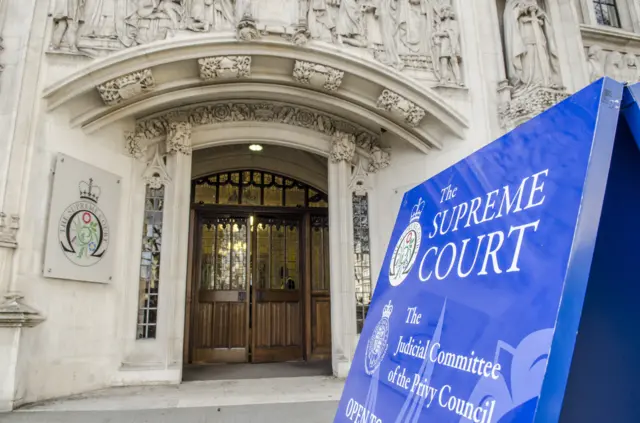
    The exterior of the Supreme Court in London. There are large, wooden doors with stained glass windows. There is a sign displaying 'The Supreme Court' outside the grey stone building.Image source, Getty Images
    • The Supreme Court ruled teaching at the school, in accordance with NI's core RE syllabus, did not convey information in an objective, critical, and pluralistic manner and "amounts to pursuing the aim of indoctrination"
    • It also ruled that exercising the right to withdraw a child from RE lessons and worship may place an undue burden on an objecting parent
    • But the judges stressed the case was "not about secularism" in education and insisted that no-one was suggesting that RE should not be provided in schools"
    • The Supreme Court ruling is not going to mean the end of RE in Northern Ireland's schools or ban hymns or prayers in school assemblies
    • Instead, pupils are likely to be taught about a range of religions - not just Christianity - from the earliest years of primary school, with greater diversity in assembly speakers
  3. Call for education minister to provide claritypublished at 15:39 GMT 19 November 2025

    The chair of Stormont's education committee, Nick Mathison, is calling for the Education Minister Paul Givan to provide guidance for schools on religious education.

    The Alliance Party assembly member says it's not about "pitting faith against secularism", but rather "ensuring schools are inclusive spaces that recognise and respect all value systems – both religious and non-religious".

    The ruling will "not mean the removal of religious education from schools, but does mean there will have to be some change to ensure a more objective, critical, and pluralistic approach which respects the rights of families of all faiths and none", he adds.

    The Department of Education has not yet responded to this morning's ruling.

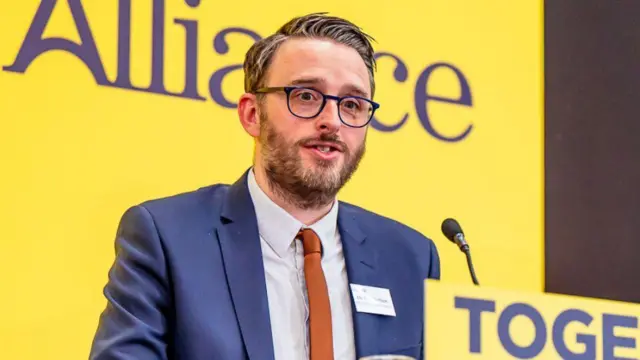
    A man with short dark hair, black glasses and a navy suit with orange tie. Speaking into a microphone with a yellow Alliance backdrop behind him.Image source, ALLIANCE
  4. 'Fundamental change' required, says solicitorpublished at 15:37 GMT 19 November 2025

    Lucy Carlin
    BBC News NI

    We're hearing again from Darragh Mackin from Phoenix Law, who represented the family in this legal challenge.

    “I think that this is probably the single most important legal decision for education certainly in the last century," he tells BBC's Evening Extra programme.

    “It is difficult to comprehend a more significant decision in terms of human rights protections for this jurisdiction," he says.

    Mr Mackin says the ruling shows there is an “important distinction” between “teaching about a certain religion as opposed to teaching them to be a certain religion".

    “This isn’t an attack, it should be seen as a watershed moment," he says, adding he hopes today's ruling will "lead to a brighter future".

    “Fundamental change” is required, he adds, “to ensure that the teaching is compatible under the protections of the European Court of Human Rights”.

    “[The] Supreme Court has said that the current system is not compatible with human rights protections therefore there is a requirement that urgent action will be taken.”

    You can listen to that interview in full on Radio Ulster from 5pm.

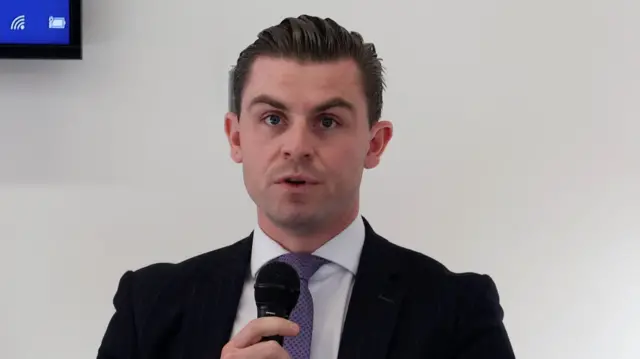
    Darragh Mackin speaks into a handheld micrphone. He has slicked back, dark hair and is wearing a dark suit jacket, a white shirt and a purple tie.Image source, Pacemaker
  5. Department 'must examine how curriculum can comply with the law'published at 15:28 GMT 19 November 2025

    Jamie McColgan
    BBC News NI

    Education spokesperson for the Ulster Unionist Party (UUP) Jon Burrows has said on social media, external that the ruling will "understandably cause uncertainty and concern" across the education sector.

    He confirms that the UUP will "look at the judgement in detail", adding that "it is vital that the Department of Education urgently provide clarity on the scope and full implications of this ruling".

    The assembly member says that "no child should ever be stigmatised" because their parents opt out of religious education, however, "many people will not agree with the suggestion that current provision amounts to indoctrination".

    He adds that the department "must now examine how the curriculum can comply with the law while continuing a system that has worked well for generations".

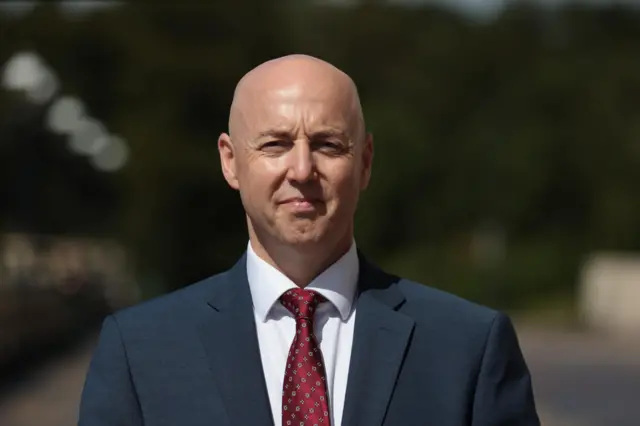
    A bald man in a navy suit, red tie, pictured outsideImage source, PA Media
  6. Who launched the original legal challenge?published at 15:14 GMT 19 November 2025

    Today's judgment comes after proceedings were brought forward by a father and his daughter.

    The young girl is anonymised as JR87, as well as her father, who is referred to as G.

    They wanted to challenge the legality of the teaching of religious education and the practice of collective worship in the young girl's primary school which she attended between the ages of four and seven.

    The school has not been named.

    The Supreme Court ruling backs the original 2022 High Court ruling, which ruled in favour of JR87 and G, and found that as the school followed the Department of Education's core syllabus and both RE and collective worship were not conveyed in a objective, critical and pluralistic manner.

    Exterior of UK Supreme Court, a large stone building with blue signageImage source, Getty Images
  7. What is the Education and Libraries (Northern Ireland) Order 1986?published at 14:58 GMT 19 November 2025

    The legal challenge centred on provisions in the Education and Libraries (NI) Order 1986.

    The broader 1986 order governs all education and library services in Northern Ireland and the duty of parents to ensure their children receive a suitable education.

    Part of it outlines parents' rights regarding religious instruction.

    It states that the day in every grant-aided school "shall include collective worship whether in one or more than one assembly". This should be "based upon the Holy Scriptures" and "not be distinctive of any particular religious denomination".

    It also places a legal duty on schools to provide RE and gives parents of any pupil the right to request that their child should be wholly or partly excused from both RE and collective worship.

    These exemptions will last until the requests are withdrawn.

  8. How is Northern Ireland's school system organised?published at 14:54 GMT 19 November 2025

    A child sits at a deskImage source, Getty Images

    The majority of Northern Ireland's school system is largely divided into three categories of schools:

    • Controlled schools - many of these were previously owned by Protestant voluntary and charitable organisations but when Northern Ireland was established in 1921, the churches transferred ownership of the buildings to the state in return for government funding to run the schools. These schools are now directly under the "control" of the Education Authority but churches can still appoint many of the school governors

    • Catholic maintained schools - after partition in 1921, the Catholic Church did not transfer the school buildings it owned to the state. These voluntary schools still receive government funding to provide daily education but their managing authority is the Council for Catholic Maintained Schools (CCMS). Most governors of these schools are appointed by the Catholic Church

    • Integrated schools - these schools are part of a small but growing sector which teaches pupils from Catholic, Protestant, and other backgrounds together in the same classrooms. The Council for Integrated Education says integrated schools are "essentially Christian in character but proactively strive to ensure everyone’s tradition is respected and included"
  9. Teachers 'not trying to force children to become Christians'published at 14:46 GMT 19 November 2025

    We heard from the vice chair of the Transferor Representatives' Council (TRC) earlier, Dr Anita Gracie, who said she accepted that the current RE core syllabus in Northern Ireland schools "could be used to indoctrinate" children into a religious ideology.

    However, she added that current teacher training programmes in Belfast's Stranmillis College stress that RE "should be objective" and must not be indoctrinatory.

    The TCR is a body which represents the main Protestant denominations in education.

    Dr Gracie told BBC's Talkback programme that teachers "are part of the modern world in most cases and they are not trying to force children to become Christians".

    She added: "I think some teachers who've been in the profession for a long time - maybe that was their understanding of what religious education was in the past.

    "But certainly in the modern years, I think everybody is realistic about that and nobody is trying to expect agreement with their beliefs from pupils now."

    You can listen back to that interview here.

  10. Is this the end of school assemblies?published at 14:35 GMT 19 November 2025

    There is a legal duty on schools to make sure each day includes collective worship through one or more pupil assemblies.

    Young people can already be partly or wholly excused from attendance from these acts of worship if their parents make such a request.

    Teachers can also request part or whole exemption from both conducting or attending collective worship.

    This is granted provided a request to the school governors is made solely on the grounds of conscience.

    There are also safeguards in place to make sure teachers who opt out are not denied promotion or any other advantage.

    Assemblies, which at many schools include hymns and prayers as well as highlighting pupil achievements, are likely to continue but may see some changes.

    Rows of grey plastic chairsImage source, Getty Images
  11. 'Disturbing news' - Jim Allisterpublished at 14:22 GMT 19 November 2025

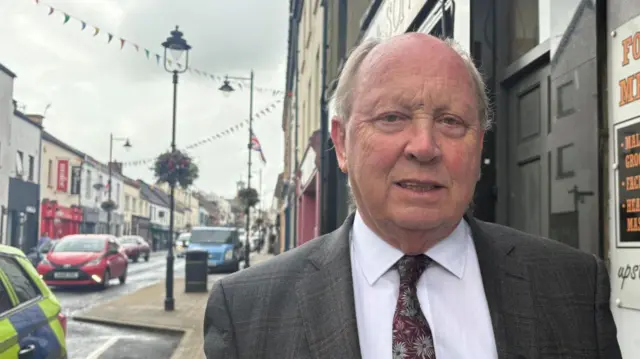
    Jim Allister

    Traditional Unionist Voice MP Jim Allister says he is "deeply disturbed" by the news.

    "The language used - particularly the inflammatory term 'indoctrination' is an affront not only to teachers and parents but to the Christian foundations upon which our education system has long rested," he adds.

    "I reject entirely the suggestion that Christian teaching in our schools amounts to indoctrination," he says, adding that the word has been "weaponised to belittle the sincere Christian ethos that shaped our society, our laws and our moral compass".

    He says this is "another insidious elevation of rights of non-Christian parents over those of Christian parents".

    He says it's a challenge to the Education Minister as to how he he will "protect Christian values in our schools".

  12. 'Concerned parents across Northern Ireland' - Michelle McIlveenpublished at 14:11 GMT 19 November 2025

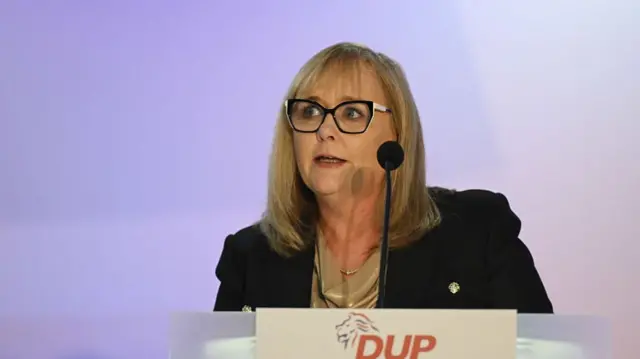
    Michelle McIlveenImage source, Getty Images

    Earlier, we heard from Democratic Unionist Party (DUP) MP Carla Lockhart, who attended today's judgement in the Supreme Court.

    Her party colleague and Deputy Leader Michelle McIlveen now says it's a "deeply disappointing" decision.

    The former Education Minister says the courts and legal process should be respected but this is something that will "concern many parents, governors, teachers and faith communities across Northern Ireland for whom the ethos is so important"."For generations, Christian values have shaped the moral character of our school system. Through assemblies, school activities and the everyday life of the classroom, those values have helped form young people with integrity and respect for others."It's not something she is prepared to see "diminished".

  13. Ruling 'cannot be ignored by NI Executive'published at 14:01 GMT 19 November 2025

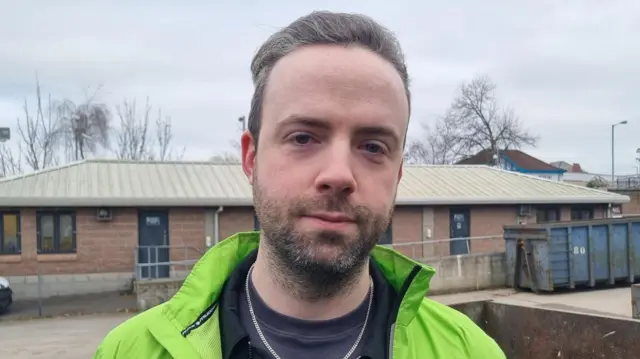
    Anthony Flynn looks directly into the camera with a neutral expression. He has long, grey hair which is slicked back. He is standing in a yard with big containers and is wearing a green coat, a silver chain and a grey t-shirt.

    Green Party NI councillor Anthony Flynn calls the court's ruling "hugely significant".

    Flynn says this is not about attacking faiths, but that every family should be respect equally.

    "This ruling is a chance to finally update NI’s education framework so every child feels welcome and respected.

    "The executive should move quickly to make it happen."

  14. Girls' parents said she was 'happy' at the primary schoolpublished at 13:55 GMT 19 November 2025

    Eimear Flanagan
    BBC News NI

    The parents of the girl at the centre of this case are not Christians and are “broadly speaking” humanist in their outlook on life, according to the judgement.

    The girl, who is now 11, went to the school for three academic years, when she was between four and seven years of age.

    Her parents agreed that during her time at the school she was "happy" and the principal described the child as "a much-valued pupil”.

    The judgement stated that the parents were "at pains to point out that they have no issue with the school other than the provision of religious education and collective worship".

    Their concern stemmed from their fear that school was teaching their child to assume that Christianity was "an absolute truth".

    The parents did not want their daughter to be raised as a Christian, but instead wanted to bring her up to be "caring, ethical, and respectful towards all people, whatever their religious beliefs or otherwise".

    The family also insisted that they do not object to the teaching of religion in general, provided that such education was objective, critical, pluralistic and age-appropriate.

    The judgement explained that the family's concerns were "heightened given that she is being taught at an age prior to the development of her critical faculties".

  15. Mixed opinions in Derry on rulingpublished at 13:45 GMT 19 November 2025

    Emmet McElhatton
    BBC News NI

    BBC News NI asked people in Londonderry what they thought about today's ruling.

    There were mixed opinions.

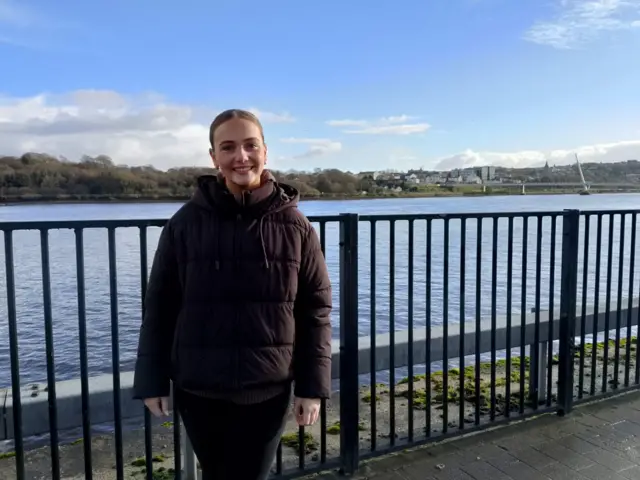
    A brown haired woman in a black puffer coat

    Holly, who spoke to BBC News NI from Derry city centre, says: “I think it should be an option whether or not your even taught religion in school.

    "It shouldn’t be forced upon you.

    "It’ll be interesting now to see what changes are made to religious education here after today’s ruling,” says Holly.

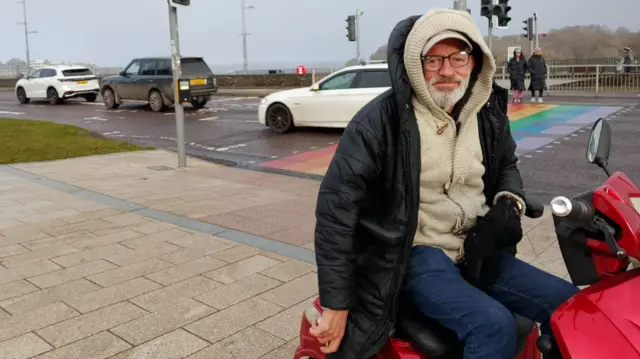
    A man with glasses sits on a bench with a black coat and wooly cardigan under it

    Carl Anderson, from Dungiven says: “I think young people should be taught whatever religious background their parents and grandparents come from.

    "Religion is important to everyone," he adds.

    "Respect is easy carried and we should be able to live beside each other side by side.”

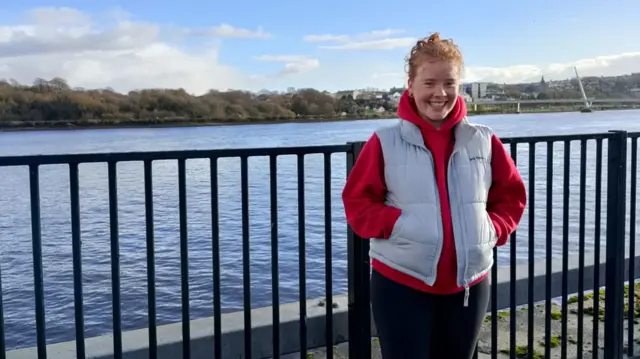
    A red haired woman stands in front of Derry's peace bridge

    Orla tells BBC News NI “there should be a choice, especially in secondary school".

    "I also think this a chance for us to all learn more about other religions in Northern Ireland. However I really don’t think the system as it is now is causing a divide the way it’s suggested,” she adds.

  16. Girl's family says withdrawing her would have left her 'stigmatised'published at 13:33 GMT 19 November 2025

    Chris Page
    BBC News Ireland correspondent

    One of the pivotal questions in the Supreme Court’s 40-page judgement is about the existing legal right of parents to withdraw children from RE lessons and collective worship.

    The Northern Ireland Court of Appeal had previously ruled that, in effect, the provision was sufficient to protect families’ educational entitlements under human rights law.

    The Supreme Court said that “exercising the right of withdrawal is not that simple, either for parents or for schools” – because decisions about practical arrangements for the pupils “involve discussion and negotiations”.

    The 11-year-old girl, whose family brought the case, said that withdrawing her from RE and worship would have left her “stigmatised” – because, for example, she would have been the only pupil in her class not to take part.

    These factors led the Supreme Court to rule that the right to withdrawal placed an “undue burden” on parents.

  17. 'The DUP will defend the Christian ethos of our schools'published at 13:23 GMT 19 November 2025

    Jamie McColgan
    BBC News NI

    The Democratic Unionist Party (DUP) says, in a social media post, external, that it will take time to consider the detail of the judgement, but the party will "defend the Christian ethos that underpins our education system and has served Northern Ireland well for generations".

    Carla LockhartImage source, Getty Images

    DUP MP Carla Lockhart says she's "disappointed" with the news, but adds "we remain steadfast".

    "Christian teaching and values have long been part of school life in Northern Ireland, and we will continue working to ensure they are protected," she says.

    The Department for Education has been asked for a response to the judgement.

  18. Department needs to offer clarity - academicpublished at 13:12 GMT 19 November 2025

    Dr James Nelson, a guest on BBC's Talkback programme, says that from today, teachers and parents have been left in an uncertain place.

    He called on the Department of Education to "step up" and provide that clarity as soon as possible.

    It also needs to be clear on the withdrawal process, which has been seen as a "difficult space" and an "impossible dilemma".

  19. Protestant churches' education body 'welcomes' judgementpublished at 13:09 GMT 19 November 2025

    Eimear Flanagan
    BBC News NI

    The Supreme Court ruling has been welcomed by the body that represents the three main Protestant churches in educational matters in Northern Ireland.

    "We're quite pleased to see the judgement and we're delighted that it has finally come today," said Anita Gracey, vice chair of Transferor Representatives’ Council , external(TRC).

    It represents the interests of the Church of Ireland, the Presbyterian Church and the Methodist Church who transferred ownership of their schools to the state following partition in 1921.

    Ms Gracey said the TRC had been calling for "the revision of the core syllabus" on religious education for some time, and having to wait for this judgement had blocked that process.

    The Supreme Court judgement stated that the TRC had accepted in court that the core syllabus "does not convey religious education in an objective, critical, and pluralistic manner".

    "We've been using the same [syllabus] since 2007 so it's coming up to 20 years old now," Ms Gracey said.

    "We have been asking and lobbying the department for the development of a revised syllabus which would be inclusive, objective and not confined to teaching of or about Christianity."

  20. What about Catholic schools?published at 12:59 GMT 19 November 2025

    The Catholic maintained sector, which has more than 400 primary and secondary schools, is the only large faith-based sector in Northern Ireland.

    About half the grammar schools in Northern Ireland are also Catholic in ethos and are identifiably religious.

    The ruling is likely to have some impact on Catholic schools, but only in terms of the curriculum and worship.

    Other religious elements, such as crucifixes on classroom walls, statues and preparation for Holy Communion will likely continue and ethos will be largely unaffected.

    The laws around collective worship and Christian-focused RE lessons apply to Catholic schools in the same way as they do to the state controlled sector, which while non-denominational, largely serves the Protestant community.

    All schools - Catholic maintained, state controlled, integrated, Irish-medium and voluntary grammar must follow the core syllabus. Individual schools are then free to build upon this in a way that best suits the needs of their pupils and their ethos.

    In addition, the RE core syllabus includes Christianity, morality, world religions and a requirement at Key Stage 4 (GCSE) "for pupils to study the Christian church from both a Protestant and a Roman Catholic perspective" at all schools.