Summary

Media caption,

'I might stick to my bicycle': Young people react to driving rule changes

  1. Road safety strategy could see longer wait for learners and forced eye testspublished at 17:14 GMT 7 January

    Adam Goldsmith
    Live reporter

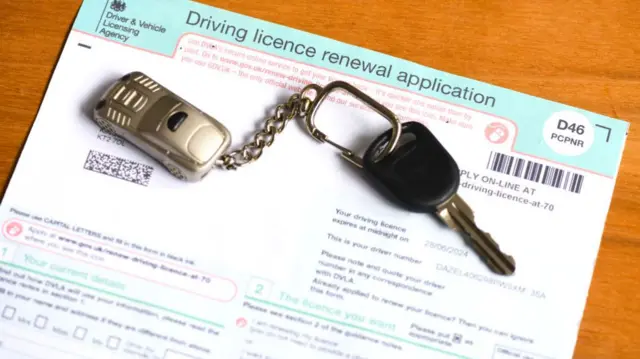
    Driving License applicationImage source, Getty Images

    Driving rules for young and older drivers are set to change after the government announced its new road safety strategy today.

    The proposals aim to lower the number of people who are killed or seriously injured on Britain's roads - with a targeted reduction of 65% by 2035.

    Here's a rundown of the proposed new rules in an earlier post; which include a possible minimum wait time before taking a test for learners, as well as eyesight test requirements for older drivers.

    The drink-drive limit could also be lowered, bringing standards in line with Scotland.

    Taking your questions today, experts largely welcomed the changes on drink driving, but there was uncertainty on whether a minimum wait approach is the right one.

    Remember though, nothing changes immediately - as our transport correspondent points out, all of today's proposals will be consulted on and reviewed before they're put before Parliament to become law.

    That brings our live coverage to a close, but for further reading:

  2. 'The standard of driving is shocking': Young people react to proposed rulespublished at 17:08 GMT 7 January

    Faarea Masud
    Business reporter

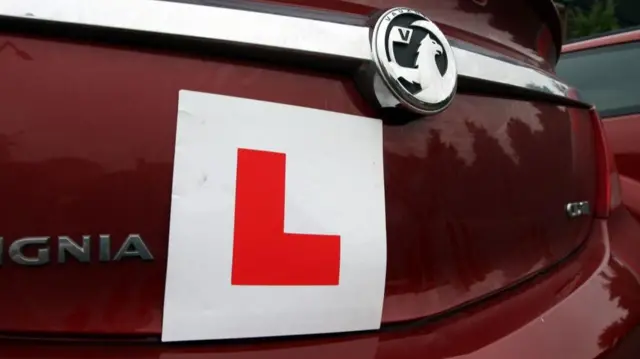
    An L plateImage source, PA Media

    Although some have hit out at the government's plans to make learner drivers wait six months between their theory and practical tests, others say this will improve safety on the roads.

    Twenty one-year-old Ryan, from Reading, thinks learner drivers should spend a minimum amount of time with a driving instructor "because the standard of driving - especially those who have just passed - is a bit shocking".

    However, he understands lessons can be expensive, and that in some cases it's very necessary that young people are allowed to drive as soon as they can.

    Ryan says that sometimes, the buses only go to his surrounding villages once every hour, increasing reliance on cars to get around.

    Jack, from York, is currently considering taking lessons, and says he thinks the proposals are reasonable, as there was an increased rate of accidents at "either end of the age scale".

    "If they hadn't suggested eye test for older people, I would feel targeted, but I feel like it's fair," the 25-year-old says.

    However he does feel that "forcing people to take them [lessons] for six months means forcing them to pay expensive driving fees for an extended period of time".

  3. Six-month wait for test is 'condescending', learner tells BBCpublished at 16:54 GMT 7 January

    Faarea Masud
    Business reporter

    Catherine poses for a selfieImage source, CATHERINE THOYTS

    The government has proposed learner drivers wait six months between taking their theory test and their practical test.

    But Catherine, from Bristol, is waiting to take her driving test and says the proposed rule seems "condescending" towards younger drivers, adding further barriers at a time when many need to drive as soon as possible to find jobs and earn their independence.

    The government believes a minimum period between sitting the theory test and the practical test would help learner drivers develop their skills, including driving in different conditions.

    But Catherine says introducing a mandatory waiting period would be pointless as the wait times for a driving test are already so long.

    "Additionally, the prices of driving lessons can be very high. I am struggling to afford it... and with the cost of living being so high and the jobs crisis among young people, many people will not be able to afford six extra months of lessons," she says.

    Catherine believes policies sometimes "infantilise young people" by not really considering them adults "except when it's convenient", with "every problem being pinned on those between the ages of, say, 15-20".

    "People don't have responsibility unless you give it to them," she concludes.

  4. A recap of the possible changes and what our experts have to saypublished at 16:44 GMT 7 January

    Our experts have been answering your questions on what the proposed new driving rules could mean for you. Here's a recap of what you need to know:

    • Learner drivers may have to wait six months before they are eligible to take practical test. Carly Brookfield says we should instead be talking about a "minimum period of learning" that covers set competencies
    • Drivers aged 70 or over could have to get an eye test every three years in order to keep their licence. Steve Cole says this is because you're likely to see a "significant decline" in eyesight at that stage of life
    • The proposals form part of the government's wider road safety strategy - here our transport correspondent Katy Austin takes a look at what it's aiming to do
    Your Voice banner
  5. Strategy not just about learners and older driverspublished at 16:36 GMT 7 January

    Katy Austin
    Transport correspondent

    There’s a lot more in this strategy than those most talked-about measures.

    Take one example; piloting a “National Work-Related Road Safety Charter to support professional drivers and riders, including lorries, cars, e-bikes and bikes.

    This is about trying to reduce road deaths among those getting around for work, something that’s become even pertinent with more delivery drivers in the gig economy.

    The establishment of a specialist data-led Road Safety Investigation Branch for Great Britain is another example.

    And action to try and address the issue of illegal number plates, including "ghost" number plates.

  6. Watch: Young people react to driving rule changespublished at 16:30 GMT 7 January

    The BBC has been out hearing from young learner drivers on the proposed rule changes - that could see learners needing to wait six months before they're able to apply for a driving test.

    Here's what they had to say:

    Media caption,

    'I might stick to my bicycle': Young people react to driving rule changes

  7. Remember, no rules have changed for learner drivers just yetpublished at 16:23 GMT 7 January

    Katy Austin
    Transport correspondent

    It's important to remember that today's announcements won't immediately change the rules for learner drivers.

    The consultations on the key headline measures we've been chatting about run until the end of March.

    After this, the government will review the feedback it gets and decide what to do next.

    If it's happy, then it will go to Parliament to change the law.

    So there's no real timeline yet for how quickly we're likely to see today's measures implemented.

  8. Should people with foreign driving licences have to take a UK test?published at 16:18 GMT 7 January

    Claire from Leicester asks: Should people with a foreign driving licence have to take a test in the UK before they are able to drive over here?

    Driving Instructors Association chief executive Carly Brookfield says there is a belief that there is a belief that certain countries do not have as strong road safety standards in the UK.

    But, she says the UK is actually trailing quite far behind other countries now.

    Brookfield says we should look at how we can help people from other countries familiarise themselves with the UK's roads and rules better than we do currently.

    But, she says it's best to do this through encouragement than with mandates or rule changes.

    Steve Cole points out that visitors to the UK can usually drive for up to 12 months on a foreign licence and that is often reciprocated for UK drivers when they go abroad.

    He says some can swap their licence for a UK one without a test, but others have to take a UK test.

    Your Voice banner
  9. Why isn't everybody required to take an eye test every five years?published at 16:14 GMT 7 January

    Neil in Telfordasks if lorry drivers must take a medical and eyesight test every five years, why isn't the same requirement applied to all drivers?

    Carly Brookfield says she wishes we could get drivers back more regularly to test all aspects of their driving, not just if they could see properly.

    She adds that eyesight is clearly a major safety concern when driving and occupational drivers are highly at risk of an accident, which is why they are tested more regularly.

    She says getting the general public to willingly submit to regular eye test checks is going to be more difficult.

    Steve Cole adds that the key reason people over the age of 70 could be required to take mandortory eye tests is that your eyesight tends to decline as you get into later life.

    He says you're likely to see a more significant decline at that stage, and would be for almost all people in the population over a certain age.

    A red banner with white writing that reads your voice
  10. How do other countries manage minimum waits before taking practical test?published at 16:07 GMT 7 January

    There's a question for our experts about a new possible requirement that learner drivers must wait six months before they are eligible to apply for a test.

    Steve Cole, policy director for the Royal Society for the Prevention of Accidents, says the government will consult on this length of time, which is "right and proper".

    Carly Brookfield, chief executive of the Driving Instructors Association, says different countries have different ways of applying a minimum learning period.

    She describes how countries like Australia enforce this in an hours-based methodology where learners log the hours they've completed.

    Brookfield says she would prefer a system like this, which would allow for more flexibility.

    "I think we should be talking about a minimum period of learning that covers a minimum set of competencies," she says.

    This, she says, would be easier for learners to swallow, and would enable those who learn faster to graduate to a full licence faster if they can prove competency.

    The stream is now ending but we'll continue to bring you the answers to some more of the questions.

    LP Banner
  11. Should England and Wales match Scotland on drink-driving?published at 15:59 GMT 7 January

    Steve Cole, policy director for the Royal Society for the Prevention of Accidents, is asked for his assessment of lowering the drink driving limit in England and Wales to match those in Scotland.

    He says there's "very strong evidence that alcohol blood content causes significant impairment to driving".

    This means drivers who drink up to either the English or Scottish drink driving limit can be six times more likely to be killed in a collision, he says.

    He adds that England, Wales and Northern Ireland have the highest drink driving thresholds in Europe.

    Lorna Lee, AA Campaigns Manager, is asked why England and Wales don't introduce a zero tolerance policy to drink driving.

    She says a zero limit to alcohol in the body isn't practical because there are situations where the body does naturally produce some alcohol.

    However, she says a lower limit like that in place in Scotland is effectively zero tolerance, which means the only way to ensure you're below that limit is not to drink any alcohol.

    A red banner with white writing that reads 'your voice'
  12. What is the government's road safety strategy aiming to do?published at 15:51 GMT 7 January

    Katy Austin
    Transport correspondent

    Before we take your questions, the BBC's transport correspondent Katy Austin is asked to explain what the government's driving consultation will look at.

    What's been released today is a big strategy for trying to improve road safety. This means trying to improve the number of those killed or harmed on Britain's roads.

    In 2024, the last full year of figures, just over 1,600 people were killed on Britain's roads, and safety experts say progress has stalled in this area.

    Ministers say you wouldn't accept these numbers on the rail network or planes, so why should we accept it on the roads?

    Some of the headline grabbing measures include lowering the drink driving limit in England and Wales to match that in Scotland, as well as lower initial limits for novice drivers.

    A lot of these will require changes to the law - for instance mandatory eye tests for over 75s - so we don't know exactly when these measures would come in or how they would work.

    But the government's overarching target is to try to reduce the numbers killed or seriously injured on the roads by 65% by 2035.

    Your Voice banner
  13. Lower limits and 'alcolocks': What changes are there on drink drivingpublished at 15:39 GMT 7 January

    Emer Moreau
    Business reporter

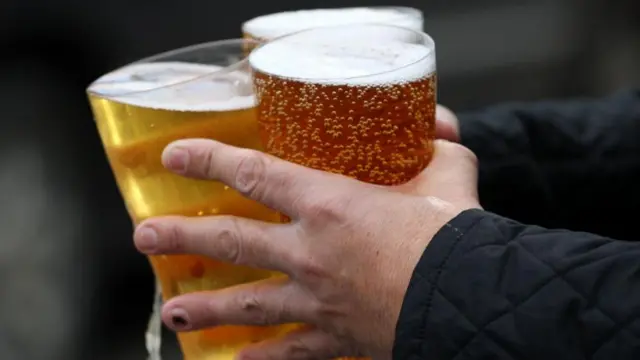
    A close-up of a pair of hands carrying three pints of beerImage source, PA Media

    Drink driving has certainly become less socially acceptable than it once was - and now the limit on how much alcohol you can have in your body while behind the wheel could go down further.

    The transport department has proposed reducing the alcohol limit for learner and recently qualified drivers in England and Wales from 80mg per 100ml of blood to around 20mg.

    For all other drivers, the level would be lowered to around 50mg, which is the current limit in Scotland.

    It is difficult to say how many drinks this translates to as people process alcohol differently depending on factors such as their age and weight.

    Another suggestion is introducing "alcolocks" for drink-driving offenders as a condition of allowing them to drive again.

    These are devices which prevent a vehicle being started or driven unless the driver passes a breath test.

    They are already used in several countries such as Australia, Belgium, Canada, the Netherlands and the US.

  14. Watch: Experts take your driving questions livepublished at 15:32 GMT 7 January

    We're now turning our attention to our panel discussion on the proposed changes.

    Our experts will be answering your questions about what the shake-up could mean. We'll hear from:

    • Carly Brookfield - CEO, Driving Instructors Association
    • Steve Cole - Policy director, the Royal Society for the Prevention of Accidents
    • Lorna Lee - AA Campaigns Manager
    • Katy Austin - BBC transport correspondent

    You can watch live by clicking play at the top of this page - and if you're not able to tune in, we'll bring you all the most important information here.

    A red banner with the BBC Your Voice logo
  15. It’s not clear exactly how these measures would workpublished at 15:26 GMT 7 January

    Katy Austin
    Transport correspondent

    The strategy as a whole, with its target to reduce road deaths and serious injuries by 65% by 2035, has been welcomed by road safety charities, who say it's overdue.

    But the eye-catching changes which have grabbed the headlines - such as mandatory eye tests for over 70s, lowering the drink-driving limit in England and Wales, and the minimum learning period - are subject to consultations ending on 31 March.

    The responses then need to be considered before decisions are taken on how to proceed.

    And the detail is yet to be worked through. So at this point it’s not clear exactly how these measures would work, or when they would come in.

  16. 'If I'd taken more lessons, maybe I wouldn't have crashed'published at 15:14 GMT 7 January

    Alisa sits inside a car behind the steering wheel
    Image caption,

    Alisa did a driving assessment four years after getting her licence to see what skills she could improve

    Alisa Fielder, 22, from Surrey, passed her test as a teenager but crashed a year ago as she was trying to overtake a lorry on a motorway.

    She says she took "too long checking the blind spot" and all the cars in front of her had stopped. Nobody was injured, but her car was written off.

    "If I had maybe taken some more lessons then I would know that you can't really take that long", Alisa says.

    She didn't drive for a year after the crash and has since done an informal assessment with charity IAM RoadSmart to boost her confidence.

    "I wasn't driving to the best standard and that's why I had a crash."

    Alisa says the process of becoming a better driver should continue after a person passes their test.

  17. Older drivers would not be able to self-report eyesight under new rulespublished at 15:03 GMT 7 January

    Emer Moreau
    Business reporter

    Drivers in England and Wales who are aged 70 or over could have to get an eye test every three years in order to keep their licence.
    Older motorists already have to renew their licence every three years, which involves declaring that your eyesight is good enough to get behind the wheel.

    But at the moment, there's no proof required, and it's been suggested that some people are avoiding getting their eyes checked or ignoring warnings not to drive.

    Last year, a senior coroner was sharply critical of the self-reporting system after four people were killed by drivers with failing eyesight

  18. Our experts will be answering your questions on the changespublished at 14:54 GMT 7 January

    At about 15.30 GMT, our panel will be answering your questions on the government's road safety strategy and what how it could affect you.

    As well as our transport correspondent Katy Austin, we'll be joined by Carly Brookfield chief executive of Driving Instructors Association, Steve Cole policy director at the Royal Society for the Prevention of Accidents and Lorna Lee, AA Campaigns Manager.

    You can follow along here or by clicking watch live at the top of this page.

  19. Learner driver? What the rules for young and new motorists could look likepublished at 14:43 GMT 7 January

    A learner sticker on the bumper of a red carImage source, PA Media

    The government is planning a big shake-up to driving rules for people who have just passed their tests. Here's what getting behind the wheel could look like for young drivers and novice motorists in the not-so-distant future.

    Longer wait for practical tests

    Learner drivers be made to wait as long as six months after passing their theory test to do their practical, effectively ending the ability of teenagers be able to drive days after turning 17.

    The government thinks that would help young drivers develop their skills in different conditions, reducing deaths on the road.

    The proposed learning period would include any informal learning people may do with parents or guardians as well as formal lessons with a driving instructor.

    However, the proposal may make little practical difference as long waiting lists mean many are already facing that sort of wait.

    Reduced legal alcohol limits

    At the moment, a new driver in England and Wales can legally drive with 80mg per 100ml of blood detectable in their systems.

    Under the changes, that could be slashed to 20mg, drastically reducing the amount a novice motorist could drink before driving.

    The government is looking to slash legal alcohol levels for all drivers, but the biggest reduction is reserved for people who have recently passed their tests.

  20. The proposed new driving rules at a glancepublished at 14:30 GMT 7 January

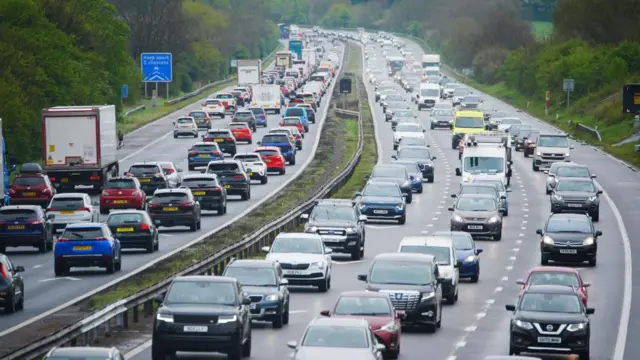
    A busy motorwayImage source, PA Media

    The government has launched the first major road safety strategy in over a decade, which is subject to a consultation. Here are the key things you need to know:

    • Learner drivers could face a minimum period of up to six months between sitting their theory and practical tests
    • Drivers over the age of 70 may have to take an eye test every three years
    • Drink driving limits could be reduced for novice motorists and those within their two-year probation period from 80mg per 100ml of blood to around 20mg. For all other drivers, the level would be lowered to around 50mg
    • Tougher punishments are also planned for people who drive without insurance or an MOT, as well as people using "ghost" number plates