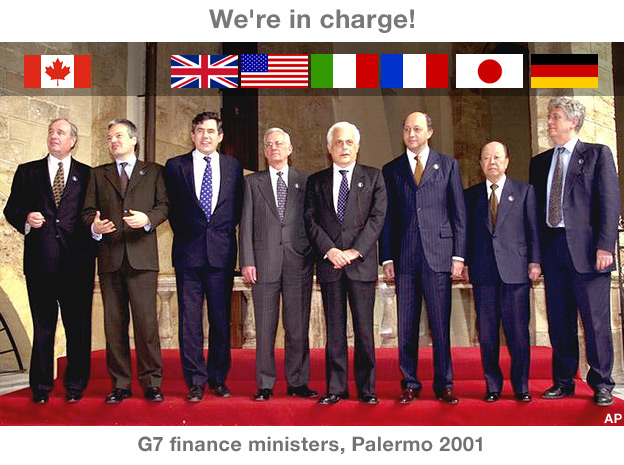
 In 2001, weighty economic issues were dealt with by the G7: Canada, the UK, the USA, Italy, France, Japan and Germany (Belgium's finance minister was also invited).
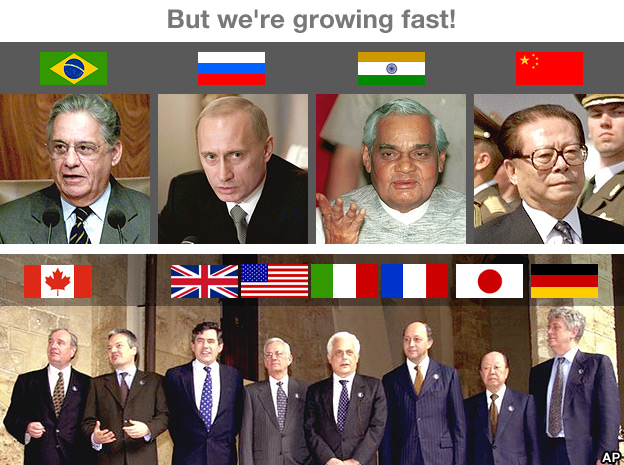 That year, economist Jim O'Neill came up with the term Brics, standing for Brazil, Russia, India and China and said they should have a bigger say.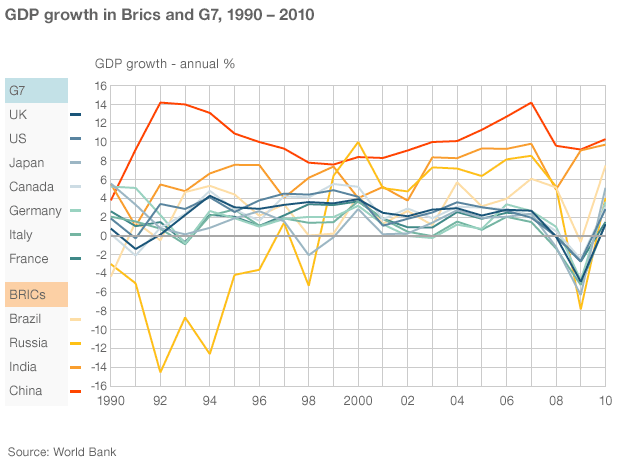
GDP growth in Brics and G7, 1990 - 2010
CLICKABLE
GDP growth - annual %
- --
- --
- --
- --
- --
- --
- --
- --
- --
- --
- --
Source: World Bank - GDP at market prices in constant local currencies
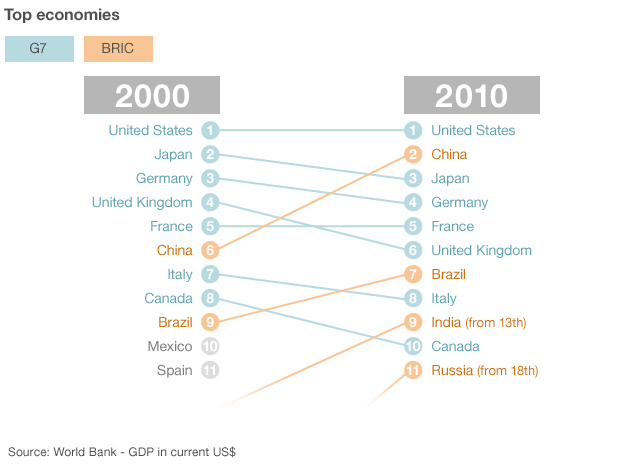 Ten years on, the Bric countries are well established among the biggest economies. China, in particular, has stormed up the rankings and may soon challenge for top spot.
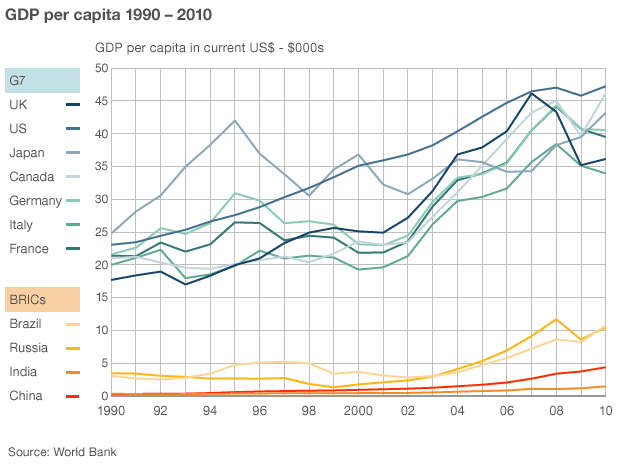 The Brics are still well behind in some areas though. Accounting for over 40% of world population, they are way behind in economic output per person.
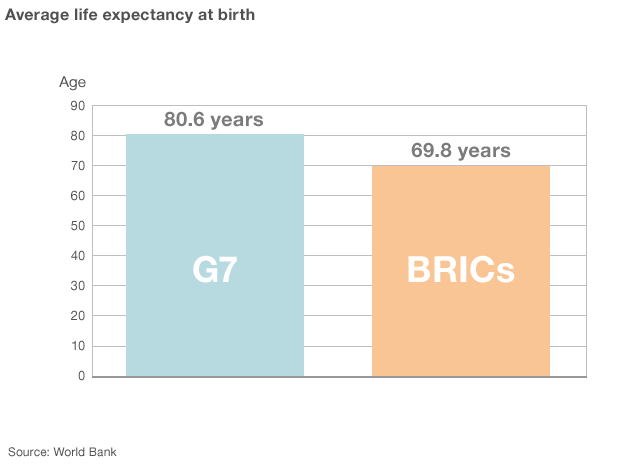 The Bric countries also have great economic inequality. Average life expectancy is significantly lower than in the G7.
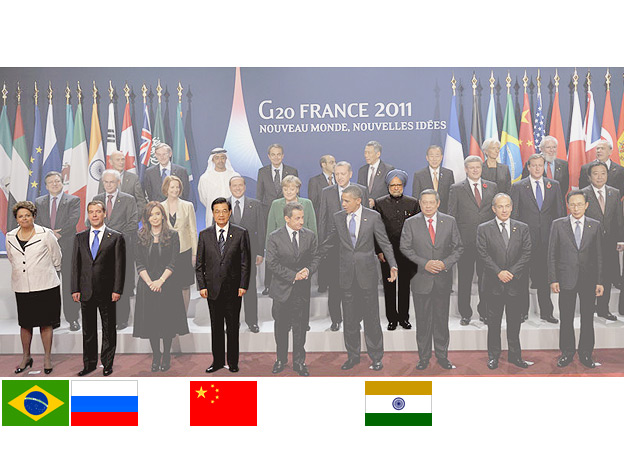 Today, weighty economic issues are discussed by the G20 instead of the G7. The old G7 countries are hoping that the rich Brics are going to fund their recoveries by buying their products and their debt.
- Published21 November 2011
- Published2 November 2011
