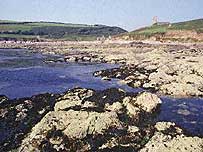
 | Wembury is located to the east of Plymouth within the South Devon Area of Outstanding Natural Beauty.
This stunning coastal area was hidden from public view for many years when it was acquired by the Ministry Of Defence in 1940. | | On the beach - top spot for rock pooling |
Today the site has been decommissioned and, in spite of pressures for development, the National Trust has been successful in acquiring it and returning it to recreational use.
One of the most distinctive features at Wembury is the Great Mewstone island, a small, undisturbed rock which is important for cliff-nesting seabirds.
In winter it is also a great place to watch or photograph a dawn or a sunset without having to get up early or stay up late due to the short winter days. Rock pooling  Wembury is one of the best places in England for rock pooling. Wembury is one of the best places in England for rock pooling.
In the summer there are organised rock pool rambles but winter can be just as good.
With the right clothes and equipment rock pooling can be an all year round activity, but don't forget to check the tide times. There are creatures to be discovered in every pool at Wembury, and the Common Prawn, Shore Crab and Cushion Stars are amongst the marine life. The Common Prawn often moves offshore during the winter, but it's often possible to find one onshore during winter at Wembury. Shore crabs use their strong claws to crack open mussels, and are renowned for getting into territorial fights. Cushion Stars start their lives as males - they become female at about four-years-old.
If you turn a Cushion Star upside down, you'll see that these creatures have an amazing ability to right themselves. This marine creature also changes colour to match its surroundings like a chameleon. Beach combing  Beach combing is a good alternative if you don't fancy getting your hands and feet wet. Beach combing is a good alternative if you don't fancy getting your hands and feet wet.
The seas along this coast can get very rough which is good news for beach combers as the waves throw up all sorts of treasures.
One of the unusual finds to be made at Wembury is something called a Mermaid's Purse. These are the little pouches which once contained baby Sharks or their near relation - the Ray. Sharks and Ray breed all round the UK - but many of them are endangered, having been depleted in numbers by intensive fishing. This is your chance to help with conservation efforts and scientific research by recording your finds and sending them to the Shark Trust and Marine Life Information Network. |