Park life 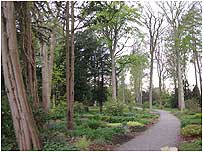 | Thorp Perrow in the beautiful Yorkshire Dales is one of the best locations in Britain for horticulture, with some of the rarest and oldest trees from around the world on show. | | Thorp Perrow - woodland walks and rare plants from around the globe |
 Thorp Perrow covers 85 acres of woodland and lakes, providing excellent opportunities for some really interesting wildlife walks. Thorp Perrow covers 85 acres of woodland and lakes, providing excellent opportunities for some really interesting wildlife walks.
With nearly 2,000 different species of trees, flowers and insects, a walk around the site is like a journey through the flora and fauna of the world, with examples from all the different continents.
Places like Thorp Perrow are crucial for conservation and with the news that wild bees and the British flowers they pollinate are in serious decline, it's even more important that these many species are protected.
A recent survey of hundreds of sites across Britain has shown that the diversity of bee species has fallen by about 80 per cent and that this is having a serious impact on 70 per cent of wild plants which rely on them for pollination.
Flora and fauna
 There are 25 species of Bumble Bee in the UK which can be distinguished by their colour patterns. There are 25 species of Bumble Bee in the UK which can be distinguished by their colour patterns.
At Thorp Perrow you can see the Red-tailed Bumble Bee and Cuckoo Bee, as well as many different moths, like the White Ermine with its feathery antennae.
That's the best way of telling the difference between a moth and a butterfly - moths have feathery antennae while butterfly antennae usually have little bobbles on the end.
Horticulture enthusiasts will also enjoy a selection of trees from around the world at Thorp Perrow, including the Spanish Fir, Japanese Flowering Cherry, Kentucky Yellow Wood and Chinese Paper-Bark Maple.
Many of the estate's trees are over 100 years old, as the former owner of the estate, Lady Augusta Milbank, planted seeds from around the world, particularly North America and Asia, during the 1840s and 1850s.
High flyers
 Thorp Perrow is also home to one of the UK's largest collections of birds of prey, with over 75 birds from around the world. Thorp Perrow is also home to one of the UK's largest collections of birds of prey, with over 75 birds from around the world.
The conservation and captive breeding centre provides a great opportunity for visitors to learn more about these incredible birds, including the majestic Peregrine Falcon.
This large and powerful bird has a mottled blue-grey appearance with a black head and 'moustache' defining its white face, and can reach speeds of over 100mph in the air.
It's important for the Falcon to be fast and manoeuvrable as it preys on other aerial birds, closing its wings and dropping from the sky to attack with its feet and then circling around to catch its kill.
Once very low in numbers, the Peregrine Falcon has often been persecuted by gamekeepers and landowners, particularly during World War Two when large numbers of falcons were shot because it was thought they were a threat to carrier pigeons.
Falcons have also suffered at the hands of egg collectors, but this is now illegal and conservation centres like Thorp Perrow are helping get their numbers back up to a healthier figure. | | SEE ALSO | Watch and ListenAudio and Video links from this page require Realplayer  Today's clip: Today's clip:
Seal safari  On bbc.co.ukOn the rest of the webThe BBC is not responsible for the content of external websites |
Activities |  | Discover nature activities. Summer is a great season to enjoy wildlife during long daylight hours. |
 | Make a difference for people & wildlife in your neighbourhood. |
|



