BBC Review
One of the Stax label’s greatest triumphs.
Lloyd Bradley2010
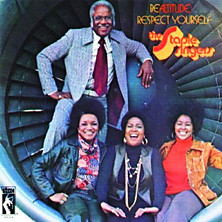
This is the album on which The Staple Singers’ consolidated their gentle folk-gospel into something altogether funkier, and delivered with enough wit and variation to make people stand up and take notice. Until then, the family quartet of Pops Staples and his kids enjoyed a reputation as an acoustic gospel group, who took their subtle harmonising into the 1960s folk scene. That’s where they acquired their penchant for powerful, universally accessible protest songs, allowing them to slot into post-Civil Rights black sensibilities without alienating the late-model hippies at the more righteous end of rock. All they needed was a great album, and after two uneventful efforts on Stax came this one: a classic.
Stax co-owner Al Bell produced it, and straight away parted company with brother Pervis Staples to bring in the middle sister, Yvonne, tightening their harmonies, and providing a clearer platform for Mavis’s super-soulful lead vocals. It created a gospel sound that you didn’t need to go to church to be moved by, defining the soul of one of the groups that defined the protest soul of that era.
Be Altitude jumps straight into solid syncopated southern funk with The World, then eases into what became the group’s theme song, Respect Yourself. It’s an almost five-minute version and, pushed on by the music behind her, Mavis works herself up into a foot-stomping testifyin’ frenzy that manages supremely angry and monumentally uplifting at the same time. Similar is their other anthem, I’ll Take You There, one of the most joyous soul songs ever written, which seems even more spirit-raising in this full length form. The Memphis sound is well-represented, with the wah-wah guitars, drawling horns, swirling organs and fat bass lines of Name the Missing Word, Who and Who Do You Think You Are?, while the country soul element is there with Are You Sure and We the People.
In every respect, this album was one of the label’s triumphs. Maybe their best set that didn’t involve Isaac Hayes, it set a modern funk agenda but never lost sight of old-time values. But actually none of that would have counted for much if the group hadn’t been so spectacularly soulful.
- - -
 This work is licensed under a Creative Commons Licence. If you choose to use this review on your site please link back to this page.