BBC Review
...works as a stand-alone record full of talented artists.
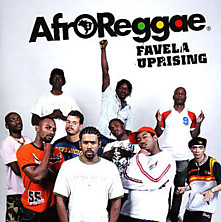
It’s not unusual for artists to try and show social responsibility by playing the occasional benefit concert, or addressing social issues in their lyrics. However, there aren’t many who take social engagement as seriously as Brazil’s AfroReggae. From their beginnings in the favela (shantytown) of Vigário Geral in 1993 AfroReggae have always been much more than just a band. They are a cultural group working within the poorest and most violent communities in Rio de Janeiro. Their mission is to take young people out of the drug trade through various arts-based activities, music being one of them. The cultural group has numerous projects, but it’s the main band AfroReggae that has gained the most acclaim internationally, mainly through their amazing concerts, which apart from great music also include other vital elements of Brazilian culture, such as capoeira.
Favela Uprising now tries to do justice to AfroReggae’s powerful performances. Their main influences are samba, hip-hop, reggae and funk, and this album offers a real variety of material. It opens with “Nenhum Motivo Explica A Guerra” (Nothing Justifies War), which includes a sample of Bob Marley’s “No More Trouble” and guest appearances by UK rappers Ty and Estelle. The tempo then gets turned up with “Mais Uma Chance” which, like the later tracks “Benedito” (featuring guest vocals by Manu Chao), “A Parada E Outra” and “Aguas De Moloch”, show off the side of AfroReggae best described as a Brazilian Red Hot Chilli Peppers or even Rage Against The Machine – a funky mix of hip-hop and rock.
The catchiest songs are the reggae ones: “Quero Só Você” is simply irresistible, and ‘Haiti’, penned by AfroReggae’s ‘godfathers’ Gilberto Gil and Caetano Veloso, seems to have several ideas rolled into one song but actually works well. And there’s even a ballad, called “Partida”.
Favela Uprising rocks and grooves. More than simply complementing the live experience, it works as a stand-alone record full of talented artists and ideas which push Brazilian music forward as much as the band push their social agenda to the masses.
 This work is licensed under a Creative Commons Licence. If you choose to use this review on your site please link back to this page.