BBC Review
The opening track on this latest compilation of the doomed singer's work...epitomises...
Mick Fitzsimmons2003
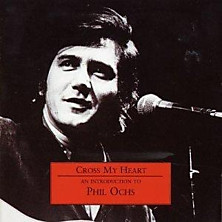
'God help the troubadour who tries to be a star', sings Phil Ochs in ''Chords of Fame''. The opening track on this latest compilation of the doomed singer's work, it epitomises the central dilemma facing all idealist liberal artists - become famous and become a sell out.
Ochs, as Sid Griffin points out in his eloquent sleeve notes, never did. However, this compilation steers clear of Ochs' more overtly political Elektra albums. Instead it concentrates on the records he made for A&M, starting with 1967's Pleasures of the Harbour. Perhaps hungry for the success enjoyed by contemporaries like Bob Dylan, Ochs acoustic sound was replaced by elaborate arrangements, while the overt proselytising was replaced by a more personal, poetic approach. It's heard to fine effect on ''Cross My Heart'', with its reaffirmation of youthful idealism.
Politics returned on 1968's Tape From California, which included two tracks inspired by Vietnam - ''The War is Over'' and ''White Boots Marching in a Yellow Land''.Also included here is an epic reading of the protest ballad ''Joe Hill''.
Later in 1968 Ochs witnessed the police brutality at the Chicago Democratic Convention and returned to the studio seemingly jaded and less sure of his ideals. Rehearsals for Retirement, while still capable of great moments such as the title track, finds bitterness starting to seep into his music for the first time.
The ironic title of his last studio album, 1970's Greatest Hits, is further evidence of this. Despite the benefits of Van Dyke Parks' production, its blend of mild country rock and elaborate strings failed to gel.
An increasingly troubled soul, Ochs live appearances were becoming more and more confrontational, mixing rock and roll covers with the protest songs as he dressed in gold lame suit and adopted the character of Elvis Guevara. This compilation's sole nod to his early years, ''I Aint Marchin' Anymore'', is culled from this period.
Ochs never regained his creative momentum. Plagued by alcoholism and mental problems, his suicide in 1976 was the culmination of years of disappointments, both personally and politically.
As a budget primer to Ochs' work this is a decent start, admirably attempting to establish his critical reputation. But without the inclusion of his early work, the more personal material lackscontext - if you want a proper introduction, get hold of the double CD American Troubadour.
 This work is licensed under a Creative Commons Licence. If you choose to use this review on your site please link back to this page.