BBC Review
Third CD from wildlife recordist Chris Watson comes over all meteorological...
Peter Marsh2003
Those of us with long memories may remember Chris Watson as the third member of the original line-up of Sheffield electronic punk funkers Cabaret Voltaire and later with 'industrial' noise scientists The Hafler Trio.
Since then he's got a proper job as a TV and radio sound recordist. Two CDs have presented his wildlife recordings, made in locations that range from the Scottish highlands to the Serengeti and documenting the activities of creatures from whales to deathwatch beetles.
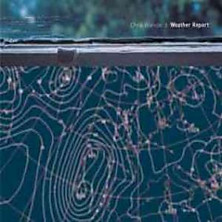
Weather Report is slightly different (and in case you were wondering, has nothing to do with Joe Zawinul). Here, Watson documents meterological phenomena, and has for the first time opted to edit his recorded material (or 'time compress' it), ending up with three 18 minute pieces sourced from hours of material. This seems like a big step; though Watson hasn't treated his recordings in any way, this collage process hints at an artistic or editorial intent that wasn't apparent on the earlier records.
This is cinema for the ears. Episodes of rain, thunder and wind are rendered in stunning fidelity; headphones and closed eyes are essential. Watson's way with a microphone is nothing short of awe inspiring. Animals, birds and for a brief moment, human sounds flit in and out, seemingly at the mercy of the elements and without an umbrella in earshot. A strong sense of narrative, coupled with the extended lengths of these pieces makes for a much more engaging listen than Watson's previous CDs, which despite their extraordinary contents seemed more like BBC sound effects discs than anything else.
The third piece presents the sound of Icelandic ice floes cracking and melting. It's hard to imagine that these muted scrapes, cracks, whooshes and soft, ghostly moans are the result of natural processes (there's a very nice kick drum sound in there that Richard D. James would be proud of),but maybe that's only to be expected in our primarily visual culture.Watson's work argues for the equality of the ear with the eye, and maybe even its supremacy. Listen.
 This work is licensed under a Creative Commons Licence. If you choose to use this review on your site please link back to this page.