BBC Review
As World Cup fever builds, a tribute to Brazil’s “Coltrane of soccer”.
Jon Lusk2010
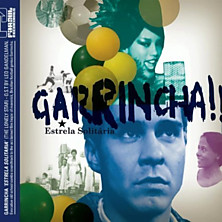
As World Cup fever grows to ever more mandatory proportions over the coming months, expect an increasing flurry of spurious, gratuitous and downright deluded commercial tie-ins. Far Out Recordings are getting in early with this football-related re-issue of the soundtrack to the 2003 biopic Garrincha – Estrela Solitária.
It’s the story of one of Brazil’s most beloved footballers, who overcame disability and rose to the top of his profession, lived fast and died of cirrhosis of the liver at just 49. Fortunately, you don’t have to be a football fan to enjoy this samba-dominated selection, which was largely composed specifically for the film by Brazilian producer, arranger and saxophonist Leo Gandelman.
Gandelman’s engaging Brazilian Groove Band album, Anatomy of Groove, was also issued on Far Out last year, but that disc featured longer pieces of peppy jazz funk fusion. The tracks here (26 in all) are far shorter and range from percussion-only batucada-style samba workouts through the stylish cha cha cha of Chile to vintage sambas from the late 50s to early 60s – the last of which are frustratingly short excerpts.
The above period was when Manuel Francisco do Santos (nicknamed Garrincha) was at the peak of his fame. He was later married to MPB icon Elza Soares, who he took his fists to before she gave him the boot.
Anyway, Gandelman referred to Garrincha as “the Coltrane of soccer”, so the Stan Getz/Charlie Byrd jazz-samba vibe of his Bota Jazz makes sense. The woozy, almost ambient experimentalism of Decadente Psicodelico signals the beginning of Garrincha’s decline, soon followed by more sombre pieces such as Garrincha e Passarinho and Hospital, which features a harrowing cello solo and atmospheric percussion. The suitably smoochy bossa nova flavour of Love Total seems to offer a reprieve shortly before the concluding pieces.
Like a lot of soundtracks, this will undoubtedly make more sense if you’ve seen the film. It works well enough as a standalone piece of music, even if the interlude-like nature of its many parts makes it less than satisfying at times. Although it is a re-issue, it’s good to see that this label is taking a break from relentlessly cannibalising their back-catalogue. Obviously new recordings are a risky and expensive option in these difficult times for the music industry, but it would be great to hear some from Far Out soon.
 This work is licensed under a Creative Commons Licence. If you choose to use this review on your site please link back to this page.