BBC Review
Unapologetic, caustic but somehow loveable, Haines impresses again.
Nadine McBay2009
Luke Haines is not on Facebook. Luke Haines does not Tweet. Social networking is not a concern on Klaus Kinski, the strummed third track of Haines’ fifteenth album as principal songwriter. “Who needs people? Who needs friends? They only drive you round the f****** bend,” he spits, with a voice like toxic drizzle. The song references Kinski’s disastrous 1971 monologue at Berlin’s Deutschlandhalle in which the wild-eyed actor was ridiculed for his portrayal of Jesus Christ as a radical revolutionary.
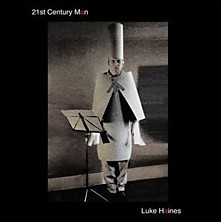
21st Century Man pulses with such exiles, refugees and ambiguous misfits, of which Luke Haines is certainly one. It was largely written amid the reception to Bad Vibes: Britpop and My Part in its Downfall, Haines’ chokingly hilarious 1990s-set memoir that novelist David Peace described as “part Oswald Spengler, part Spike Milligan”. If Haines is at home anywhere it’s in such questionable, contradictory company. While 21st Century Man is part celebration of the outcast – see the aggressive glam of Peter Hammill, a track which features one of the best lyrical couplets of Haines’ career, or the nihilistic gloom of Russian Futurists Black Out the Sun – it also finds solace in the arms of London’s commuter belt, a place depicted by name-checked artist Stanley Spencer as holy, and one mythologized in English Southern Man, a compulsive motorik rumble surely made to soundtrack a leisurely drive through Home Counties villages.
While more consistent than 2006’s intermittently excellent Off My Rocker at the Art School Bop – an album, like much of Peace’s work, which drew parallels between 1970s kitsch, Leeds United and the Yorkshire Ripper – 21st Century Man is not without its misfires, the unremarkable White Honky Afro undeserving of its place between the aforementioned English Southern Man and the album’s title and closing track, a heart-bruising, seven-minute elegy for the 1900s that seamlessly weaves politics, pop culture and personal history to intoxicating effect.
Unapologetic, caustic but somehow loveable, Haines is something of a pop Jonathan Meades; you know he’d wince at the suggestion, but the world is better off with such a wilful refusenik. The day he gets a Twitter account, we will wear black.
 This work is licensed under a Creative Commons Licence. If you choose to use this review on your site please link back to this page.