BBC Review
The idea of fusing the music of the Middle East and India with flamenco isn't exactly...
Jon Lusk2009
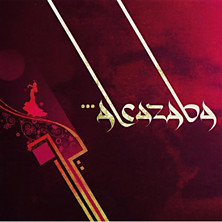
The idea of fusing the music of the Middle East and India with flamenco isn't exactly new. Ojos de Brujo, Radio Tarifa and Eduardo Niebla & Adel Salameh – check out their wonderful Mediterraneo album – have already been there in various ways. Thus, any band that does so needs to have some sort of 'X factor' or at least a new angle. Unfortunately, that can't be said about the debut album by this London-based group. It's an occasionally diverting but generally unexceptional addition to this perhaps over-familiar fusion genre.
Alcazaba was founded in 2005 by flamenco guitarist Ramón Ruiz, oud player Attab Haddad (from an unspecified country in the Middle East) and Indian bansuri (bamboo flute) player Teymour Housego, who share the writing credits. Later, they were joined by percussionist Genevieve Wilkins and flamenco singer Eva Piñero Mesa.
The album kicks off with the oddly-titled and rather pedestrian Calcutta, which sounds more like Rodrigo Y Gabriela imitating The Gipsy Kings. Like the former band, many of Alcazaba's melodies often settle into a look-ma-don't-I-do-my-scales-well vibe, which doesn't exactly make for entertaining listening. The fact that the men often play them in unison – typical of much Asian and middle-eastern music – only underlines this weakness.
Aire del Oud has a more purely flamenco feel, with a vocal by Eva Piñero Mesa that suggests she may be Alcazaba's best asset. She's also the star of Bombay, the most swinging piece on the album. Himalaya, which is built around Housego's haunting bansuri playing has moments of focus. Even so, it's hard to shake the idea that both here and on Temptation, he's channelling the world's most famous exponent of the instrument, Hariprasad Chaurasia, specifically his Call Of The Valley masterpiece with Shivkumar Sharma and Brijbushan Kabra. And there's some impressive interaction between guitar and oud on Taxim Segurillas Part, before an outbreak of castanets inevitably gives Part 2 a rather tacky, touristy feel.
Overall, there aren't enough memorable tunes to maintain interest, and Alcazaba's music too often simply becomes aural wallpaper.
 This work is licensed under a Creative Commons Licence. If you choose to use this review on your site please link back to this page.