BBC Review
A long lost 1969 session from UK national treasure Surman, together with John Taylor...
Peter Marsh2005
Cuneiform have done it again. It still startles me that a tiny record company in Maryland, USA is turning out some of the best reissues and rediscoveries of 60s and 70s British Jazz (think Brotherhood of Breath, Graham Collier, Nucleus) as well as giving a home to more recent work from people like Paul Dunmall.
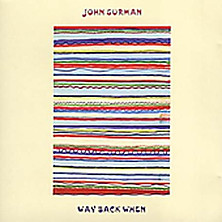
This release gathers material recorded by John Surman in 1969, just prior to leaving for Europe to join The Trio (with Barre Phillips and Stu Martin). Surman had gathered a few of his mates for a farewell jam session in an East End recording studio, and though a few test pressings were made, the master tapes were lost for over 30 years. Till now, that is.
Presented as is (without remixing or remodelling), this recording is just a snapshot of where Surman and his mates (John Taylor, Brian Odgers, John Marshall and Mike Osborne) were at the time. Having said that, it's a rewarding listen; there's very little sense of the music's informal origins, or at least there's none of the usual extended solo/head/solo tedium that usually signifies a (ahem)'jam session'.
Way Back When is cool, supple music. The use of electric bass and piano suggests rockist tendencies, and unsuprisingly there's a strong whiff of In a Silent Way in the air. The title track is split into four parts (if the theme is familiar, that's because it turns up as "Glancing Backwards" on John McLaughlin's Where Fortune Smiles); each feature extended solos, mainly from Surman's occasionally electronically mutated soprano.
Surman's thorough investigation of his instrument's range makes for some lovely moments, but it's the fluid dynamic of Marshall's drumming and the glistening, sweetly melodic funk of Taylor's electric piano that offer the most pleasure here.
Things shift up a gear when the much missed (and under-recorded) Mike Osborne turns up. The 14 minute "Owls head" (written by John Warren) is a languid slow burner; Osborne's darting alto solo recalls Jackie McLean (maybe with a bit of Phil Woods too). Lyrical, fiery and restless, his playing prods Marshall, Odgers and Taylor into animated four way conversation, until Surman takes over on baritone for more of the same. Nice.
A must-have for anyone interested in 60's Brit jazz or the early days of fusion. Thank God for Cuneiform...
 This work is licensed under a Creative Commons Licence. If you choose to use this review on your site please link back to this page.