BBC Review
40th anniversary bells-and-whistles repackaging of Clapton and company’s classic.
Sean Egan2011
In 1970, Eric Clapton was known as ‘God’ for his guitar virtuosity in a succession of groups. One thing for which he was not renowned was songs, either in quantity or quality. The epic, anguished title-track of the debut album of his new band project Derek and the Dominos changed that forever.
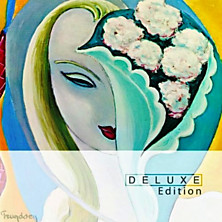
Layla and Other Assorted Love Songs has already been the subject of Other Assorted Releases in which the briefly-lived Dominos’ legacy has been padded out with remasters, remixes and bonus tracks. This 40th anniversary Super Deluxe Edition features the original double album, the posthumous In Concert album, singles cuts, a TV show appearance, studio outtakes, projected second album tracks, an audio-only Surround Sound DVD and a vinyl LP – and still doesn't manage to round up all the previously released Dominos material.
Those who only know the signature song may be surprised by the Layla album, which is largely made up of mid-tempo and sometimes even slightly soporific blues work-outs, albeit adorned by almost impossibly brilliant instrumentation. Highlights are the quietly worshipful I Am Yours, the funky, fast-rapping Why Does Love Got to Be So Sad?, an unexpectedly fine version of Jimi Hendrix’s ostensibly unimprovable Little Wing and Thorn Tree in the Garden, even if ending the album with the latter fragile Bobby Whitlock composition is overegging the pudding following the mellow piano outro of the title-track.
Despite his importance to the album, guitarist Duane Allman was technically only a guest performer, so his absence from In Concert is at least understandable, whereas Layla’s is unforgivable, especially in light of the idiotic presence of the 18-minute Let It Rain, one of several cuts that vastly outstays its welcome. The miscellany disc is predictably mixed (and indeed sometimes remixed), though the Johnny Cash Show appearances are marked by some zip.
Layla stands not just head and shoulders above anything else here but much else in the rock canon, sounding as moving and anguished as a song that’s rooted in the agony of falling in unrequited love with the wife of a best friend should. The flashing dagger of a riff is one of the finest in history and Clapton duels magnificently with both his overdubbed self and Allman before an exhausted piano-based second act. It almost makes us forget that it constitutes a rather narrow foundation stone for an increasingly massive edifice.
 This work is licensed under a Creative Commons Licence. If you choose to use this review on your site please link back to this page.