BBC Review
'Although firmly rooted in flamenco, the arrangements encompass a wider musical world,...
Alan Gregory2003
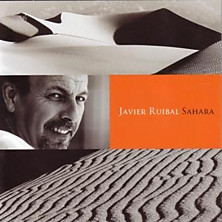
Javier Ruibal is much loved and revered by musicians and fans alike in his native Spain. The singer and guitarist from Cadiz is best known for his vocal talents and songwriting, whilst his arrangements mix flamenco music with the rhythms and harmonies of world and contemporary sounds. In fact the flamenco guitar only appears on a few numbers.
This CD is a combination of two previous releases and is being launched as his international debut. It will be interesting to see how well he does. Any music not sung in English finds it difficult to break the Anglo-American music industry and therefore he must be pretty good to have a crack at it. He has already performed at last year's Womad festival, Ronnie Scotts jazz club and appeared on DJ Charlie Gillett's radio show.
Javier's voice is strong and not at all contrived, all the more an achievement since every song he sings drips with emotion and his love of beautiful women. His style is familiar romantic, sometimes melancholic, traditional and rooted in the past. He can definitely be called a romantic, not an intellectual.
Although firmly rooted in flamenco, the arrangements encompass a wider musical world, from classical to jazz, bittersweet Portuguese to upbeat calypso. African and Arabic percussion give most of the numbers a North African tinge.
The CD opens with a hit. "Isala Mujeres" is a punchy anthem, a piece of flamenco pop as accessible as it is danceable. Javier's voice is carried along by Spanish guitar, backing vocals, Latin, African and flamenco percussion and handclaps, only breaking for a short violin solo. On "Toita Cai Lo Traigo Andao" he creates a rumba feel for the dancers. "Aurora", a slower mid-tempo track has rich, dark harmonies but is just as accessible.
"Por La Puerta De Elvira" is a perfect example of mixed emotions and styles that dominate the album. It starts with an Arabic sounding lamentation on vocal and guitar but opens out into a more conventional love song with backing vocals and strings.
Though encompassing many elements, Sahara is essentially a showcase for Javier's voice. Fair enough, but some numbers do struggle with the weight of his ambition. "Vino y Besos" sounds a little clumsy with its salsa arrangement and piano. Some of the slower numbers are over produced ballads where the smoothness borders on slippery.
Mixing flamenco with other modern musical forms is nothing new; the Nuevo Flamenco movement in Spain in the 1980s and 90s revived flamenco by absorbing everything from salsa to rock and jazz, thus spawning artists like Javier Ruibal. However even though there is little that is truly innovative on this recording we still get original, often seductive arrangements and a wonderful voice.
 This work is licensed under a Creative Commons Licence. If you choose to use this review on your site please link back to this page.