BBC Review
Their lines of phrase are smoothly satisfying
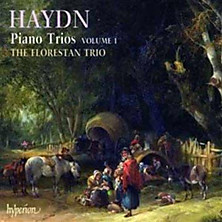
Although this disc's title announces its contents as piano trios, the truth is rather more interesting. Haydn wrote these when the piano was becoming an increasingly popular domestic instrument, and limelight-hungry violinists and cellists should steer clear. These are really piano sonatas with string accompaniment, designed to showcase the talents of the pianist and their instrument. Consequently, they require a particular brand of musical teamwork, and sensitivity to the subtleties of the relationships between the parts. The Florestan Trio have these in abundance, and their performance is abounding in expression, delicacy and verve.
All four of these trio sonatas were written in London and were dedicated to women Haydn met and taught there. Hob.XV27 is dedicated to a top pupil of Clementi, Therese Janson, with whom Haydn forged a friendship. Then, the first three were dedicated to a widow called Rebecca Schroeter with whom Haydn fell in love, despite his own marriage making a relationship between them out of the question. Haydn later admitted to his biographer that Schroeter was, ''a beautiful and loveable woman, whom I would very readily have married if I had been free then''. The first movement of Hob.XV24 in G major, with its mood of nervous joy, surprise bursts of energy, and stops and starts, sounds like all the little insecurities and sudden rushes of excitement that characterise the early days of falling in love. Susan Tomes puts all of this into her piano performance, perfectly matched (or should that be accompanied?) by Anthony Marwood's violin and Richard Lester's cello playing. They deal equally sensitively with the other two movements, and then expertly switch the tone to the carefree folkiness of the Hungarian-influenced Hob.XV25.
Whether zipping through Hob. XV27's exhilarating Presto, or gently singing Hob. XV26's Adagio cantabile, the Florestan Trio play with understanding and sympathy to each other and to the music. Their lines of phrase are smoothly satisfying, Tomes deals with the difficult piano passages with ease, and Marwood and Lester's instruments sing with conviction when the music allows, and elegantly support when the piano is centre stage.
 This work is licensed under a Creative Commons Licence. If you choose to use this review on your site please link back to this page.