Patrick Holland's speech at the launch of BBC Two's new season line-up
Speech by Patrick Holland, Controller, BBC Two at the launch of new season line-up on Monday 30 April 2018.
Published: 30 April 2018
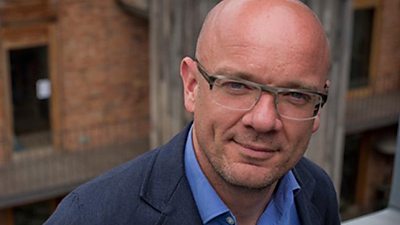
It has been my mission to bring ... BBC Two’s unorthodox DNA back to the centre of the channel. It is this DNA that, at its best, makes BBC Two the most exciting channel on TV today.
Check against delivery
Introduction
I want to start by asking a question, a question that might sound odd coming from the channel controller. Why does BBC Two exist? In an algorithm-driven, streaming world, why do we need channels at all?
The answer, my answer, is that we have never needed BBC Two more than we do now.
I want to share with you why I think BBC Two is such a vital voice for audiences today, and why its values are so fundamental. And I hope what I’m going to say about the journey we have been on over the past two years – and what today’s announcements tell you about where we’re headed – will make you as passionate and excited about BBC Two’s future as I am.
BBC Two's unorthodox DNA
It always surprised me, even before I joined the BBC, that anyone might consider BBC Two stuffy, comfortable or complacent. That couldn’t be further from how I feel about the channel, it couldn’t be further from the impact the channel had on me growing up.
I was the first person in my family to go to university and television was my window on the world. BBC Two brought that world to me with jaw-dropping ambition through ground-breaking series like Life on Earth. But it also delivered stories and storytelling that blew my mind. From Boys From The Blackstuff to Our Friends In The North, drama on BBC Two explored stories that were unflinching in their complexity, whilst being creatively awe-inspiring. Comedy from Not The Nine O’Clock News, The Young Ones, through to The Day Today broke new ground, pushing at the boundaries of taste, challenging the status quo.
It is little wonder that those shows grew on BBC Two – the channel was the first TV outsider, the first to question the mainstream, the first with a mission to be unorthodox.
It was established in the Sixties with a mandate to do things differently, to think differently, to hear from different voices. It was a challenger brand long before the term even existed.
It has been my mission to bring these qualities, BBC Two’s unorthodox DNA, back to the centre of the channel. It is this DNA that, at its best, makes BBC Two the most exciting channel on TV today.
It’s a place to wrestle with what’s happening to the world. To challenge your views and assumptions. Change your mind. Right now I don’t think this could ever be more important.
In a world of fake news and filter bubbles, we are too often tempted into an oversimplified, binary view of the world – love or hate, in or out, for or against. There is no room for nuance. No need to change your mind. Assertion is more powerful than understanding. The truth is more about shouting loud than listening hard.
I have been working to make BBC Two stand for just the opposite. For me, that means making sure of three things:
Truly Challenging
First, that BBC Two is truly challenging. The place audiences come to take on the biggest questions, explore the most difficult issues and experience the very best new ways to tell stories.
Hospital was one of the first series I commissioned and it encapsulates what I mean by challenging television.
It is challenging to make; the team at Label 1 perform miracles to deliver such highly polished, human documentaries a matter of weeks after filming.
Because it’s fast turnaround, it says something urgent and powerful about the challenges the NHS faces right now.
And it does it, above all, by focusing on the incredibly hard, human decisions staff must make every day.
The result is shocking but life-affirming. Moving but never mawkish. Difficult – but honest.
So today I’m pleased to announce the recommission of this ground-breaking series.
Hospital is just one of the titles that have transformed documentary on BBC Two.
From the multi-award winning Exodus to Molly Dineen’s Being Blacker to our 3 years study of social mobility, Generation Gifted, to Chris Packham and Charlie Russell’s extraordinary exploration of his Aspergers, we have made the channel home for the best film-makers, to explore the most important stories.
Tonight I want to announce another new series, Murder.
Told over eight episodes, the series will explore the layers of a major murder investigation from multiple perspectives, following the different teams of detectives, specialists, scientists and lawyers from day one. Intercut and in real time it promises extraordinary insight into the challenges of the criminal justice system told with a fantastically ambitious creative approach.
And Kibbutz: a new format from Lion Television, which will see a diverse group of British Jews journey through modern Israel.
The result promises to take the audience into debates about anti-Semitism, the situation for Palestinians, the occupied territories, issues fiercely contested through history, with special relevance in the present.
But challenging can be funny too. Toby Jones’ new comedy Don’t Forget the Driver, follows a loveable, mid-life crisis coach driver, as his life turns to chaos when a dead body washes ashore in Bognor Regis. Its beautifully observed, richly layered, painfully funny, so very human.
The Mash Report is returning to BBC Two having broken the internet with its viral clips from the brilliant Rachel Parris and Nish Kumar as they discussed Trump, sexual harassment and Brexit. Short form content from this series has had over 200 million views – bringing a massive new audience to topical comedy.
These are all shows that draw the audience in, demanding their attention, challenging us all.
Embracing complexity
The second element at the heart of my BBC Two is that we embrace complexity. We never simplify, but rather relish the details that make the world fascinating, contradictory, nuanced. The world is too messy, too complicated to have all of the creases ironed out. Our audience wants illumination not simplification.
The unique Hugo Blick’s new drama Black Earth Rising focuses on one woman’s search for identity and justice set against the backdrop of the Rwandan genocide.
The issues behind the drama do not get much bigger – or more complex and it makes for unforgettable television. Today I am announcing that the brilliant Michaela Cole is staring as Kate – she is mesmerizingly brilliant.
I’m also announcing Doing Money from Gwyneth Hughes, a drama that tells the shockingly true story of a Romanian woman abducted in London and forced into prostitution. Another urgent story for our times. And Alan Cubbitt returns to Two with a haunting story of love, betrayal and rebellion in 19th-century Ireland, in Death and Nightingales.
Complexity also means looking closer to home. In a country that is increasingly diverse and devolved, that feels more divided than ever before, our job is to dig even deeper into our communities to reflect all views and perspectives and find the voices that need to be heard.
Enter a docusoap for a new generation - The Mighty Redcar. Commissioned through Clare Sillery’s documentary team, it follows life in the north-eastern town after the steelworks has closed down. The subject could be grim or gawpy but the series is anything but. It paints a complex picture but asks a simple question: If young people can only succeed by leaving the town, what will become of it, what will become of home? Voiced by the young people, the films are as moving as they are funny and life affirming, with a grammar that is fresh and unique.
The setting is important too. I am determined to pull the schedule away from London and the south east, Back in Time is returning next year from Birmingham and will be focussed on the changing face of education. A House Through Time has been recommissioned and will see David Olusoga return to his roots in Newcastle.
This summer we have a major season of programmes focussing on the impact of migration to the UK from south Asia. As well as celebrating, there is a real commitment to exploring complex issues
New talent Mehreen Baig, tries to uncover why some Asian cultures have thrived in the UK while others have struggled. And Mobeen Azhar, tells the unheard story of how the lives of British Muslim families were transformed by the Satanic Verses affair.
We are a national channel, working with world class programme makers, telling local stories.
Taking risks
The third thing we need to be sure of is that we are innovating, taking risks. I’m proud of the fact that BBC Two launches more new titles than any other channel, across the genres. And I’m proud of what we have done to reinvent the channel in the past two years – especially across factual with Alison Kirkham and her team.
We’ve taken a traditional genre like history and injected it with immersive modern story-telling, like the award-winning Elizabeth I’s Secret Agents. Blitz: The bombs that Changed Britain gave us startling new insights on the human fallout from individual bombs, like discovering the psychological studies of Hull children, commissioned to justify the fire-bombing of German cities.
Now we’ve announced the five-part series Thatcher, charting the seismic social history of modern Britain, told through one controversial figure’s rise and fall.
Tonight I am announcing The Assads, a new history series that tells the shifting rise to power of a dynasty that is, right now, determining the fate of the Middle East.
And another series, 15 years after the invasion to overthrow Saddam ex-soldier Adnan Sawar returns to Iraq. With Tom McDonald’s team, we’re showing that history is not a timeless academic pursuit, to be rendered into didactic, traditional television. It is a dynamic, contested, exciting endeavour that drive the way we live and the way we see ourselves in the world.
We’re doing the same in science, where Surgeons will return as the most unfiltered, immersed science series on television. Not for the faint heated, it has doubled the audience of traditional science films as well as setting twitter ablaze as young viewers announce their determination to rethink career choices and train as medics.
All of these shows do things differently; discover a brand new perspective or a gripping new concept. I want to continue to make BBC Two the most exciting and collaborative creative partner where your ideas can push the boundaries of the possible.
As I said at the start, in the Ninetees I was blown away by the size and impact of Our Friends In The North. Now we are announcing the commission of a drama of a similar scale and ambition about the experience of four generations of a family from Pakistan. Created by the amazing Riz Ahmed, Englistan is an epic story of migration, community, racism, and radicalisation; most of all it is a drama about family and identity, it is about who we are. It is being produced by BBC Studios and I am hugely proud to have commissioned it with Piers Wenger and his team in drama.
I want BBC Two to be the place where big talents know they will get the freedom and backing to realise their most creative, and most daring, ideas, whether it’s writers like Riz Ahmed or Jane Campion, Tom Rob Smith who was behind the stunning Versace and returns to the channel with MotherFatherSon next year, or David Hare who created his first television series with Collateral.
Or incredible talent from Diane Morgan to Romesh Ranganathan, Anthony Hopkins in King Lear to Frankie Boyle’s New World Order, and Louis Theroux whose films somehow manage to get better and better.
David Harewood, who was sectioned in his twenties, and who is now making a film on the front line of mental health provision for young people.
Or Holly Walsh – whose sitcom pilot, The Other One, we’re making into a series. She’s also part of the writing team behind Motherland, which I’m proud to say that Shane Allen and I commissioned for two series before the first episode had even aired. We did the same with the astonishing Inside Number 9 and with the pitch perfect, life affirming Mum with Lesley Manville, and in drama with the peerless Peaky Blinders. We didn’t need to see any of these series record-breaking numbers before confirming the next order.
This is a sign of our confidence in, and commitment to, our talent. And that’s something that’s been one of my big priorities.
Committed enough to commission a nine-part art series like Civilisations and give space to bold, contemporary pieces like People Just Do Nothing or Famalam
Unorthodox spirit
There is something else, something that ties all of this together. And that is the sense of outsider that was there right at the start of BBC Two; the unorthodox, upstart spirit.
Two at its best has a sense of mischief. It’s always stimulating but it’s fun and playful too. Whether that’s Philomena Cunk’s wise words on Britain, or Ade Adepitan’s unique journey across modern Africa. Or the terrific new comedy Defending The Guilty – following junior barristers as the dreams of their youthful idealism meets the cold cynical reality of life in the legal profession.
There’s also the joy of Sara Cox’s new dating show and the subversive comedy of I’ll Get This – a brand new entertainment idea from Kate Philip’s team with no host, no studio; just a group of celebrities battling not to pick up the tab for dinner.
BBC Two may demand your attention, but it’s a channel to make you laugh and enjoy the world too. So I want shows that revel in people’s passions.
Together with David Brindley and his team, we are reinvigorating factual entertainment too. Fred Sirieix fronts the new entrepreneurial format, Million Pound Menu where life changing amounts of money are invested in dream restaurant ideas. Sewing Bee returns to the channel with Joe Lycett. And I’m really excited about a new interior design competition that combines the great lineage of BBC Two home improvement shows with the gladiatorial combat of The Apprentice.
It’s this light and shade that makes BBC Two at its best feel so vital, plugged into the mains. Blending strong opinions and bold perspectives with brilliant comic voices and finger-on-the-pulse entertainment. Never afraid of provoking knowing we may upset people along the way.
The titles I have talked about today could never have been commissioned alone by a Silicon Valley algorithm. You can’t write code that replaces human insight. We commission based on passion, on gut feel, on public service purpose.
Our shows exist because they matter, not because they make the numbers work. And our schedule exists as a living, breathing force that responds to the challenges and complexities of now and drives conversation and community.
Conclusion
I hope tonight I have persuaded you what makes us different, what makes BBC Two essential in the modern broadcast landscape.
I’m proud of what we have achieved with the channel over the two years. A big thank you to all the creatives in this room and beyond who have made the channel what it is today.
But now my plea. We have much further to go. So I want to urge all of you to keep coming to us with your essential stories and unique perspectives, your most exciting dreams and most mischievous thoughts.
TV may have gone through revolutionary change over the 50 years since BBC Two was born. But we are still outside the tent. We are still challenging the status quo.
At its core, BBC Two is about values that urgently need championing right now: curiosity and challenge, diversity and difference, mischief and provocation. Not shying from complexity but actively seeking it out.
It’s a vital cultural force: unorthodox, essential viewing for all those with a stake in society and point of view on the world. And if it didn’t exist, right now we’d need to invent it.