Alison Kirkham's speech at the launch of BBC Factual's 2017 programming
Speech by Alison Kirkham at the BBC on Thursday 1 June 2017.
Published: 1 June 2017
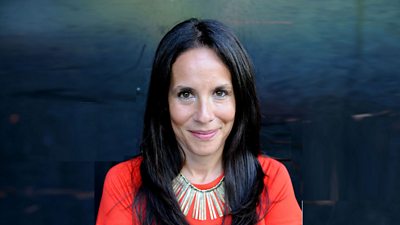
To be successful Factual has to speak to the broadest possible audience. Because when people stop seeing visions of themselves... then they will stop coming.
Check against delivery
Good evening. I’m Alison Kirkham and I run factual commissioning for the BBC. For those of you who don’t live and breathe our org chart, that’s everything ranging from documentaries to factual dramas, natural history to science and history, religion to factual entertainment.
First of all, it’s great to see so many of you here this evening. Thank you for coming and for the work you are doing with us. Tonight is a celebration of your passion and creativity.
I’m going to be talking about our role as factual commissioners and programme makers, and why I think factual television is more important now than it’s ever been, as well as sharing with you my vision for factual over the next few years alongside what you can expect from us creatively in the coming months.
Three weeks ago at the Baftas I was struck by the words of Syrian refugee, Hassan Akkad.
While collecting the award for Exodus he talked of the "untold stories" that are all too easy to ignore. Leading this department, my ambition is for us to tell more of those important and untold stories.
For evidence of that desire you need look no further than within this room. We’re surrounded by some of the people behind those stories - the teams behind Hillsborough, Damilola Our Loved Boy, Muslims Like Us - are standing here today with freshly-minted Baftas of their own.
My heartfelt thanks to all of you for trusting us with those stories.
Its hard to believe but just a few years ago, many within the industry were predicting the demise of factual in a multi-channel, multi-choice world.
In fact the opposite has proven to be true. Today audiences are rewarding the best factual television as emphatically as ever.
- Planet Earth II was the highest rating natural history series for 15 years.
- Rio Ferdinand’s soul baring examination of grief and loss was watched by nearly seven million people on BBC One and another 30 million on Facebook. In its wake statutory bereavement leave has even found its way into two manifestos in this election.
- And in documentary the phenomenal launches of Ambulance and Hospital among many others, prove more than just that one word titles work…they prove that our audience remains ready to come in numbers to high quality challenging and most importantly, timely programme making.
When we get character and form just right, the BBC can have impact that no other broadcaster can match.
If anyone had told me twenty years ago when I was a new researcher on the Today programme (if I’m honest, nearly 25 years ago), that one day I would be running Factual Commissioning at the BBC, frankly I think my first thought would have been concern for the future of the organisation.
But truthfully my reasons for going into factual television were naively principled and idealistic. We often lose much of that idealism as we get older. But it’s useful to remember why we do the things we do. What motivated us then, and should still motivate us now.
Television for me is this enormously significant and potent bridge between ‘society’ and the individual. Television at its best helps you learn, it helps you understand complex issues and so helps form reasoned and responsible opinions. It offers you respite from the challenges of life. It can make you cry, make you laugh. It offers companionship.
Television reminds us that we are all surrounded by others however isolated we might feel. It can do all those things - when done well.
I hope you agree we all - have much to be proud of.
And I want to say thank you to the directors, producers, presenters and contributors with us tonight. It is your talent and skill - your passion for your subject - that delivers a range and ambition of factual programmes that you simply won’t find anywhere but the BBC.
At the risk of embarrassing them, I also especially want to thank the three people in my team who run the Specialist Factual, Documentary and Popular Factual teams–Tom McDonald, Clare Sillery and David Brindley. Thank you.
Thanks also to everyone in my team. It is a privilege to come into work with you every day.
So tonight I want to give you all a really strong sense of my ambition for Factual content at the BBC.
There are a series of promises I’m going to make…
1. Risk
First of all creative risk…We are living in an era where so much is changing so quickly. Both in terms of the news cycle, but also in terms of technology and audience behaviour. In that environment it’s my view that only one thing can deliver success – a willingness to innovate and take risks.
The licence fee is both a privilege and a responsibility. It affords us the ability to embrace new thinking and challenge conventional wisdom and I’m determined that we must do just that.
We must continue to tackle complex, difficult issues on screen. Whether by exploring the myriad voices within Islam in Muslims Like Us; or by accompanying the extraordinary trans-continental journeys made in Exodus. Or by encouraging audiences to break down the stigma surrounding the once hidden epidemic of mental illness in Minds Over Marathon.
No subject should be taboo. We can’t and won’t shy away from ambitious, complicated programmes. Programmes which will be bold enough to ask difficult questions, spark tough debate and target real change.
Someone who epitomises this approach is the extraordinary force that is Anne Robinson. She will be bringing her fearless presence to a deeply contentious subject - Abortion. It’s now 50 years since the abortion act came into being and Anne’s asking what Britain Really Thinks. I’m proud that we’re exploring this difficult subject at such an important time in the debate around the right to choose.
Another of my new announcements - Murdered For Being Different is a factual drama for BBC Three from the team behind the Bafta Award winning Murdered By My Father. It unflinchingly asks really tough questions about the prejudice that is dividing our young communities and the violence that can erupt out of alienation and a sense of difference.
This is a real commitment that I am making. Our programmes will tackle the issues of today…. speak to the NOW…
Whether a curse or a blessing, we certainly live in ‘interesting times.’ Given that, it would be unforgivable if our programmes ever, felt suspended in aspic.
2. Authorship
Authorship is a key part of that strategy. We will be unafraid of offering voices prepared to articulate a point of view, to take a stance and stimulate the audience into re-examining long held beliefs and inbuilt prejudices.
On BBC Two Ian Hislop will be casting his uncompromising, interrogative eye on that most polarising of subjects - immigration.
Chris Packham, having recently decided to open up about his Asperger’s, embarks on a searingly honest journey to better understand his condition.
And one of Marigold’s most notable alumnus - the irrepressible, Miriam Margolyes - is making an epic trip of her own through the heart of middle America - a country she once lived in for over a decade but now barely recognises.
These, and many other strong voices like them invaluably deliver opinion and perspective to our output. And I absolutely believe so enrich the variety of what we can deliver audiences inviting them to lean in and engage with our shows. Television shouldn’t be passive.
3. Specialism
Specialisms have always been a fundamental part of the story of BBC Factual.
What a joy to see the TV moment of the year go to a specialist factual show at the BAFTAs (that’s the last mention I promise…)
And here’s another promise – specialism will continue to thrive on the BBC.
In history, I am announcing a season of programmes this summer to mark the 70th anniversary of partition across BBC One and Two. The consequences of this extraordinary event still ripple through cultural identity across continents today.
The season will explore how communities affected have grappled with the implications of one of the greatest forced migrations in human history.
And will often shine a light on the personal and harrowing stories of people who did not make it into the history books. Again, the untold stories.
In science, just last month many of us gathered as we announced Tomorrow’s World – a partnerships with many of the key science institutions in Britain today, as well as over 40 hours of science programmes to amaze and inspire. It is fundamental to our factual ambition that we should partner with the key centres of learning in the UK. We pride ourselves on these associations.
Tomorrow’s World kicks off on air with a live programme coming from the science museum vaults in a matter of weeks. Passionate amateur enthusiasts including Trevor McDonald, Angela Rippon, Giles Coren, Nick Knowles and David Harewood will be championing objects in the search for Britain’s Greatest Invention.
In science, there is one other specific programme I would like to mention. You will have glimpsed it on the showreel. The Parkinson’s Trial. Five years in the making it follows cutting edge research into treatment for this most devastating of illnesses. A longitudinal commitment I can only ever imagine happening at the BBC.
Our commitment to religion and ethics remains undiminished. There is a new six part series for BBC Two following the lives and work of rural vicars from Whitsun to Christmas. Exploring how their message of Christianity fits into an ever-changing world.
And in Natural History this year we dive back into the oceans for the eagerly anticipated Blue Planet 2. But we will also be soaring into the skies. I’m announcing a new landmark natural history series for BBC One - Earth From Space – delivered by the superlative natural history unit. It will afford us an incredible new perspective on the planet and continues our fine tradition of technological innovation in storytelling.
And that is the wonder of what specialisms do. Their complexity enriches minds encouraging people to look up and see further.
But we won’t forget the importance of also revering that which is closer to home.
Whether it is Monty Don inspiring amateur gardeners.
Or Chris Van Tulleken helping people to better understand their own health.
Or the incomparable Mary Berry (and I’m thrilled Mary is with us this evening) spinning the world on its axis by encouraging us to put white wine and cream into our Bolognese sauce.
I am making a commitment that alongside expanding minds and transporting audiences, we will always step forwards towards them, into their lives. Respect what they care about. Sharing and exploring their more personal pleasures and preoccupations.
Fundamental to this, as it is fundamental to everything we do across BBC Factual, is the very best talent. I want our department to be the place talent can come to pursue their passions, where they have the freedom to do their best work.
I’m delighted to announce that we have just commissioned the wonderful Nigella Lawson’s new series At My Table. A series that will be a mouth-watering celebration of home cooking, and the food that makes people feel happy and welcome as they sit around your table.
I’ve been lucky enough to get to know Nigella in the past few years. She is as warm and poetic about food and life in person, as she is on screen.
And she personifies the ability to establish an emotional connection with the audience.
Nowhere is this connection more important than in factual entertainment.
It is not by coincidence that Reith articulated an aim beyond just education. For Reith there was ALSO a need to entertain. He knew that facts without emotion are just data.
Our appetite for popular factual is as strong as ever.
Tonight, I am announcing a new transformation series – The Make Over Show. And I’m genuinely so excited that Claudia Winkleman - one of the funniest, most entertaining women I know - has agreed to host it for BBC One. I have complete confidence the audience will enjoy spending more time in her company.
So count on us to take creative risks,
- to back authorship and specialism
- to take a step towards our audiences, to inform, educate and entertain.
And there are two other priorities that I want to highlight.
First, expect us to be increasingly digital
Linear and digital can absolutely complement each other. As someone succinctly put it to me recently – ‘more is more’. We’ve seen that time and time again in the past year. From those brave iguanas to the extraordinary inventions in Big Life Fix – many millions are viewing our content in short-form. We’ve also had huge success in Virtual Reality with David Attenborough And The Giant Dinosaur leading the way.
So when you come to us with ideas – don’t forsake digital at the altar of linear. Please remember we commission factual content for many platforms and are committed to doing so. We work in close partnership with Damian’s BBC Three team and share an ambition to innovate in short form as well as to excel in long-form.
Indeed it is in digital that we are often able to speak with audiences we can otherwise find it harder to reach.
And to be successful BBC Factual has to speak to the broadest possible audience. That is fundamental to what we do.
For me - range is about both our range of output but also the range of voices we represent.
Because when people stop seeing visions of themselves on TV, or within our content on Snapchat, Twitter, Facebook - then they will stop coming.
Idris Elba, speaking to Parliament last year said it better than I: "Diversity is more than skin colour - it's gender, age, disability, sexual orientation, social background - and most importantly diversity of thought."
So that is my final promise - we will reflect a plurality of issues and opinions. We will reflect our audiences back to themselves.
Only by succeeding in that we will continue to be the trusted choice of the whole of the UK.
So that’s my vision for BBC Factual in the years ahead...
To offer the variety and breadth and unrivalled commitment to quality that has always been our trademark, but also to engage with audiences more than ever, on their own terms…on what matters most to them today…
A place for difficult issues and joyous passions to sit beside each other, and a place that looks to embrace complexity.
But before I conclude I want to share a preview clip with you from a very special programme - a landmark documentary for BBC One.
It is a one off in every sense. An extraordinary, intimate exploration of a defining event for a family, and a country. Many have speculated and commentated on this period in our history. Indeed there will be many voices in our film, but there are two particularly which simply have to be heard.
It was a privilege to work with the Duke and the Prince on our recent mental health season. They're remarkable people who have touched us all with their words about their mother and their loss.
It may feel a story we know well, but... in this new documentary they talk for the first time about their memories of that shocking week itself. Memories of learning of their mother's death, of the public outpouring of grief, as well as of the funeral.
All of us gathered here in this room, have it in our gift to ensure that factual television at the BBC continues to takes risks, make a difference, inspire change.
Our shared ambition must be to prove that, as the great Ed Murrow once said, television can and should be more than just lights and wires in a box.
And it’s never been more important.
Because we are living in a period of seismic change. When it feels like months happen in weeks.
In an era of false facts and fake news it is the role of a proudly independent BBC to respond by offering a trusted lens through which to view the world.
I believe we in BBC Factual are uniquely placed to achieve just that.
Thank you for all the enormously hard work and commitment you have shown making programmes with us. And thank you for coming tonight.
