An Interview with Julian Jarrold
Director
Published: 12 December 2016
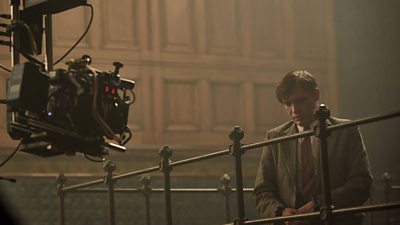
It’s part of a great tradition in Britain to be fascinated by murder and it is a particularly British kind of drama that can either be done in a cosy, reassuring, gentle way or as a challenging, uneasy and tense way, whereby the character’s dark energies are revealed. I can tell you that we are more towards the latter than the former.
You are known primarily for your work as a film director, what was it about this script that made you want to come back to television?
It was the script that pulled me in. I thought Sarah Phelps’ take on the short story was fascinating and brought a new depth and angle that you’re not used to seeing in past Agatha Christie adaptations. What was interesting about this is that the short story was the model and not the play. The short story was written much earlier and seemed a tougher, more succinct, complex and interesting psychological portrayal of Leonard and Romaine. I found those two characters completely fascinating, particularly Romaine. To me it seemed a great opportunity for an actress, and a very interesting one for a director, to play all those games she indulges in.
What were your ambitions for the design of the show?
We have gone for a very particular type of cinematography. Our lead character John Mayhew is this downtrodden family solicitor who lost his son in the Great War and is living in penury, until that is, he gets the opportunity to represent Leonard Vole in a high-profile case that might just make his name and his fortune. So our aim was to create this foggy, nightmarish, dark, suspenseful world of London. I’ve gone for a tough claustrophobic look where the characters are hemmed in by their environment. There is a sense of unease, that you’re not quite sure what’s going to happen around the corner and you’re not quite sure how to read the different characters. Are they playing a role and are they as innocent as they appear to be? Luckily I’ve got fantastic actors to help me with that.
Describe the cast that you’ve brought on board?
The part of Romaine Heilger is really interesting and because it’s embedded in this film-noir world, I wanted an actress who is incredibly strong underneath and a powerful female character. Andrea Riseborough was someone that came to mind very early on, and when we met, I really thought she could bring all those different aspects to the character of Romaine Heilger.
Toby Jones and I made a film about Alfred Hitchcock (The Girl) and he just transformed himself. He is one of this country’s truly great actors and I believed he could portray the complex journey of Mayhew. Toby is incredibly warm and sympathetic yet able to portray a tougher, more complex line as well which works beautifully for the character of John Mayhew.
With Billy Howle (who plays Leonard Vole) we were looking for a young, attractive, innocent guy who is picked up by this society woman Emily French (played by Kim Cattrall). I wanted the audience to be able to feel the fizz and chemistry between them and then keep you guessing as to the nature of the relationship between the pair. I have been very lucky with the cast.
Why shoot in Liverpool as opposed to London?
Weirdly Liverpool is much better at being London than London because there are so many buildings that have been preserved. So much of London has been modernised and steamcleaned whereas in Liverpool there is a wealth of locations that we’ve been able to find all within quite easy distance of each other. In London you have to travel half way across town just to change locations so Liverpool worked well in many ways.
What’s been the most challenging part of the shoot for you?
We shot a World War I sequence and all I had to play with was a ploughed field and a bit of smoke. Hopefully we’ve created quite an epic opening shot. It’s an important scene because the First World War casts such a shadow across our characters and the story itself. The characters’ actions are dictated by their experiences of the War and so this opening – a thirty-second scene – had to hint at the trauma of war that they all felt. That was both exciting and daunting.
Were the courtroom scenes difficult and dense to film?
A quarter of the entire drama is in the courtroom and we had to shoot those scenes within four days. The actors were fantastic and word-perfect but I think they were going completely crazy by the end because we did so many takes from so many angles. You are trying to create not only the story of the prosecution and defence, but also the looks and manoeuvring of all the characters who are either looking at each other or not looking at each other, which adds another layer to the whole thing and makes it much more interesting from my point of view. It was an incredibly intense batch of shooting days but I’m really pleased with the result.
Can you describe filming the theatre scenes?
The theatre scenes form another key moment in the show. It’s when John Mayhew really forms a bond in his own head with Romaine and he sees hope and joy through her performance and singing on stage. This tatty old theatre suddenly becomes transformed in his mind to something beautiful and magical. We filmed these scenes at Winter Gardens in Morecombe, which is a beautiful old theatre.
Why do you think Agatha Christie remains so popular around the world?
Agatha Christie’s plots are incredibly tight and very satisfying. I think she presents really good, rounded, psychologically complex characters that offer great opportunities for actors and directors alike. It’s part of a great tradition in Britain to be fascinated by murder and it is a particularly British kind of drama that can either be done in a cosy, reassuring, gentle way or as a challenging, uneasy and tense way, whereby the character’s dark energies are revealed. I can tell you that we are more towards the latter than the former.
Alice Mayhew
Played by Hayley Carmichael
Stifled by years of repressed emotion, Alice has as much verve and vigor as the grey meals she makes Mayhew for dinner. Haunted by the memory of her son who died at war, her few, precious moments of happiness are spent in his bedroom, left perfectly intact since the moment he left.