Interview with Michael Palin
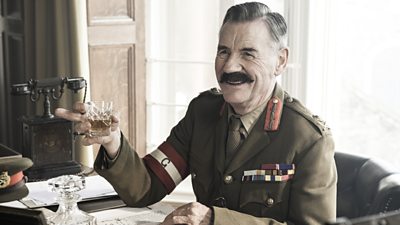
Michael Palin who plays General Mitford talking about his role in The Wipers Times
There are many films about the tragedy, futility and loss during the First World War but Ian and Nick give an alternative angle. They show, for perhaps the first time, how important humour was for people to deal with life in the trenches."
On his involvement with The Wipers Times:
I’ve always been very interested in the First World War. When I was shown Ian and Nick’s script, I felt it dealt with an area of life during the First World War which has been kind of ignored - and that’s humour. I felt it showed that humour was present, even in the middle of all those ghastly trench attacks and deaths. The Wipers Times is a true story about the way the British use subversive humour to deal with trauma. I’m a great fan of Private Eye, and the Wipers Times is sort of like the Private Eye of the First World War - that’s where the parallel lies.
On his character General Mitford:
My character, General Mitford, is a competent and authoritative officer with a sense of humour and a grasp on all the ironies of war. He very much sympathises with what the troops are going through, but the dilemma for him is that, however empathetic he is towards his troops, he still has to send them into battle.
In one of the scenes, Mitford is looking through the casualty figures when in comes Howfield, who is very angry about the magazine and wants it closed. Howfield reads a bit of the magazine, which makes Mitford laugh, even though he’s simultaneously looking at casualty figures. Howfield asks him what he finds so funny, to which Mitford replies “It’s a lot funnier than what I’m reading at the moment.” You have the two sides to a man here: the general, pushing troops into battle and a man who sees what the other men are actually going through.
Mitford likes the magazine, the way it’s written and the jokes, but more than that, he feels it’s good for the men’s morale to be able to say what they like about their senior officers and for them to see the war expressed in terms of their own experiences and frustration. He recognises it allows them to let off steam.
On working with Ian and Nick:
Ian and Nick are very amenable and very open to talking about the characters and making changes you feel are needed, although there wasn’t an awful lot to be done. The script is very tight, the characters clear and the dialogue explains exactly what each character is trying to do. It’s been an easy relationship and a pleasant experience and I would hope that as authors they would say if something didn’t feel right. They’re lovely people to work with and they’re very excited about the production.
There are many films about the tragedy, futility and loss during the First World War but Ian and Nick give an alternative angle. They show, for perhaps the first time, how important humour was for people to deal with life in the trenches.
