The Cairngorms - our new home
The Cairngorms are the wildest part of the UK - their snowy peaks, ancient forest and deep lochs define the Highlands of Scotland, and they are full of some of the rarest and most spectacular wildlife in the whole country.
Published: 22 January 2019
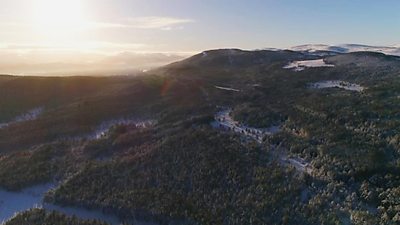
The home of Winterwatch 2019 will be in a tipi nestled amongst the Caledonian Pine at the Dell of Abernethy, a lodge built in 1780.
The Dell sits on the edge of the Abernethy Caledonian pine forest and is surrounded by a mixed of broadleaved woodlands, open grassland, farmland and garden spaces, all bordered by the stunning River Nethy.
From here, the team will be able to reach out to the heart of the Cairngorms; from the wind and snow-swept plateaus where ptarmigan and mountain hares huddle, to the salmon spawning in its rivers, desperately trying to evade the resident otters as they do so. The team will look at the habitat provided by the ancient ‘granny pines,’ home to everything from tiny insects to marauding pine martens. They’ll also explore the many rare habitats, and species that live here.
The Cairngorms will provide the backdrop for a much bigger story – the way our landscape has changed on both geological, and anthropological time scales.
These mountains are a relic of the last ice age, and the effect of glacial action is easy to see on their exposed slopes. However, the exposed slopes also tell a human story, of deforestation and the man-made changes to the landscape.
Winterwatch will look into how the area has changed over time, and introduce the Cairngorms Connect project, which looks to the future and aims to reforest vast swathes of the area in an ambitious 200-year plan. It’s the UK's largest landscape-scale conservation project, bringing together NGOs, private landowners and governmental departments - and just 15 years in, some of the results are extraordinary.
Live wildlife possibilities
In the coldest, harshest part of the country, our cameras will be out to find and film the animals who are still trying to find food and stay alive in this inhospitable habitat.
At the pine tree feeding station, pine martens and red squirrels will hopefully be on the lookout for food. They are both active throughout the winter, and finding enough to eat at this harsh time of year is a constant battle - as is finding shelter - and bespoke mammal boxes could be used as a refuge for both species.
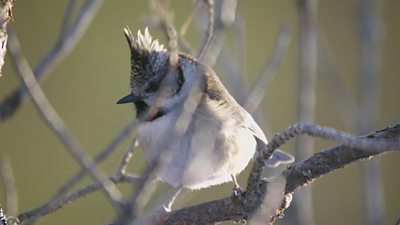
A well-stocked bird feeding station will encourage many visitors during the daylight hours. With a mix of the familiar such as great tits and coal tits, and some more unusual guests like crested tits (pictured) and brambling, these birds will provide a splash of colour in the darkest months.
Down on the river, a camera has been placed to give the best possible chance of finding the otters that work these banks. Notoriously shy, there are tracks in the mud and spraint by the water - but will these elusive mammals show?
If the temperatures are not too low another nocturnal mammal may rear its head - with an active badger sett just a stone’s throw from the studio.
Tawny Owl boxes have been put up around the Dell, and with these birds nesting early there may be some action in late January as they choose and excavate their preferred location to nest. And there will be plenty of owl food too, with rodent cameras positioned around the area to catch these small mammals desperately in search of food.
Other Cairngorms wildlife
Both golden and white-tailed eagles are seen around the Cairngorms at this time of year, and the long-lens camera team has every chance of filming them.
There are plenty of deer in the area, but they tend to be hidden away in the forest at this time of year, along with the hardiest member of the grouse family, the ptarmigan.
The mountain hare and ptarmigan are still active at the top of the mountain, as are snipe and woodcock down on the woodland edge and out on the open farmland.
Further Afield
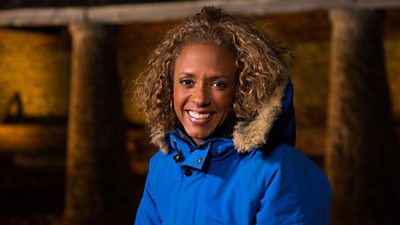
While Chris and Michaela will be based around the Dell, both Gillian (pictured) and Iolo will be out and about in the Cairngorms, gathering stories and footage from further afield, and looking into some of the more unusual stories and species found here.
As well as stories about snow fleas and wood ants, Gillian and Iolo will be looking for some of the bigger, iconic Scottish species.
The Scottish wildcat population has been known to be in serious trouble for some time, but scientists recently confirmed what a lot of people feared: the species is ‘functionally extinct’ in the wild. However, not all hope is lost, and Iolo will visit a captive breeding programme which hopes to release some pure individuals back into the population, and tags along on a wildcat tagging mission.
Gillian, meanwhile, will be in Inverness, visiting a very late spawning population of salmon in the Ness River. She will meet the scientists studying the animals and find out that Atlantic salmon populations are facing a series of increasingly tough situations.