Victoria Hamilton Q&A
Q&A with Victoria Hamilton, who stars in new BBC One drama, What Remains.
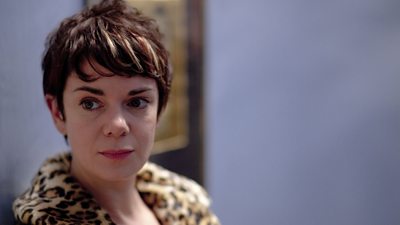
Tell us about Peggy
She’s a rather vulnerable, rather scared woman. I spent quite a lot of time talking to Coky about backstories for her because one of the lovely things about the writing was that there was an awful lot there for the actor to create because very little is explained about these people when you meet them.
Actually, nothing is explained about who Peggy was before you meet her in this at all. We did a lot of talking about her and her sexuality, which I think is probably something that she’s battled with quite a lot. She doesn’t appear to have a lot of friends and I think she probably met Elaine and was blown away by her. She thought she was very much in love with this charismatic beautiful woman who gradually traps her. I find it very sad that it’s a relationship that she can’t get out of. She fights to get out of it but the pull of Elaine and everything that’s happened means she can’t get out, it’s a sort of pact with the devil.
What is Peggy’s relationship with Elaine like?
I think it has changed a lot over the years. When they met it was probably a teacher/pupil relationship. Elaine is so confident and that was probably a wonderful person for Peggy to be with and she was probably the first person that made Peggy feel good. Then she started to learn about the kind of person Elaine actually was, when she started to become unhappy in the relationship, and realised that she was being controlled. That’s essentially what that relationship is about, power and control.
How does Peggy feel about the discovery of Melissa’s body?
She’s totally horrified. She sees the group of people standing out the house and just leaves and doesn’t reappear for a long time. God knows where she goes, she just goes to ground for a while. I think she’s completely terrified, she goes in to complete shock for a long time.
What relationship did Peggy have with Melissa?
She really empathises with Melissa. One of the sad things is that, when you look at the make up of characters in that house, they actually could have become friends in different circumstances. There is an occasion when Peggy tries to initiate that. Had that friendship been allowed to develop it could have been a really good thing for both of them and it’s a tragedy that it was not allowed to. They are similar in many ways, they are both deeply vulnerable people.
One of the themes of What Remains in loneliness. Although Peggy is in a relationship do you think she feels lonely?
I think she’s incredibly lonely and it’s a really good study of how you can actually be more alone in a relationship that when you’re single. Especially if it’s going wrong and there isn’t any love left but you’re unable to get out, that’s a phenomenally lonely position to be in. We’ve all had that experience to a certain degree; it’s like being in a crowded room and being on your own. You can be much more alone, much more stranded and much more desperate in the wrong relationship than single like Melissa.
Do you think what happens to Melissa in What Remains is reflective of society today?
There was a horrific documentary about this girl that was discovered having been dead for a long time, with the television still on and post at the door, and no one was able to work out what had happened and why nobody had looked for her. One of the frightening things about the drama and one of the things that makes it really chilling is that most of us at some point have been in a situation where you’re living in a block of flats where you can live below or above people for years and never know people’s names. It’s a very London-centric thing I think, a lot of people squashed in to a small place actually means you know each other less well than being somewhere with more space which is a lot more friendly.
What attracted you to the role and What Remains?
I loved the idea of working with Coky because I’ve always watched her work and thought it was fantastic and I loved the fact it was a female director. When I did the overview I had some fascinating chats with her about Peggy and the psychology of the piece. I was drawn to Peggy because she is so vulnerable and it’s interesting to play somebody that holds a lot of secrets and isn’t what they seem, which is the case with most of the characters in this! It’s an interesting challenge for an actor to not reveal things rather than for everything to be on show in a very obvious way, which is a great thing about Tony’s writing. He always leaves an awful lot hidden and that means there’s a lot to play with.
Were they any challenges playing the role?
I was very lucky in that I’d worked with Indira several times before and we were already friends. The whole awkwardness that you might have of playing that relationship with someone that you’ve only just met wasn’t there for us, which was wonderful. We started from a really good place and were able to talk a lot before we started filming about who we thought they were and what we wanted to do with it. The most obvious challenges weren’t really there for me because we knew each other so well.
Do you think that helped you make the relationship more believable?
I do because we met up before we started filming and talked so much about it. There were no backstories or backgrounds so we didn’t know where they came from and why they were the way they were. You certainly have to have answers for yourself, even if the audience never knows, in order to play people like that, so it was great for it to be so collaborative. Also, it sounds ridiculous but there was a lot of laughter on set, which is usually the case, the darker what you’re doing is the more you have to let off steam in between takes. In my experience when you’re doing comedy is when everyone is walking around with long faces. It was just a really enjoyable experience that I could work with her again and that we got to work with Coky.
What was it like working with the rest of the cast?
It was amazing. It’s the most fantastic cast, one of the best casts I’ve ever worked with. You looked around and everybody was stellar. I was thrilled to work with David Threlfall because I’ve always watched his work and admired him, and the same with Steven, I love what he does. Everybody across the board was fantastic. I’ve worked with Claudie before and really respect her as an actress. It was a really great, really rare situation where you find yourself standing in a room with such brilliant people. I feel very lucky to be part of it.
Did you have much input into Peggy’s look?
Yes, Indira and I did. One of the things that we were worried about was that we didn’t want to do the stereotypical lesbian relationship. We didn’t want to put across anything that was that simplified as we thought that wasn’t being respectful to gay couples as it’s a cliché. We talked a lot about costume and the materials that put across different messages. We picked a lot of soft materials for Peggy that flowed a lot so that her clothing reflected who she was. We also felt that Elaine had probably had a hand in dressing Peggy originally, that she’d designed a look for her, because she didn’t have the confidence to do that herself. We felt Elaine made her feel good about the way she looked so we went for that 50s cinched in waist skirt and outfits like that, that Elaine had dressed her up in, almost like a doll. She’d given her her look and given her sexuality and that was a nice way in to the kind of controlling aspects of their relationship.
Did you have a favourite scene?
I loved doing all the stuff with Indira because she’s such a good actress and I find her very easy to act with. She made a difficult job look easy because she made Elaine a layered character instead of presenting her as somebody who was unbelievably confident, she does a great job of showing the vulnerability of Elaine as well as the madness. I also loved doing my interview scene with David because he’s a fantastic actor and I’ve never had the opportunity to work with him before, you do find that working with people of that quality lets you learn as you act along with them.
What can audiences look forward to about What Remains?
It’s a fantastically high-quality thriller, there are a lot of dramas around that pretend to be thrillers but actually really aren’t but I think this genuinely is. It pulls you in and keeps you guessing and gives you a panoply of very complicated characters that you slowly get to know. What I love most about it is the pace. There’s this fashion now for incredibly fast paced editing and storytelling but what I love about What Remains is that it actually moves at a slow pace, particularly for the first couple of episodes, and it draws you in a way that a lot of drama doesn’t anymore. I think people have lost faith in just putting very interesting characters on a screen and letting people watch them, and I love the fact that Coky lets silences really play and lets scenes breathe. I think that’s something that really hooks you. Then of course it absolutely rockets in the last part of it as these secrets are revealed one after another and the horror builds. Just when you think you know where you are, suddenly that’s when all these twists and turns come in and you’re left gasping as each characters dubious morality and darkness is revealed. That’s quite rare for the pace to be so daringly slow and then so incredibly fast.
