Steven Mackintosh Q&A
Q&A with Steven Mackintosh, who stars in new BBC One drama, What Remains.
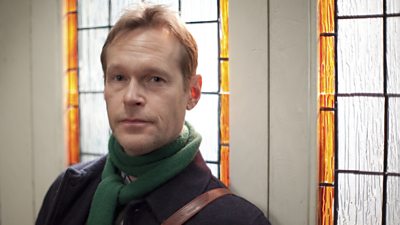
What attracted you to the role and What Remains?
I felt it was something quite unusual. Even though there was a whodunit element to the story, I felt there were many more layers to it than the usual thrust of a whodunit drama, which tends to focus on who did it and is constantly about looking for a suspect. I felt this was to do with sadness and loneliness and how it relates to all of the people in the block of flats. The sadness and loneliness of the victim herself and of course Len’s character, the policeman, who is trying to get to the bottom of it. The overall theme of it seems to be about people dealing with their inner demons and then you have this thriller element woven through it which made a very interesting mix.
What kind of man do you think Kieron is?
He’s a man who is trying to escape his demons and his dark past. At the beginning of the series he’s in a good place. The details don’t really emerge about him until later on, particularly episode three, when you get a big insight into who Kieran is and what his past had been. But at the beginning of the story he’s in a good place. He has a new partner, a work colleague who is now getting close to moving in with him, as long as he can work it out with his son. He’s got a new life, he’s been married, he’s got a teenage son and we discover that he’s had an alcohol problem in the past but he’s in a good place with it at the moment. It’s a new beginning for him. But then unfortunately as the story of Melissa’s body being found in the attic emerges then it brings some of the demons back to him.
Later on we discover more about that past and we discover that he did know Melissa, even though at the beginning he implies that he didn’t know her very well. We discover that there’s quite a bit more to it. So all this emerges and unfortunately later on he becomes more of the man that he used to be. So it’s an interesting journey. He goes back into his dark place. It’s a great journey. He’s got a very complex relationship with his son. I think he feels incredibly responsible for the break-up of his marriage, he feels guilty and to blame about that. There have been some problems with his son’s behaviour and he’s finding that difficult to deal with because he obviously feels that that’s been caused by the marriage break-up so that he’s to blame. He’s got lots of mixed responses when he wants to be quite firm with his son but at the same time he feels really quite guilty. His new girlfriend and their domestic situation he finds quite difficult as well because his son would still like his father to get back with his mother again, which is never going to happen. Kieran finds all of that very difficult to deal with and to navigate. So there is a lot going on!
What kind of a Dad do you think he is?
At the beginning of the story he’s in the best shape he’s been in for a while. He’s a good guy, there’s no doubt about it, he is a decent man. But he’s been wayward. His job and his alcohol problem, have caused him some bumps in the road and have made him less of a good father than he could have been at times. But at the beginning of this story he is back on track and he’s feeling like that’s not me anymore and he’s going to be responsible and be the best father that he can. He is good but he’s had some problems and those are reflected back to him through Adam’s behaviour.
What kind of a partner do you think he is?
At the beginning he’s in a good place and he’s very fun to be with. He’s a liberal, open guy and they’re having a really nice time in their relationship. I think he’s enjoying this new phase of life and is a lot of fun to be with, until later on the cracks start to appear as the Melissa story gets closer to him. Then the darkness emerges and starts to affect his current relationship and that’s when his little secrets start to emerge about his past and it gets more and more difficult for him. Things change throughout.
Were there any challenges playing the role?
It was always just plotting the journey really carefully and finding out when he hits these bumps in the road. So looking at that carefully, especially as the doors start to close in around him and he feels the pressure is on him from Len’s character, he feels in a corner. So it was all about just building very carefully to that place so it didn’t suddenly come from nowhere. It was about the gradual journey into the darkness. Just trying to make that as real and possible and finding the light and shade in it. Because even when someone’s in a dark phase it’s still important to find the colours and shades in that as well to make it feel real and complicated, like people are. Rather than just, he’s being not very nice here. Kieron’s got a lot of different parts to him which I think we all have as people. It’s just trying to give that the best portrayal.
How do you think he feels when Melissa’s body is discovered?
He feels shocked. It’s all about bringing up the past for him and that’s something that he didn’t want to have to do. I think he was hoping that now he could just continue a new life with his new girlfriend and a clean slate and his marriage is now over and things can start again. This is now preventing that from happening and he realises he’s going to have to answer questions about the past that he’d rather not answer. It’s very difficult. But the audience don’t know how hard it is for him, it’s only as the story progresses that we realise that he even really knew her. For a while he just tries to pretend to everybody that she was just a neighbour and that they just passed each other on the stairs occasionally but it becomes clear that there was actually much more to it than that.
Do you think what happened to Melissa is reflective about society today?
I think it’s a sad reflection of our society. I did see a powerful documentary about someone being found dead after about three years in a flat in Wood Green. It was a very sad and powerful story, particularly in a highly dense and populated place like London, for no-one to apparently miss a person is very sad. It makes you realise that if the connection with family is gone, that was the case in this documentary as the girl had lost connection with her living family, and then if people’s relationship with other people are then fairly transient, it’s perfectly possible that that can happen in this day and age. But it is terribly, terribly sad. It just reminds us that there are lots of people that are very lonely who we pass in the street every day. People that have very little connection with other people at all in their lives, and even if they do have connections they can be very light and transient.
How did the role of Kieron compare to other roles you’ve played?
It’s all very new. It felt like there was a lot to explore there and it didn’t feel like I was treading on old ground, and as an actor you look for new challenges and new directions to portray. Kieron felt to me like someone I hadn’t played before. It’s often disappointing when you’re sent scripts and you see why you were sent it; they want you to repeat the same thing you’ve done before. It felt, even though I’ve played a lot of characters with hints of darkness in them, there was so much more going on in this story. It was a real pleasure to get my teeth into.
Is there anything that particularly draws you to Tony’s writing? You’ve worked with him before on Inside Men…
Inside Men was the first time I came across his writing and it’s such a great piece. My role was so exciting and thrilling and the audience response to it was so fantastic. To get the opportunity to read another one of his scripts that felt very, very different was an absolute thrill. I knew it would be something that would be exciting to act and that audiences would get a thrill out of. It’s not in any way formulaic and that’s what I love about What Remains. Having seen the first episode, it doesn’t feel like anything else which in these days is no mean feat. It’s very easy to watch anything and go: “it looks like that, it feels like that there going for that.” It has an underlying menace and a sadness and a darkness. There is lots to pull you in to all these characters. It has something very real about it, the atmosphere in this house, that I can’t quite put my finger on but it has it. The atmosphere is very powerful.
What was it like working with the rest of the cast?
I was thrilled to get to work with David Threlfall. He’s absolutely fantastic. I had a ball with everyone. It felt like separate films actually because we’re all very contained in our individual flats so we all had our bite of the cherry in the studio. We had these blocks of time when we did Kieron’s story and there was Joe’s story and we popped in an out of the other stories but when we were in our own flat it was very intense, like making your own little film. I had many scenes with Claudie’s character and Alex’s character, my son, and I got on with them so well. My relationship with Claudie worked well because we were really relaxed with each other, so that helped playing a couple that were getting on well. Despite the darkness in the script, the atmosphere on set was incredibly light and fun. You could imagine it being grim and moody if you’re making something that happens to be about death. The cast were a great bunch of people and I’m looking forward to seeing how those stories emerge in those different flats because it’s an interesting bunch of residents!
What can audiences look forward to with What Remains?
They can expect elements of a thriller that they’ll recognise but I think what gives it it’s unusual appeal is that it’s about people and their sadness and where that’s coming from, from each of the characters in the story. The characters that are both dead and alive. People are going to want to know who was responsible for that murder but also understand what makes these people tick and why they are who they are and act the way they do. Sadness and loneliness run through as a theme which is a universal theme that everybody can relate to.
