Q&A with David Bamber
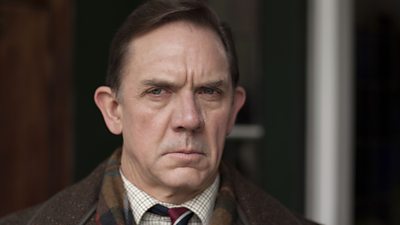
Interview with David Bamber, who plays Joe in BBC One drama What Remains.
I love Tony’s writing. You learn such a lot about everybody and it’s very intriguing. When I read it I just didn’t know what was going to happen and when you get to the end and you have to piece your character together it’s brilliant."
Tell us about Joe…
He’s a late middle-aged maths teacher who lives in the basement flat of the block of flats in which What Remains is set. He’s the key holder for the flats and he’s a rather officious, letter of the law type of person. You learn that he has had a row with Kieron about putting stuff in the loft and when Michael puts a sheet out on the balcony he puts a note through the door having printed off the terms of the lease. He’s rather brusque. Some people are very outgoing and some people just aren’t.
He was very friendly with someone in the block of flats – once – it would spoil it if I told you who. So he can be kind.
Why is Joe such a stickler for the rules?
I think he’s an old school teacher and he brings that to his life as well as his work. He’s rather isolated and not terribly social, possibly because of his secrets he is hiding. He doesn’t have much in common with the other people in the house and when we see him in the staff room he’s also sat by himself.
Is there more to Joe than it seems?
Narratively there’s more to everybody, that’s one of the great things about this particular drama. Everybody has layers which they try not to reveal but slowly circumstances make them peel off. Everybody is guilty of not caring about Melissa. Joe says he just thought she’d disappeared and he never really paid attention to any movement up there, or if she had any friends visiting, but of course he’d have heard everything going on because he’s a busybody. He’s always looking out the window.
How does Joe feel when her body is discovered?
He thinks it’s a big drag and a pain for the whole house, people coming in and out all the time and leaving cards and having interviews. When he goes for his interview he wants to wrap it up as quickly as possible.
What attracted you to the role and What Remains?
I love Tony’s writing. You learn such a lot about everybody and it’s very intriguing. When I read it I just didn’t know what was going to happen and when you get to the end and you have to piece your character together it’s brilliant. I worked years ago with Coky and I was desperate to work with her again. She is just fantastic and I think she’s done a wonderful job. She is incredibly creative and has a brilliant visual eye.
What was the filming process like?
It was unusual because due to the locations you always shoot things out of sequence but this was more unusual than anything I’ve done before. The staircase was on a completely different set so all the scenes on the stairs were shot in the first week, as was anything in the loft. Then after that was finished all the exteriors and coming and goings through the front doors and parking outside was done. Then we filmed in our own flats and you did all your interiors. What was nice was that when you were in your flat it was very intense and you did all your scenes over a few days and you really got into it.
What was it like working with the rest of the cast?
It’s a wonderful cast. Steven and I worked together twenty years ago, Indira and I were in Rome together, David Threlfall and I were at the Manchester Youth Theatre 40 years ago. There were also a lot of brilliant actors that I hadn’t met before and it was not just the usual suspects. It was like an ensemble and what’s amazing about the writing is how there are so many gritty vivid characters and so much is juggled. It’s about relationships as well. I found it terribly moving when Kieron has to tell his son that he doesn’t like him, you don’t need a whole drama about a father that doesn’t like his son, you just need that scene. I found that very hard to watch. It’s full of upsetting near-misses and marvellous characters.
Do you think what happens to Melissa in reflective of society today?
You read about people that are found mummified in their sitting room with the gas fire still burning, often elderly people. I think that we are more isolated and prone to not helping each other, maybe you shouldn’t look at the past with rose-tinted spectacles but certainly if my mother hadn’t seen our neighbour for a week she’d be in there in a heartbeat. Joe would certainly know that that flat was vacant. If she’d moved why didn’t they wonder if anyone knew was moving into it, or what was happening to it? It reminds us that we can be very thoughtless and that we do keep ourselves to ourselves. It’s awful to think that you wouldn’t be missed by anybody.
What can audiences look forward to with What Remains?
Obviously they’ll want to know the resolution of the whodunit but what they should look forward to is the way that they learn more about the characters. There are so many different relationships represented that I think everybody can relate to. That should be looked forward to just as much as the dramatic finish, getting under the skin of these fascinating characters and relationships. It’s not just got a narrative thrust, they should look forward to the hunt rather than just the kill, to discovering more about the house and what it harbours and what goes on behind closed doors.
