BBC Radio 3
New digital programming from BBC Radio 3.
Published: 14 October 2019
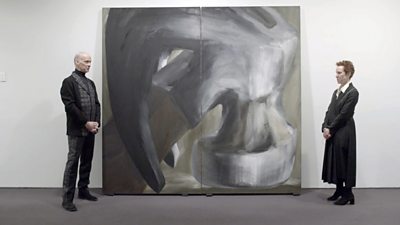
New digital programming from BBC Radio 3.
The Way I See It: Radio 3 & MoMA’s Journey Through Modern Art (30 x 15’)
Renée Fleming, Fiona Shaw CBE and Mark Morris are among the latest addition of stars and cultural thinkers to join the innovative line-up of interviewees taking part in a new collaborative programme series from BBC Radio 3 and Museum of Modern Art (MoMA) New York.
The unique collaboration will see an epic 30-part series of programmes aired about creativity, the look of art and the art of looking on BBC Radio 3 and BBC Sounds.
The full list of new names added to The Way I See It series include:
- Orhan Pamuk - Nobel Prize-winning author and screenwriter
- Renée Fleming - international music performer
- Bryan Stevenson - American lawyer and social justice activist
- Madeleine Thien - novelist
- Hisham Matar - Pulitzer Prize winning author
- Mark Morris - choreographer and dancer
- Es Devlin - artist and set designer
- Fiona Shaw - actor and director
Since the days of the Third Programme, BBC Radio 3 has always undertaken to broadcast ambitious, pioneering arts programming with creative organisations the world over, but this is the first time the broadcaster has worked with MoMA. As part of BBC Arts’ and BBC Radio 3’s wider commitment to visual arts, The Way I See It will feature deeply personal responses to modern art from globally admired stars and vanguards, as they transport listeners through a radiophonic art exhibition of their choices of the most inspiring and provocative works from the MoMA collection.
Additional leading cultural figures such as international opera star Renée Fleming, acclaimed choreographer and dancer Mark Morris, actor and director Fiona Shaw CBE, will join the likes of Grammy and Emmy Award-winning Hollywood actor and comedian Steve Martin, the author of the New York Times best-selling essay collection Roxane Gay, composer Steve Reich and stand-up comedian Margaret Cho in giving their interpretation of famous works of art. These 30 programmes, presented by art critic Alastair Sooke, are playful, curious and inspirational.
In the company of some of the leading creatives of our age, we take a deep dive into the stunning works in MoMA’s Collection, whilst exploring what it means to see.
How does an astrophysicist see Van Gogh’s Starry Night? How does a jazz pianist see Mondrian’s Broadway Boogie Woogie? How does one of the first black women to write for Marvel comics see the difficult truths Kara Walker’s sweeping image of African-American history? What does a top fashion designer see in the curving forms of a Brancusi sculpture?
This series celebrates our hunt for ourselves and our lived experience in art. The result is a series that tries to provoke, inspire and startle us into new ways of seeing art and our world.
- The new series will appear in Radio 3’s The Essay slot and launches on 14 October, running from Monday to Friday at 10.45pm -11pm until 1 November, and then again from mid November until December, and will feature some of the world’s most creative, disruptive minds. The Way I See It will also be available on BBC Sounds.
African Renaissance (3 x 60’)

Radio 3’s The Essay: 2019 - The Year of Blade Runner
Los Angeles, November 2019: Blade Runner's future is now ours, and Radio 3 marks the anniversary in a five-programme special. Ridley Scott's 1982 classic future film of replicants escaping to a retrofitted Earth and meeting their end at the hands of the washed out, titular Blade Runner (Harrison Ford as Rick Deckard), is adapted from Philip K. Dick's classic 1968 novel, Do Androids Dream Of Electric Sheep?
Both film and book are meditations on what it is to be human, and we have been looking through the eyes of the film ever since it plunged us into its acid rain, neon-coated West Coast nightmare of flaming night skies, commercial ziggurats, flying cars and fake animals.
Now its future is our present. We live in a world of environmental crises, of the extinction of species, rapidly developing A.I., all-powerful corporations and extreme divides between rich and poor. It's just that neon umbrellas never caught on.
Five writers explore what it is to be human or a machine, the sonic reaches of the film, the contradictions of sex robots, the cinematic legacy.
The series starts begins with Deyan Sudjic, director of the Design Museum, considering the filmic city of Blade Runner's Los Angeles and how its aesthetic has bled beyond the screen into architecture and design.
Frances Morgan, a writer and researcher into electronic music, pierces the sound barrier of a film that defined the future - not only in the way it looked but in the ways we heard tomorrow.
Writer Ken Hollings takes the Voight Kampff test as he examines the ethical barriers between us and the machine. Dr Beth Singler, Junior Research Fellow in Artificial Intelligence at Homerton College, Cambridge, asks what is real and fake in A.I. sex and love. And the legendary writer on film, David Thomson, takes a long hard look back at Ridley Scott's rain soaked mash up of existential noir and artificial souls.
- Producer: Mark Burman for BBC Radio 3
The Escape Artist (10 x 15’)
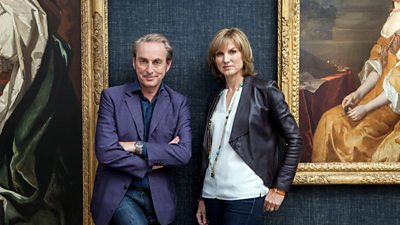
Arthur Cravan was a pioneering figure in 20th century art. Born in 1887, he was a performance artist before performance art, a troll before the internet, a purveyor of fake news, a myth maker and provocateur who understood that celebrity and notoriety is its own currency. Cravan was also the secret nephew of Oscar Wilde, amateur heavyweight champion of France, a First World War draft dodger, a trickster, and a poet; a man whose own life became a work of art.
In a ten-part series writer, artist and award-inning Podcaster Ross Sutherland takes listeners down the rabbit-hole of Cravan’s life. He wants to get to the bottom of who Cravan really was and gauge his pioneering approach to art and the figure of the artist.
Part drama, part detective story, part documentary, The Escape Artist centres on the mystery of what an artist is and can be. With contributions from contemporary artists, other devotees of Cravan and even Cravan himself - voiced by the actor David Reed - as his words and ideas speak to our age from over a century ago.
- Producer: Melvin Rickarby for BBC Radio 3
The Age Of The Image (4 x 60')

Radio 3’s Sunday Feature: The Queen Of Technicolour
The centenary of Maureen O’Hara, one of the biggest stars of the Golden Age of Hollywood, is marked in a new edition of Sunday Feature.
Marie-Louise Muir traces the journey of her childhood idol from the Dublin suburbs to star of the big screen. Speaking to the family and friends who knew her best, Marie-Louise explores the reality behind the popular persona of the flame-haired actress, star of The Quiet Man (1952), who was affectionately dubbed The Queen of Technicolour.
In Los Angeles, Marie-Louise meets Maureen’s friend and biographer, Johnny Nicoletti, who says Maureen often felt typecast by her looks and longed for more serious roles. Johnny recalls that, from her arrival in Hollywood aged just 18, Maureen wasn’t afraid to stand up for herself. At a time when studios exerted huge control on the lives of their stars, Maureen’s independent spirit led to confrontations with some of the most powerful men in Hollywood - including Walt Disney and John Ford, who developed an obsession with her.
Long term friend Stefanie Powers, who starred in McClintock! (1963) alongside Maureen and John Wayne, remembers a woman fiercely proud of her Irish roots who had little time for the Hollywood life, while Ladybird star Saoirse Ronan reflects on Maureen’s legacy and influence on the current generation of young Irish actors.
In Idaho, Marie-Louise meets grandson Conor Beau Fitzsimons, whom Maureen lived with in her final years. To this day he keeps personal letters that Maureen wrote to close friend John Wayne, and letters received from John Ford which document his obsession. Archive recordings of Maureen herself and extracts from her most celebrated films also appear throughout this Sunday Feature, a compelling new portrait of a true Hollywood icon 100 years after her birth.
- Radio 3’s Sunday Feature: The Queen Of Technicolour was commissioned by Matthew Dodd for BBC Radio 3. It is presented by Marie-Louise Muir and produced by Conor McKay from BBC Northern Ireland
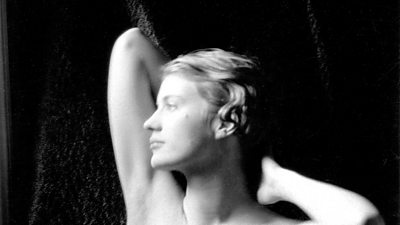
Lee Miller (1 x 60’)
Radio 3’s Sunday Feature
Sunday Feature turns its focus on Archibald Motley Jr and Artemisia Gentileschi.
In Sunday Feature: Archibald Motley Jr, Lindsay Johns rediscovers the legacy of Archibald Motley Jr., one of the great painters of the Harlem Renaissance. Today Motley's colourful portraits of the vibrancy, individuality and vitality of the jazz-age African American community have firmly established him as a painter who mattered. His cityscapes chart the emergence of Chicago’s ‘Black Metropolis’ as jazz and gospel music were born. But they also represent the diversity of African American life in the 1920s - from skin tone to class.
In Sunday Feature: Gentileschi’s Revenge, painter Caroline Walker explores the story of artist Artemisia Gentileschi, who is now considered one of the greatest female artists of the Baroque age. A follower of Caravaggio, Gentileschi had an illustrious career as a painter - but her reputation is dominated by her experience of rape, and a very public trial.
She was encouraged to paint by her famous artist father but when she was 16 Artemisia was raped by another artist Agostino Tassi, who had been sent to teach her. Her father took the Tassi to court. Transcripts of the trial offer a fascinating window into life for a young ambitious woman in Rome, and the legal system: she was even tortured to verify her testimony.
Tassi was eventually found guilty and Gentileschi was left to get on with her life as a tainted woman. Caroline Walker picks up the story to find out what happened to her next and discover how she forged a remarkable career as a painter in a man's world and became the first women to join the artists' academy in Florence.
- Producers: Giles Edwards for Radio 3 (Archibald Motley Jr) and Jo Wheeler, Freewheel Productions (Gentileschi’s Revenge).

