Interview with Chloe Pirrie
Chloe Pirrie plays Emily Brontë in Sally Wainwright's one-off drama for BBC One.
Published: 24 November 2016
Wuthering Heights is portrayed as a great romantic novel and when I read it again I thought, how is this romantic? All these people are horrible to each other!
Tell us about your character?
I play Emily Brontë. She’s quite a headstrong individual and is the writer of Wuthering Heights and some beautiful poetry.
How did you get involved?
I knew of Sally’s work and so when I knew what the project was I was very excited. Then when I read it I just thought it was the most brilliant writing, so exciting and so accessible!
What makes it unique?
Sally approaches everything from a strong place of truth. She wants to tell the story that hasn’t been told before about the Brontës. So much has made them into mythical creatures and the reality is far more interesting. They were three very ordinary and highly intelligent woman who wanted to write since they were kids. They created an imaginary world and decided to start writing novels. It’s a miraculous story that these books were created and published!
What did you think of the script when you first read it?
I loved it! I just thought it was brilliantly written, with amazing stage directions and brilliant descriptions. I really understood who these people were immediately, having not known a huge amount about them before. I’d read the books but I didn’t know much about them and the family, but the characters just leapt off the page.
What is it about To Walk Invisible that will excite and appeal to audiences?
It’s an amazing story that I think people will enjoy. It’s funny, there’s a lot of humour in the writing as well as in the characters - they were a really funny little set. It’s also very moving and has everything you want from a drama.
What is the one thing that you want people to take away from To Walk Invisible?
The average person doesn’t know a huge amount about them. Some people will have read their books and some people will know more than others. Some people will be ready fans of their work but, like me, they might be fans but not actually know much about them. I think it will be very informative, but not in a boring way!
Has To Walk Invisible changed your perception of the work of the Brontës?
It’s changed my perception of all of them to some extent. I didn’t know anything about Emily before. I read Wuthering Heights when I was about 15 or 16, and when I got this job I reread it and had such a different experience. I had such a different reaction to it and perceived the characters very differently from how I did when I was younger.
Wuthering Heights is portrayed as a great romantic novel and when I read it again I thought, how is this romantic? All these people are horrible to each other! It’s just such a fantastic vivid, violent book in a way that I hadn’t processed. It had a strong effect on me, thinking about the person writing all these words and these dark characters. It’s such a forceful book, and when I read Sally’s script again I realised that Emily as a person is forceful. I could see absolutely where the script lined up with the author of this book. So that was very informative and it did change my perception of Emily.
I also learned about Charlotte and Anne and what they were like and what made them write these novels. A lot of people don’t know that when they were kids they wrote all these amazing stories and created these whole imaginary worlds. And bringing Branwell to life, people generally don’t know about Branwell, I didn’t even know they had a brother. He’s a fascinating character and that’s a really interesting plot line.
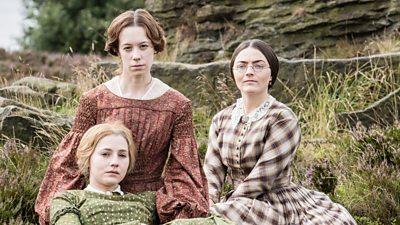
Pictured: Emily Bronte (Chloe Pirrie) Anne Bronte (Charlie Murphy) Charlotte Bronte (Finn Atkins)
Sally Wainwright on writing To Walk Invisible…
"I wanted it to feel as authentic as it could. When people watch it I want them to feel that they are transported back in time. It’s not a chocolate box world and I hope it does reflect the real world that they lived in.
The primary aim of To Walk Invisible is to entertain people, for people to engage with it as drama and to enjoy it. I hope people will want to go away and know more about the Brontës, read their novels and read Emily’s poetry.
What’s interesting about the story to a contemporary audience is the domestic situation of the three Brontë sisters. The family are living with the alcoholic Branwell, who was very ill. It started in 1845 and goes through to 1848 when he died. The story is really about these three women living with an alcoholic brother and how they start trying to publish."