Top Of The Lake: production story
The story of the production of new BBC Two drama, Top Of The Lake.
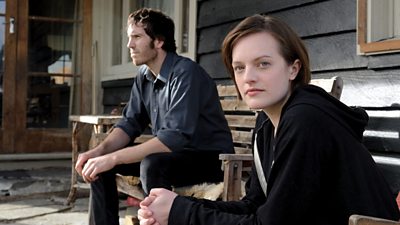
The soaring mountains, deep lakes and quiet mossy forests of the remote South Island of New Zealand are as much part of the story as any of the characters that populate Top Of The Lake. In this unique mystery, a modern detective story involving murder, drugs and sex plays out against the timeless beauty and stillness of one of the last true wildernesses left on earth.
Native New Zealander Jane Campion has been inspired by the incredible landscape near the Routeburn Track which she discovered 15 years ago, to make a richly textured crime drama that explores the complexities and mysteries of life.
“I discovered that there was a real place called Paradise at the top of Diamond Lake, extraordinarily lovely, and that the people that had settled there had been dreamers,” explains Campion.
“But it was also a place where great hopes were built and dashed. It made me very curious about notions of paradise – the idea of a wilderness paradise, something that’s liberating and real, a place for people wanting to get away from everything. But then there’s the dark side of it. If you look at the story of Eden there is always the serpent and there is always the downfall, that’s just the way it is. I love crime mysteries and I wanted to write one that had room to expand like a true novel, so the idea of doing a six-hour long story was very exciting to me.
“Robin Griffin is returning home, to a place where traumatic events happened to her - she feels strong, invincible, she has become an accomplished detective - but she discovers she can be brought to her knees by her past, by what she has denied and is hoping to forget.”
Jane Campion took the idea to Ben Stephenson, Controller of BBC Drama Commissioning.
“Having always been a huge fan of Jane's work when Christine Langan suggested that Jane would like to meet me to discuss a TV idea I leapt at the chance. From the minute I met Jane I was swept away by Top Of The Lake. It's an utterly compelling piece of drama in its own right with an extraordinary array of characters, a bold tone and a chilling atmosphere. But more than that is drama which sheds a remarkable eye on gender, sexuality, love and what family means. Although set in New Zealand it is a BBC drama through and through with all the values of great British drama and an ambitious vision from a world class talent that we have been able to give full rein to.”
Jane Campion and co-writer Gerard Lee also took the idea to producers Emile Sherman and Iain Canning at See Saw Films.
“We knew we would need about double the budget of a normal TV series and would need to bring in broadcast partners from a number of different territories. With BBC Two, we found a partner who believed in and supported the originality of Jane’s vision. Luckily we live in a world now where TV shows are able to do things that the film world can’t. Top Of The Lake has a boldness visually and stylistically, and in terms of what it is saying it’s refreshing, inspiring and hard-hitting. Jane has told a story that is a microcosm of the greater world – with the struggles, the heartbreak, the unusualness and the textures that I feel exist in the world we live in but are often unexplored,” says Sherman.
Looking for a producer on the ground in New Zealand, See-Saw approached Philippa Campbell. Campbell was immediately swept up into the story.
“When Tui is discovered to be pregnant, her body becomes a crime scene. As Robin takes on that mystery, she also takes on a mystery about herself. The secrets that the characters hold inside themselves are the ones that are most challenging for them and for other people; so it’s a crime story and it’s also about self-knowledge and healing. As she searches for the girl who has gone missing, Robin is also searching for this lost little girl inside herself. Both searches have high stakes,” says Campbell.
“There is also a complex, passionate love story between Robin and Johnno. Their relationship has history, and in order to figure out if they have a future together they have to renegotiate who they are to each other, and who they are to themselves.
“It’s a world that has a degree of violence inside it, it’s a world where your senses and your nerve endings are engaged all the time, and sometimes that overwhelms some of the characters and they have to deaden themselves a bit. It’s also really funny, there’s a kind of a rock and roll groove, that if the characters find themselves unable to fit into they get thrown out a little bit. It’s full of contrasts, because the beauty can feel very fragile but it’s also very strong.”
The idea of the search for happiness has a literal representation in Top Of The Lake with the Women’s Camp at Laketop. The women have come in search of themselves, with someone they consider to be their spiritual guru – an enigmatic, ’enlightened’ person called GJ who has an unusual brand of wisdom. “They bring fun, they bring craziness, they’re a bit out of control and they bring possibility, they are still discovering things,” explains Campbell.
“I wanted to write about a group of women who feel like they have fallen off the edge of the earth,” says Campion.
“They’re older, disillusioned and not really part of the dominant patriarchal community or culture that we live in. So I imagined a patriarchy up in Laketop, led by Matt Mitcham, and that the matriarchy and the patriarchy could be in a dance together, a dance that can also turn violent. The women’s camp and the Mitcham family are struggling over the same piece of land which is called Paradise. Matt Mitcham has been trying to manipulate the owner of the land into selling it to him at a very reduced price but then out of nowhere these women have arrived and offered twice the price and bought it, and he’s absolutely furious. He’s been living there his whole life and suddenly the prize has been ripped out beneath him. And as difficult and aggressive as he is, he does have a genuine love of the land, and also another complexity; his bullying mother is secretly buried there, in expectation it would be his.
“GJ is very different from most so-called enlightened people because she’s quite challenging and she’s inspired by someone who I really loved and felt was the most interesting person I have met in my whole life, UG,” says Campion. “He was the most free person I have ever come across. I think the honour of knowing a remarkable person like that is that it means they have touched your life in some way that’s profound, and all I can say is it’s a curse and a joy, because you can’t let go of it, you have to proceed forward in that way, of understanding that everything you think you see isn’t real. And at times that just seems like a laugh, and fabulously absurd, and at other times it feels threatening.”
GJ is played by Holly Hunter. The last time the two worked together was also in New Zealand on The Piano which won Academy Awards for both. Campion wrote the character of GJ with Hunter in mind.
“Meeting her again and seeing her as a more mature woman it was just absolutely exciting and brilliant. I think it was an opportunity for us to build on the trust and the relationship we had from doing The Piano. We work together like sisters. We don’t have an actor/director style of talking together. I feel like we created and explored together.”
A huge amount of energy was put into finding the other on-screen talent who could bring the characters to life in the way that Campion envisaged. Acting powerhouses David Wenham and Peter Mullan and the relatively unknown Thomas M Wright were quickly cast in the pivotal roles but the search for Robin took longer.
“It’s a strange thing when you go to cast your leading character and you find yourself having not a clue who they are,” Campion says.
“I just wanted somebody to show me - who is Robin Griffin. And no-one did that in a way that convinced us all until Elisabeth Moss’s audition tape came in. She brought the dialogue into a place where it felt deep and true and complex and she did it quite quietly. I was really surprised, but I totally believed her. Now, having worked with her over these months the thing I have found is that she’s addictive, I can’t wait to see her again every day, and it’s always a bit mysterious. I think it’s like the mysterious attraction of the Mona Lisa, it’s seductive, it gives something and it holds a lot back. The other thing about a person like Lizzie is I really believe that she has that light inside her, that something strong and good is inside her.
Another astonishing find is Jacqueline Joe, who plays Tui. Spotted in Auckland and with no previous acting experience, Joe is an extraordinary talent. Local children from Wanaka, completely at home in the world of the story, were cast as Tui’s friends, and bring an authenticity to the production.
The landscape of New Zealand is a big character in this story. Campion explains: “It’s a metaphor in itself in that it can be completely nurturing and beautiful, and other times dangerous and freezing. The story is in tune with the landscape – both extreme and intimate. Whenever I’m in the forest and we’re filming there it’s like having the most beautiful living room in the world; and then just the scale of these mountains - they have a way of making you feel that all your dramas are ludicrous beside this incredible landscape. I really love to share with the rest of the world what I think is so special about the South Island. A true wilderness is available and that is rare now. The romantic poets had the Arcadian ideal that in order to balance yourself you ought to be in nature because it will show you the way to be. It has a capacity to heal and guide your spirit.”
