Top Of The Lake: Holly Hunter
An interview with Holly Hunter, who plays GJ in new BBC Two drama, Top Of The Lake.
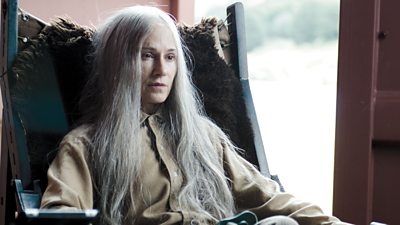
Who is GJ?
GJ is hard to describe, it’s questioned as to whether she is a man or a woman and that androgyny was very interesting to me. GJ is a person who people seek answers from. She attracts people who are in need or sick and they follow her, whether she likes it or not, asking for help. GJ ran into a woman, Bunny, she is a seeker and she attaches herself with great hope to GJ. Bunny can fund a kind of retreat for herself - and one or two other people she thinks - so she asks GJ to participate. GJ doesn’t really want to, but she put her finger on the map and it was Paradise. Bunny has the funds to make whimsical actions like that take place, and that’s how the women’s camp came about.
I think there is something ironic for GJ about being in a place called Paradise with people who feel troubled by their lives. GJ doesn’t believe in enlightenment. And she doesn’t really believe that anybody can actually be helped. It’s kind of an oblique outlook and at the same time there is something really reassuring about it because it’s so unbelievably real. There is a surety about GJ and a lack of confusion and there is something really attractive about being around that.
What does the women’s camp contribute to the story?
The women at the camp offer this changeable view of humanity. I think this is one of the beautiful things that Jane has done here - how the audiences’ perception of this group can change as the course of the story evolves. And the women, their humanity is moving, and funny. They’re searching for their happiness, they’re searching for enlightenment, they’re searching for peace, love, answers and tranquillity and they find none of that.
Is this search for happiness and answers a modern day phenomenom?
The self-help section of national bookstore chains in America is one of the largest sections. In a way it’s nothing new and in another way very new. People have always searched for answers, that’s why we have religion, people have always been seeking some relief from their own mortality. I think people probably feel a little more disenfranchised now than they ever have. The community and the family have become much more disparate and people feel isolated. They get into these electronic families, electronic communities which don’t really provide the relief from life and what it brings, which is maybe even grief over the fact you are going to die. People want to feel this is not the end, when this is over it’s not over.
Was GJ an easy character to play?
Playing GJ was very interesting because of the detachment. Actors always seek connection. Drama is all about the moment of ultimate conflict for a person. GJ doesn’t have that. And she is not wrestling with any of those things, she is not missing contact, she is not missing engagement, she doesn’t really need it and that was very interesting problem for me to solve, for my own self and Jane was tremendously helpful with being less engaged. I really needed a hook into her, that she looked a very particular way. Jane had a very specific visual idea of GJ and we just made that happen. I love wearing wigs because they’re instantly transformational.
It has been suggested that GJ is rather like Jane, do you agree with that?
GJ is a kind of composite of this yogi UG that Jane knew and loved and is highly influential in her creating this part. And it goes through the filter of Jane and Gerard who have had a lot of encounters with enlightened people. There is a point of relaxation about GJ and Jane has this real incredible relaxed nature so there is a part of Jane that is like GJ. But I see Jane in all of the characters. She is rather unjudgmental about people so I think she absorbs the people she writes about and expresses them without judgment. There is no one who I think she doesn’t understand and so we understand them too.
This is the first time you have worked with Jane since The Piano and now you are both back in New Zealand, how do the experiences compare?
Well, you know, the landscape is diametrically opposed, The Piano was lush and jungly and close and had this real sense of darkness. And this place is filled with light and what you feel here is the sky, you almost lose a sense of proportion here because the mountains are so giant and the water is so calm and there is this real expansiveness, it’s kind of the absolute opposite.
Have you had a chance to explore this part of New Zealand?
Rudyard Kipling said that Milford Sound was the eighth wonder of the world, and it’s a mind-blowing place, a very moving place to see. So I was so happy to get down there this time because it’s beyond compare. There is no place like it on Earth and New Zealand is just kind of that way. The Southern Alps are here, the rainforest is here, people are doing outrageous things here - which I have not done any of, the extreme sports are on steroids here!
You and Jane have stayed in touch since The Piano and now you are working together again, what was that like?
The thing that I like about Jane is that she is always this close to laughing. No matter what is happening. She wears the making of a movie very lightly and that is so refreshing, and so unusual. The relaxation that Jane has as a director and kind of creatoress is felt by everyone on the set. The first and most important thing you need to be creative is to relax, particularly for the actors. Jane provides us with a safety that’s original. There is no one like her.
What will audiences enjoy about Top Of The Lake?
Top Of The Lake is a great story with a beginning, and a middle and an end, about darkness - it’s like the heart of darkness. And everybody has got one. When I was reading it, I couldn’t put it down, and I wanted to know what was going to happen next. And I think people will love that.
