Interview with Sathnam Sanghera
Interview with Sathnam Sanghera, who wrote The Boy With The Topknot.
Published: 7 November 2017
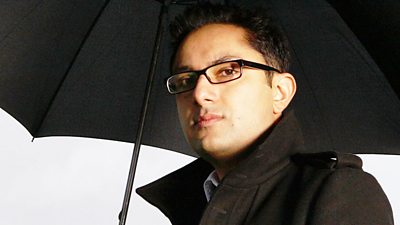
You walk into the room and there’s a bunch of really good actors acting out the most painful moments of your life. That is just strange beyond belief
Do you think the team have done a good job of adapting your book into a drama?
I think it’s amazing. Technically it's a miracle of concision because my book is 100,000 words long, features about six different characters and is set over 50 years - I don’t know how Mick Ford (the screenwriter) has managed to condense all that into 90 minutes but he has.
But even more than that, I think the producers and the director have captured the emotional truth of it all. So much so that I even found it very painful to watch. When they had the read-through before filming, I had to walk out - not because it was bad - but it was just incredibly true and so very painful. I think they’ve done a wonderful job.
Was it strange to meet the actors playing you and members of your family?
I need several years’ therapy! No, but I’m normally the only Sathnam in the room and at the read-through there were four Sathnams. There was the Younger Sathnam, the Older Sathnam, an actor called Sathnam and then there was me. That was weird. Also you walk into the room and there’s a bunch of really good actors acting out the most painful moments of your life. That is just strange beyond belief. Then on set it carried on being weird - at one point I was just killing time with Sacha and I said "oh I like your shoes" and he was like, "well of course you like them - they’re your shoes!". Someone had been paid to buy my shoes and make him wear them (he hated them because he wears Doc Martens), it was just endlessly weird. But also wonderful and flattering. Because not only is Sacha a nice person, a great actor, but he is incredibly good looking - so that’s flattering!
Can you tell us about the boy in The Boy With The Topknot?
One of the weirdest things for me about the drama, the most emotional, is thinking about Young Sathnam and meeting the boy who played the younger version of me. I’m a conventional, metropolitan, liberal journalist now, but I was very very different and I’ve kind of forgotten how different I was. On my first day of school, I couldn’t speak English; I had a topknot, long hair (which I kept until I was about 15) and to go from that to what I am now it almost gives me vertigo. It’s such an extreme journey from not speaking English to having a degree in English at Cambridge, becoming a writer... So seeing the younger version of me was very intense.
Has it been a catharsis, has it had a positive effect seeing it played out on screen?
The whole thing has felt like an elaborate act of family and personal therapy. My only real regret from the book was that I shared too much, was too earnest and too easily impressed by cars and the media etc. The adaptation and Sacha’s performance has made me realise that while I might have been a prat at times, I did something hard and compassionate and loving in writing the book. Seeing how tortured he is on screen made me realise something really important. I took two years out of my life to learn about my family and then I presented the information - with love and their support. I think that has been an act of therapy for me and it’s been really, really great.
Are there any particular stand-out moments in the drama for you?
The scene I find the most difficult because it’s so true and painful are the ones with my sister because that’s basically how it all happened. I think the Vineeta Rishi’s performance is incredible and I’m so glad it’s been included because one of the things I most wanted from the drama was a balanced, realistic portrayal of schizophrenia. In the media it can be portrayed in such a negative way, focusing on people being violent but actually people do recover from schizophrenia, people have full lives.
My father has been a great parent, my sister is a great mother and sister, and it really comes across in that scene that she could have been me, I could have been her - it was only that chance, fate, that made her suffer from this awful disease. So I think that is the most painful but also my favourite scene in the whole drama.
The other thing I really like is my mother in the Ferrari. I’ve been test driving cars for quite a while now and she’s always like that in these posh cars - she can’t stand the smell of the leather, she sits down and starts praying, and it’s just very funny and very true.
What do you hope audiences take away from the drama?
I hope they understand a bit more about schizophrenia - that schizophrenia is not a death sentence, that it is an awful illness and it can wreck your life but people do recover and you can be a good parent, a good sibling, you can work. It doesn’t need to be the end of everything. The other thing I really want people to know about my family life is that you can get over things with love... because looking at my parents’ story, it’s not a conventional love story, but if you have love in your life, you can achieve anything. I hope people get that message from the drama.