Interview with Anupam Kher, who plays Sathnam’s father
Interview with Anupam Kher, who plays Sathnam’s father in The Boy With The Topknot.
Published: 7 November 2017
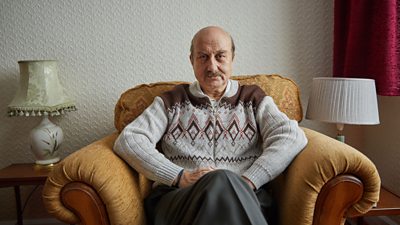
You don’t have to know a person who is suffering from schizophrenia; the film - the book and the film - is about our lives, it’s about small joys
How did you become involved in The Boy With The Topknot?
The script was sent to my wife about two or three years back, she was an actress at the time (she’s now a member of parliament), and I flipped through the pages and thought it was an interesting script. Last year I was approached through my agent and then I read the whole draft - it’s been adapted very well from the book.
I liked the idea of playing the father’s role - there’s a lot to do with the role and I do a campaign about mental instability and mental illness, so it felt right. I also think it’s very important to work with first-time directors making a feature film. I’m introduced to a lot of first-time directors in my career and I think it’s fabulous to work with them.
Has this been a challenging character to play because you are representing somebody with mental health issues and somebody who is based on a real person?
As an actor, anything you do with schizophrenia and mental illness is very challenging because you don’t want to misrepresent the disease or the problem. You don’t want to overdo it (because as actors we tend to overdo things) so you’ve got to find the balance. Sometimes it’s not just acting skills but it is more to do with your sensitivity towards the person you’re playing; it’s not about me as an actor, it’s about me as a person who thinks about these issues.
Sometimes the role goes beyond the actor... I would like to make people more aware of this particular problem, especially in India. There needs to be more awareness than there is now.
Have you met the real Sathnam?
Yes, I met Sathnam at the reading. Usually if it’s based on a true story I don’t want to meet the real-life person because then the actor part of me takes over, then I will notice how he or she is moving his hand - “why is he doing that like that?” - but it was wonderful to meet Sathnam as this script has come from his own experience.
When a writer writes his autobiography or a story about his family, you don’t just see it objectively. This is catharsis, not only for the writer, sometimes it is for the parents, and sometimes the outsider.
So tell us about working with Deepti Naval?
Well you know out of the 507 films that I’ve done - and I’m sure Deepti has done more than 200 films - we have never worked together! We did a film which wasn’t completed (or wasn’t released). And now I have worked with her and she’s fantastic. The role is brilliantly written and you need a very fine actress to portray it. She’s fantastic.
Deepti Naval is one of the finest actresses in India - she has a good body of work, she’s a singer, she’s a poetess, she’s a painter, she’s a very accomplished person and I was very happy that she was playing the role of Sathnam’s mother because she brings with her a lot of experience, also being a Punjabi person.
The script provides so much in the role of the mother; the mother is a spiritual part of this family and similar to a lot of mothers, Indian mothers all over the place who have bonded the family together. Deepti has been absolutely brilliantly cast in this film.
What would this programme give to viewers? Why should they watch?
I think people should watch this film because it could be the story of their life. You don’t have to know a person who is suffering from schizophrenia; the film - the book and the film - is about our lives, it’s about small joys. It’s about discovering who our parents are, it’s also about love, about ambition and ambition not being the most important thing in life sometimes - sometimes discovering a relationship is much more important. So I think anybody watching this film will be watching a part of their life being revealed on camera.