The Wall
Hosted by EastEnders star Danny Dyer, The Wall (6x45') is the ultimate combination of strategy, knowledge and luck and will see the questions voiced by TV legend, Angela Rippon.
Published: 8 October 2019

About the show
Hosted by EastEnders star Danny Dyer, The Wall (6x45') is the ultimate combination of strategy, knowledge and luck and will see the questions voiced by TV legend, Angela Rippon.
Wildly unpredictable with heart stopping jeopardy, The Wall gives and The Wall takes away. Expect colossal wins and heart-breaking losses, this new game show really can change people’s lives in an instant.
In this game, pairs need the right answers, the right bounces and cast-iron trust in each other to win a life-changing cash prize.
The Wall, an original format created by SpringHill Entertainment and Andrew Glassman’s Glassman Media in collaboration with Universal Television Alternative Studio, was first shown in America on NBC in 2016. The most travelled format of 2017 and 2018, The Wall is an international hit and has sold to 24 territories around the globe.
The Wall has been commissioned by Charlotte Moore, Director BBC Content and Kate Phillips, Controller, Entertainment. The Commissioning Editor for the BBC is Rachel Ashdown. The Executive Producer for Remarkable is Richard Hague. The Series Producer is Stephen Lovelock.
AH3
The format
In each show one pair take on The Wall in three rounds that are the ultimate combination of strategy, knowledge and luck.
Freefall (Round one)
A pair of contestants start out playing together for fast cash in freefall. A multiple-choice question with two possible answers is asked as three balls fly down The Wall. The balls fall randomly towards slots of varying cash amounts. The players have until one ball has reached the money to lock in their answer. If they’re correct, the balls turn green and money is added to their prize pot. However, answer a question incorrectly and the ball turns red, deducting the amounts of the slots they land in. There are five questions in freefall and the only rule is that players must finish the round with cash to progress.
Round two
The money slots have larger cash amount added. The pair of contestants separate. One goes into isolation, the other stays with the host. The player gets two free green balls to try and accumulate cash. But whichever slots they drop from at the end of the round, two red balls will also have to drop the same slots. The players then face three questions. The player in isolation, under intense pressure, will answer the questions whilst their partner takes risks on The Wall.
For each question, the player in front of The Wall is shown three possible answers, before deciding which slots to place the balls, based on whether they think their partner is going to answer the question correctly or not. The more confident they are, they should place them to the right - closer to the higher amounts. The less confident they are, they place them to the left - nearer the smaller amounts. If the isolation player is correct the ball turns green, if they’re wrong, the ball turns red - but the isolation player never knows if they’ve answered correctly. For questions two and three, The Wall player has the chance to double up and then triple up - players make this decision after seeing the possible answers to the question and must decide based on their confidence in the isolation player. The balls are all played on the same number. At the end of the round, The Wall player must drop the two red balls from the same number as the free green balls at the top of the round. These will subtract the amount of whatever they land in.
Round three
The money slots have larger cash amount added. Round two works in a similar way to the previous round but this time players get three free green balls to drop, in order to try and maximise their cash winnings. But whichever slots they drop the balls from they will have to drop three red balls from the same slots at the end of the round. The players face three more questions, this time with four possible answers. As before, the player in isolation will answer the questions while their partner takes risks on The Wall. Again, for questions two and three, The Wall player has the chance to double up and then triple up - players make this decision after seeing the possible answers to the question and must decide based on their confidence in the isolation player.
The contract
In the final round before the final three red balls are dropped, the isolation player is sent the contract. If the isolation player signs it, the pair take home the sum that was banked in the freefall round, plus a cash amount for every correct answer they gave over the course of the game - this is the guarantee. However, they’re in isolation so they don’t know how well (or badly) they’ve played and what the final value of the guarantee is. If the isolation player tears it up, they take the risk that their partner has been more successful and they will take home whatever is left on The Wall. If there’s any money left in play on the wall, the player must drop the three red balls from the same number as the free green balls at the top of the round. These will subtract the amount of whatever they land in.
The players are reunited at the end of the game and the isolation player explains how and why they came to their decision. Their partner then tells them what was on The Wall and they either celebrate or commiserate - depending on whether the isolation player made the right decision to take the most out of the game.
Interview with Danny Dyer
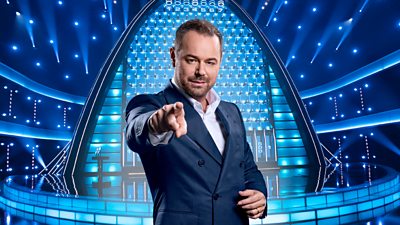
Can you tell us a little bit about your role and what people can expect from the show?
I play the host of the show. So I am the driving force that has to keep it lively really, it’s a lot of improvisation and adlibs, so Mr Saturday Night I suppose!
This is your first time hosting a prime time quiz show - how have you found switching Walford for The Wall?
It’s been quite difficult actually because there’s a lot of anxiety around the idea of being a gameshow host because, what is that? what does it mean? I’ve enjoyed it though - I’ve enjoyed it more than I thought I would.
So it’s been quite a leap from Walford because Walford/EastEnders, it’s all quite serious and it can be quite dark. Whereas this is a light-hearted world, the game show world, so it’s been quite nice actually to have a little break and do something different.
If you were going to be on the show, who would you choose to go on with you and why?
Initially, I’d say my little Dani but I think probably my wife, Jo, I think that she’s quite good under pressure. I think she would be quite calm, I think she would be the one that goes into isolation and I’d be the one outside with The Wall, gambling and taking loads of risk - so [it'd be] interesting just to see how she gets on really, so I’d like to have a go with her.
Which two co-stars from EastEnders do you think would be a good pairing on the show?
I’d have to pick Linda Henry, because I love Linda - she’s funny and she doesn’t like leaving her house a lot so I’d just do it to wind her up you know what I mean? Get her on the telly doing something else. I’d probably pair her up with… I’d say Kellie Bright or maybe Rudolph Walker I think they’re a right strong double act them two. You know what I mean? I think Rudy and Linda Henry. Shirley and Patrick, now that’s a duo!
Have you got a catch-phrase from the show?
There is a catch-phrase but it’s something I have to say which is the balls at the top of the wall, I have to release them when questions have been answered or when the contestant’s told me what number they want they want them to drop from so it is… "Drop it!"... Or "Drop 'em!", if there’s a couple of balls. It’s a very simple thing but I’m sure I’m going to get that screamed at me everywhere I go.
Were there lots of highs and lows during filming?
Very interesting because you really do invest in them [the contestants], you really do. You literally meet them, give them a cuddle, say: "Hi, I’m Danny", they introduce themselves and then we start the show. As the show goes on - it takes about three hours to film one ep so you do start to become quite pally and of course if they’ve got a bit of a story behind them, if they’ve had a rough year or they want the money for a wedding or want it to take their family on holiday you really are routing for them. So when they’re winning money you’re in it and when they lose, you feel it, it’s quite painful actually. That’s part of that journey though I suppose, and I never know how it’s going to pan out of course so that was probably the hardest bit actually - when people walk away with nothing.
Would you like to host more game shows in the future?
I don’t know yet. I don’t know… this is all new to me and I think I enjoyed it far too much but maybe is The Wall my thing? Like Bradley Walsh does The Chase, that’s his gameshow. This might be my thing, I don’t know. I love acting far too much I’ll be honest with you, that is my passion and I’m very lucky and grateful to have a job that I love to do so I wouldn’t really rock the boat with that, I don’t know if you can really be both. Let’s just see how The Wall pans out and we will see, if people are loving it then maybe I’ll change my mind. Never say never!
Interview with Angela Rippon
Can you tell us a little bit about The Wall and the role you play in it?
Basically, I am The Voice of The Wall - as I am the person who asks the questions.
Do you watch a lot of game shows at home?
I occasionally watch Pointless, The Chase, Mastermind and University Challenge. It depends on my work schedule.
What is your favourite game show of all time?
Mastermind.
If you were to take part on The Wall, who would you choose to go on with you and why?
My cousin Christopher Betts - he seems to know so much about everything.
You’ve hosted a number of gameshows before: Masterteam, What’s My Line, Matchpoint - and now The Wall. Which has been your favourite one to host and why?
I loved doing Masterteam - we had such fascinating and fun people making up the teams - and a really eclectic batch of questions covering a vast spectrum of subjects. People still talk to me about the show as it was very popular.
You do lots of TV presenting, would you like to do more quiz show hosting in the future?
In truth I don’t actually host The Wall - that’s Danny’s job - and he does it brilliantly. But I’ve enjoyed all the quiz programmes I’ve worked on, so yes, would love to work on another.