The Other Bennet Sister cast and creatives talk Pride and Prejudice, filming in Wales, and what to expect from the series - "Mary’s not your typical period drama heroine"
While we might dream of being Lizzy, in reality most of us are more like Mary…
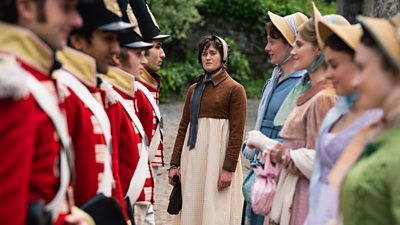
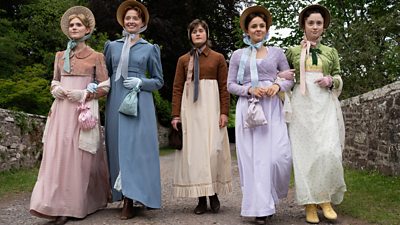
Based on the bestselling novel of the same name by Janice Hadlow, The Other Bennet Sister focuses on Mary Bennet — the seemingly unremarkable and overlooked middle sister in Jane Austen’s Pride and Prejudice. The series takes as its premise that — when it comes to the Bennet sisters — while we dream of being Lizzy, in reality most of us are more like Mary…
The series follows Mary as she steps out of her sisters’ shadows in search of her own identity and purpose, finding herself in the middle of an epic love story along the way. Her journey will see her leave her family home in Meryton for the soirées of Regency London and the peaks and vales of the Lake District, all in search of independence, self-love, and reinvention.
Ella Bruccoleri (Call the Midwife, Bridgerton) leads the cast as Mary Bennet, whilst Richard E. Grant (Withnail & I, Can You Ever Forgive Me?) and Ruth Jones (Gavin & Stacey, Stella) co-star as Mr and Mrs Bennet. Indira Varma (Obi-Wan Kenobi, The Night Manager) and Richard Coyle (Heads of State, The Chilling Adventures of Sabrina) will play Mr and Mrs Gardiner, whilst Laurie Davidson (A Cruel Love: The Ruth Ellis Story, The Girlfriend) and Dónal Finn (The Wheel of Time, SAS Rogue Heroes) play potential suitors Mr Ryder and Mr Hayward, respectively.
Sarah Quintrell (The Power, Ellen) wrote nine of the ten half-hour episodes, with Maddie Dai (We Were Dangerous) writing one episode. The series, which was filmed in Wales, is directed by Jennifer Sheridan (Extraordinary) and Asim Abbasi (Cake).
The story begins at Longbourn, the Bennet family home, where Mr and Mrs Bennet preside over a lively household of five unmarried daughters: Jane, Elizabeth, Mary, Kitty, and Lydia. As society’s pressures mount, the Bennet sisters navigate the glittering yet precarious world of Regency England, where marriage is both aspiration and necessity.
While her sisters pursue romance and social triumph, Mary embarks on a very different path. Leaving Longbourn behind, she travels to London to live with her aunt and uncle, Mr and Mrs Gardiner, in their elegant home on Gracechurch Street. There, Mary begins a journey of self-discovery, stepping out of the shadows and into her own story.
Iconic settings from Pride and Prejudice include the Meryton Assembly Ball and the Netherfield Ball, where fortunes and futures are decided under glittering chandeliers.
JA2
Interviews with the cast
Ella Bruccoleri (Mary Bennet)
How would you describe your Mary Bennet?
Mary Bennet has been written off by many members of her family, and as a result she’s written herself off too. When we meet her at the beginning of the series, she’s living with her family in a small village and has never really left that world. These are the only people she knows, and she understands herself through the values they impose on her. We know these characters from Pride and Prejudice, but it’s fascinating to see the impact they have on someone like Mary.
What excited you most about telling her story?
Mary’s not your typical period drama heroine. She lives in a world where, particularly for women, appearance is everything, and she doesn’t understand that value system at all. Instead, she turns to literature that offers a different viewpoint. Her favourite book is Fordyce’s Sermons to Young Women, because it argues that women shouldn’t have to be beautiful — they should be intelligent and pious.
How do you think this adaptation honours Austen’s legacy while offering something new?
When I read Jane Austen, I’m always struck by how it is so witty, with humour in every line. Sarah Quintrell really brings that into the scripts, and Janice Hadlow’s book does the same. The novel is very different in style from Austen, but it feels like a genuine extension of Pride and Prejudice.
Sarah’s scripts tread the line between comedy and drama better than anything I’ve ever read. It feels like a tragicomedy - it doesn’t take itself too seriously, but it’s also not afraid to delve into emotionally weighty material. That feels very true to Jane Austen.
What was it like filming The Other Bennet Sister?
What was so lovely was having time between being cast and filming starting. Director Jennifer Sheridan and producer John Pocock sent me for piano lessons, calligraphy, horse riding and movement sessions. I was able to ask for what I thought would be helpful before we began.
Is there anything from the Regency era you’d like to see return today?
Quills. Imagine if we were all still writing with quills. I love it when you get a really good one.
Do you have any tips for being a Regency wallflower?
Stick to the outskirts of the room. Stay within touching distance of the wall. Hide in the shadows and observe. A lot of Mary’s behaviour is learned - she’s spent her life watching other people.
Ruth Jones (Mrs Bennet)
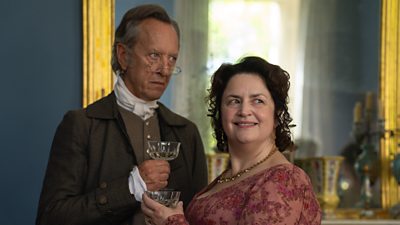
How would you describe The Other Bennet Sister?
The series is a lovely blend of lightness and comedy, with some genuinely moving and poignant moments.
What made you want to be part of this project?
Mrs Bennet is iconic and a huge challenge. I’d be stepping into very large shoes. I wanted to meet that challenge and portray her differently from how she’s traditionally been seen. In The Other Bennet Sister, we don’t see a woman of purely nervous disposition. I think of her like an estate agent with five properties to sell — four will be snapped up, but one can’t even get a viewing. She’s a tough businesswoman. That really appealed to me.
How would you describe Mrs Bennet’s relationship with Mary?
It’s complex and definitely not black and white. She is awful to Mary - let’s not beat about the bush - and often quite cruel. But we come to understand why her attitude towards her middle daughter is the way it is. Ultimately, she wants security for all her daughters. She knows how vital financial and domestic security is for a woman of that era, especially when she can’t secure it herself.
How would you describe Mrs Bennet’s relationship with Mr Bennet?
I imagine they had a very healthy sex life early on, but it soon became clear they didn’t have much in common and irritated each other greatly. Mr Bennet can be quite harsh; he doesn’t seem to take her anxiety about marrying off the daughters seriously. It’s a fractious relationship.
There’s comedy to Mrs Bennet, but also pathos. How did you balance that?
There’s lots of comedy, but also poignancy and hopefully empathy. The scripts are fabulous. Sarah Quintrell and the writing team have balanced the tone beautifully. My job was simply to serve what’s on the page.
How was it working with the other actors?
I’ve loved it. This has been one of the happiest jobs I’ve ever done. All my daughters are a joy - every one of them.
How does this adaptation honour Austen while offering something new?
Austen fans won’t be disappointed. There are so many nods to Pride and Prejudice - recognisable characters, iconic ballroom scenes, moments that make you think, “I remember that.” Janice Hadlow’s novel is crucial here; her vision of Mary allows the adaptation to examine society, our anxieties about fitting in, and the pressure of social norms.
What was it like working in Wales?
I love coming back to Wales. I recognise so many crew members I’ve worked with before, and it makes me proud that we’re creating a production like this here. Locations like St Fagans Folk Museum are places I’ve known since childhood.
Do you have a favourite scene to film?
Any scene with Ryan Sampson. He’s a comedy genius and makes me want to be silly. Mrs Bennet sometimes makes strange noises (she growls) and I love catching the twinkle in the girls’ eyes when I do it.
Are there scenes you’re particularly excited for audiences to see?
I really want to see Mary come through her journey. Many of my scenes involve Mrs Bennet criticising and belittling her, and Mary lacking the courage to stand up to her. I often had to apologise to Ella afterwards.
Richard E. Grant (Mr Bennet)
What made you want to be part of this project?
I’ve always wanted to play Mr Bennet, having read Pride and Prejudice several times. When Ruth Jones was cast, I knew she’d be perfect, so I was thrilled to work with her.
How would you describe Mr Bennet’s relationship with Mary?
Mary is a wallflower - someone to be tolerated. She has a very stern personality, and I think, unfortunately for her, he doesn’t engage with her much,
What did you think of the script?
It was concise, witty, and a brilliant distillation of the novel.
What was it like working with the rest of the cast?
As a father of one daughter, having five on screen was a delight. The energy is infectious. Ryan Sampson’s Mr Collins is innately funny - he’s absolutely brilliant.
Why does this story still resonate?
It’s about families - and everyone is born into one. Jealousy, favouritism, neglect, indulgence, money, insecurity - all timeless. Jane Austen captured all of it.
What do you hope audiences take from the series?
Enormous enjoyment in following Mary’s story. She’s the least known of the Bennet sisters - it’s time for her to shine.
Dónal Finn (Mr Hayward)
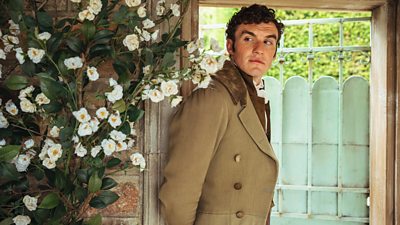
What drew you to The Other Bennet Sister?
I come from a big family with lots of sisters. Many people watch Pride and Prejudice and want to be Elizabeth, but I identify much more with Mary. She represents how people often feel internally constrained by expectations and circumstance. The story shows how someone can change when they’re removed from an environment where they can’t flourish.
Tell us about Mr Hayward.
Tom is a friend of the Gardiners and meets Mary while she’s working as a governess. He’s not from London, so he understands what it feels like to be an outsider. He works hard to be seen, and that shared experience creates an immediate connection between them.
What makes him different from other Austen love interests?
Like Mary, Tom is unconventional. There’s a vulnerability that allows them to feel comfortable with each other straight away. Unlike characters such as Darcy or Bingley, Tom doesn’t come from wealth, which gives him a grounded, earthy quality and a strong moral compass. He’s clear in his ethics and open with Mary - first as a friend, and then as something more.
What will excite audiences most?
That the world of Jane Austen is still expanding!
Laurie Davidson (Mr Ryder)
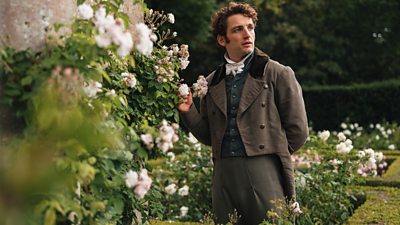
What made you want to be part of this project?
We live in an age of remakes, so I was excited to be making something new, inspired by Jane Austen but not repeating her work.
Tell us about Mr Ryder.
William Ryder is one of several suitors Mary encounters. He sees himself as very modern and forward-thinking, but he’s impulsive and easily distracted. He’s always chasing the next idea. In Mary, he sees someone completely different from the women he’s known — and a true kindred spirit.
How is he different from other Austen love interests?
Often, characters like Ryder would be expected to ruin someone’s life — that’s the fear. We don’t fall into that trope. He gets things wrong, but his heart is in the right place. He’s ahead of his time, resistant to social convention, and even thinks of himself as a feminist — though he may be a little lost along the way.
John Pocock, Producer
Can you tell us about the casting process?
Casting Mary was particularly challenging. She needs to play comedy, drama, and sustain thirteen weeks on set. We saw hundreds of actresses before Ella stood out. We didn’t cast anyone else until Mary was locked in. From there, we built the Bennet family and found two contrasting love interests - Ryder, who’s more flamboyant, and Hayward, who’s grounded. Chemistry was crucial, both on and off screen, because this is ultimately a family story.
Sarah Quintrell, Screenwriter
How did you approach bringing something new to Mary?
Janice’s novel is a big, beautiful book. My focus was on taking the character she created and meeting it with my own voice on screen, particularly leaning into the humour. Watching my own children reach their teens reminded me how intense social hierarchies feel at that age, and that really informed how I approached Mary’s inner life.
What were the joys and challenges of adaptation?
It’s been a joy. The book is fresh and modern while remaining firmly in the Regency world. The challenge was scale — the novel is huge, and I had ten half-hour episodes to make it work for television.
Jennifer Sheridan, Lead Director
How would you describe the tone and visual language?
It’s funnier than people might expect — warm, heartening, and full of encouragement for young women who feel they don’t quite fit in yet. Visually, it’s fresh and beautiful, but with quirkiness and edge. That reflects Mary herself.
What does this story reveal about Austen’s characters?
Jane Austen wrote deeply flawed, complex characters. What’s new here is that we take one of those imperfect figures and explore how they might grow. The message is that people can change — we can learn, improve, and become better.
Jane Tranter, Executive Producer
How did The Other Bennet Sister come to the screen?
I met Janice Hadlow many years ago when she first shared her idea for the novel. I loved it immediately. We optioned the book, developed it with Sarah Quintrell, and after a long journey - about eight years - the project found the right moment and the right broadcaster. I’ve been on this journey with Mary Bennet ever since.
Follow for more
Latest from the Media Centre
All newsSearch by Tag:
- Tagged with DramaDrama
- Tagged with Media PackMedia Pack
- Tagged with Latest NewsLatest News
